


We researched dozens of sales tools, went over user reviews on G2, and talked to sales leaders to find out the best B2B sales software so you don’t have to.
In this article, we will go over 10 sales tools built for B2B organizations, reviewing their best features, pros and cons, and pricing models.
Before we begin, let’s discuss the factors to consider when evaluating B2B sales platforms. ⤵️
How to choose B2B sales tools
#1: Depth of B2B Sales Features
When evaluating B2B sales tools, we need to assess the main use case of each platform as well as the depth of features offered.
For this guide, we looked at sales platforms that have different use cases and a range of features, such as:
- Built-in integrations to communicate with prospects seamlessly without switching between tools.
- Task automations to automate repetitive tasks and save time. Some of the tools enable your team to use pre-built automations or build your custom automations.
- Personalized digital sales rooms to help your sales team close more deals by addressing objections early on.
- CRM capabilities, which lets you access customer data and track the overall sales pipeline, as well as prioritization and forecasting features.
- Outreach features, whether it is for cold outreach, nurturing existing relationships, or sending out proposals.
💡 We also evaluated platforms that offer customizable reporting to help you gain actionable insights into key sales metrics.
#2: Integrations With Existing Sales Systems
Integrations are important to ensure data flow between your sales platforms and marketing tools.
We looked at B2B sales tools that could natively integrate with CRM systems, marketing automation tools, and internal/external collaboration tools like Slack.
➡️ This would help your team better manage the sales pipeline and wouldn’t have to spend time with manual data entry.
#3: Pricing Structure
Different B2B sales solutions have different pricing structures, which make sense for different use cases and employee counts.
Some sales platforms offer pricing models based on user seats, while others are based on the number of features you want to access.
The pricing model you choose can be quite expensive in the long run if you plan on onboarding many sales reps.
💡 For the sales software that did not disclose their pricing, we tried finding data from third-party sources like Vendr.
What are the best B2B sales tools?
Here are the best B2B sales platforms out of all the software we reviewed across different use cases:
#1: Arrows: Keep a gameplan for every deal and get the work between calls done, next to your CRM and notetaker.
#2: LeadSquared- Manage your sales pipeline across different sales channels.
#3: Aligned- Build tailored sales rooms with an in-built AI assistant.
#4: HubSpot- Set up an enterprise sales CRM that lets you sync all data streams.
#5: Dock- Set up buyer intent notifications in real-time.
#6: Qwilr- Design and send out professional-looking sales proposals from ready-to-use templates.
#7: Salesforce- Connect your sales data streams across different platforms to track and engage with your leads.
#8: Anaplan - Ideal for sales territory planning that is based on the product line, industry, customer, or country.
#9: Salesloft- Scale your sales pipeline with predictive intelligence.
#10: Gong- Analyze lead interactions across multiple platforms at scale to make better decisions.
#1: Arrows
Best for: B2B sales teams that want the work between calls done on every deal, on top of the CRM and notetaker they already use.
Arrows is promptless AI for account executives. It keeps a gameplan for every deal and does the work that keeps deals moving.
Full disclosure: Arrows is our product. Here’s what it does and where it fits in a B2B sales stack.
Most B2B sales stacks have a CRM that holds the deal and a notetaker that records the call. Arrows sits next to both. It reads your call transcripts, emails, CRM, and notes, builds a gameplan from your team’s playbook, and does the follow-through your reps would otherwise do by hand.
Feature #1: A gameplan for every deal
Your best rep runs their top deals from a plan in their head. Everything else gets improvised.
Arrows applies your team’s playbook to every deal, not only the ones a rep has time for. Each deal gets a gameplan with its next steps, and the plan stays current as the deal moves.
Feature #2: The work between calls, done for your reps
Arrows does the work you expect reps to do, and the work you wish they did:
- Call prep before every meeting.
- Deep research on the account.
- Follow-up emails drafted from what the buyer said on the call.
- CRM updates written back to the deal.
- Multi-threading, so a deal doesn’t hang on one contact.
- Every date tracked from your calls, with nudges when a deal goes quiet.
- Loom videos and the right case study sent between calls.
- Sales rooms kept current, so your buyer always sees the next steps.
There’s no prompt to write. Reps approve every email, CRM update, and sales room change before it sends.
Feature #3: Sits next to the CRM and notetaker you already use
Arrows isn’t a CRM or a notetaker. It works with HubSpot, Salesforce, Pipedrive, Close, and Attio, and with notetakers like Gong, Fathom, Granola, Grain, and Fireflies. It also connects to Gmail, Outlook, and Google Calendar.
Your notetaker captures the call. Arrows reads it with the deal in your CRM and writes approved changes back, so your CRM stays current without reps typing updates. See the CRM integrations.
Pricing
Arrows doesn’t publish prices. It’s priced on the work, not the seats. See how pricing works.
Not sure where Arrows fits in your stack? Book an agent kickoff to see how it works.
What stands out
✅ A gameplan that stays current as each deal moves, built from your team’s playbook.
✅ Promptless: call prep, research, follow-ups, and CRM updates arrive done, ready for a rep to approve.
✅ Works with the CRM and notetaker your team already has, instead of replacing them.
✅ Sales rooms that stay current with each deal’s next steps.
✅ One shared playbook for the whole team, instead of each rep prompting AI their own way.
#2: LeadSquared
Best for: Managing your sales pipeline across different sales channels.
Similar to: HubSpot, Salesforce.
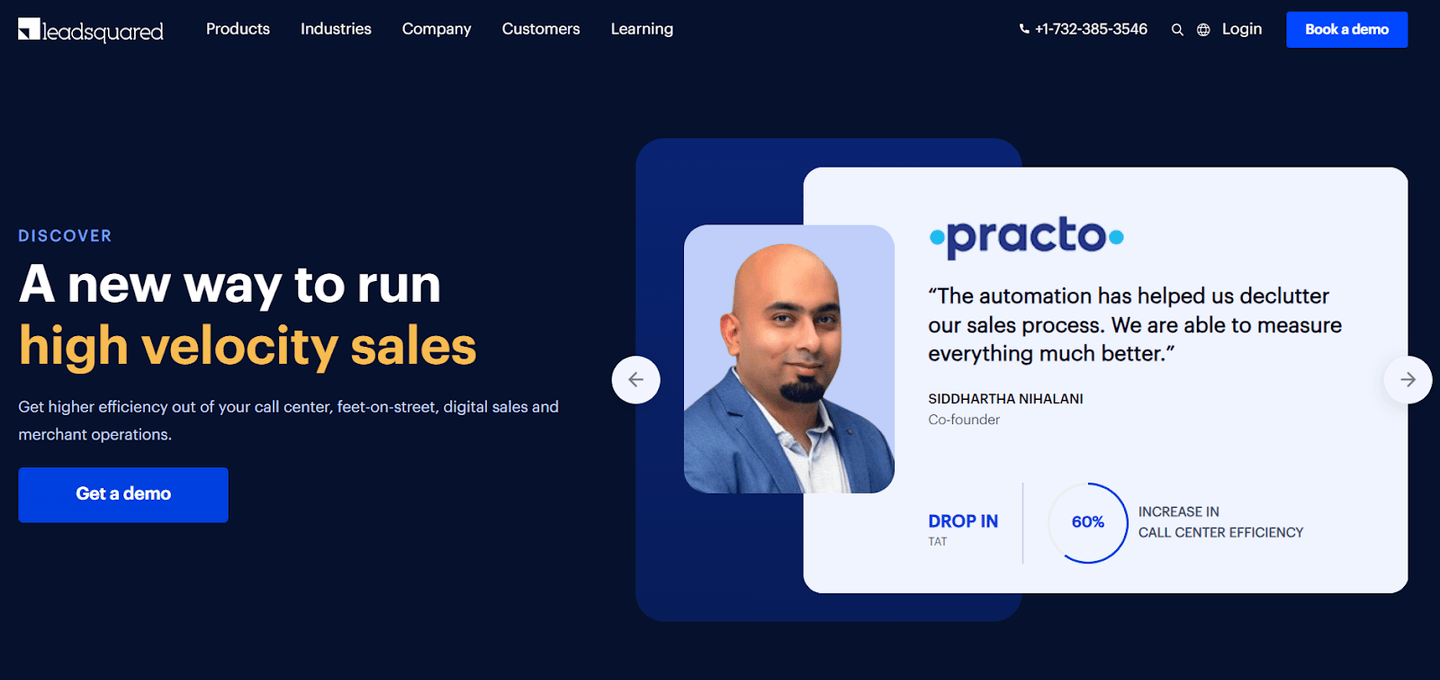
LeadSquared is an all-in-one sales CRM that gives you a comprehensive range of features for managing your leads and identifying opportunities.
Features
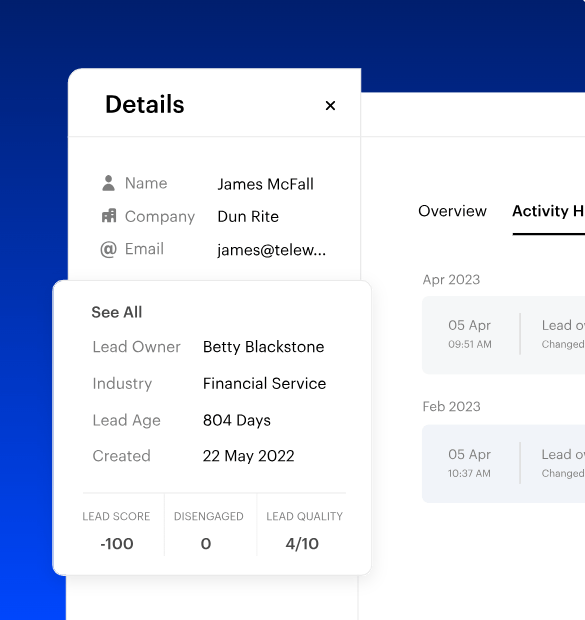
- Lead management features that include lead quality, lead score, and an overview of each prospect.
- Opportunity management features that help you spot up-selling and cross-selling opportunities to increase CLV.
- Lead distribution by quality, location, languages, agent performance, and more.
Standout Feature: Sales Automation

LeadSquared lets you create consistent sales automations by automating low-value and back-end sales tasks.
This helps your sales team focus on the tasks that matter most.
Pricing
LeadSquared does not disclose their pricing, so you’d have to contact them to get a quote and a product demo.
Pros and Cons
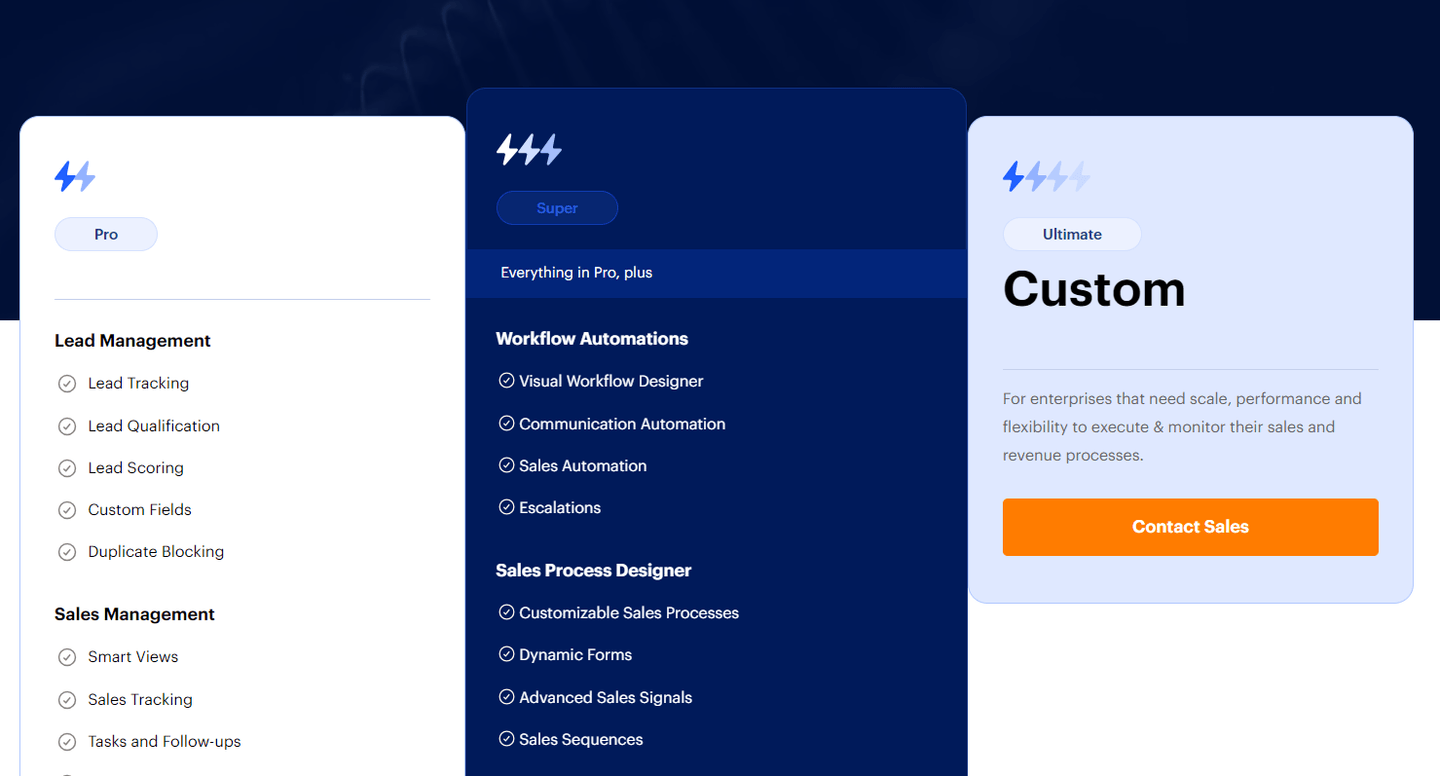
✅ All-in-one sales CRM for B2B teams.
✅ Advanced sales automations with a no-code process designer.
✅ Lead management features that include scoring and duplicate blocking.
⚠️ There have been reported some server issues.
⚠️ Fully setting up the software and all systems has taken some customers up to 6 months.
#3: Aligned
Best for: Building tailored sales rooms with an in-built AI assistant.
Similar to: Dock.
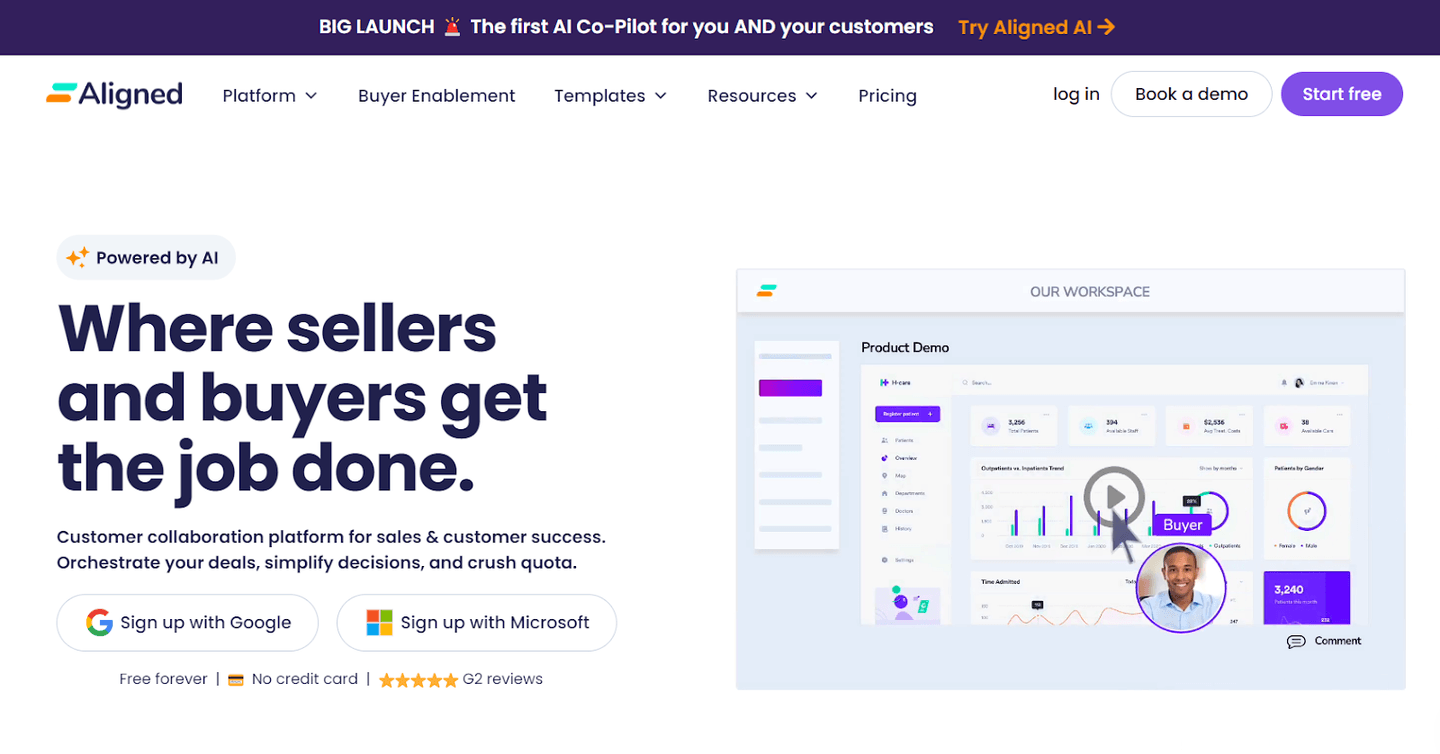
Aligned is a sales tool built for B2B teams that offers digital sales room software to help you win more deals.
Features
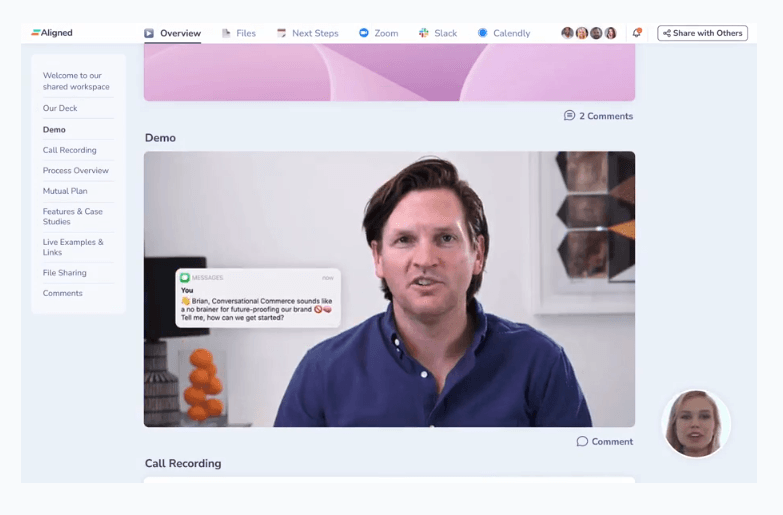
- Customizable sales rooms with no login required from your customers where you can share all sales collateral.
- Mutual action plans: Gain control over customer processes and timelines to convert your prospects quicker.
- Revenue intelligence: Enable your sales team to make better decisions and identify risks in your deals and buying intent.
Standout Feature: Aligned AI (Chatbot)
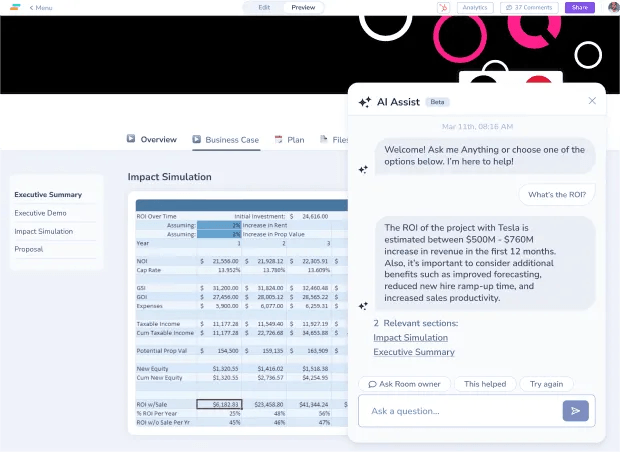
Aligned lets you access its AI copilot that helps your team keep the momentum going by answering your prospects’ urgent questions as they arise.
The chatbot can be used to summarize the project scope, ask about the ROI, and help all of your reps catch up on deals.
Pricing
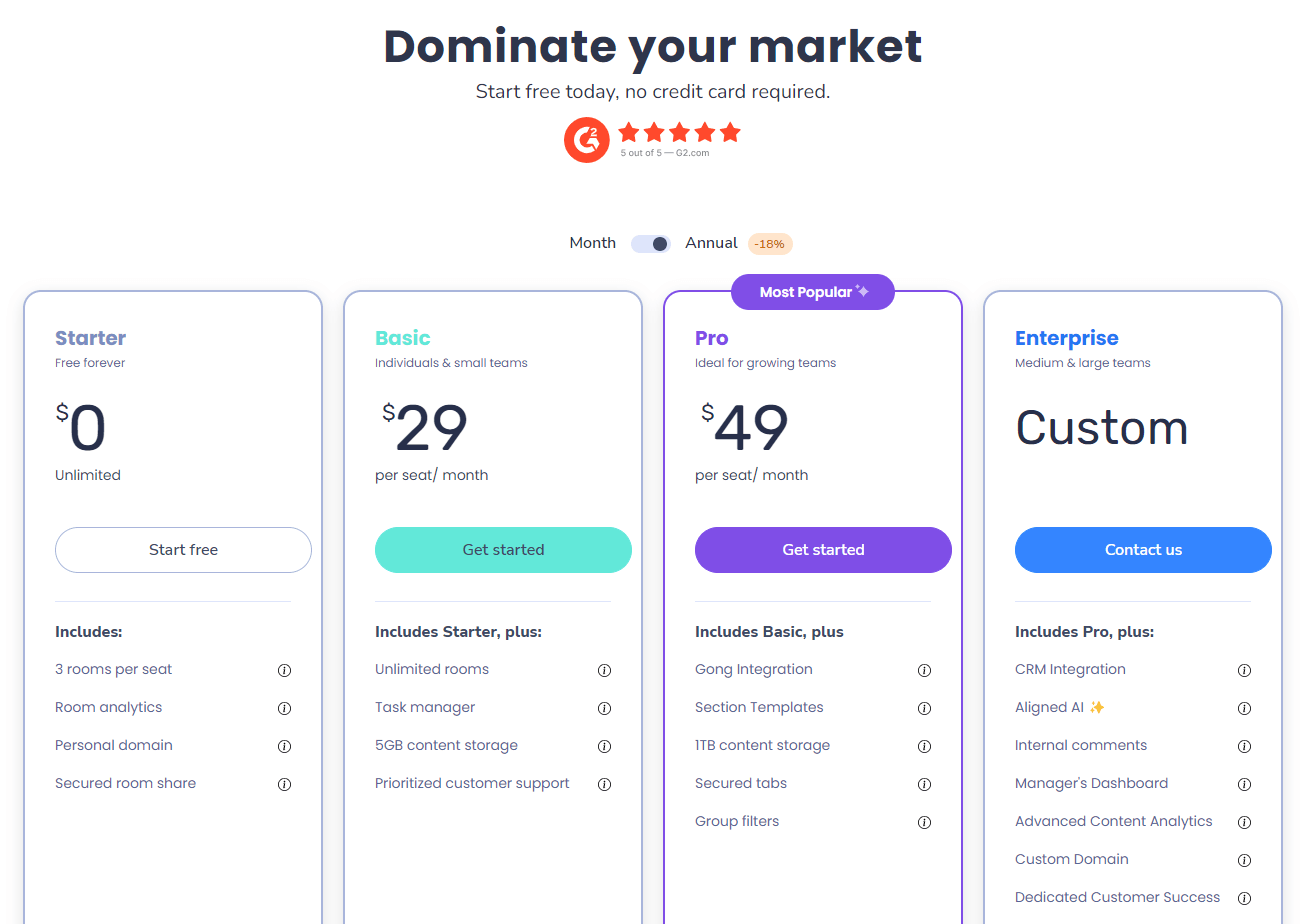
The sales enablement platform offers a freemium version that includes 3 rooms per user seat, room analytics and secured room sharing.
To access the tool’s more advanced features, you will need to sign up for one of its three paid plans:
- Basic:$29/month/seat, which adds unlimited sales rooms, a centralized dashboard, 5GB content storage, and better customer support.
- Pro:$49/month/seat, which adds a deep Gong integration, section templates, 1TB of content storage, secured tabs, and group filters.
- Enterprise: Custom pricing, which adds Aligned AI, CRM integrations, internal comments, advanced content analytics, and more.
Pros and Cons
✅ AI copilot that lets you answer your prospects’ urgent questions in sales rooms.
✅ Free plan that lets you get 3 sales rooms per seat.
✅ Advanced engagement analytics of the sales rooms.
⚠️ CRM integrations are on the Enterprise plan, unlike alternatives to Aligned.
⚠️ Some customers of the platform mention that there are not enough customization options.
#4: HubSpot
Best for: Setting up an enterprise sales CRM that lets you sync all data streams.
Similar to: Salesforce, LeadSquared.
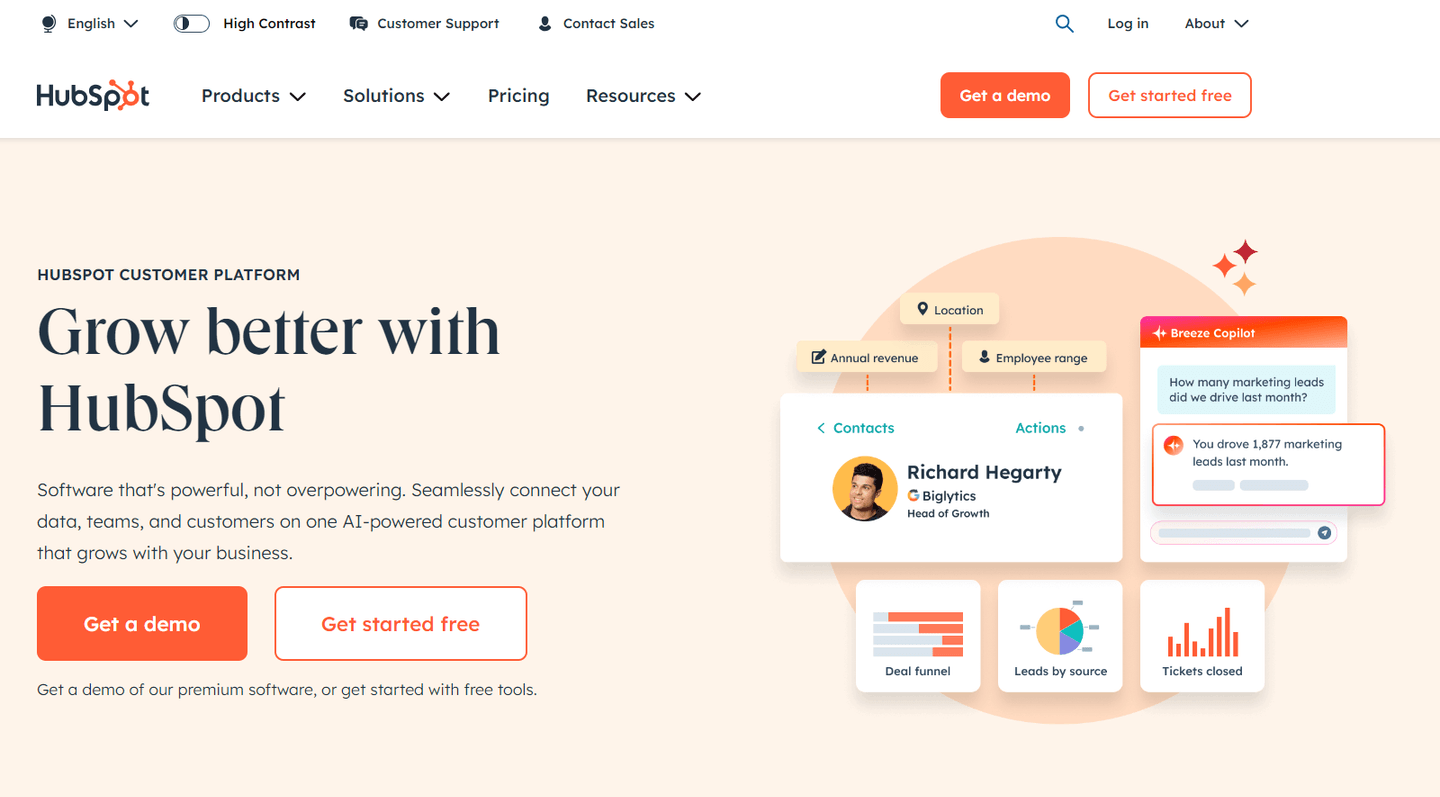
HubSpot is an all-in-one sales CRM software that lets you connect your data and manage new and prospective customers with its comprehensive range of features and integrations.
Features
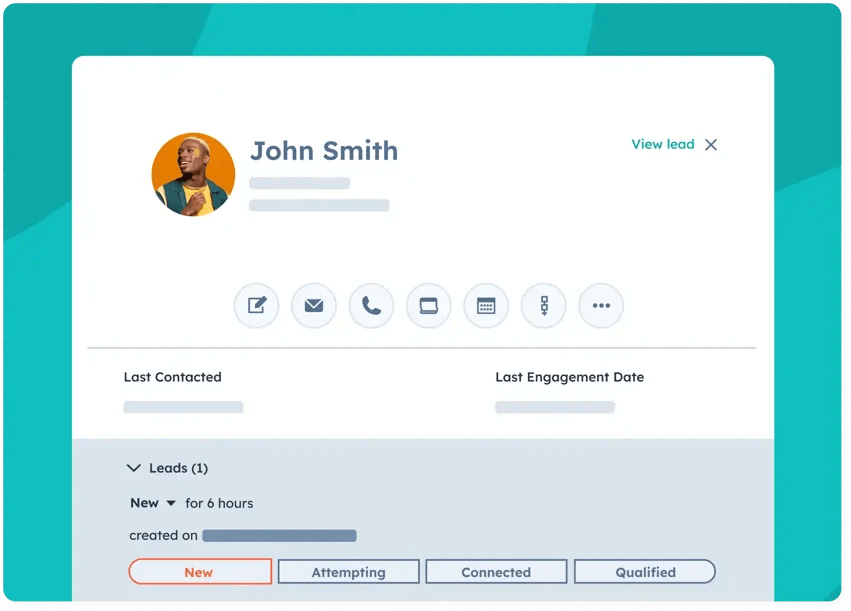
- Sales engagement features in HubSpot’s sales hub include deal management features and opportunity identification.
- Sales automations to enable your sales team to scale lead outreach with personalized email sequences.
- Breeze: An AI-powered tool that lets you analyze the buyer intent of your prospects. The chatbot also acts as a sales assistant.
Standout Feature: Deal Management
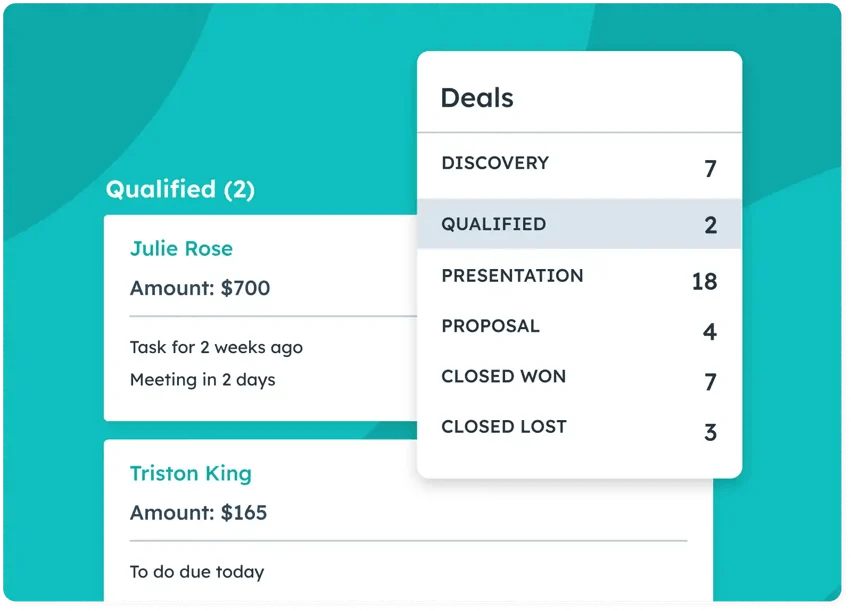
HubSpot’s deal management tools help your sales reps close more deals.
The B2B sales platform helps you prevent missed opportunities due to inaction so your team can work on the right deal at the right time.
Pricing: HubSpot Sales Hub
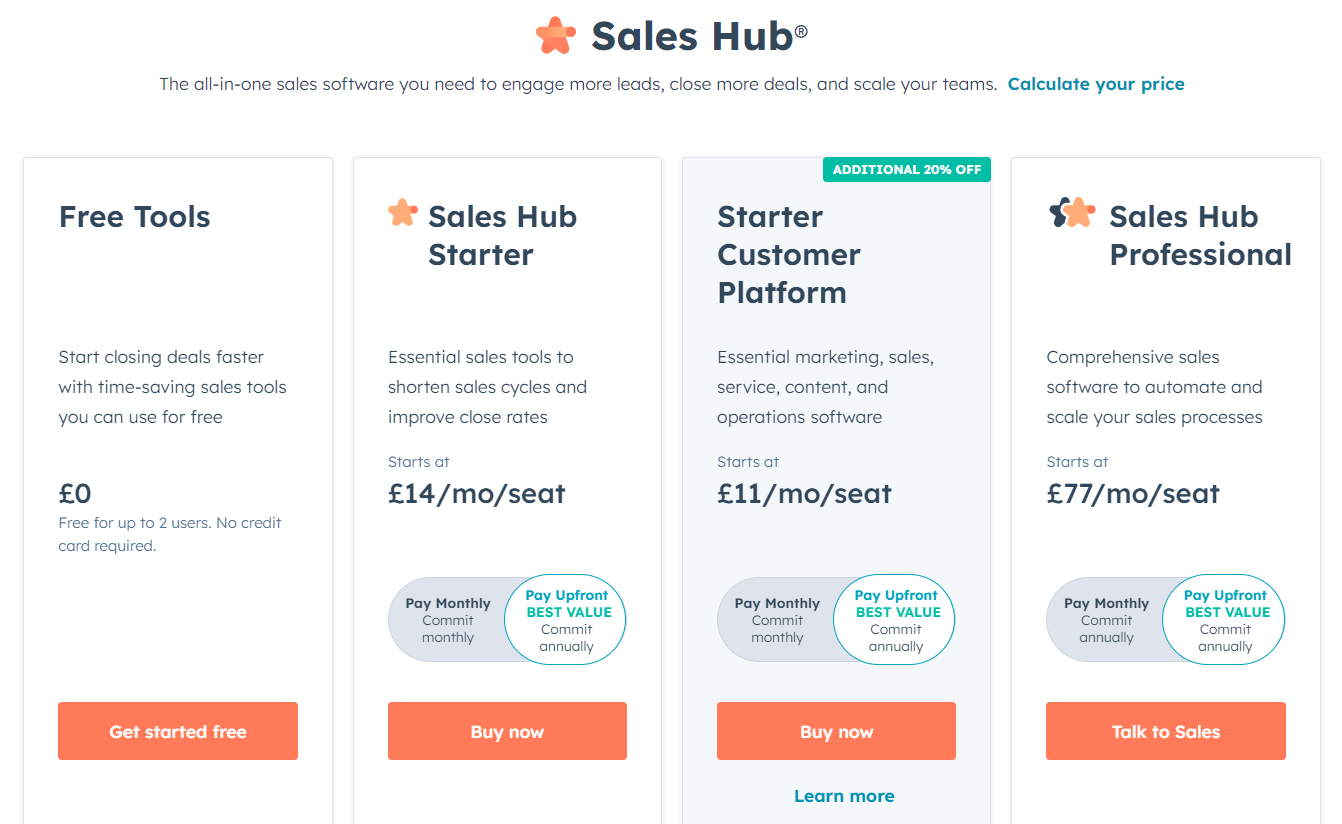
HubSpot’s Sales Hub has a free version that gives you access to its free marketing, operations and sales tools.
To access the tool’s more advanced features, you will need to sign up for one of its three paid tiers:
- Starter:$20/month/user, which adds access to 50 active lists, no HubSpot branding, 5,000 email templates, and email scheduling.
- Professional: $100/month/user, which adds access to 1,200 active lists, up to 100 inboxes, and up to 15 deal pipelines per account.
- Enterprise:$150/month/user, which adds access to 2,000 active lists, up to 200 inboxes, and recurring revenue tracking.
Pros and Cons
✅ All-in-one sales CRM that gives you access to workflow automations, and advanced analytics.
✅ AI-powered sales assistant to help your sales team.
⚠️ The templates are not very customizable.
⚠️ The platform may not be easy to navigate for sales reps who are new to the industry.
#5: Dock
Best for: Setting up buyer intent notifications in real-time.
Similar to: Aligned.
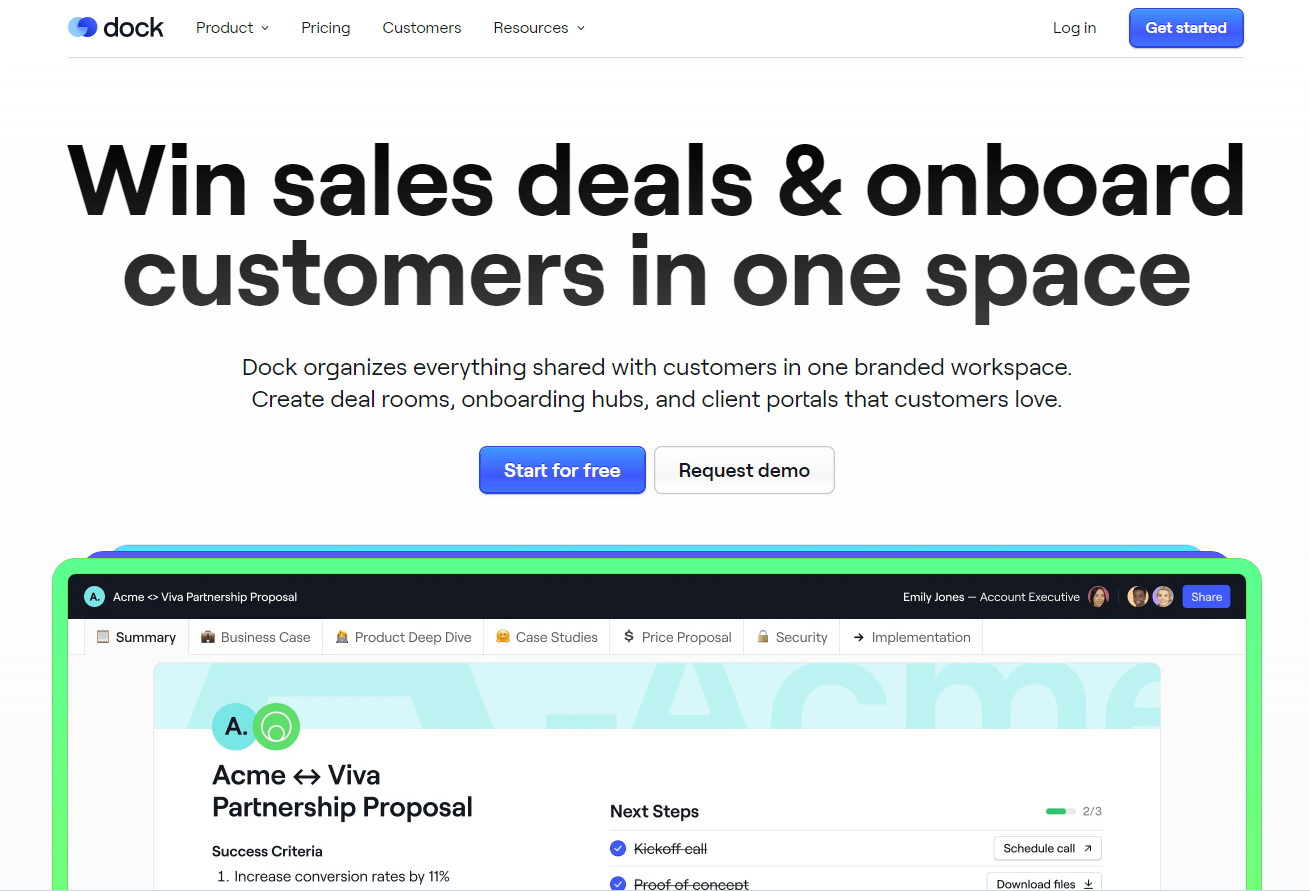
Dock is a B2B sales software that helps your sales team send out sales rooms, onboarding plans, and client portals.
Features
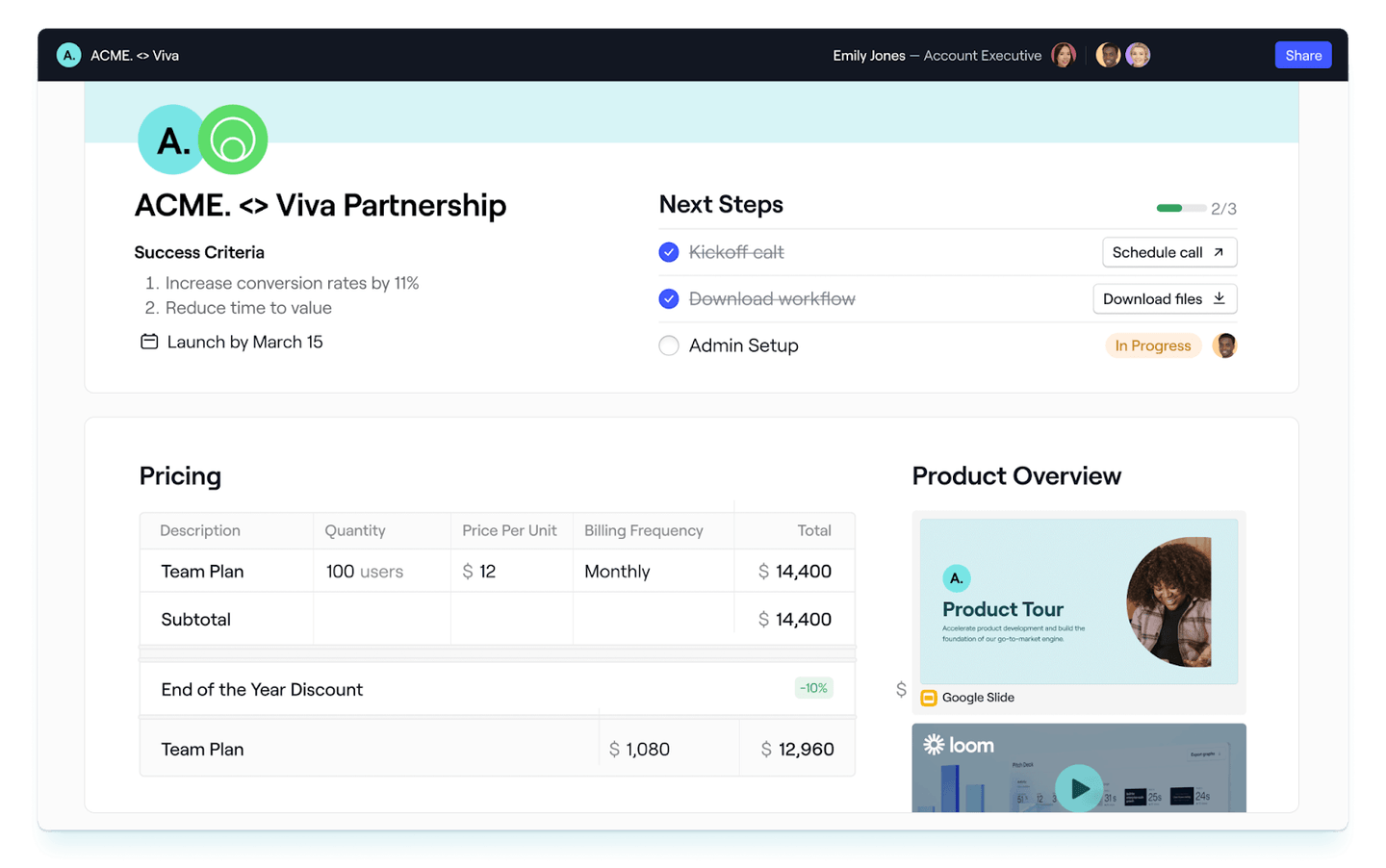
- Sales deal rooms: A place for your sales team where they can add sales content, action plans, price quotes, and order forms.
- New client onboarding portals: You can share project plans, onboarding content, and forms.
- Client portals: Organize everything for your new clients in one place to deliver a seamless customer experience.
Standout Feature: Sales Order Forms
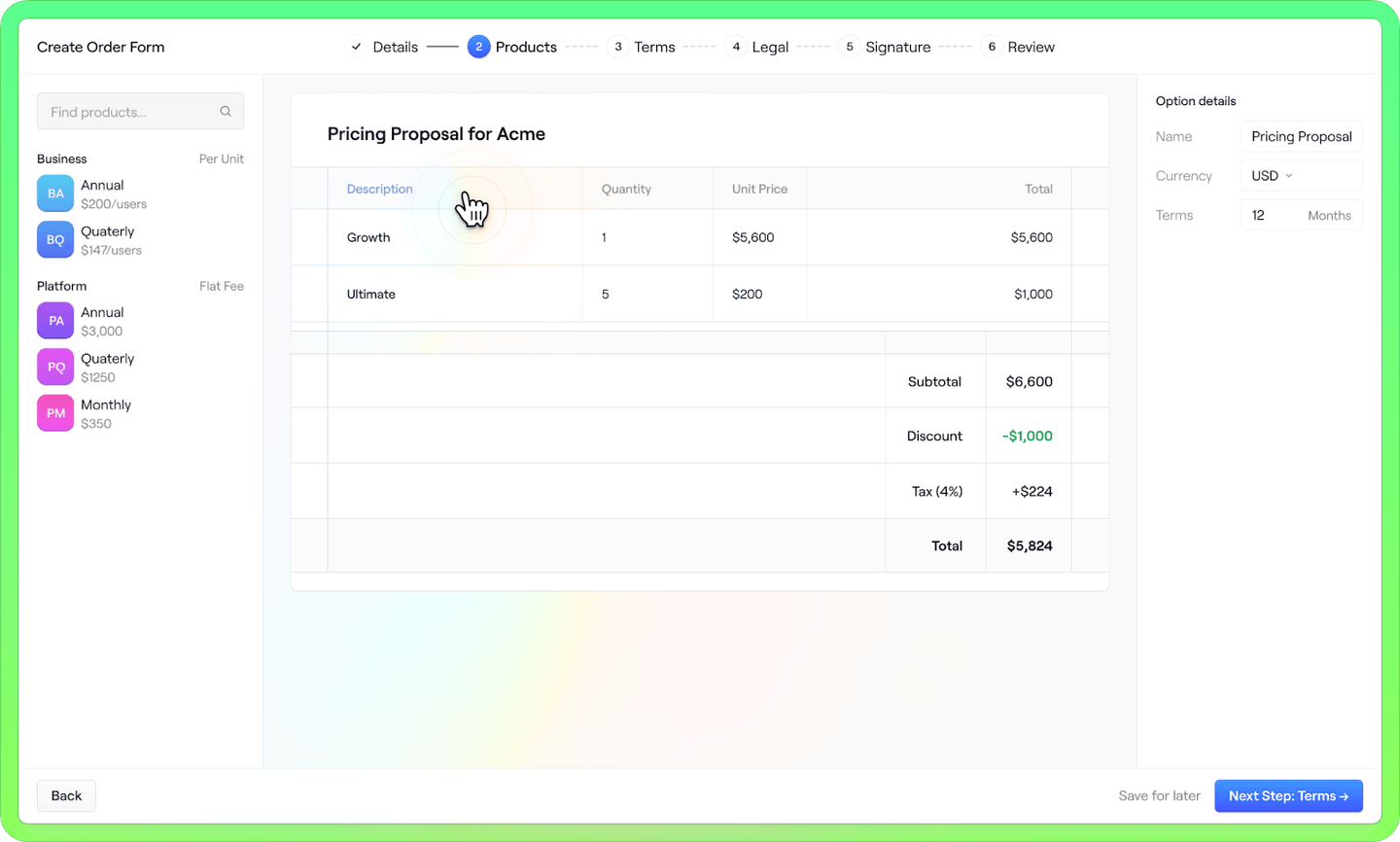
With Dock, you can create sales order forms and send them to your new customers for signing in only a few clicks to improve your close rates.
Pricing
Dock has a freemium version that lets you access five workspaces for unlimited users.
To access the sales platform’s advanced features, you will have to be on one of their three paid tiers:
- Starter: $49/month/seat, which adds sales deal rooms, customer onboarding, client portals, and sales content management.
- Growth:$59/month/seat + $250/month platform fee, which adds HubSpot integration, custom dashboards, and page visibility controls.
- Enterprise: Custom pricing that lets you access Salesforce integration, custom domain, SSO, and automations.
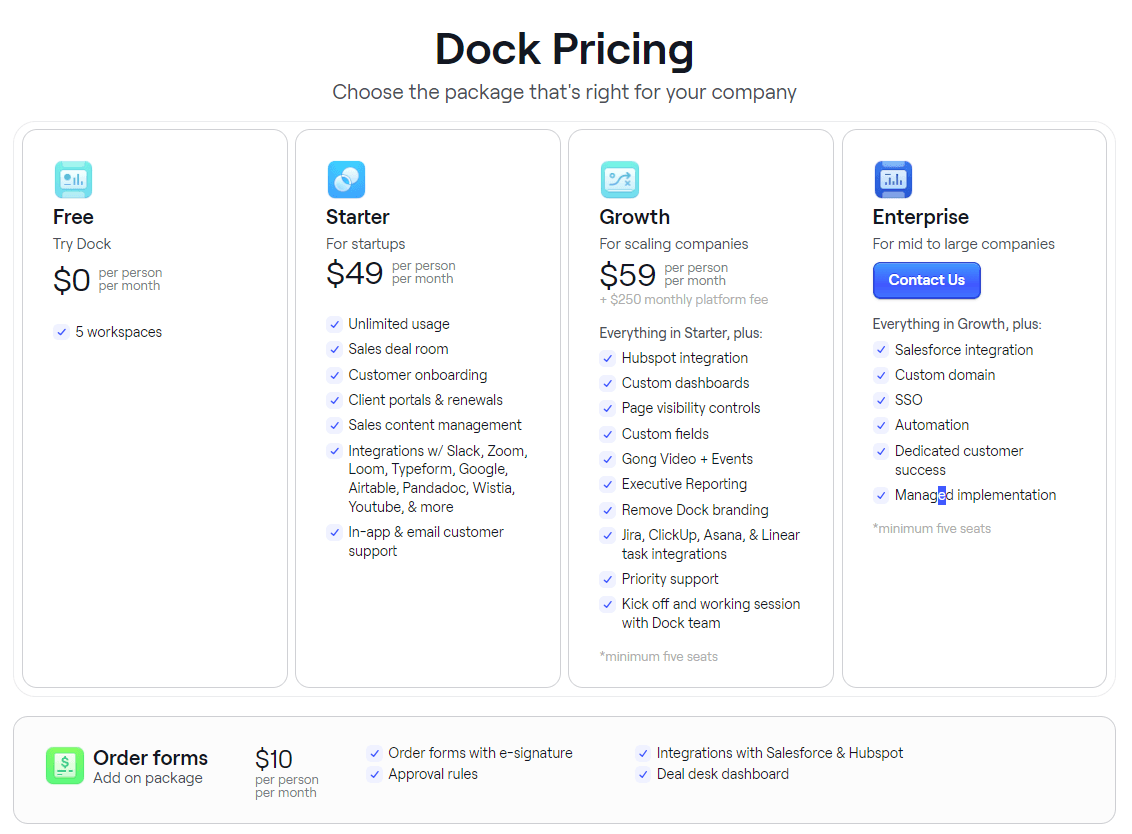
Note: You can order the sales order forms as an add-on package that costs $10/month/seat and adds access to e-signatures, approval rules, and the deal desk dashboard.
Pros and Cons
✅ All-in-one sales enablement solution that lets you access client portals, sales rooms, and onboarding plans.
✅ Generous freemium plan.
✅ Sales order forms to improve close rates.
⚠️ The whole set-up process can be time-consuming, which is why sales managers have been looking for Dock alternatives.
⚠️ The platform is not mobile-friendly yet.
#6: Qwilr
Best for: Designing and sending out professional-looking sales proposals from ready-to-use templates.
Similar to: Dock.
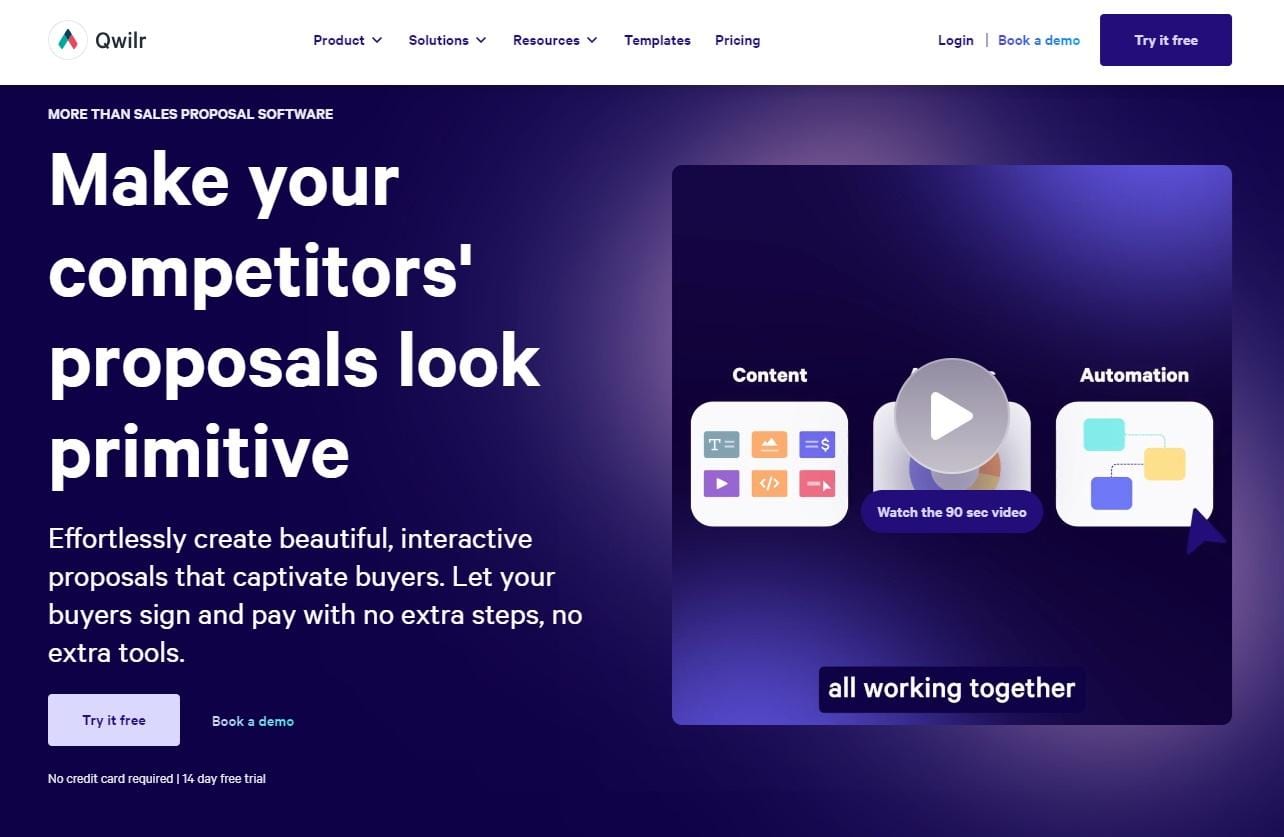
Qwilr is a sales proposal software that lets you create sales proposals in web format to convert your prospects from out-of-the-box templates.
Features
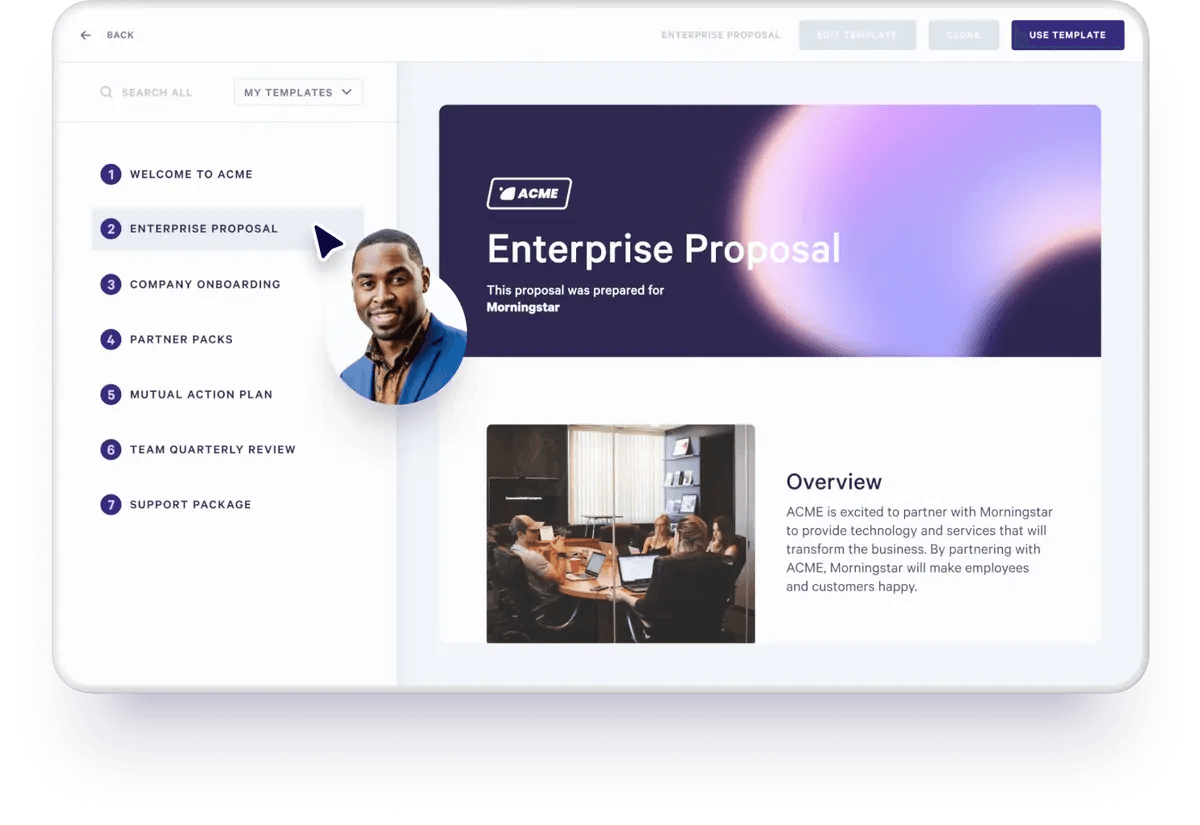
- Design professional sales proposals with Qwilr’s sales proposal web editor which has customizable templates.
- Consolidate the sign-off, agreement, pricing, quote, and payment into one interactive web page to shorten the process of accepting payments.
- Advanced engagement analytics that tracks buyer engagement across all your sales material.
Standout Feature: Template Gallery
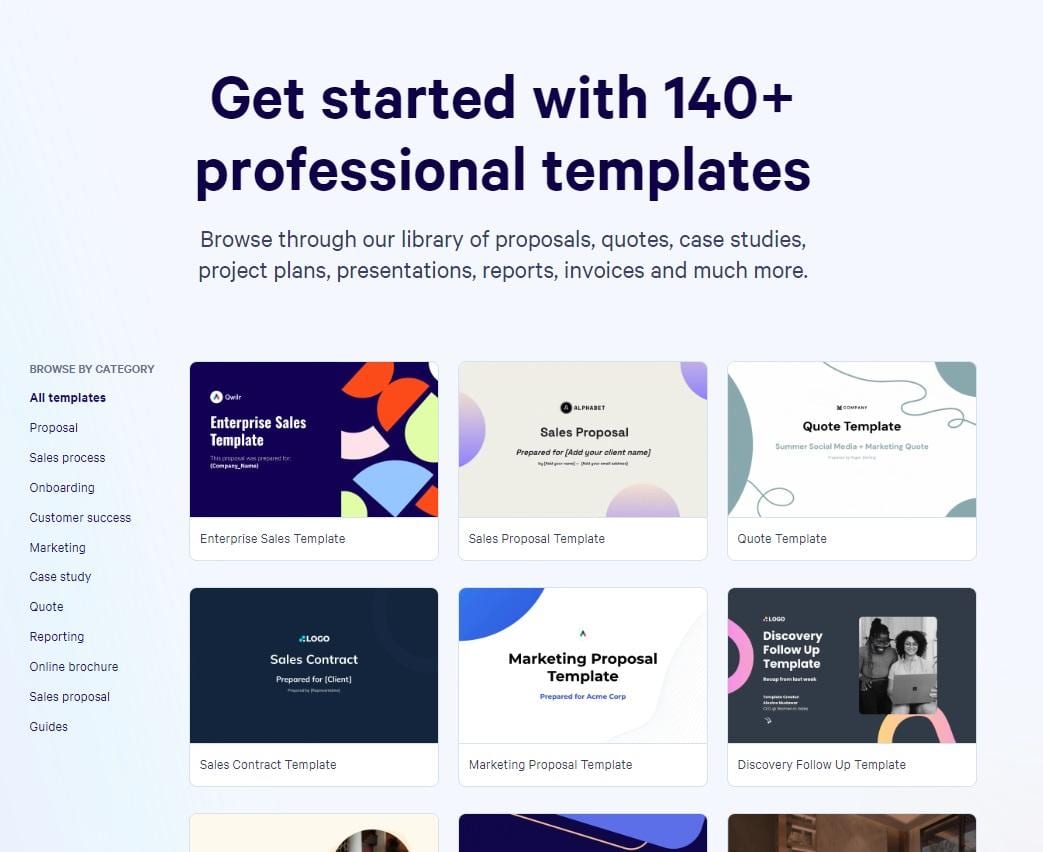
Qwilr lets you create beautiful sales proposals out of its 140+ ready-to-use templates.
The templates cover different use cases for B2B brands, such as discovery follow-ups, marketing proposals, and quotes.
Pricing
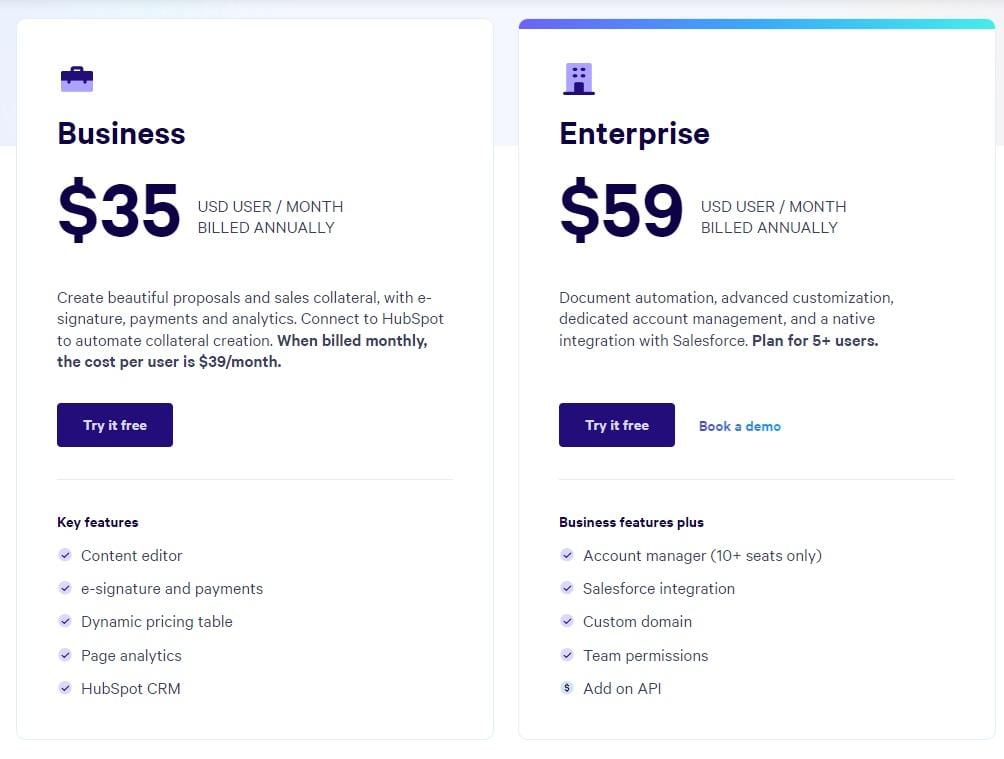
Qwilr’s pricing offers two plans:
- Business plan: $35/month/seat, which gives you access to the tool’s content editor, e-signatures, dynamic pricing table, page analytics, and HubSpot CRM integration.
- Enterprise plan:$59/month/seat for a minimum of five seats, which adds access to document automation, advanced customization, and dedicated account management.
Pros and Cons
✅ Pre-made templates that you can personalize to your prospects.
✅ Good HubSpot and Salesforce integrations.
✅ Analytics and insights into customer engagement.
⚠️ Not as good editing and customization options as other competitors.
⚠️ Lack of reporting and dashboard functionality, unlike Qwilr’s competitors.
#7: Salesforce
Best for: Connecting your sales data streams across different platforms to track and engage with your prospects.
Similar to: HubSpot, LeadSquared.
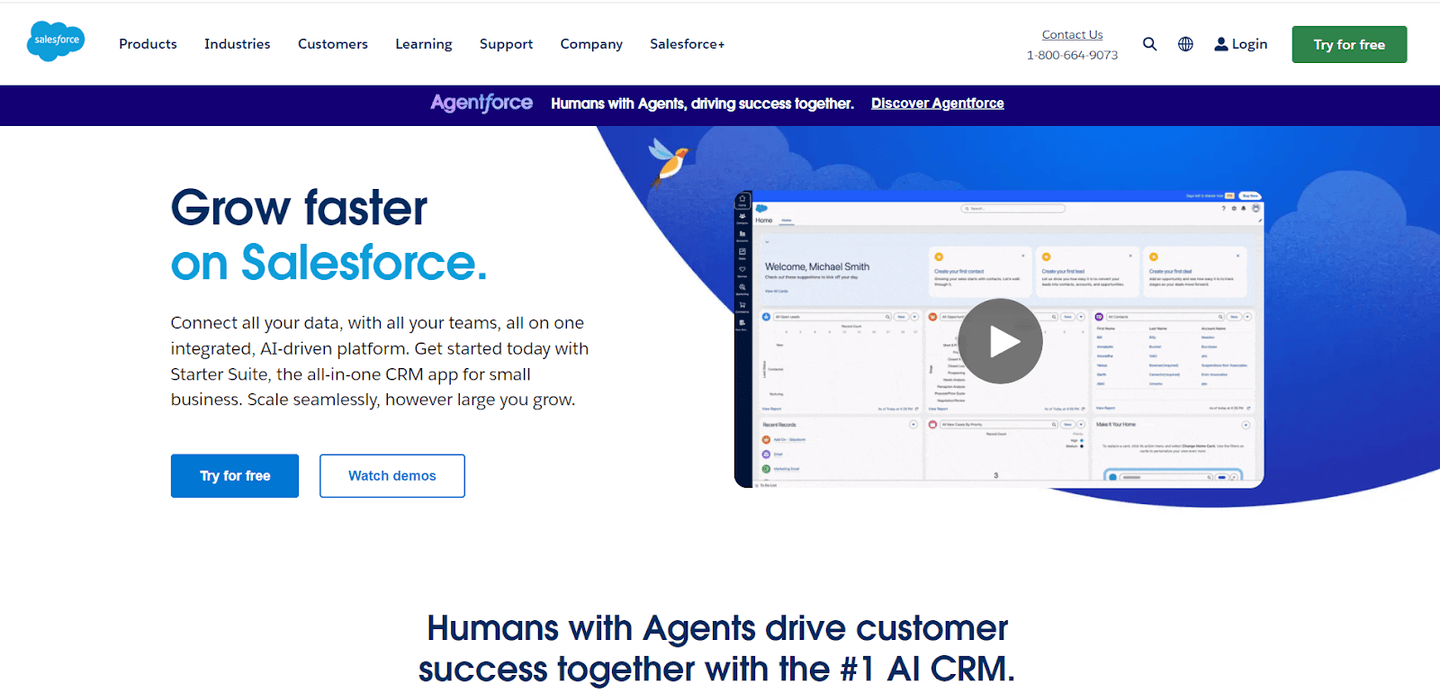
Salesforce is an all-in-one sales management platform that lets you connect your sales data with your team and offers a variety of features for customer success, sales, and data teams.
Features
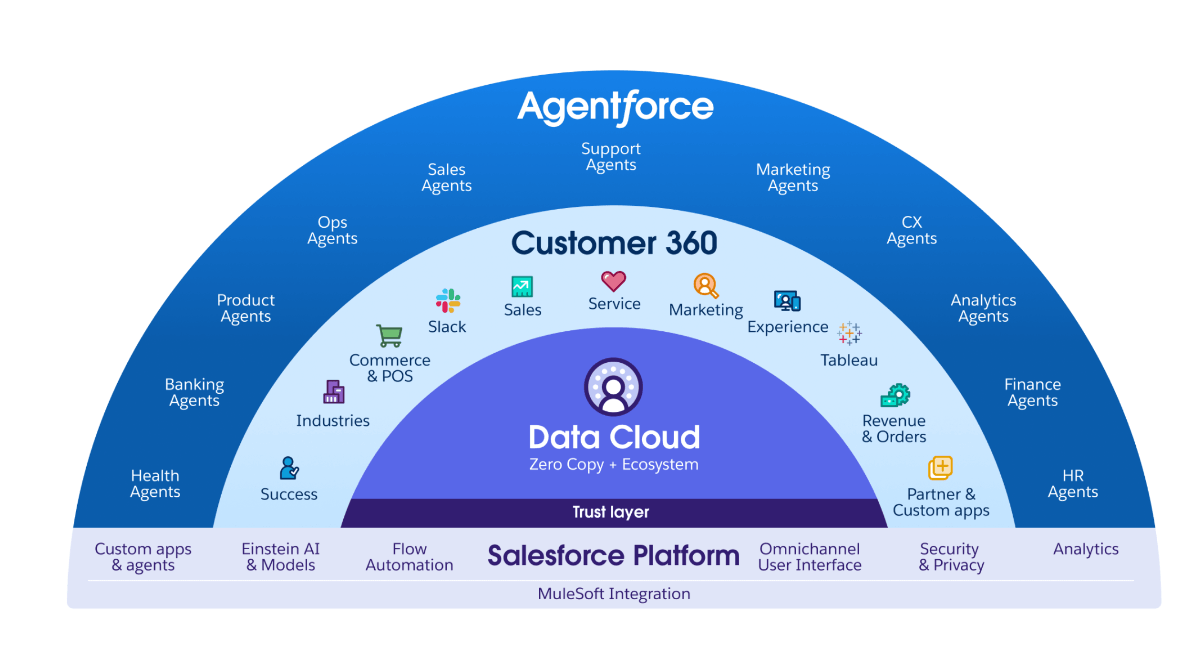
- Set up workflow automations and get access to Einstein AI, which is the Salesforce platform’s generative AI tool.
- Salesforce AI: Bring conversational AI to any workflow, user, department, and industry in your organization.
- Advanced sales analytics: Get an overview of sales performance and get access to sales forecasting and deal inspection features.
Standout Feature: Revenue Lifecycle Management
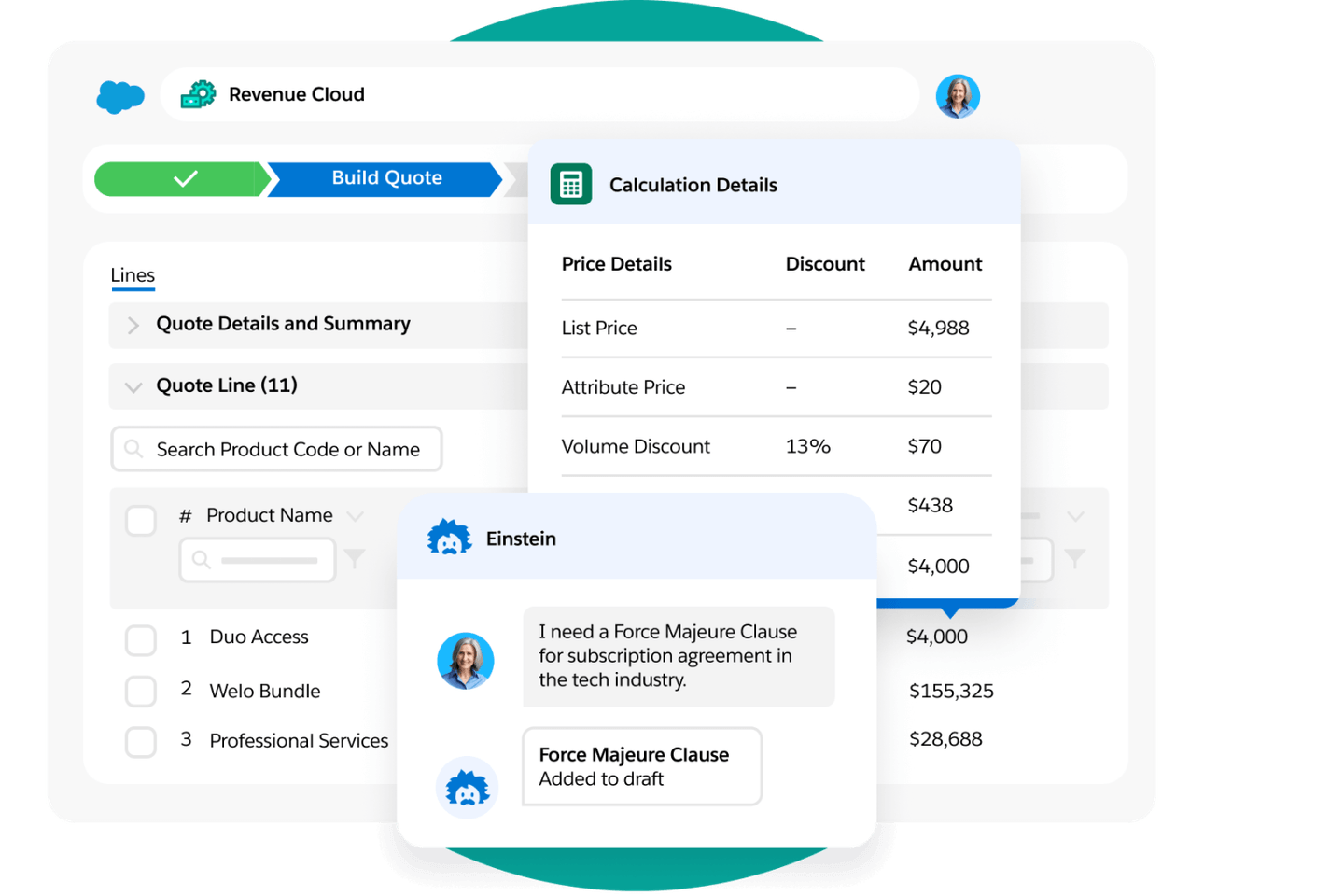
Salesforce lets you deliver a seamless buying and selling experience to your customers and close deals faster with guided quoting and AI.
Your team can manage the contract lifecycle, orders, and billing all from the tool’s CRM.
Pricing
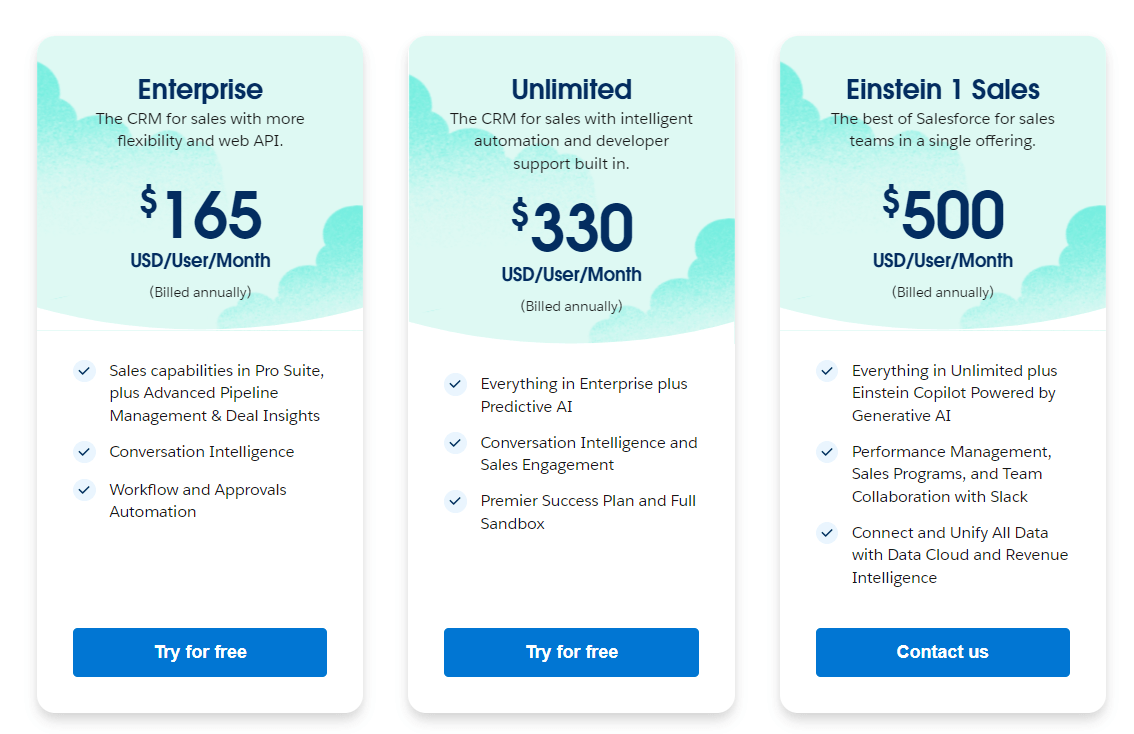
Salesforce’s enterprise platform offers 3 paid plans:
- Enterprise:$165/month/seat when billed annually, which adds access to advanced pipeline management, conversation intelligence, and workflow automations.
- Unlimited: $330/month/seat when billed annually, which adds access to predictive AI, conversational intelligence, and sales engagement features.
- Einstein 1 Sales:$500/month/seat when billed annually, which adds access to Einstein AI, team collaboration with Slack, and revenue intelligence.
Note: The software also has SMB-friendly pricing, which starts from $25/month/seat and offers lead, account, contact, and opportunity management.
Pros and Cons
✅ All-in-one sales management platform that lets you sync all of your lead data.
✅ Einstein AI, which is good for generating text and making predictions.
✅ Scalable workflow automations.
⚠️ The tool can get expensive if you need to onboard many sales reps.
⚠️ Limited customization when compared to other alternatives on the market.
#8: Anaplan
Best for: Sales territory planning that is based on the product line, industry, customer, or country.
Similar to: Gong.
Anaplan is a sales planning software that helps your sales team plan their sales territories across different countries, customer segments, and industries.
Features
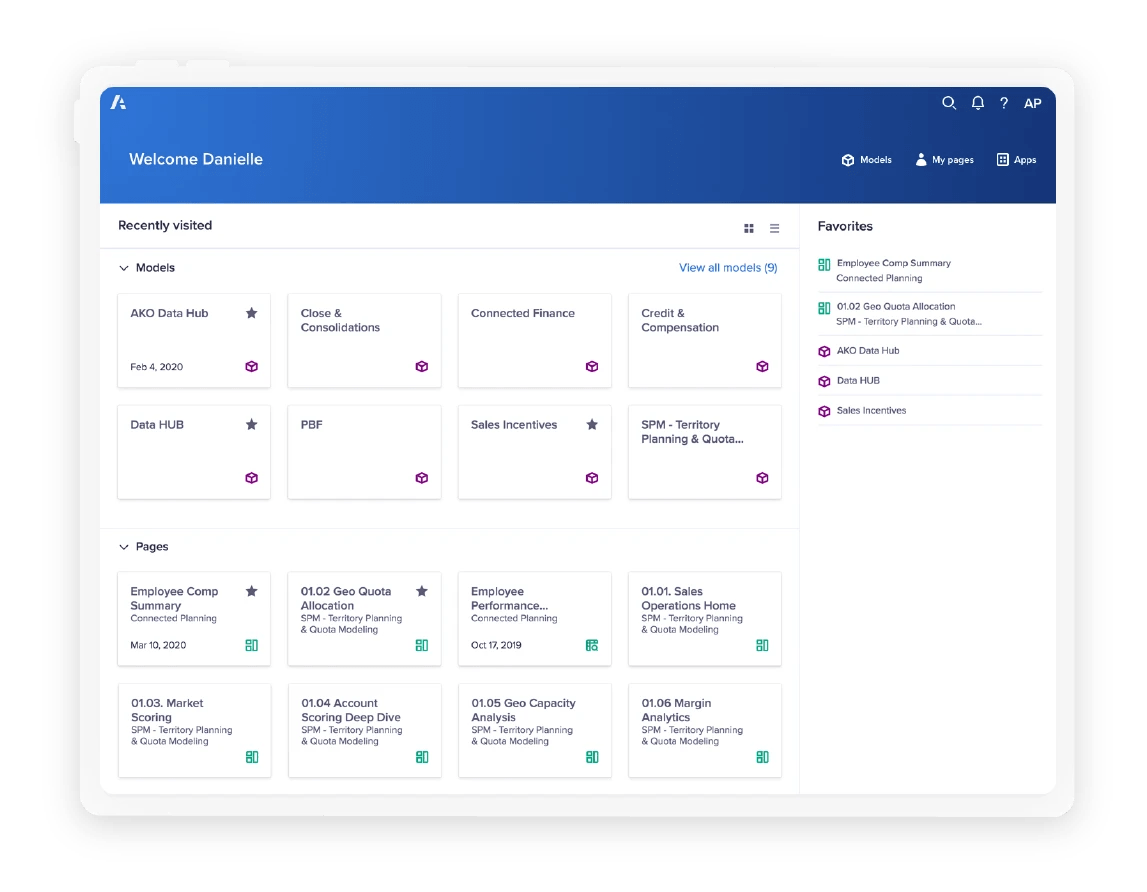
- Predictive account segmentation and scoring, where you can find out who your ideal customers are from within your sales pipeline.
- Create sales territories based on country, industry, products, or target customers.
- Model, compare, and deploy optimized quotas for each sales rep with efficient quota planning.
Standout Feature: Sales Capacity Planning
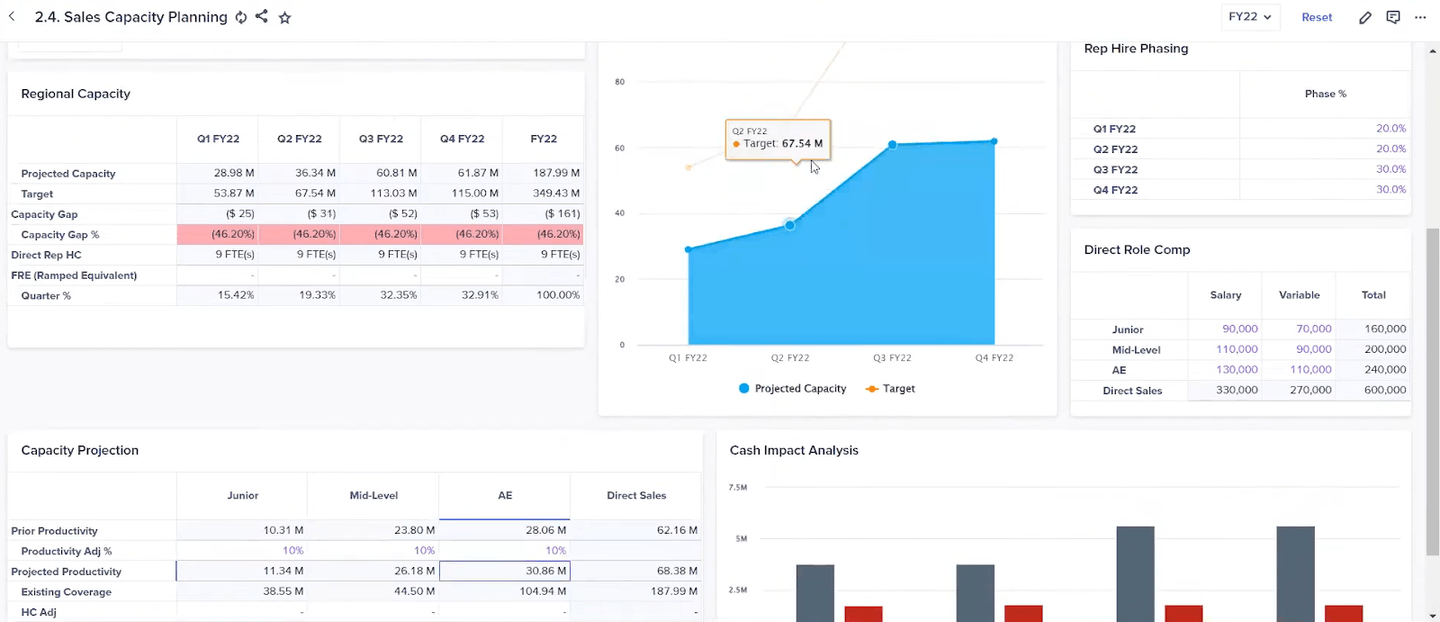
Anaplan helps you create advanced sales coverage models by using sales data and buyer propensity insights.
Pricing
The software does not disclose its pricing, so you’d have to contact their team for a product demo and a quote.
Third-party data from Vendr suggests that the average cost out of the 44 deals they handled for Anaplan was $196,864 a year.
Pros and Cons
✅ Uncover your best sales opportunities from within your sales pipeline.
✅ Advanced sales territory planning.
✅ Data-driven sales capacity planning.
⚠️ Lack of native deep integrations with external systems, unlike other sales planning tools.
⚠️ The sales models need to be developed and maintained by model-building experts.
#9: Salesloft
Best for: Scaling your sales pipeline with predictive intelligence.
Similar to: Aligned, Dock.
Salesloft is a sales platform for B2B teams that helps you better track your sales pipeline, identify the best deals, and forecast sales outcomes.
Features
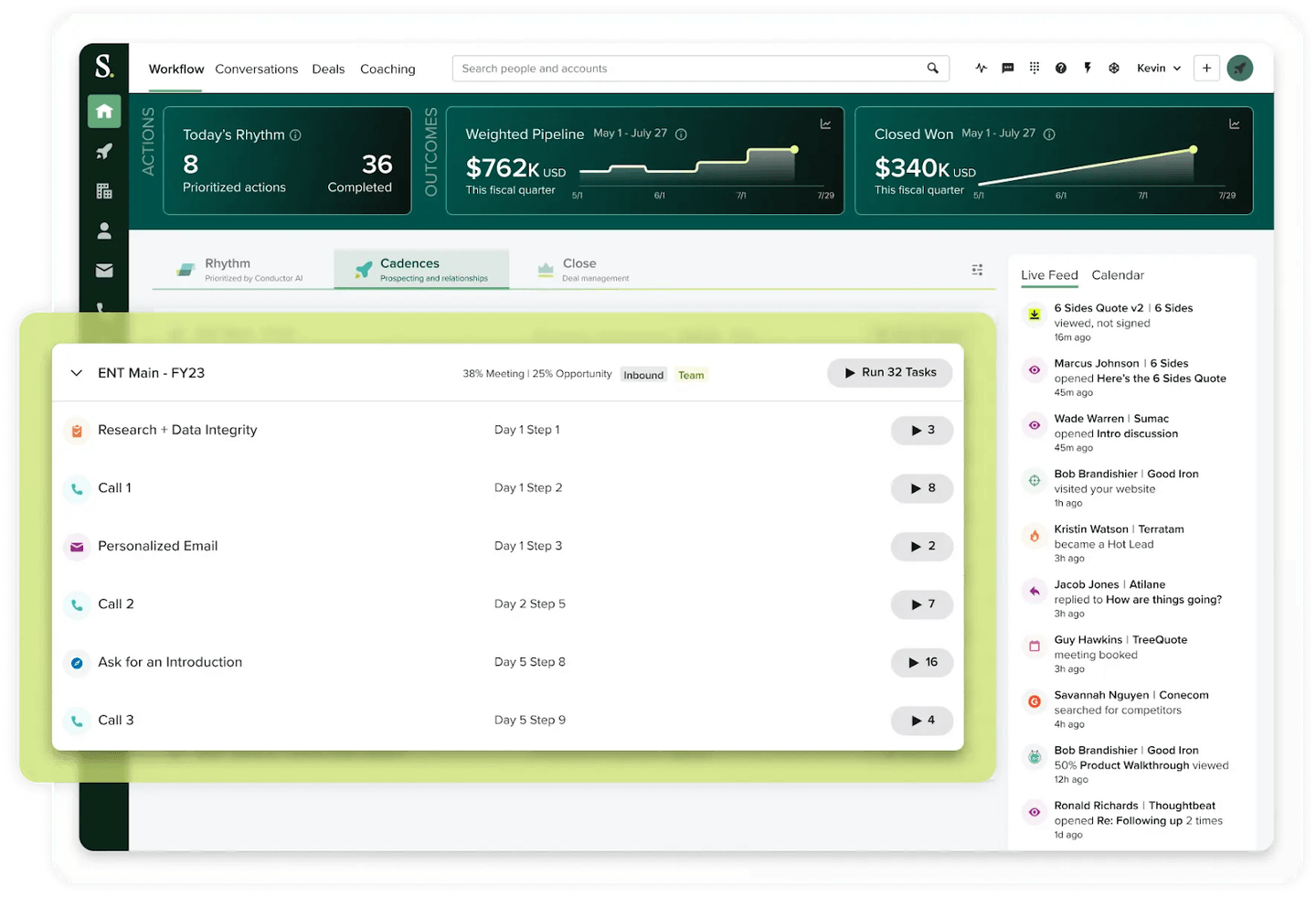
- Cadence: Salesloft’s Cadence lets you generate a predictable sales pipeline by A/B testing your sales playbooks and to prioritize high-intent buyers.
- Sales forecasting leverages AI insights to predict sales outcomes with precision to help you meet your sales targets.
- Deal management features that help you uncover hidden risks and keep your sales teams focused on the right deals.
Standout Feature: AI-Powered Email Drafting
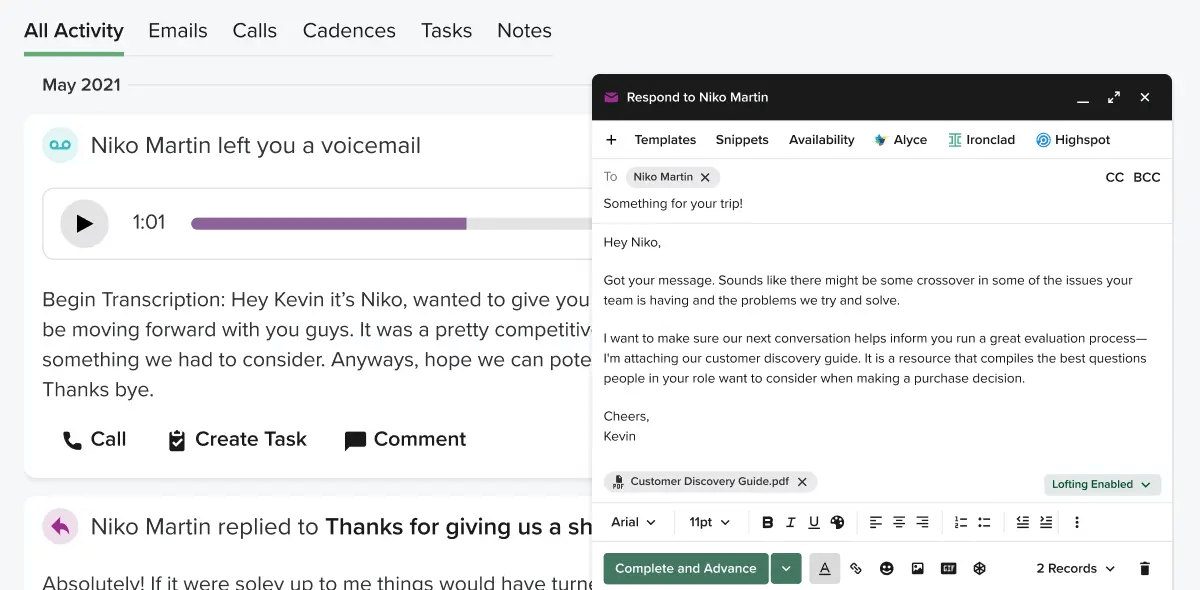
Salesloft helps you draft attention-grabbing emails with generative AI that are relevant to each deal stage.
You can personalize each email with dynamic fields that personalize outbound communication at scale.
Pricing
Similar to Anaplan, Salesloft does not publicize its pricing, so you’d have to contact the tool’s team for a quote and a product demo.
According to Vendr, the average contract value for Salesloft is $74,819/year out of the 68 deals they have handled for them.
Pros and Cons
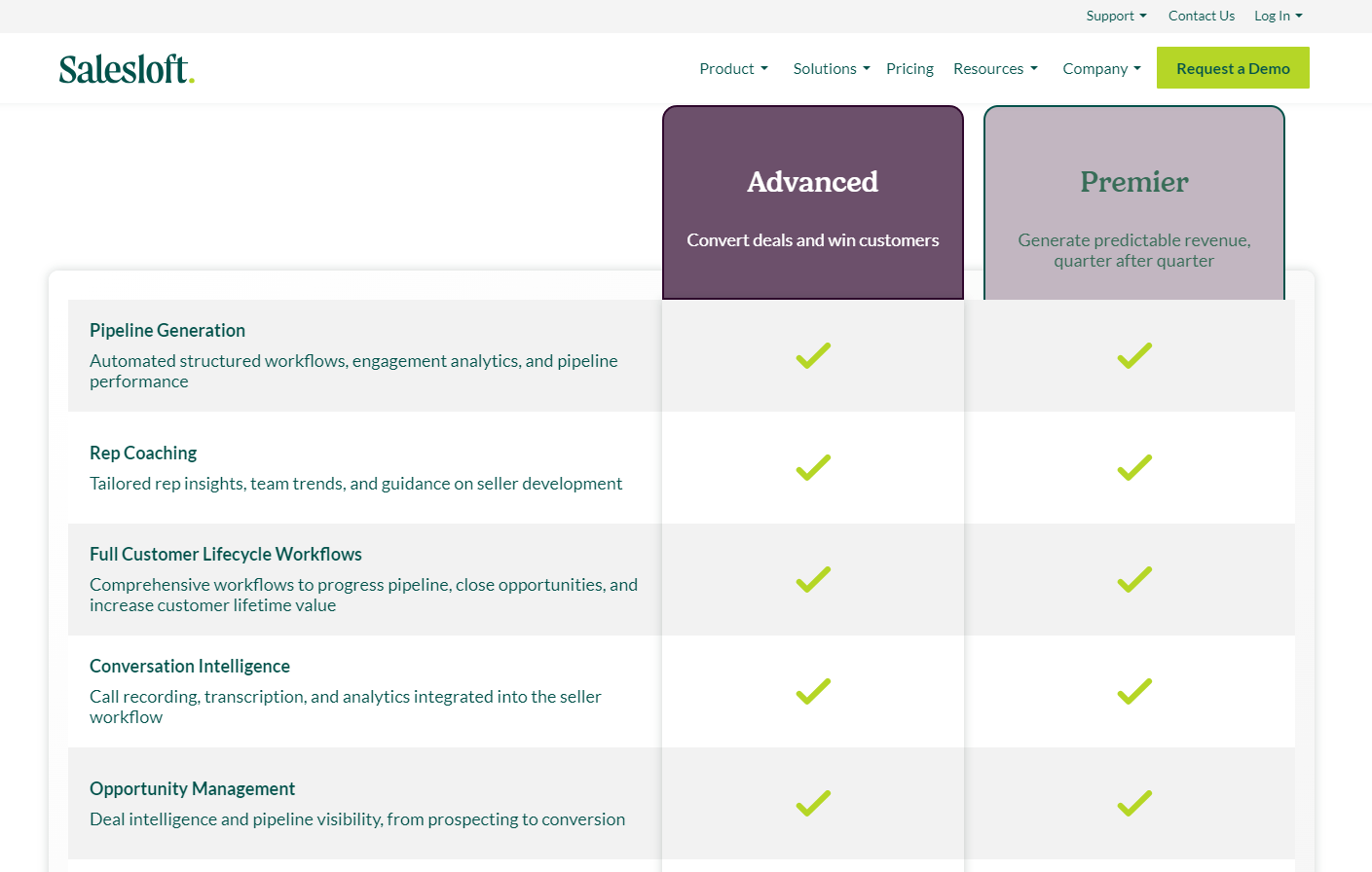
✅ Good platform for account management and buyer engagement tracking.
✅ Advanced deal intelligence and pipeline visibility.
✅ AI-powered email drafting that is personalized to each lead.
⚠️ Some users of the platform are not satisfied with Salesloft’s reporting capabilities.
⚠️ More than a few customers note integration issues with existing sales and marketing systems.
#10: Gong
Best for: Analyzing customer interactions across multiple platforms at scale to make better decisions.
Similar to: Anaplan.
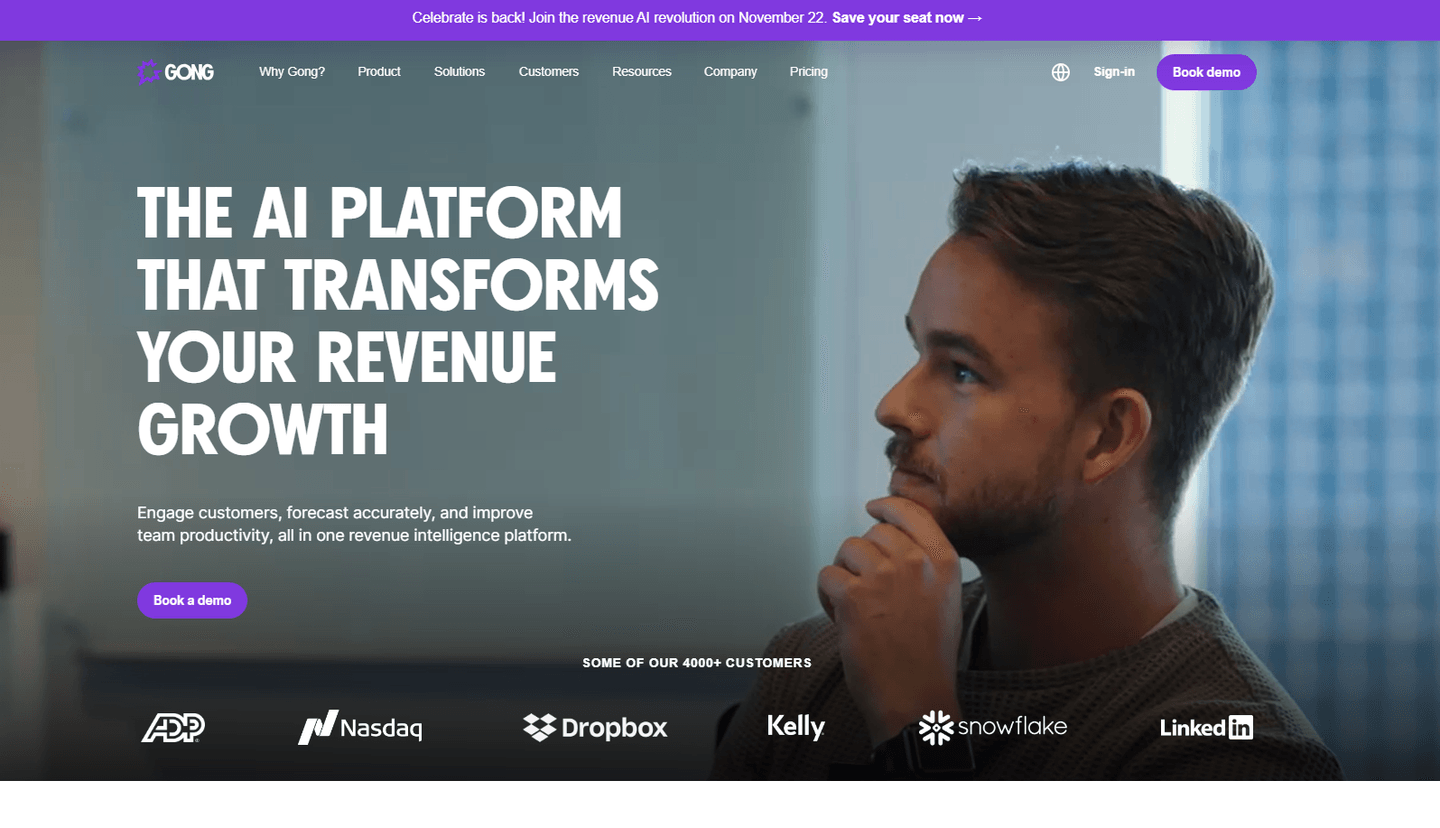
Gong is a B2B sales platform that lets you analyze customer interactions across phone, email, and the web to better understand your customers and to improve decision-making.
Features
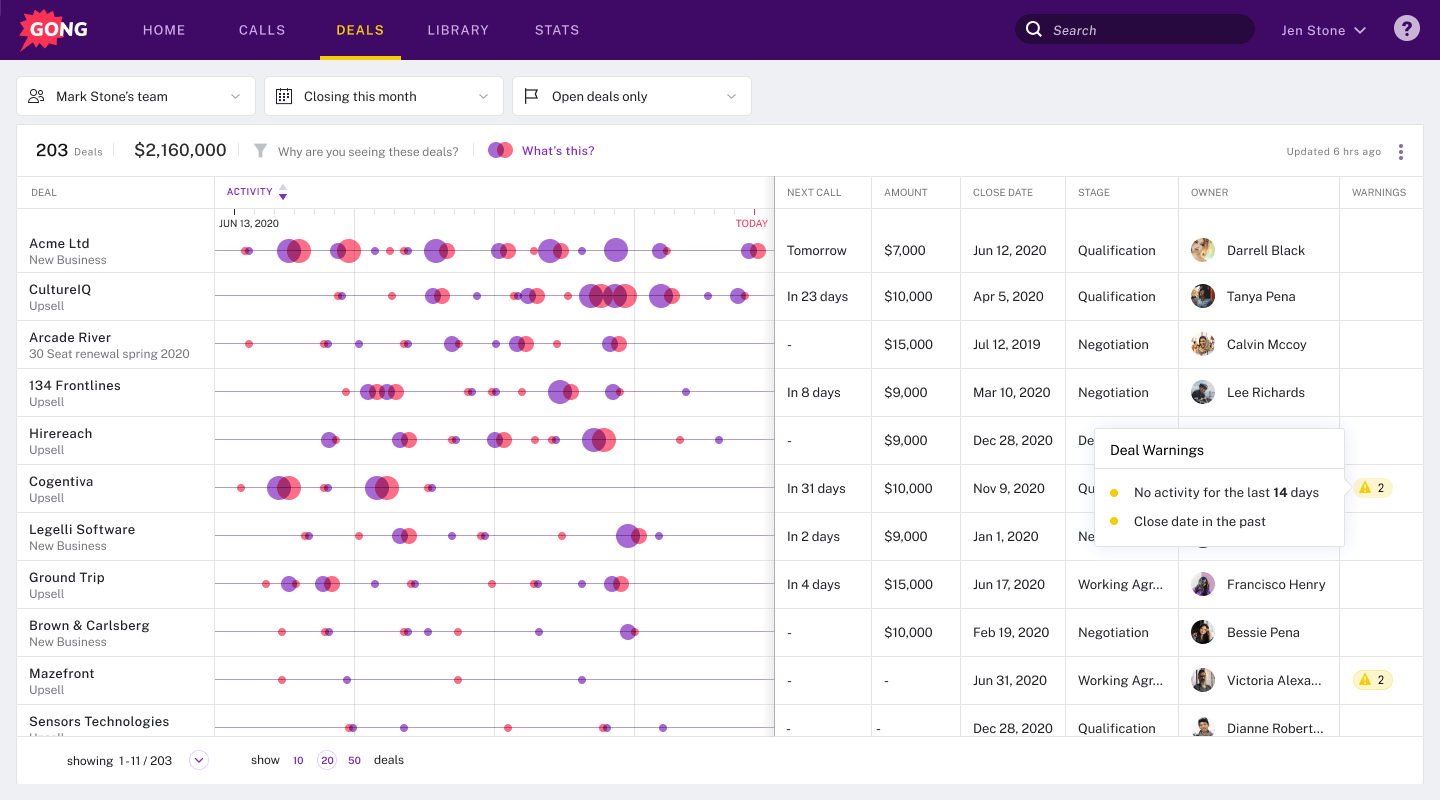
- Gong Insights: Track all of your deals through the sales pipeline and identify risks and opportunities.
- Recording, transcription and analysis of user interactions to identify patterns and access AI-driven insights to improve performance over time.
- Sales feedback and coaching that lets you access real-time feedback on sales calls to skill up your sales reps.
Standout Feature: Gong AI
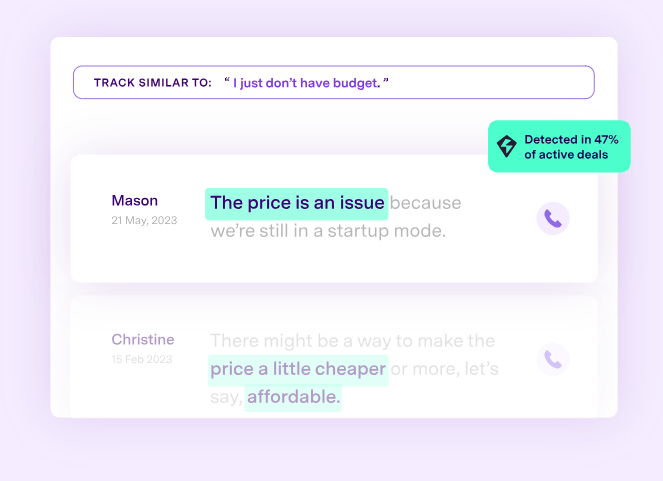
Gong AI helps your sales team analyze data, track initiatives and translate client conversations.
The AI tool can also be customized with its user-trainable system to better analyze complex data sets.
Pricing
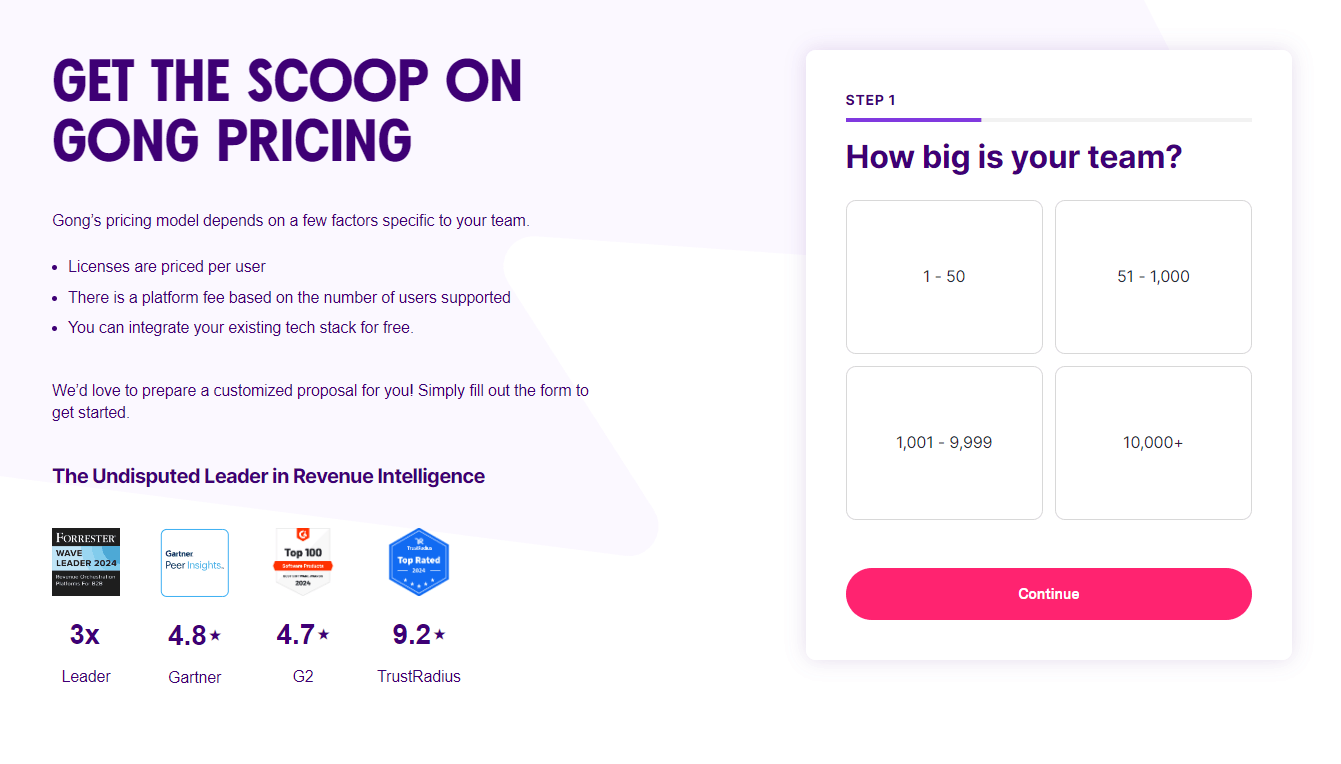
Similar to Anaplan, Gong does not disclose its pricing on its website, so you’d have to contact them to get a quote.
We did find 3rd party data from Vendr that suggests the platform bases its pricing per user and it is between $1,000 - $2,000 per seat a year.
Out of the 181 deals Vendr has handled for Gong, the average contract value was $105,530/year.
Pros and Cons
✅ Easy-to-use sales call recording platform for sales planning.
✅ Sales feedback to your reps to help you train and level up them.
✅ Trainable generative AI tool to assist you with forecasting and data analysis.
⚠️ Some users note that the call scripts to text may not be 100% accurate.
⚠️ Not every customer of the platform is satisfied with the platform’s search functionality.
Next steps: B2B sales software that works on every deal
Most B2B sales stacks already hold what a deal needs. The CRM has the deal. The notetaker has the call. The prep, the follow-up, and the next stakeholder to bring in still fall to your reps.
If you’re a sales leader who wants:
- A gameplan for every deal, built from your team’s playbook.
- Call prep, research, follow-up emails, and CRM updates done for your reps, with a rep approving each one before it sends.
- One tool that works with the CRM and notetaker you already use, and keeps your sales rooms current.
Then you can book an agent kickoff to see how Arrows works today.