

The sales enablement platform lets you effortlessly create interactive proposals, but some users of the platform have had issues with the UI, and other customers are not fully satisfied with the level of customization and reporting capabilities.
We researched dozens of tools, reviewed verified user reviews on G2, and talked to real users to create a complete list of the seven best Qwilr alternatives in 2025.
This buyer guide covers each alternative’s features, pricing, pros/cons, and use cases to help you make an educated decision.
Before we begin, let’s review why sales and customer success teams consider switching from Qwilr. ⤵️
Why do teams look for a Qwilr alternative?
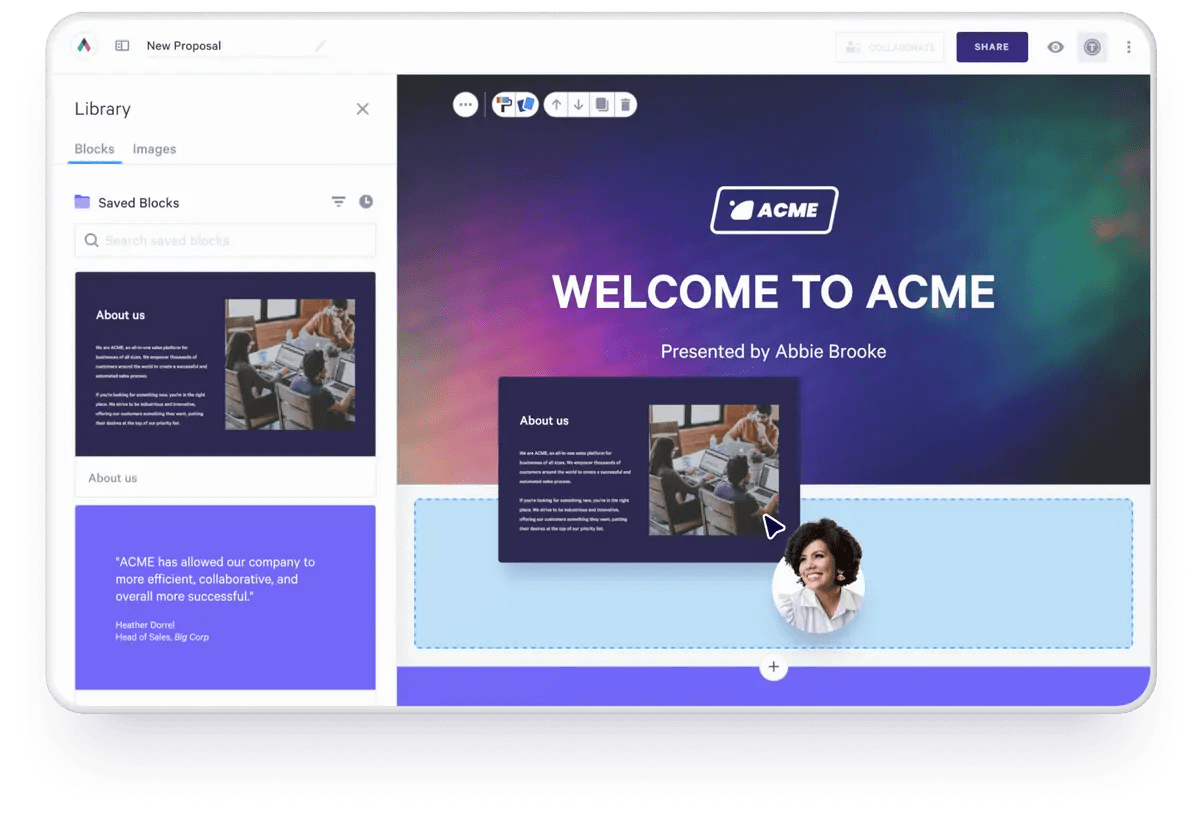
Qwilr has become popular with its beautifully designed collateral and comprehensive range of features, such as:
- Sales proposal web editor with easy-to-use templates where you can create sales materials quickly.
-
The ability to combine the sign-off, agreement, pricing quote, and payment into one interactive page.
-
Analytics that track buyer engagement across all your sales material. The tool notifies you when a quote or proposal has been viewed, signed, etc.
However, some of Qwilr’s prospective and current customers have expressed concerns about certain aspects of the platform. ⤵️
#1: UI May Hinder Easy Navigation & Actions
Verified users of the platform report that the UI feels clunky and there are UI bugs in many places of the tool.
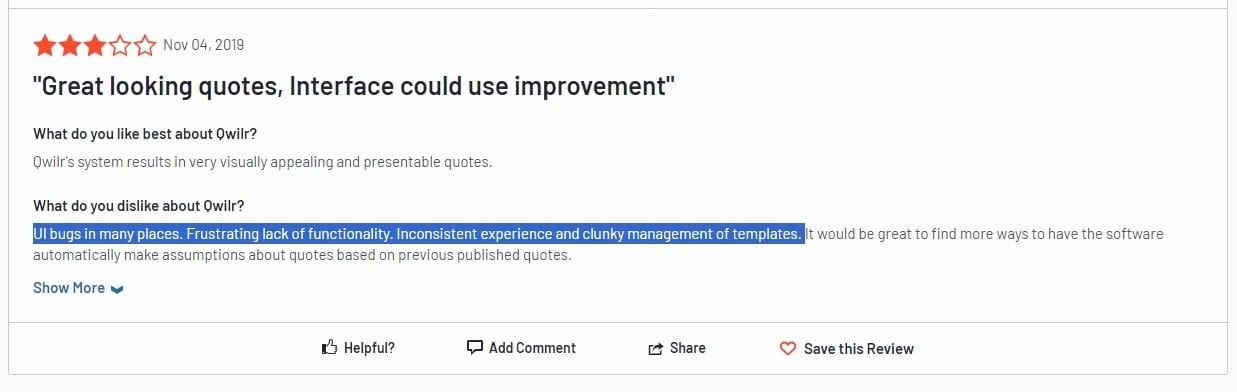
‘’UI bugs in many places. Frustrating lack of functionality. Inconsistent experience and clunky management of templates.’’ -G2 Review.
Another Qwilr user has re-instated this problem, claiming the product is slow and it’s easy to make errors.
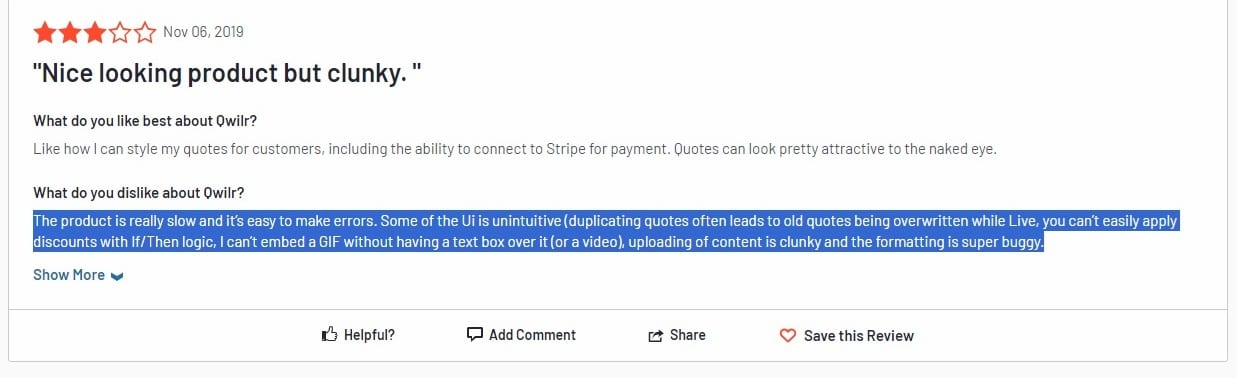
‘’The product is really slow, and it’s easy to make errors. Some of the Ui is unintuitive (duplicating quotes often leads to old quotes being overwritten while Live, you can’t easily apply discounts with If/Then logic, I can’t embed a GIF without having a text box over it (or a video), uploading of content is clunky and the formatting is super buggy.’’ -G2 Review.
#2: Editing & Customization Options Can Be Limiting
A verified mid-market user of Qwilr reported on G2 that the software offers limited editing and customization options.
According to them, Qwilr’s editing functions are ‘’restrictive’’, as text cannot be different sizes or colors without using ‘’headings’’.
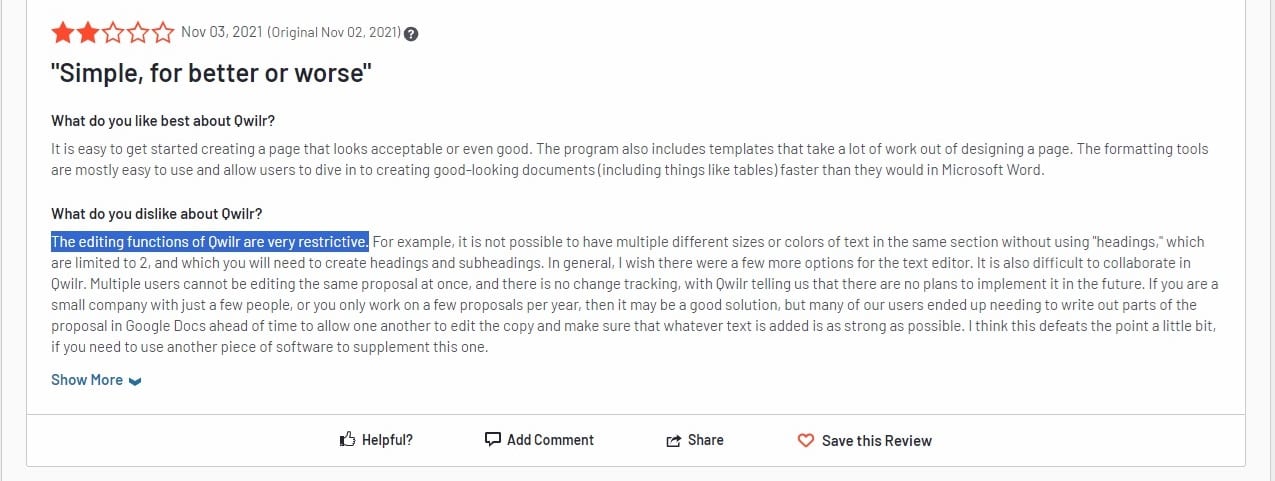
‘’The editing functions of Qwilr are very restrictive. For example, it is impossible to have multiple different sizes or colors of text in the same section without using “headings,” which are limited to 2, and you will need to create headings and subheadings. I wish there were a few more options for the text editor.’’ -G2 Review.
#3: Concerns About Reporting & Dashboard Functionality
Lastly, the third main concern about Qwilr is its lack of reporting and dashboard.
These features are important for sales teams to visualize their pipeline and showcase their results to the upper management.
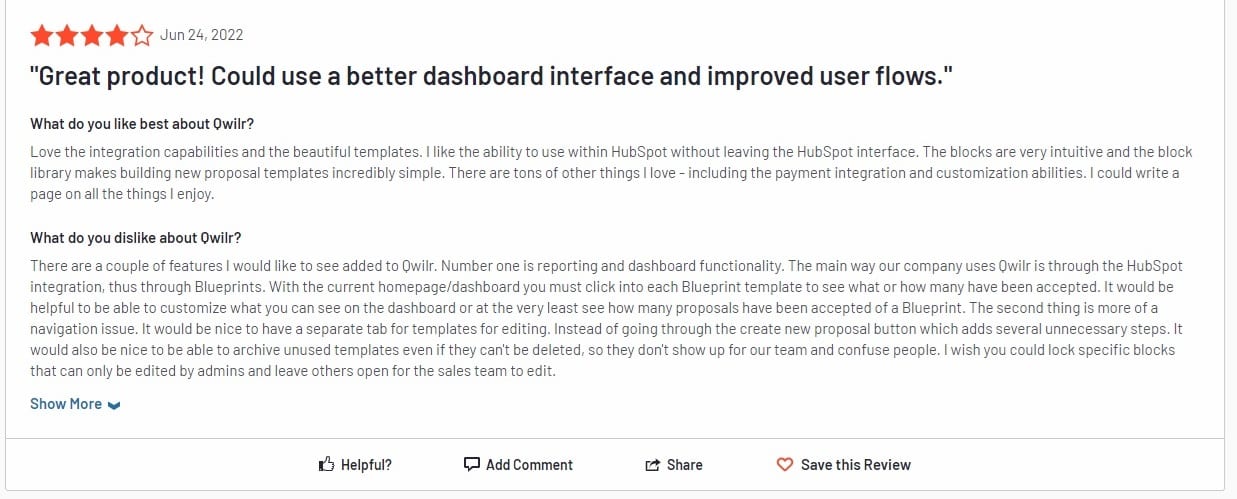
‘’I would like to see a couple of features added to Qwilr. Number one is reporting and dashboard functionality. Our company mainly uses Qwilr through the HubSpot integration, thus through Blueprints. With the current homepage/dashboard, you must click on each blueprint template to see what or how many have been accepted. It would be helpful to customize what you can see on the dashboard or, at the very least, see how many proposals have been accepted for a blueprint.’’ -G2 Review.
What are the best Qwilr alternatives?
Here are the best Qwilr alternatives that best address the challenges faced by sales and customer success teams:
#1: Arrows: Keep a gameplan for every deal and have the call prep, follow-ups, and CRM updates around your proposal done for your reps.
#2: Proposify- Design and send out professional proposals.
#3: PandaDoc- Automate your document creation and get advanced insights into their performance.
#4: DocSend- Securely share your documents with real-time control and insights.
#5: Hubforce- Personalize the buying journey to your prospects with the help of templates and AI.
#6: GetAccept- Build personalized digital sales rooms.
#7: Bigtincan- Capture the relationships within your prospects’ organization.
#1: Arrows
Best for: B2B sales teams that want the work before and after the proposal done on every deal.
Arrows is promptless AI for account executives. It keeps a gameplan for every deal and does the work that keeps deals moving.
Full disclosure: Arrows is our product. Here’s what it does and where it fits next to Qwilr.
Qwilr is where your team builds and sends the proposal. Arrows works on the rest of the deal: it reads your call transcripts, emails, CRM, and notes, builds a gameplan from your team’s playbook, and does the prep, follow-up, and CRM updates your reps would otherwise do by hand.
Feature #1: A gameplan for every deal
Before a proposal goes out, someone has to know who decides, what they need to see, and what happens after they read it. Your best rep keeps that plan in their head for their top deals. The rest get improvised.
Arrows applies your team’s playbook to every deal. Each deal gets a gameplan with its next steps, and the plan stays current as the deal moves.
Feature #2: The work before and after every call
Arrows does the work your reps would do between calls, and the work they rarely get to:
- Call prep before every meeting, including the one where your rep walks the buyer through the proposal.
- Deep research on the account.
- Follow-up emails drafted from what the buyer said on the call.
- Multi-threading, so the proposal doesn’t rest on one contact.
- CRM updates written back to the deal.
- Every date tracked from your calls, with nudges when a deal goes quiet.
- Loom videos and the right case study sent between calls.
- Sales room updates, so your buyer always sees the current next steps.
There’s no prompt to write. Reps approve every email, CRM update, and sales room change before it sends.
Feature #3: Works with the CRM and notetaker you already use
Arrows works with HubSpot, Salesforce, Pipedrive, Close, and Attio, and with notetakers like Gong, Fathom, Granola, Grain, and Fireflies. It also connects to Gmail, Outlook, and Google Calendar.
Your notetaker captures the call and your CRM holds the deal. Arrows reads both and writes approved changes back, so the deal record is current when the proposal goes out. See the CRM integrations.
Pricing
Arrows doesn’t publish prices. It’s priced on the work, not the seats. See how pricing works.
Want to see how it works next to your proposal tool? Book an agent kickoff.
What stands out
✅ A gameplan for every deal, built from your team’s playbook and kept current as the deal moves.
✅ Promptless. Call prep, research, follow-ups, and CRM updates arrive done, ready for a rep to approve.
✅ Sales rooms that stay current with each deal’s next steps.
✅ One shared playbook for the whole team, instead of each rep prompting AI their own way.
✅ Works with the CRM and notetaker your team already has.
#2: Proposify
Best for: Designing and sending out professional proposals.
Similar to: DocSend, PandaDoc.
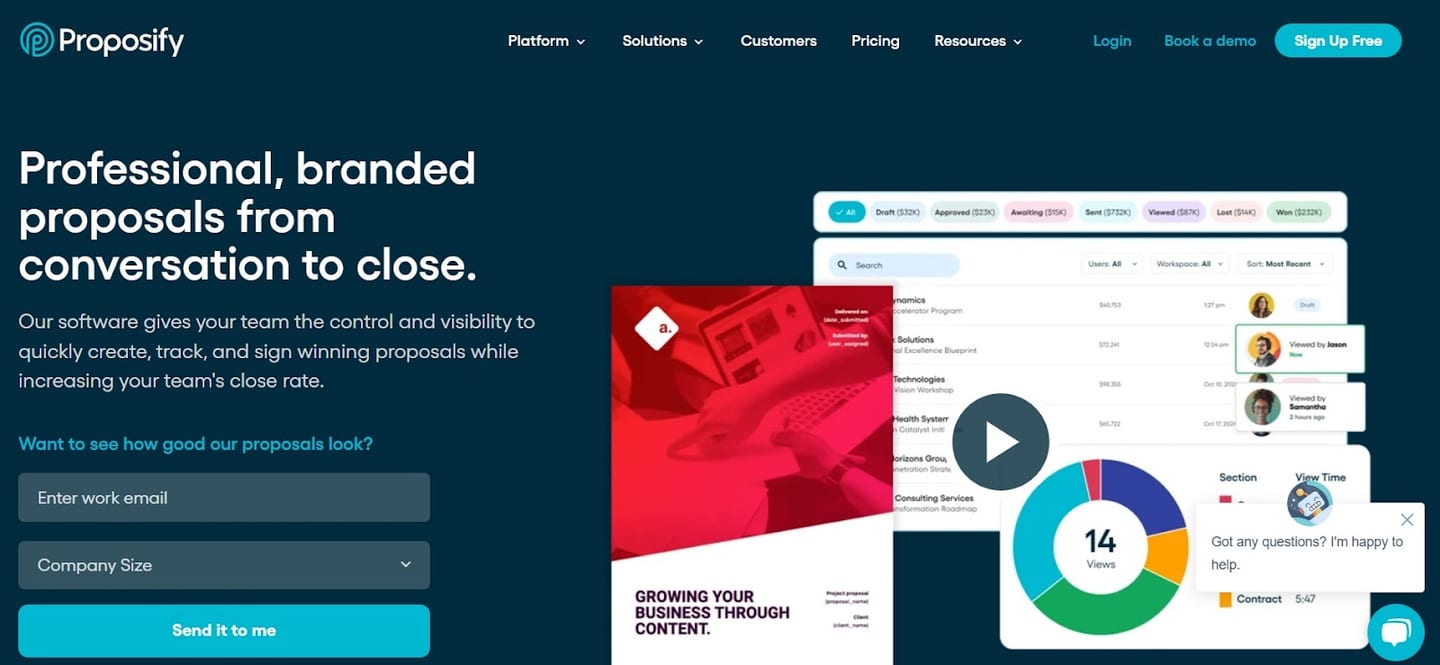
Proposify is a proposal software that helps your sales team improve close rates by creating, tracking, and signing winning proposals.
The platform is a viable alternative to Qwilr as it’s easy to use and has a dedicated dashboard that provides an overview of your proposals’ performance.
Features
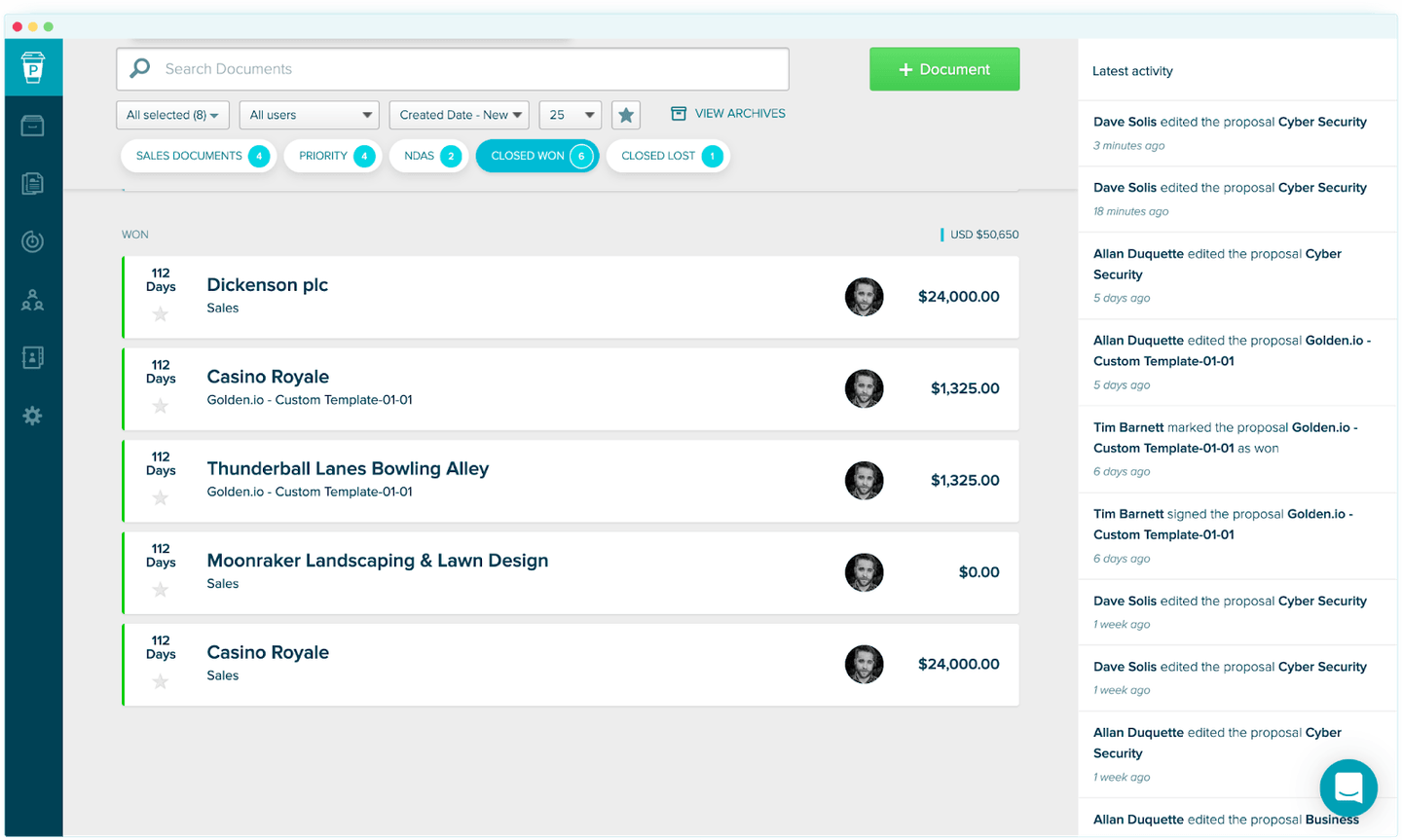
- Proposal software platform that can be accessible from any device and be exported as a PDF, unlike Qwilr. You can also use ready-to-go templates.
- Interactive quoting software that lets you create quotes with dynamic pricing, ensuring your quotes are personalized to your client’s needs.
- Integrations with popular CRMs like HubSpot, Agile, and Salesforce.
Who Is It For?
Proposify is best for sales teams that want to build professional and personalized proposals quickly.
Pricing
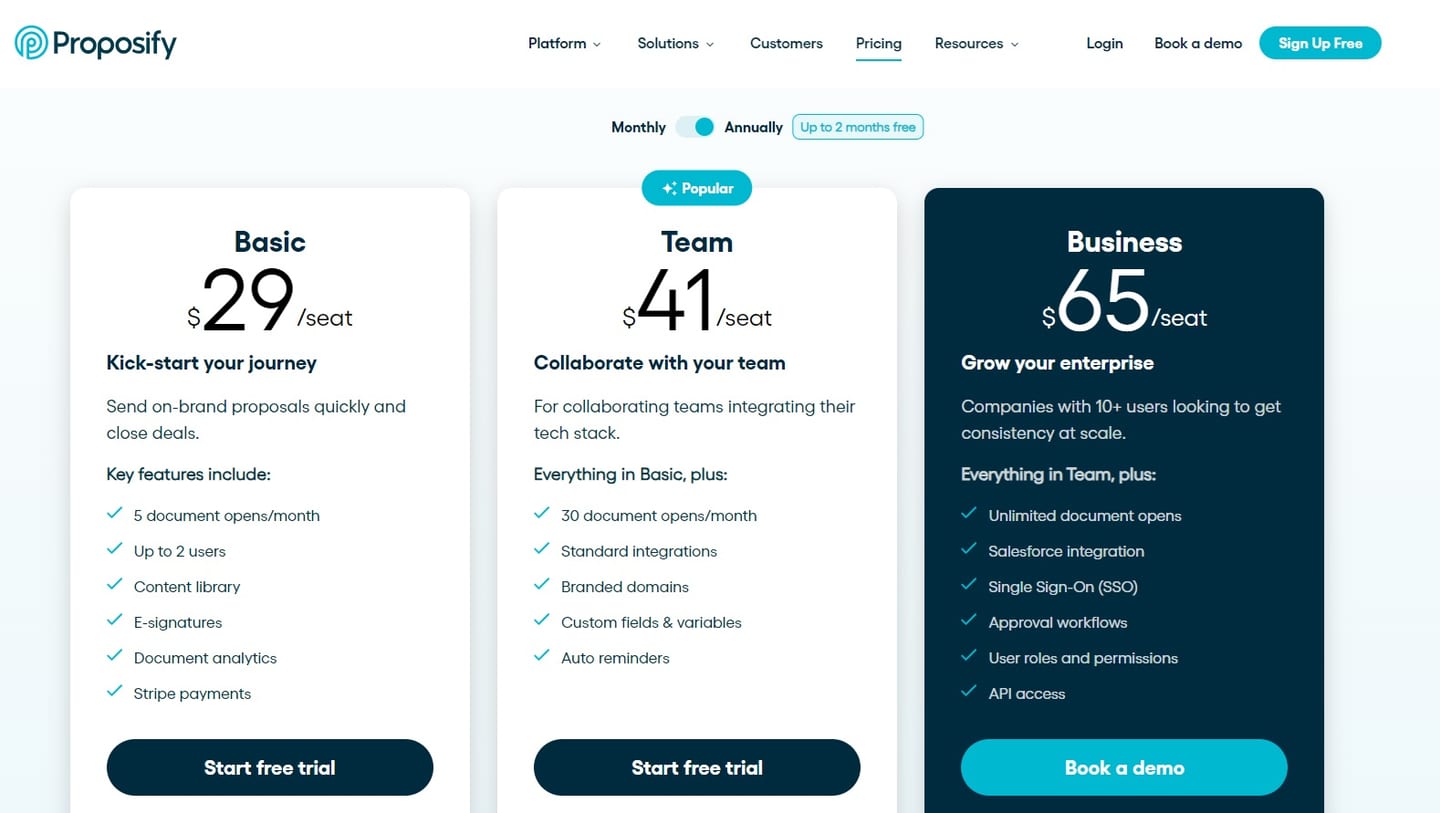
Proposify has three pricing tiers:
- Basic plan:$29/month/seat, which gives you access to 5 document opens/month, e-signatures, document analytics, and content library.
- Team plan:$41/month/seat, which gives you access to 30 document opens/month, branded domains, standard integrations, and custom fields & variables.
- Business plan:$65/month/seat for a minimum of 10 seats, which gives you access to unlimited document opens, deep Salesforce integration, API access, and approval workflows.
Pros and Cons
✅ Interactive quotes that are personalized.
✅ E-signatures.
✅ Integrations with a wide range of CRMs.
❌ Limited customization.
❌ There are some reported bug issues with the platform.
#3: PandaDoc
Best for: Document automation with document insights.
Similar to: Proposify, DocSend.
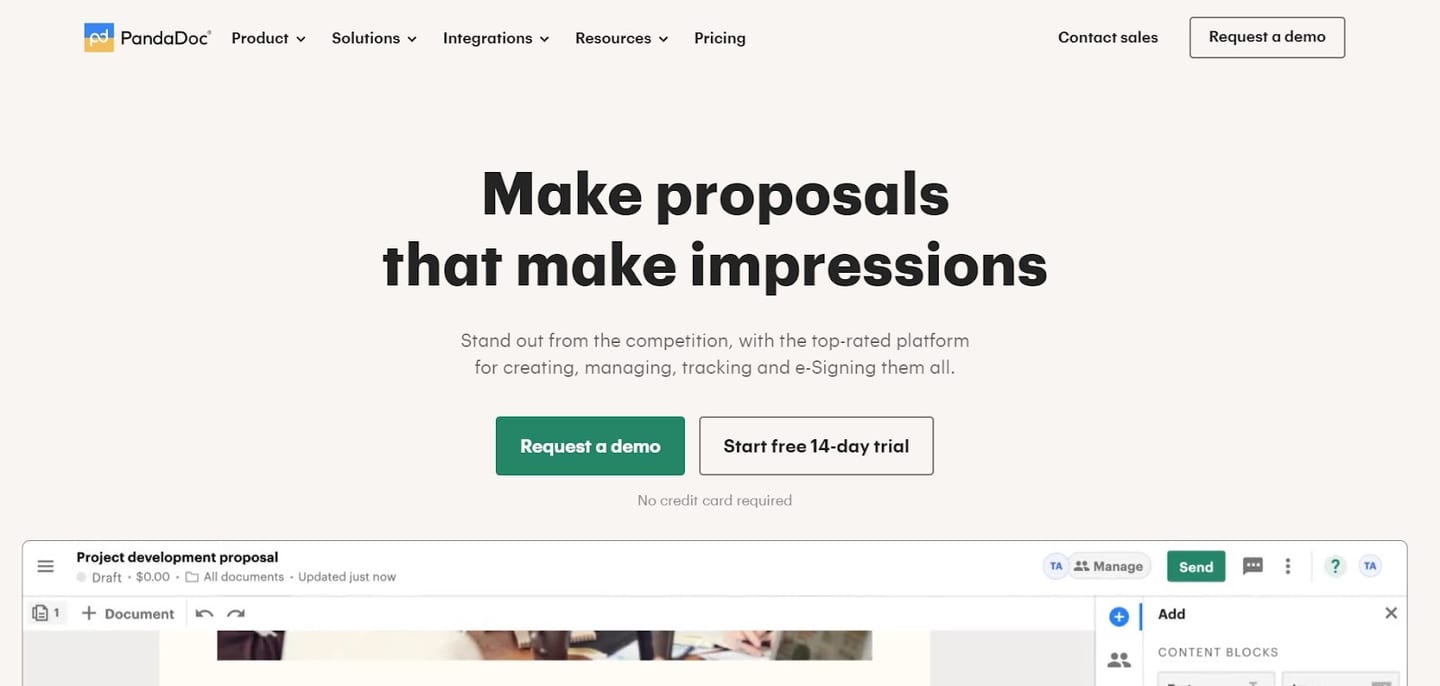
PandaDoc is a document automation platform that lets you create proposals, contracts, and quotes with out-of-the-box templates.
The platform is a bit different than Qwilr, as the tool focuses on document automation and provides insights into document engagement.
Features
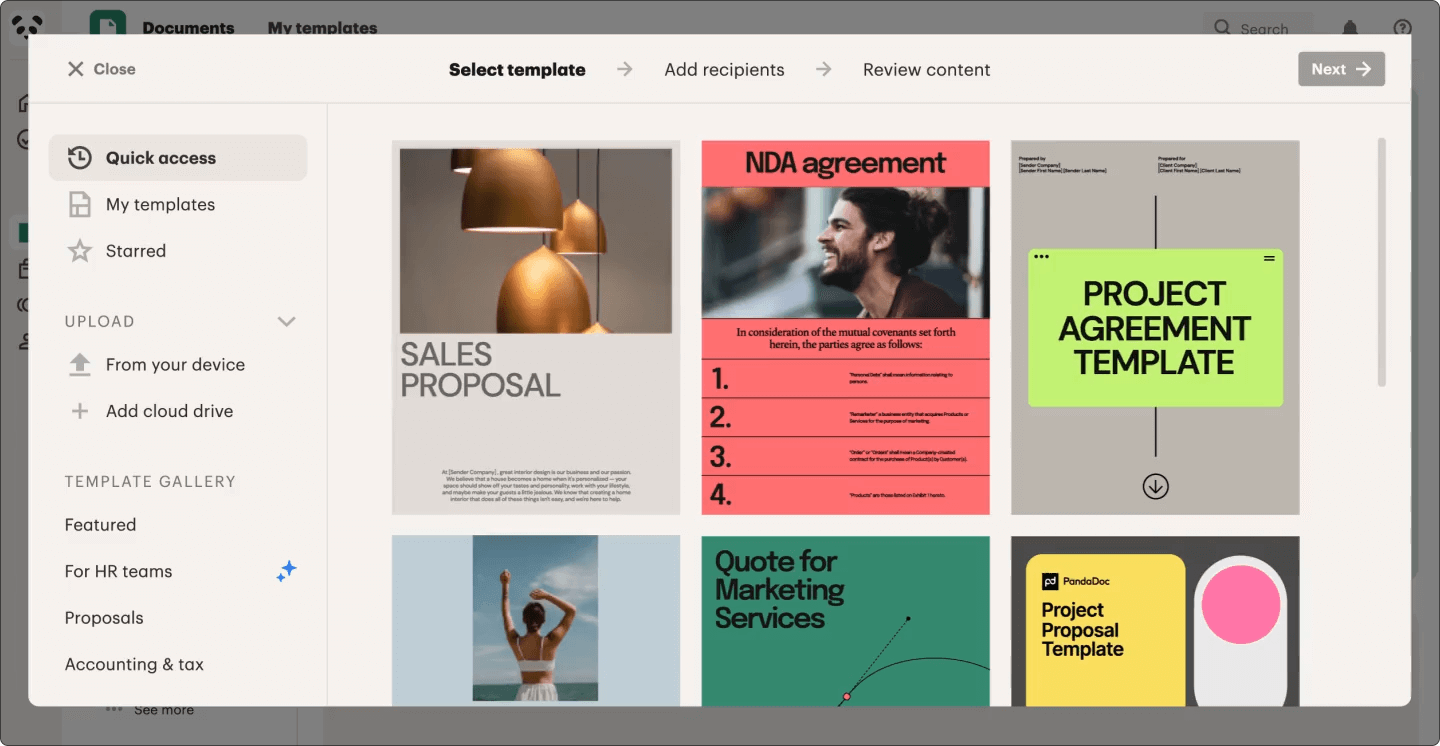
- Document generation software that lets you design and send out HIPAA, FERPA, and GDPR-compliant documents in minutes with customizable templates.
- Personalized deal rooms, which let youorganize and share resources, collaborate with buyers and stakeholders, and negotiate deals.
- Document analytics with insights, which give you access to data into how your clients interact with your documents.
Who Is It For?
PandaDoc is ideal for brands that need document management solutions with advanced workflow automation.
Pricing
PandaDoc offers three paid tiers:
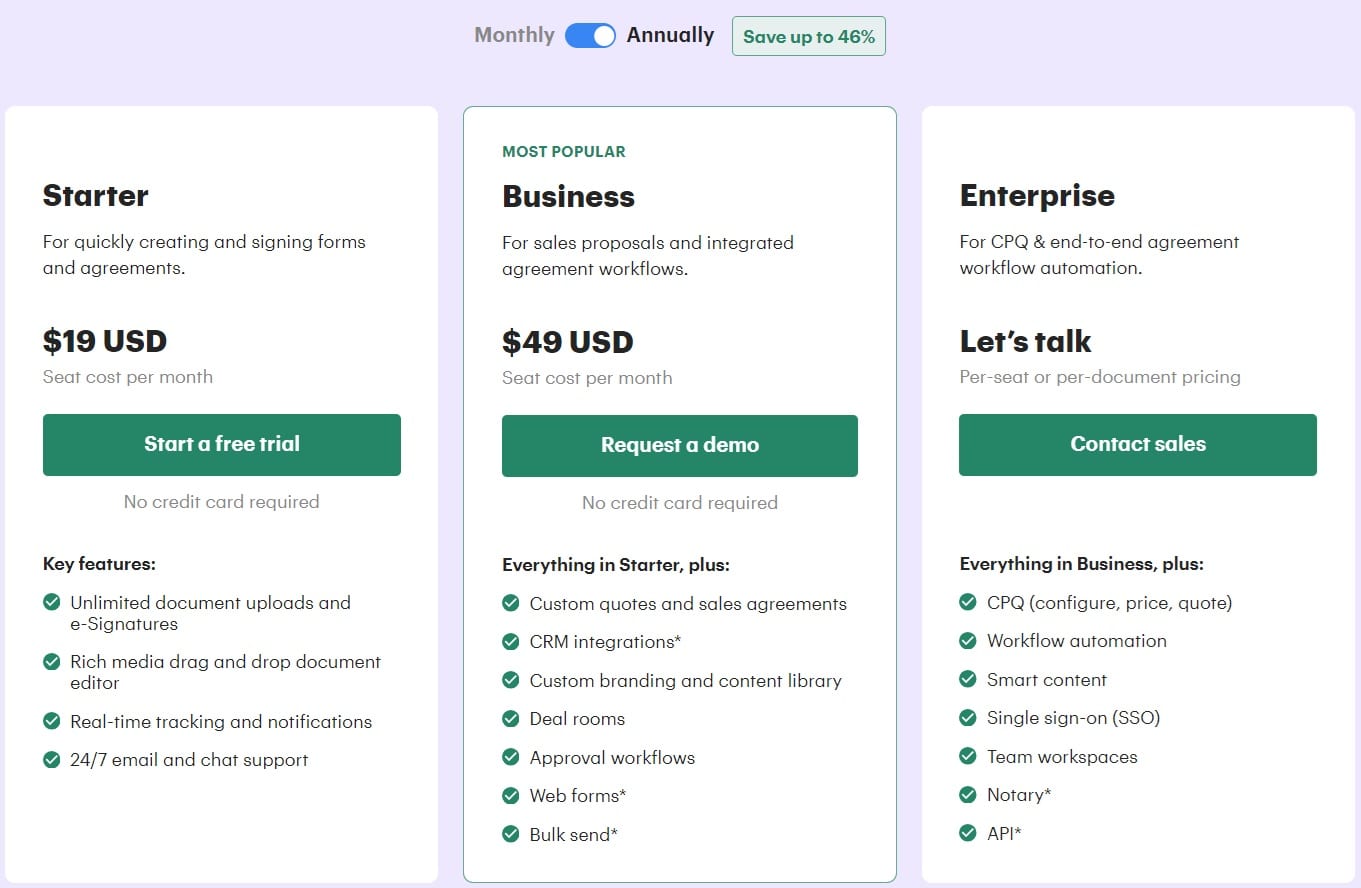
- Starter plan:$19/month/seat, which gives you access to unlimited document uploads, e-signatures, rich media drag-and-drop document editor, and real-time tracking.
- Business plan:$49/month/seat, which gives you access to custom quotes and sales agreements, CRM integrations, deal rooms, and approval workflows.
- Enterprise plan: Custom pricing that gives you access to workflow automations, CPQ, smart content, and SSO.
Pros and Cons
✅ Document automation with analytics.
✅ Large library with easy-to-use templates.
✅ Digital deal rooms.
❌ Templates are not as customizable as some users would want them to be.
❌ Integrations with CRM platforms are not deep enough.
#4: DocSend
Best for: Secure document sharing.
Similar to: GoProposal.
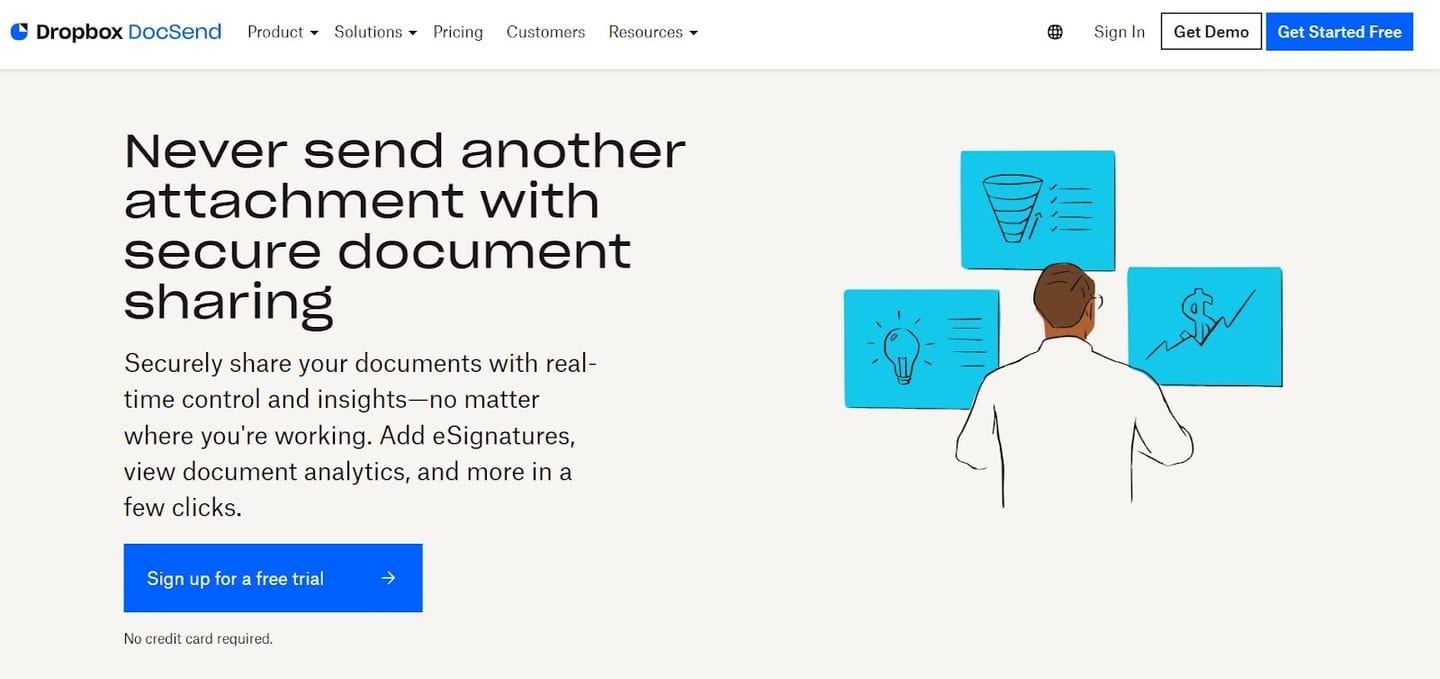
DocSend, a Dropbox product, lets you securely share your documents with real-time control and insights.
The document-sharing platform is a good alternative to Qwilr for companies that want to share, manage, and track documents securely.
Features
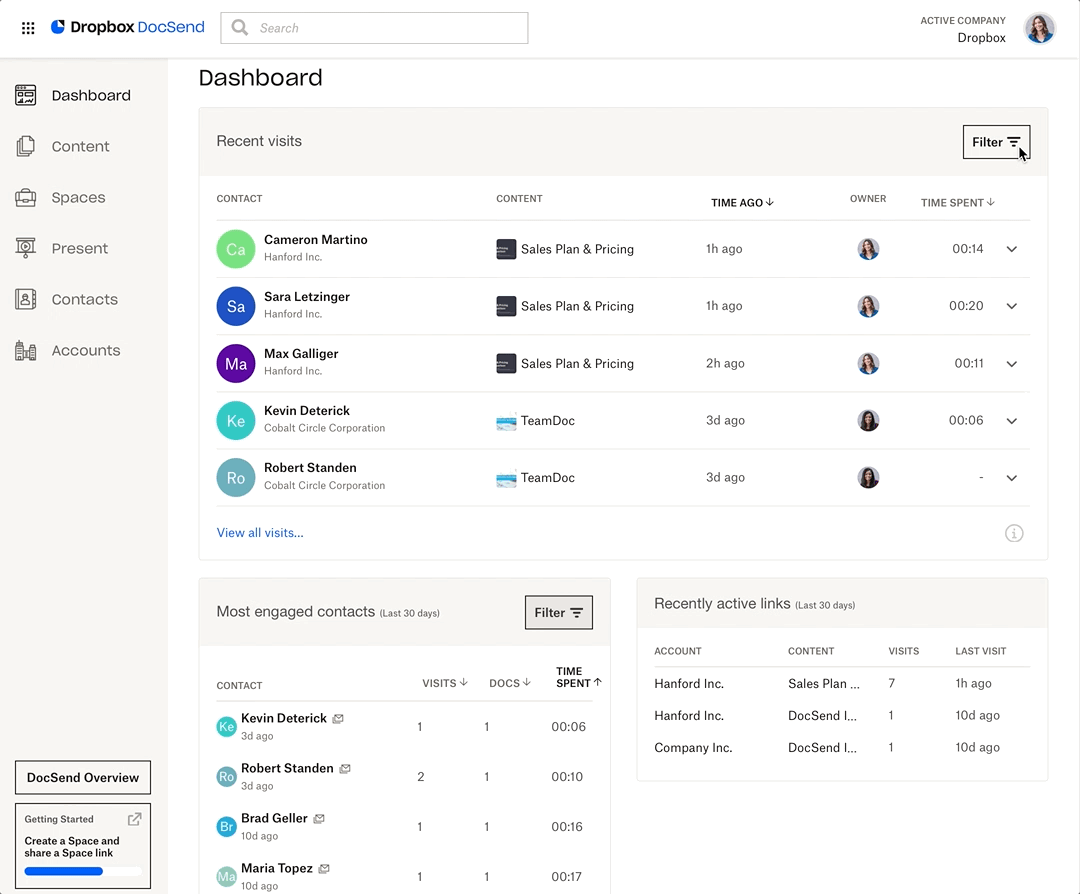
- Secure client portals that can be personalized to your clients and keep their confidential files secure.
- Virtual data rooms where you can pitch and close more deals.
- One-click NDA, which you can use to enable your clients to sign NDAs with one click.
Who Is It For?
DocSend is ideal for large enterprises that need advanced file-sharing security.
Pricing
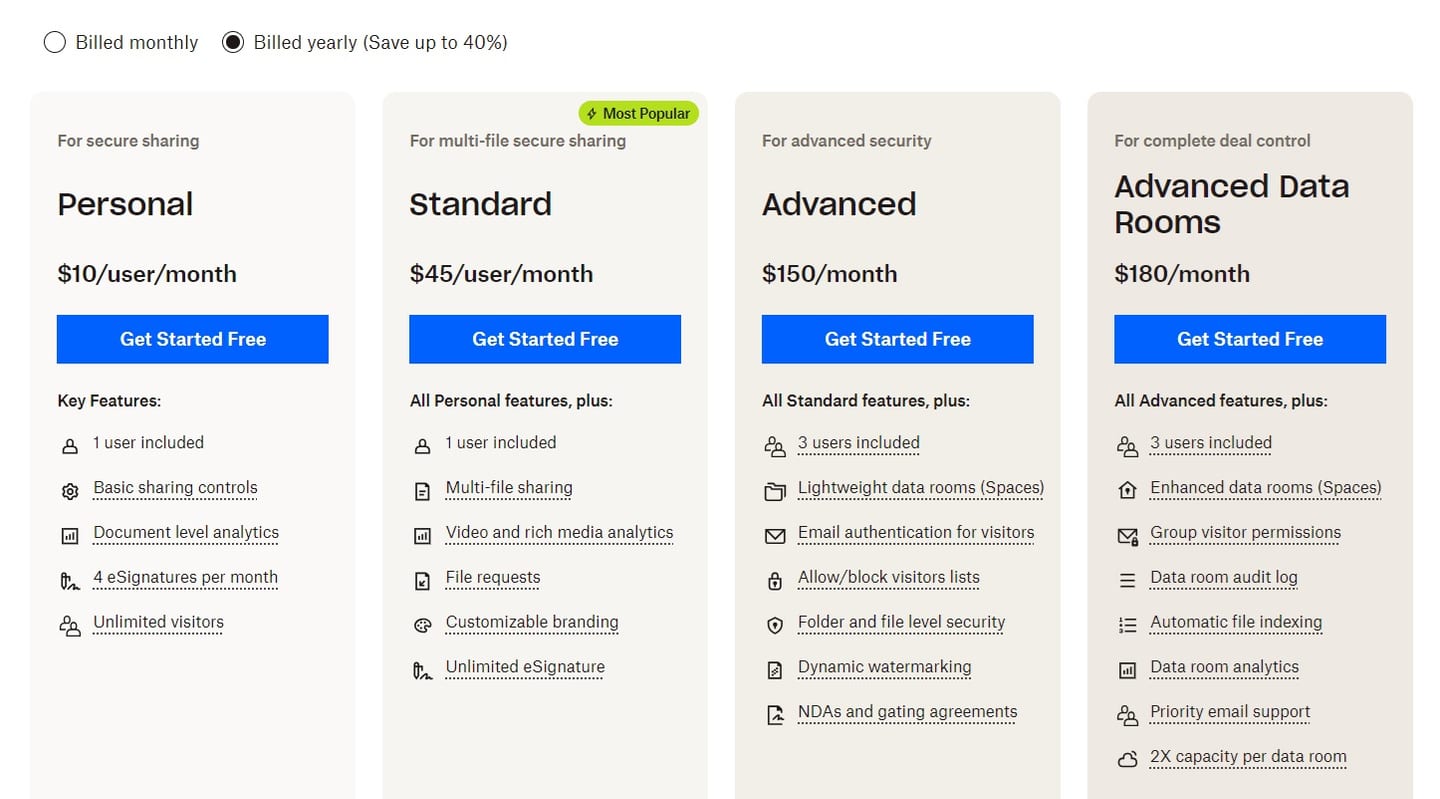
DocSend has four pricing plans:
- Personal plan:$10/month/seat, which gives you access to basic sharing controls, document-level analytics, and four e-signatures per month.
- Standard plan:$45/month/seat, which gives you access to multi-file sharing, file requests, rich media analytics, and customizable branding.
- Advanced plan:$150/month for three seats, which gives you access to lightweight data rooms, folder & file-level security, and NDAs & gating agreements.
- Advanced Data Rooms:$180/month for three seats, which gives you access to enhanced data rooms, automatic file indexing, and data room analytics.
Pros and Cons
✅ Secure file-sharing.
✅ One-click NDAs.
✅ Advanced data rooms.
❌ Expensive when compared to other alternatives.
❌ Some users report uploading issues.
#5: Hubforce
Best for: Personalizing the buying journey to your prospects with templates and AI.
Similar to: GetAccept.
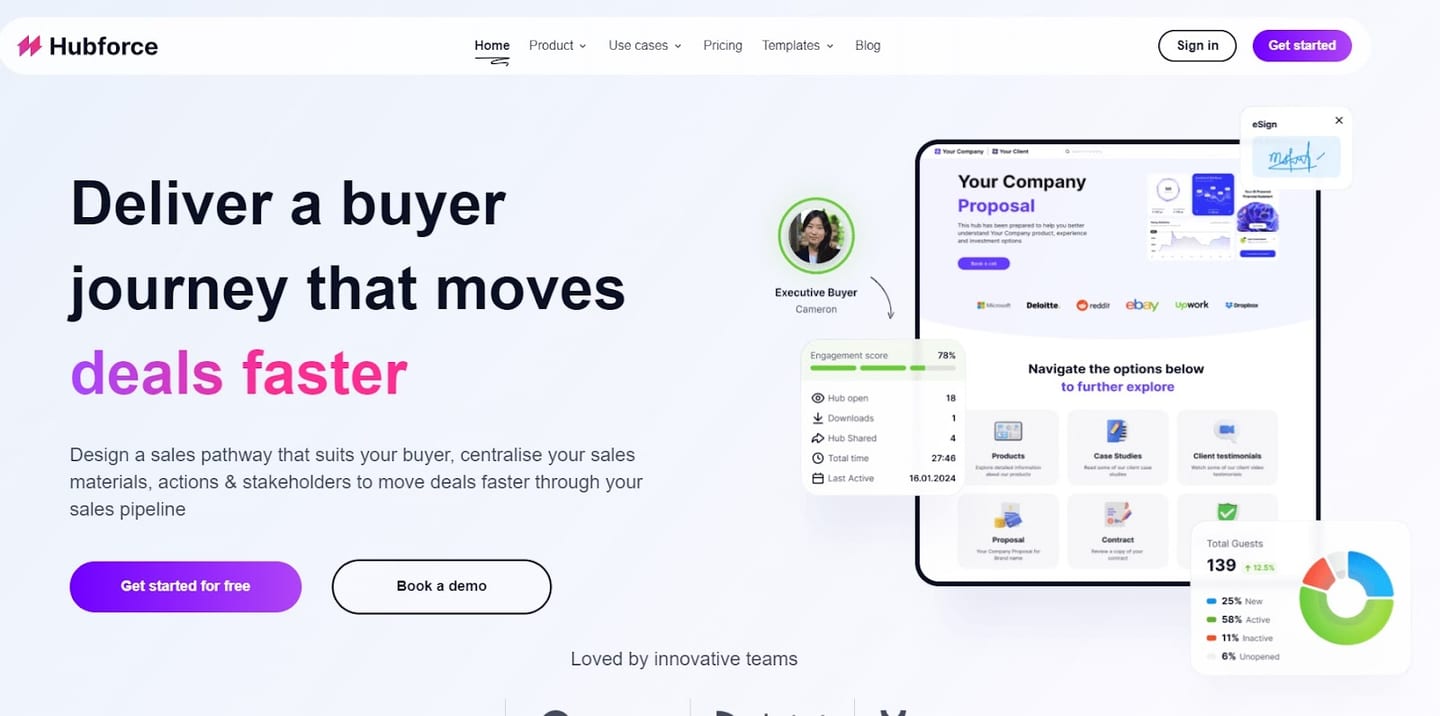
Hubforce is a sales enablement tool that uses templates and AI to help your sales team create personalized buying journeys for prospects.
The tool is a good alternative to Qwilr because of its customization features and ease of use.
Features
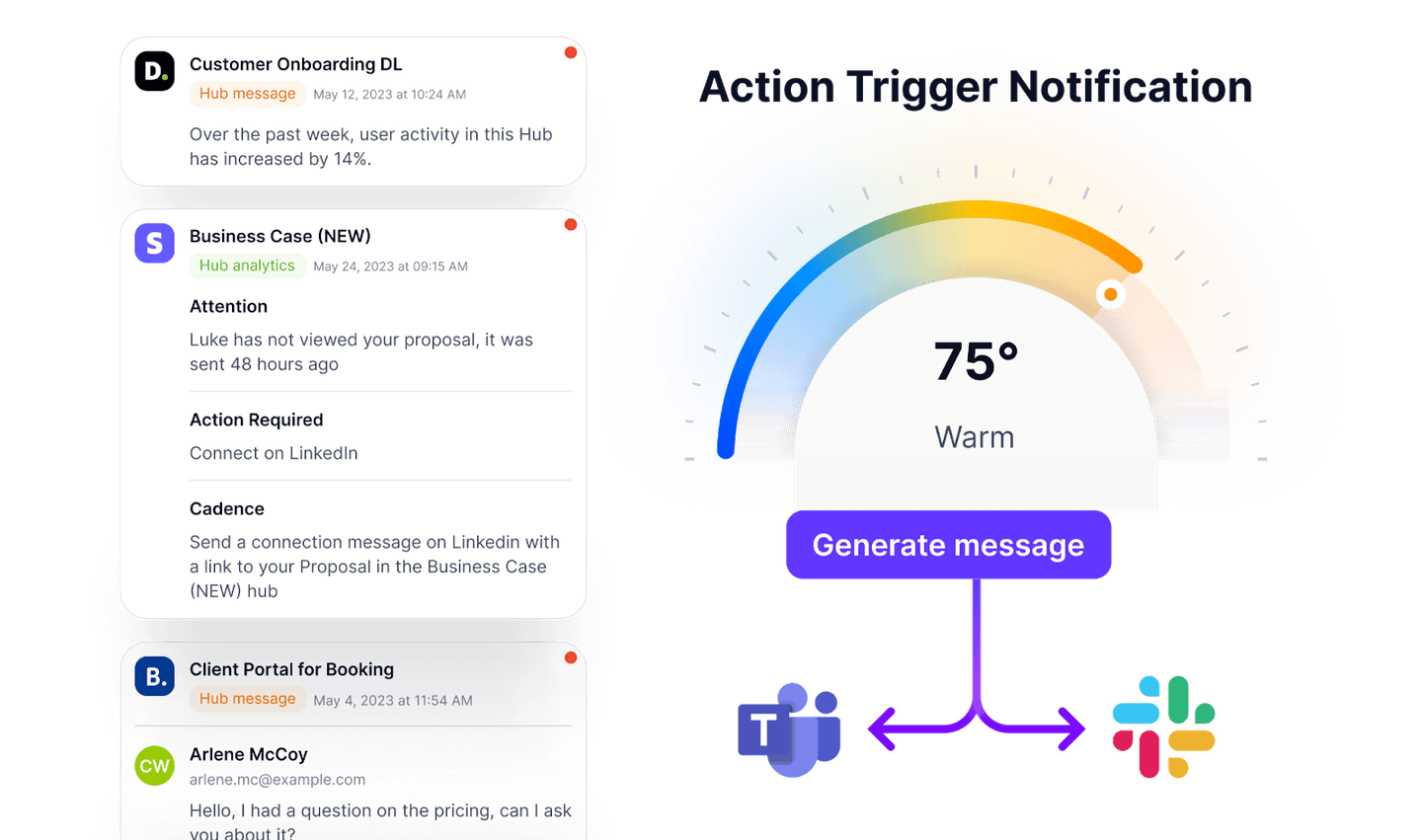
- Hubforce AI Hub Builder, which helpsyour team build personalized digital sales rooms where you can win more deals.
- E-signatures that let you manage, collaborate, and get agreements signed faster and easier.
- Mutual action plans that enable you to onboarding new customers by assigning tasks, setting deadlines, and tracking progress.
Who is it for?
Hubforce is ideal for sales teams that want to send out personalized proposals to their prospects.
Pricing
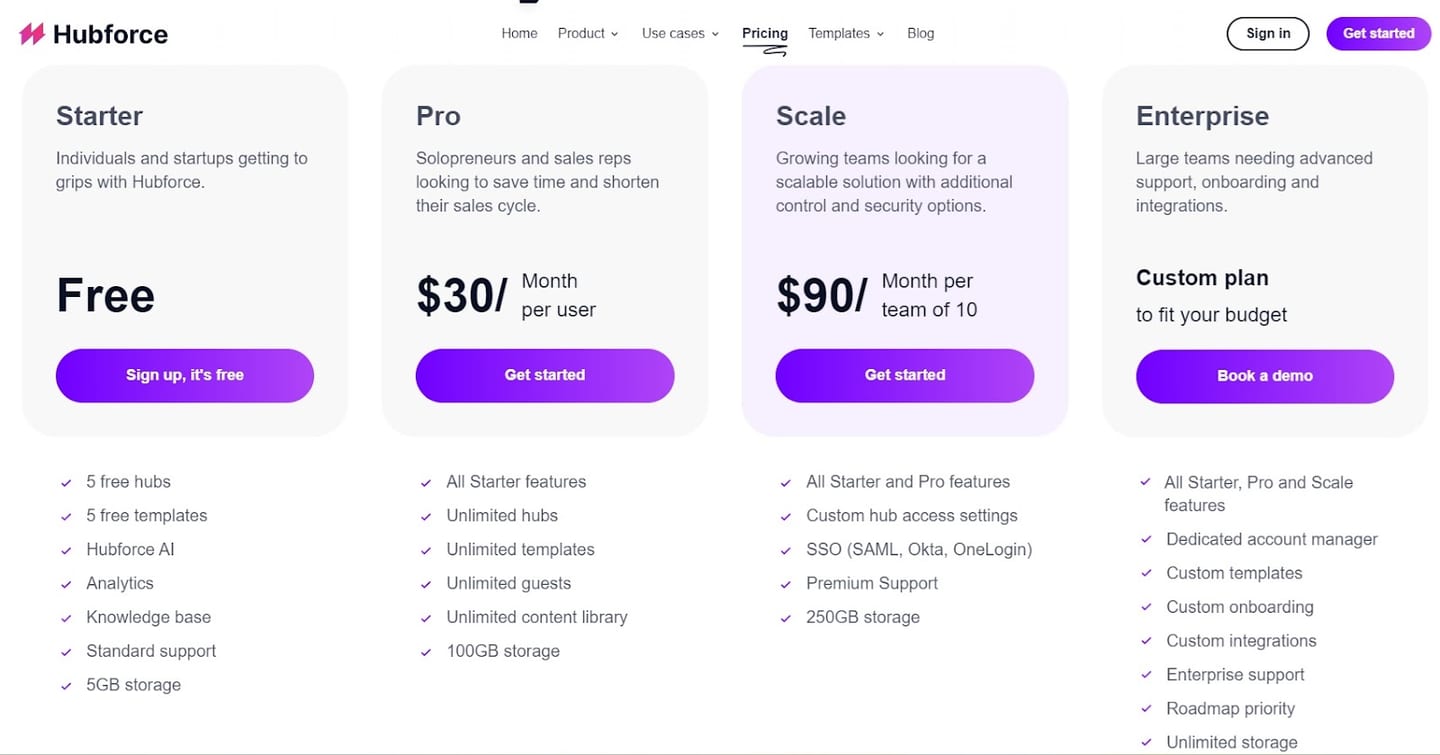
Hubforce has a free plan that includes five free hubs and five free templates.
If you want to get access to unlimited hubs and templates, you’d need to subscribe to one of its three paid plans:
- Pro plan:$30/month/user, which gives you access to unlimited hubs, templates, guests, and 100GB storage.
- Scale plan: $90/month/per team of 10, which gives you access to custom hub access settings, SSO, and 250GB storage.
- Enterprise plan: Custom pricing that gives you access to custom templates, custom onboarding, and custom integrations. The storage is also unlimited.
Pros and Cons
✅ AI-powered personalization.
✅ E-signatures.
✅ Freemium that lets you get started on the platform for free.
❌ Not as battle-tested as competitors since it’s a new product.
❌ Integrations are limited when compared to other alternatives.
#6: GetAccept
Best for: Building personalized digital sales rooms.
Similar to: Hubforce.
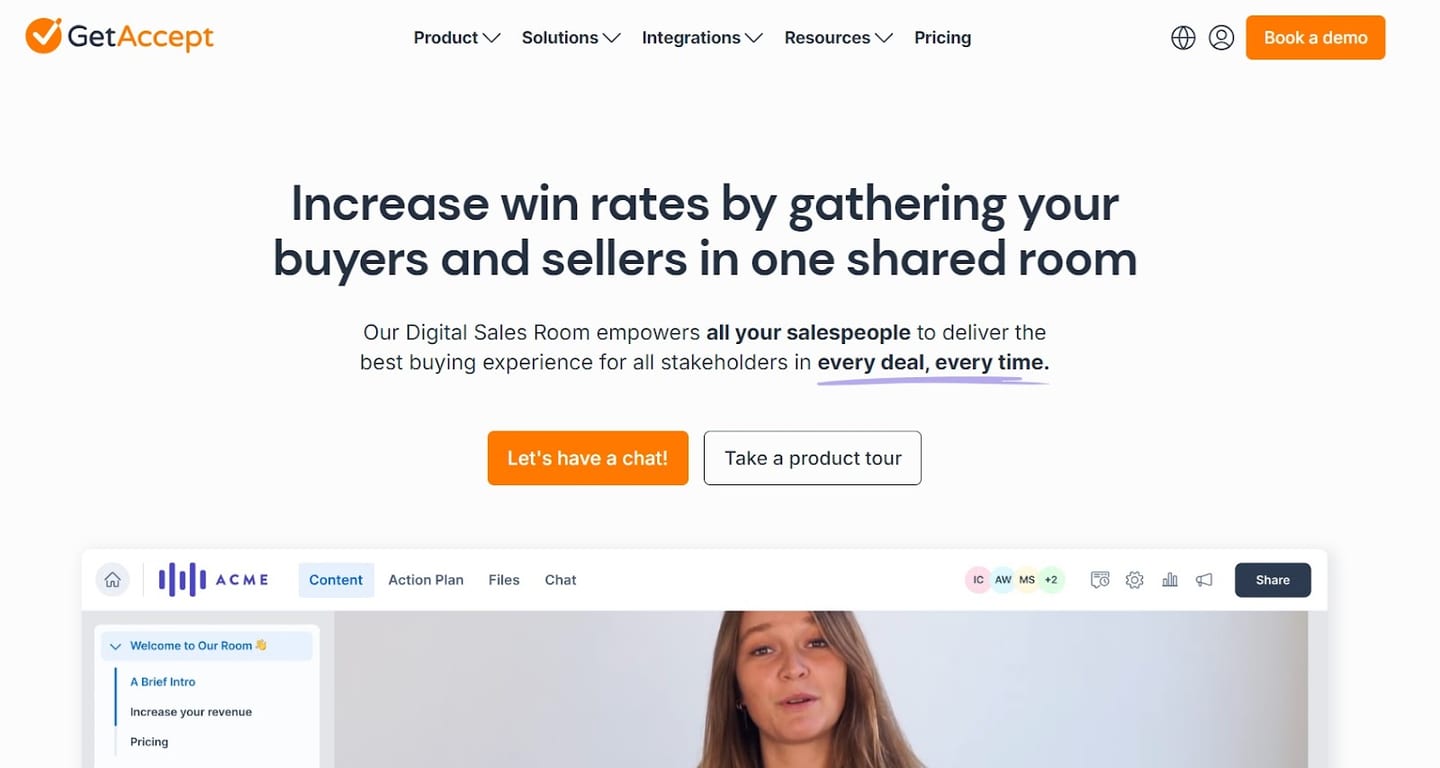
GetAccept is a proposal software that provides your sales team with document tracking, e-signatures, and interactive presentations.
The tool is a viable alternative to Qwilr with its deal room feature that lets you upload sales collaterals, track their performance, and create mutual action plans.
Features
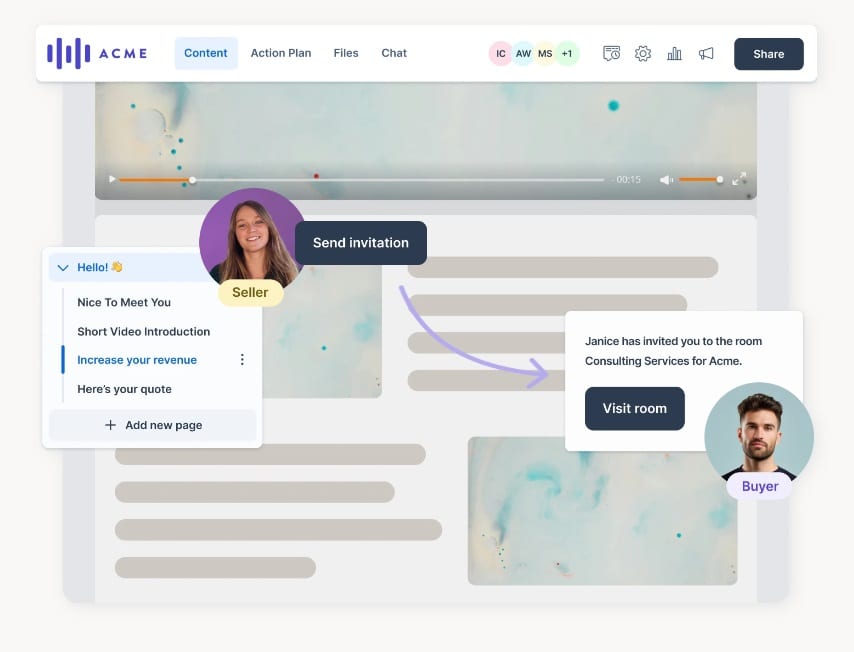
- Contract management software that lets you add personalized quotes and e-signatures with the help of templates.
- Mutual action plans where you can provide a better onboarding experience and have more clarity over your new customer pipeline.
- Real-time insights into how prospects are interacting with your proposals.
Who Is It For?
GetAccept is good for sales teams that want to build personalized digital sales rooms with the help of templates.
Pricing
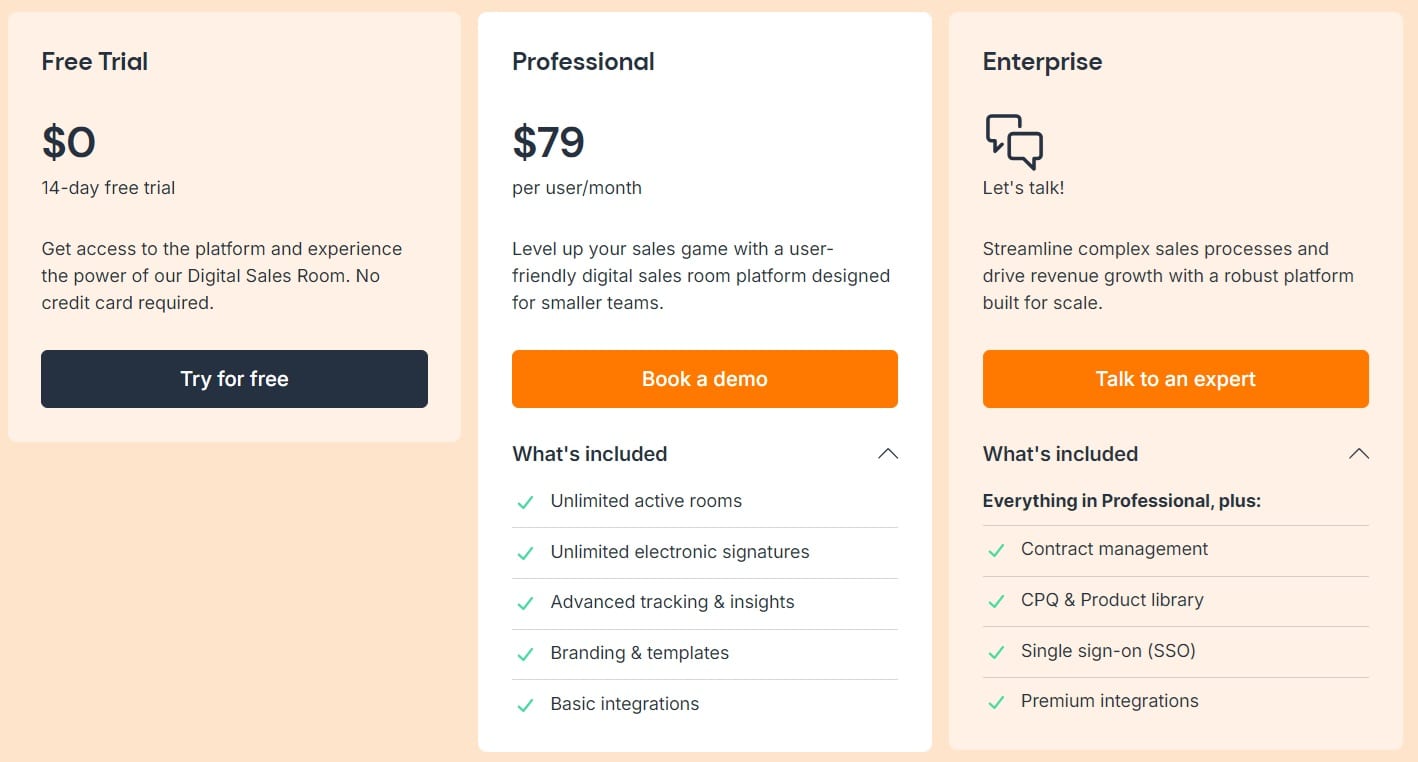
The platform offers a 14-day trial where you can test out the platform for free.
Other than that, GetAccept offers two paid plans:
- Professional:$79/month/seat, which gives you access to unlimited active rooms, e-signatures, advanced tracking, and templates.
- Enterprise: Custom pricing, which gives you access to contract management features, CPQ, SSO, and premium integrations.
Pros and Cons
✅ Easy to use intuitive platform.
✅ Mutual action plans.
✅ Good analytics into how prospects are interacting with your proposals.
❌ CRM integrations are not as deep as other alternatives.
❌ Creating proposals without templates can be too hard.
#7: Bigtincan
Best for: Capturing relationships within your prospects’ organization.
Similar to: Hubforce.
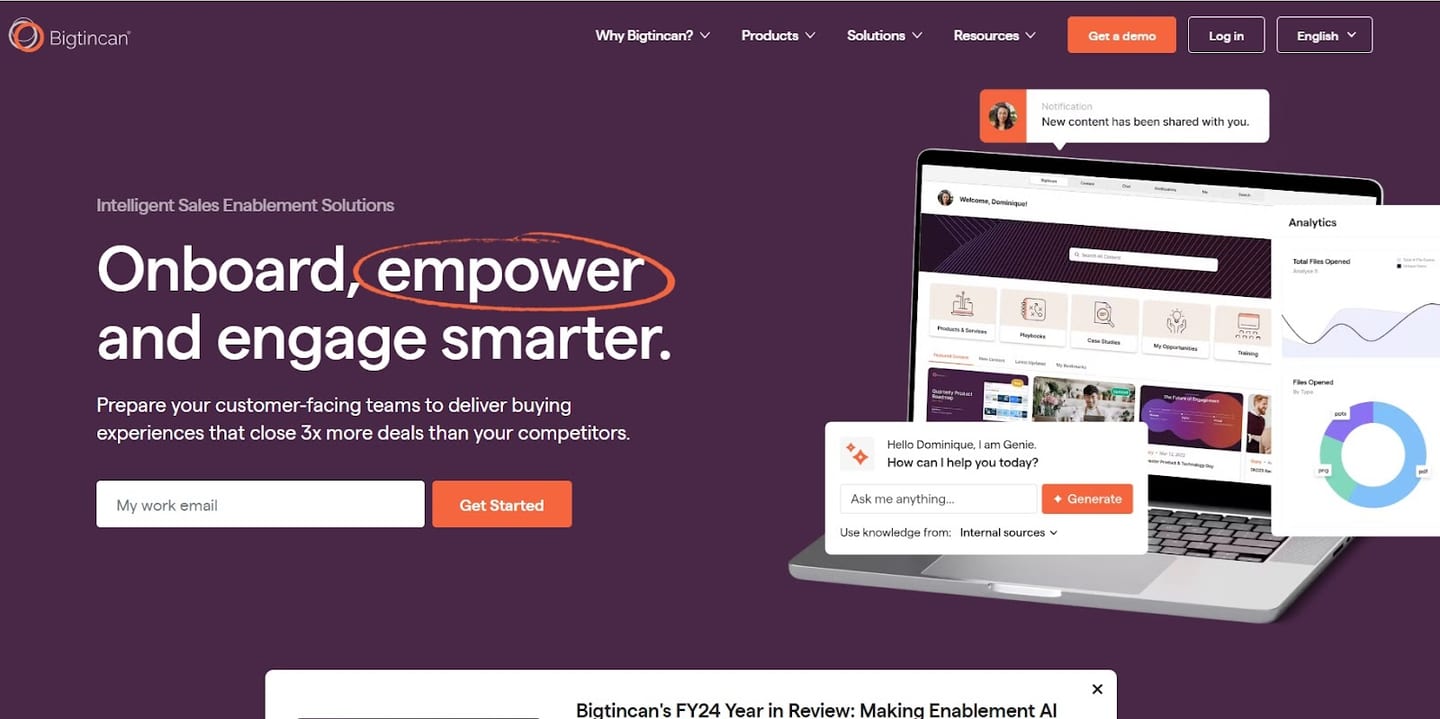
Bigtincan is a sales enablement platform that lets you onboard and engage your customers to close more deals.
The platform is a viable alternative to Qwilr because it offers more UI customization options and is generally easier to use.
Features
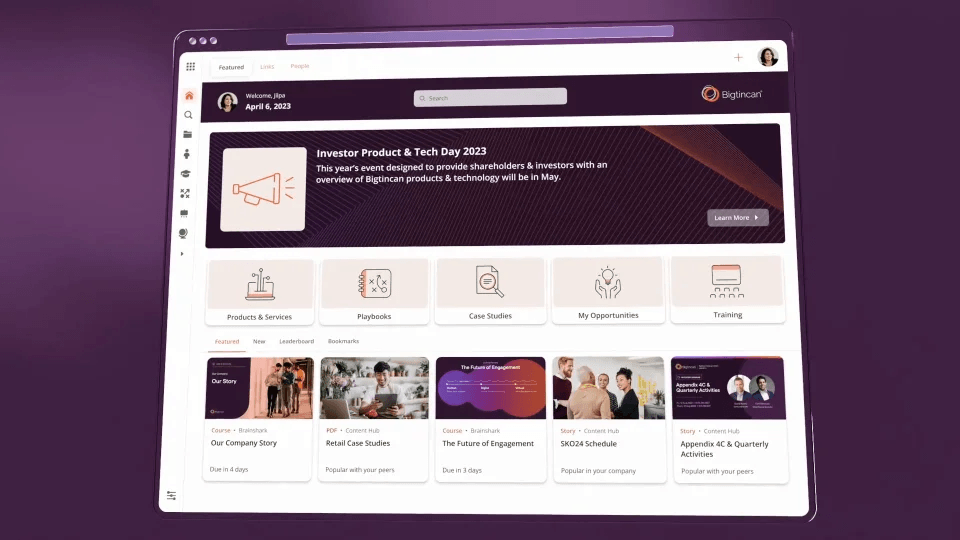
- Create personalized documents at scale: You can automate sales collateral, improve customer engagement, and collect data on content performance.
- Relationship intelligence: Capture relationships within your prospects’ organization and generate insights that help your team sell more and engage better.
- Analytics that provide you with insights into what content your prospects are engaging with the most.
Who is it for?
Bingtincan is ideal for enterprise sales teams that want to build better relationships with their prospects and personalize their onboarding experience.
Pricing
Bigtincan does not disclose its pricing, so you’ll need to contact them for a quote.
Pros and Cons
✅ Relationship intelligence so you can identify risks and understand hierarchy.
✅ Sensitive document security.
✅ Good analytics into content performance.
❌ Steep learning curve since there are many features.
❌ Pricing is not disclosed.
Next steps: get the deal work around your proposal done
The proposal is one step in a deal. The prep before each call, the follow-up after it, and the next stakeholder to bring in still fall to your reps, whichever proposal tool you pick.
If you’re a sales leader who wants:
- Every deal worked from your team’s playbook, not only the ones your best reps have time for.
- Call prep, research, follow-up emails, and CRM updates done for your reps, with a rep approving each one before it sends.
- Sales rooms kept current with each deal’s next steps, all of it working with the CRM and notetaker your team already uses.
Then you can book an agent kickoff to see how Arrows works next to your proposal tool.