


The proposal software provides your sales team with document tracking, e-signatures, and personalized sales rooms.
Despite that, there are some customers of the platform who wish for a greater level of customization and a deeper HubSpot integration.
We researched dozens of sales enablement tools, went through verified user reviews on G2 and Capterra, and talked to sales managers to create a complete list of the eight best GetAccept alternatives on the market in 2025.
This guide covers each platform’s features, pricing, pros/cons, and use cases to help you make an informed decision.
Before we start, let’s review why sales and customer success teams might consider switching from GetAccept. ⤵️
Why teams look for a GetAccept alternative
GetAccept has become known for its digital sales rooms and comprehensive range of sales proposal features, such as:
- Contract management: You can add personalized quotes and e-signatures with the help of templates.
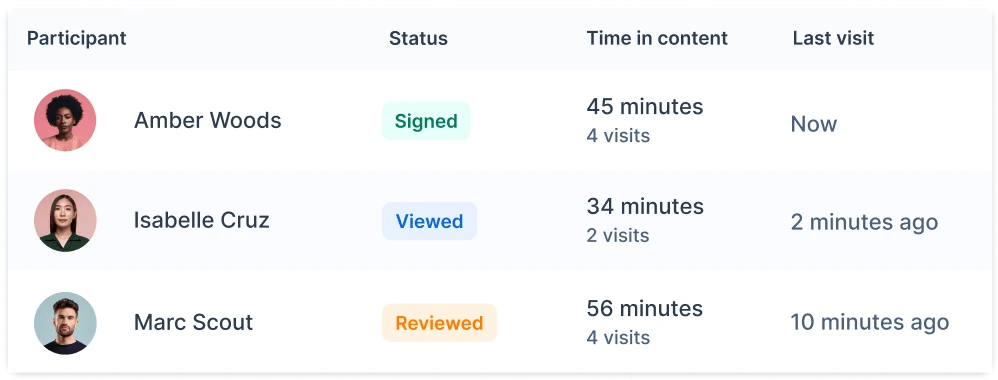
- Mutual action plans: Provide a better onboarding experience and have more clarity over your new customer pipeline.
- Real-time insights: Find out how prospects are interacting with your sales proposals.
- Uncover all stakeholders: Understand who’s involved in the deal, what they’re asking, and when to move your deal forward.
However, some of GetAccept’s prospective and current users have expressed concerns about a few aspects of the platform. ⤵️
#1: Some Users Find The Customization Options Limiting
Some verified customers of GetAccept find the platform’s customization options not flexible enough.
One user reports that their team had to adapt their contract to fit the template provided by GetAccept.

‘’We had to adapt our contract a lot to fit to the GA template and it was not that flexible the other way around.’’ -G2 Review.
#2: Some teams want a deeper CRM integration
HubSpot teams may not be fully satisfied with GetAccept’s integration, as they believe it could be better.
A deeper HubSpot integration could enable your sales team to sync all of the lead’s data back to the CRM seamlessly to keep track of the sales process in real-time.

‘’The Hubspot integration and some details about the way to work in the system could be better. The customer support could be a bit faster when I compare it to our CRM provider Hubspot.’’ -G2 Review.
#3: The Sales Tools May Not Sync Well Enough
Lastly, a customer of the platform notes that there is a missing sync between the sales room and deal room of GetAccept.
The lack of synchronization between the sales room and the deal room in proposal platforms can lead to miscommunication and lost sales opportunities, hindering sales performance.

‘’The sync between sales room and deal room is missing. Get rid of Salesroom and apply all features from SR to Dealroom.’’ -G2 Review.
What are the top alternatives to GetAccept for proposal management?
Here are the eight best GetAccept alternatives that address the challenges faced by sales teams looking to close more deals:
#1: Arrows: Keep a gameplan for every deal and get the deal work around your proposal done, from call prep and follow-ups to CRM updates.
#2: Qwilr - Send out sales proposals and collateral from out-of-the-box templates in web format.
#3: Proposify - Send out professional-looking proposals.
#4: Docusign - Manage all of your contracts and send out affordable e-signatures.
#5: Oneflow - Automate the entire contract process.
#6: DocSend - Build and send out secure documents and e-signatures.
#7: PandaDoc - Get in-depth document insights.
#8: DealHub.io - Build andsend out CPQs and invoices at scale.
#1: Arrows
Best for: B2B sales teams that want the work around every proposal done on every deal: the prep, the follow-up, and the CRM updates.
Arrows is promptless AI for account executives. It keeps a gameplan for every deal and does the work that keeps deals moving.
Full disclosure: Arrows is our product. Here’s what it does and where it fits next to GetAccept.
GetAccept and the rest of this list handle the document. Arrows works the deal around it. It reads your call transcripts, emails, CRM, and notes, builds a gameplan from your team’s playbook, and does the follow-through your reps would otherwise do by hand.
Feature #1: A gameplan for every deal
A proposal goes out when the deal is ready for one. Getting it there takes a plan, and most reps only keep that plan in their head for their biggest deals.
Arrows applies your team’s playbook to every deal. Each one gets a gameplan with its next steps, and the plan stays current as the deal moves.
Feature #2: The work before and after every call
Arrows does the work you expect reps to do, and the work you wish they did:
- Call prep before every meeting.
- Deep research on the account.
- Follow-up emails drafted from what the buyer said on the call.
- CRM updates written back to the deal.
- Multi-threading, so a proposal isn’t waiting on one contact.
- Every date tracked from your calls, with nudges when a deal goes quiet.
- Loom videos and the right case study sent between calls.
- A sales room kept current, so your buyer always sees the next steps.
There’s no prompt to write. Reps approve every email, CRM update, and sales room change before it sends.
Feature #3: Works with the CRM and notetaker you already use
Arrows works with HubSpot, Salesforce, Pipedrive, Close, and Attio, and with notetakers like Gong, Fathom, Granola, Grain, and Fireflies. It also connects to Gmail, Outlook, and Google Calendar.
It reads each deal from your calls and your CRM, then writes approved changes back. Your CRM stays current without reps typing updates. If CRM sync is why you’re comparing GetAccept alternatives, see the CRM integrations.
Pricing
Arrows doesn’t publish prices. It’s priced on the work, not the seats. See how pricing works.
Not sure where Arrows fits next to your proposal tool? Book an agent kickoff to see how it works.
What stands out
✅ A gameplan for every deal, built from your team’s playbook and kept current as the deal moves.
✅ Promptless: call prep, research, follow-ups, and CRM updates arrive done, ready for a rep to approve.
✅ Sales rooms that stay current with each deal’s next steps.
✅ One shared playbook for the whole team, instead of each rep prompting AI their own way.
✅ Works with the CRM and notetaker your team already has.
#2: Qwilr
Best for: Sending out sales proposals and collateral from out-of-the-box templates in web format.
Similar to: DealHub.
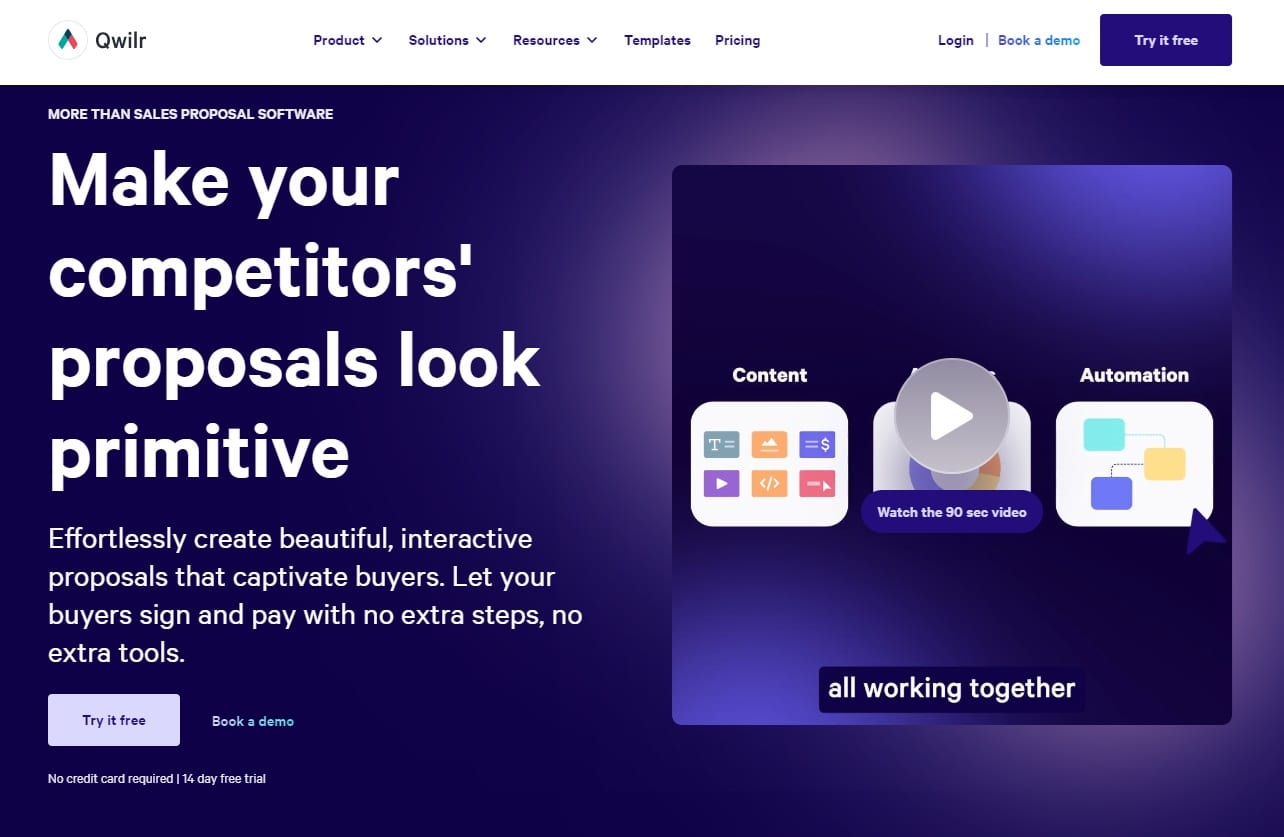
Qwilr is a sales proposal software that lets you create sales proposals in web format to close deals faster.
The sales enablement tool is a viable alternative to GetAccept for sales teams that are looking to better customize their proposals.
Features
-
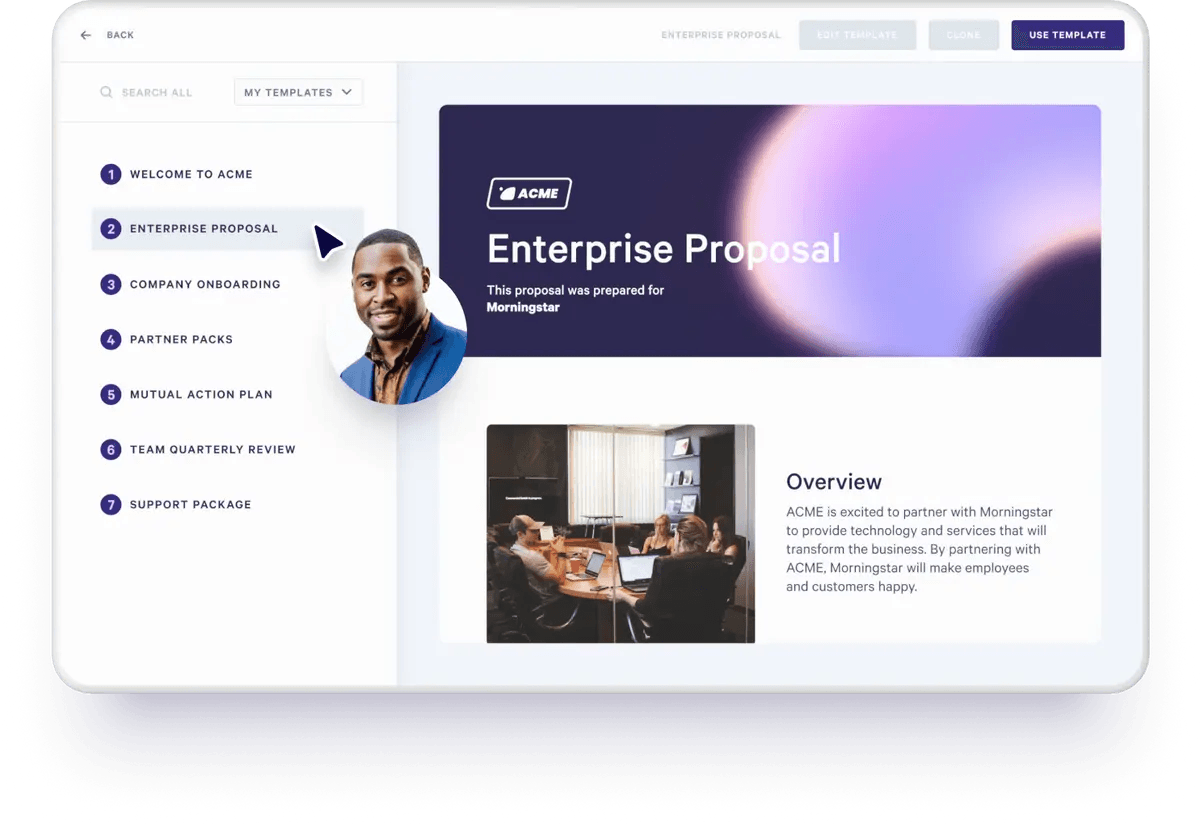
Sales proposal web editor that gives you access to pre-built templates your team can customize so you can create sales materials quickly.
-
Combine the sign-off, agreement, pricing, quote, and payment into one interactive web page.
-
Engagement analytics that helps you track buyer engagement across all your sales material. The tool notifies you when a quote or proposal has been viewed or signed.
Standout Feature: Proposal Automation Features
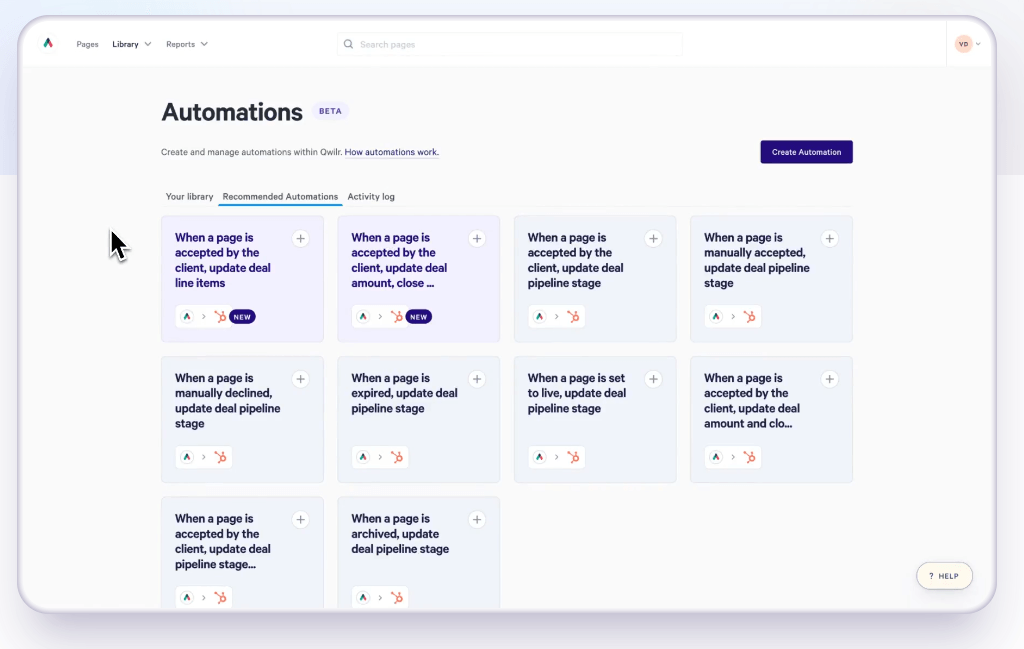
Qwilr helps you automate your sales process by creating templates and asset libraries that automatically create sales material in one click from your CRM.
Pricing
Qwilr has two pricing tiers:
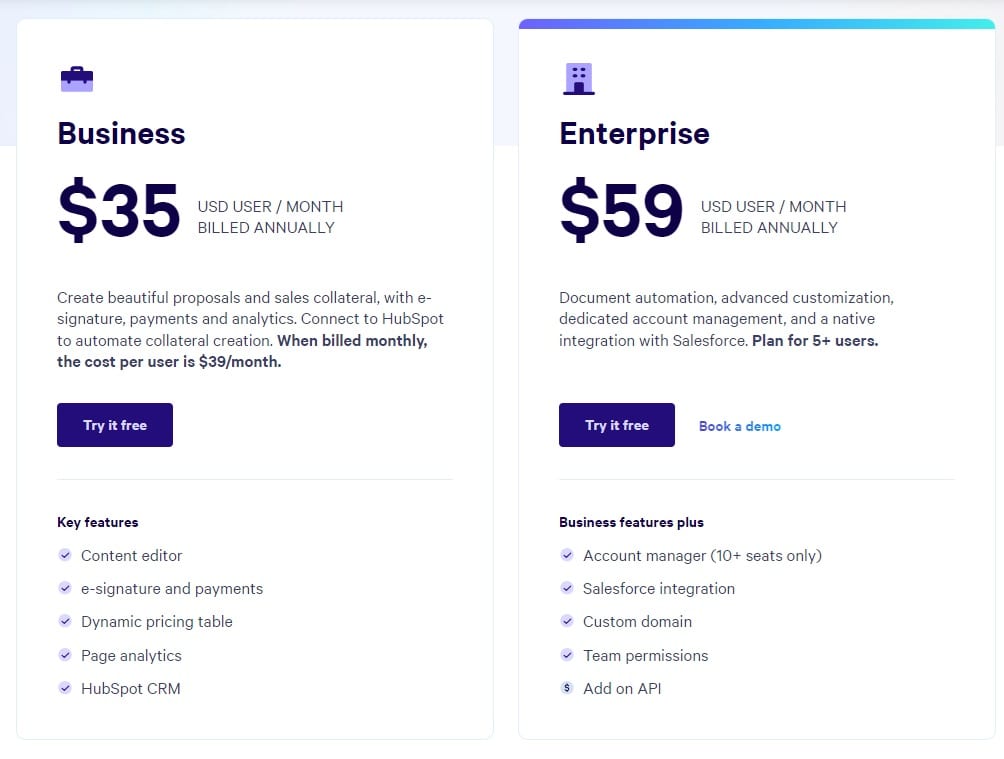
- Business plan: $35/seat/month, which gives you access to the tool’s content editor, e-signatures, dynamic pricing table, page analytics, and HubSpot CRM integration.
- Enterprise plan:$59/seat/month for a minimum of five seats, which adds access to document automation, advanced customization, and dedicated account management.
💡 You can check out our Qwilr pricing guide that goes over price reports that we were able to find, as well as discounts.
Pros and Cons
✅ Out-of-the-box templates that you can personalize to your leads.
✅ Sales process automations.
✅ Analytics and insights into customer engagement.
⚠️ Not as good editing and customization options as other alternatives on the market.
⚠️ Lack of reporting and dashboard functionality.
#3: Proposify
Best for: Sending out professional-looking proposals.
Similar to: DocSend, PandaDoc.
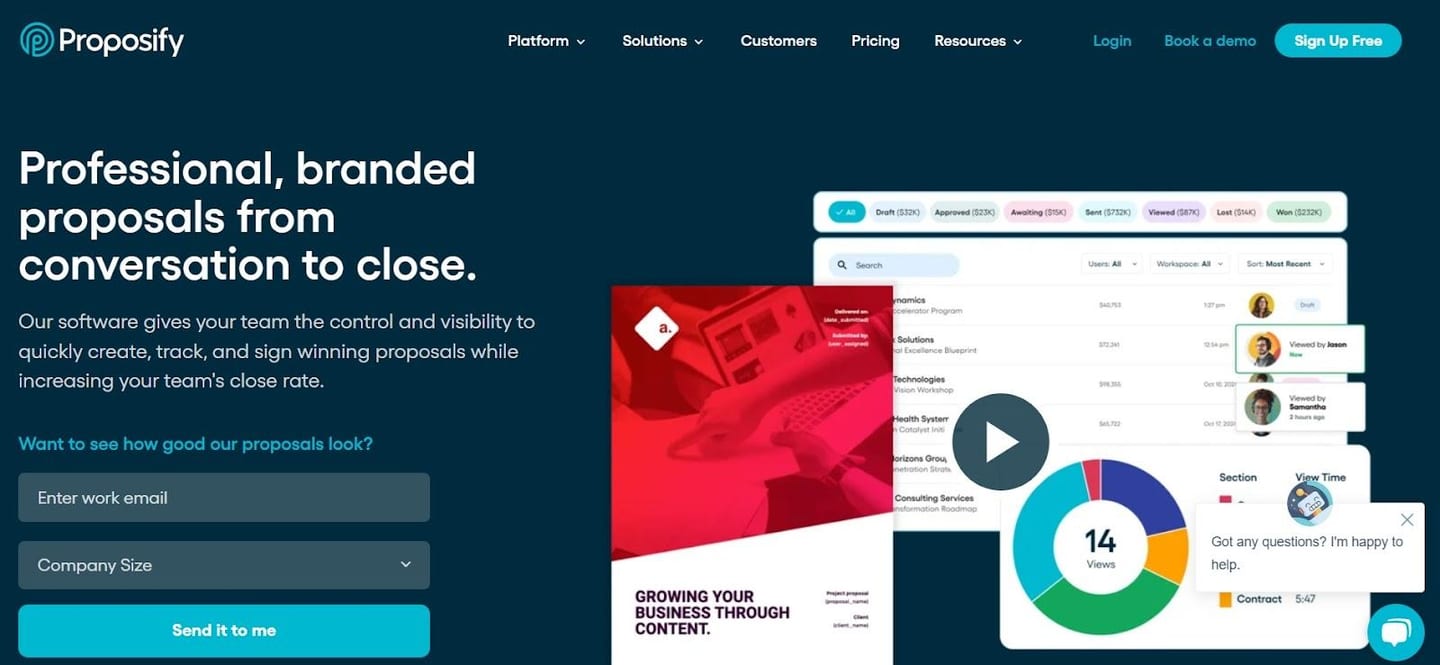
Proposify is a sales proposal platform that lets your sales team create, track, and send out winning proposals.
The platform is a good alternative to GetAccept as it’s easy to use and has an intuitive dashboard that provides an overview of your proposals’ performance.
Features
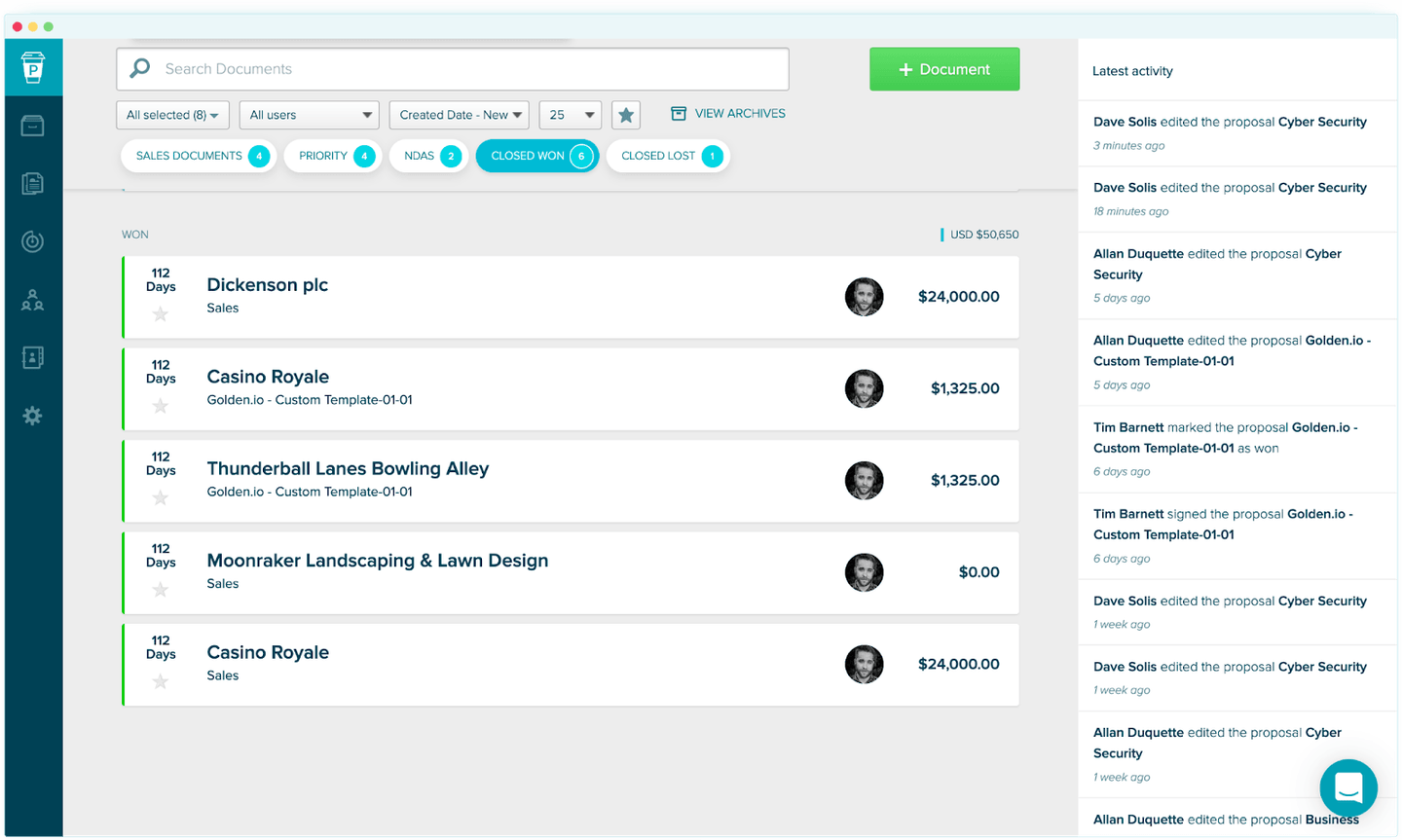
- Proposal software platform that can be accessible from any device and be exported as a PDF.
- Pre-built proposal templates that help you automate your proposal process and send out professional-looking templates.
- Good integrations with popular CRMs like Agile, and Salesforce.
Standout Feature: Interactive Quoting Software
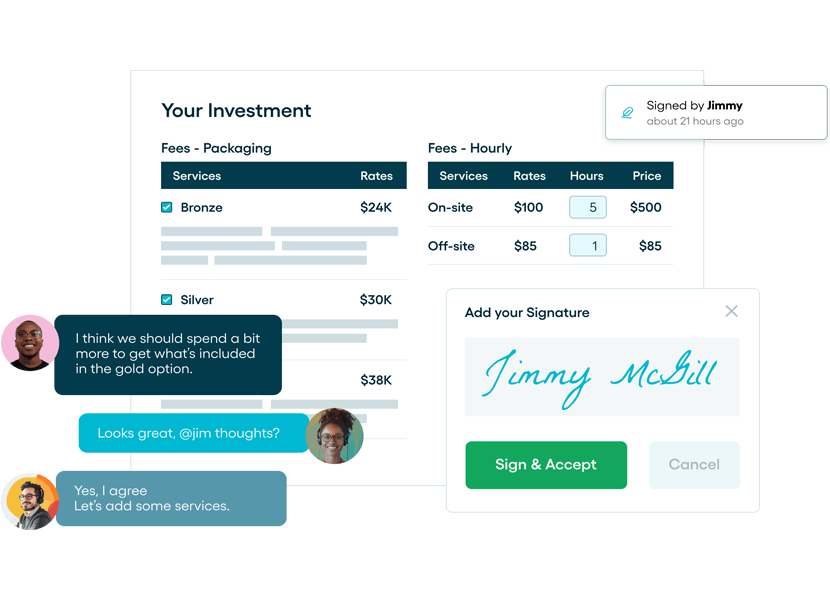
Proposify lets you create and send out personalized quotes with dynamic pricing. Tailored quotes can also be used to up-sell prospects.
Pricing
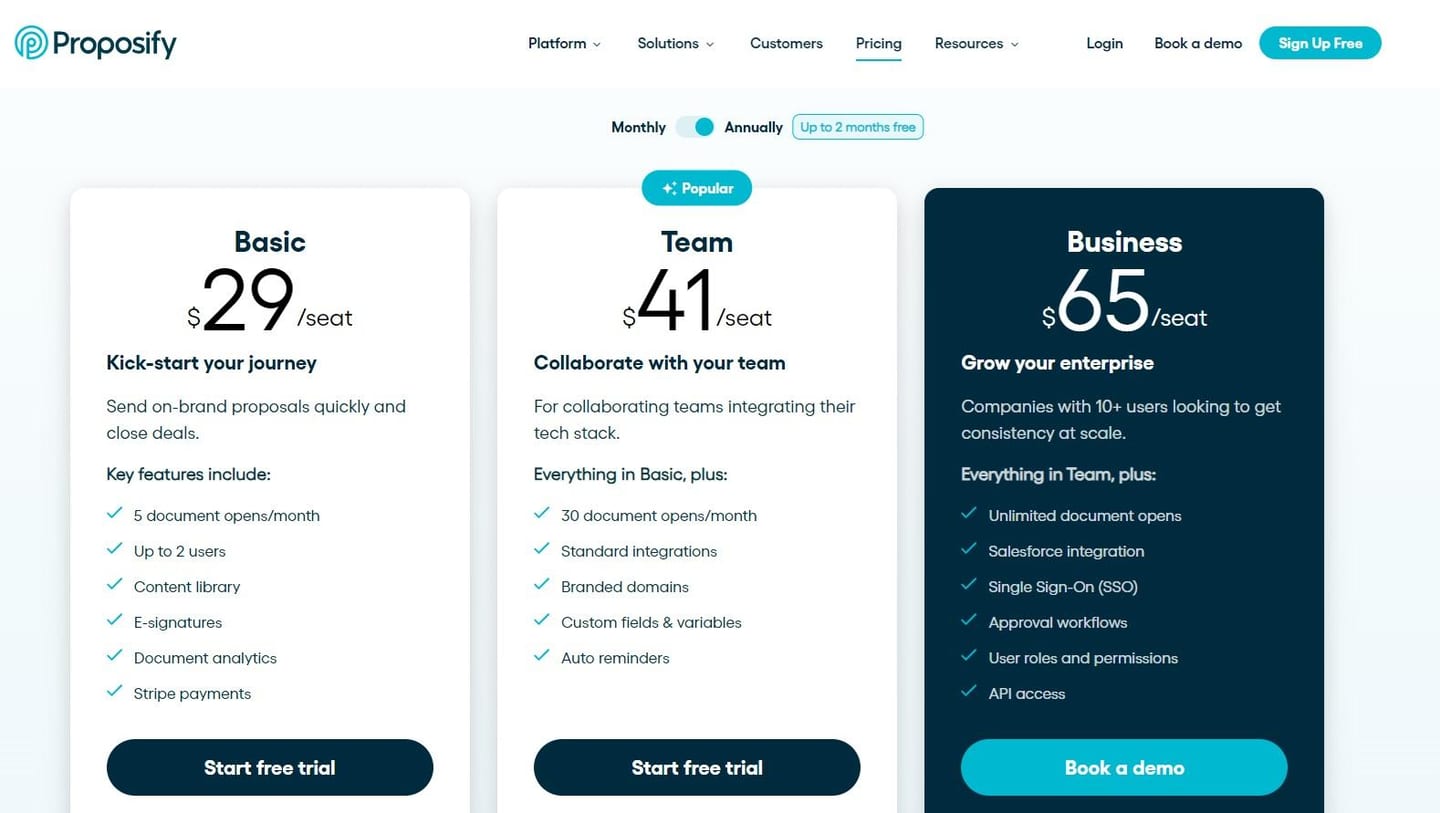
Proposify has three pricing plans:
- Basic Plan:$29/month/seat, which gives you access to 5 document opens/month, e-signatures, document analytics, and content library.
- Team Plan:$41/month/seat, which adds access to 30 document opens/month, branded domains, standard integrations, and custom fields & variables.
- Business Plan:$65/month/seat for a minimum of 10 seats, which adds access to unlimited document opens, deep Salesforce integration, API access, and approval workflows.
Pros and Cons
✅ Interactive quotes that are personalized and optimized for up-selling.
✅ Ready-to-go templates.
✅ Integrations with a wide range of CRMs.
⚠️ Limited customization.
⚠️ There are some reported bug issues with the platform.
#4: Docusign
Best for: Managing all of your contracts and sending out affordable e-signatures.
Similar to: DocSend, PandaDoc.
Docusign is a sales proposal software that lets you send out, sign, and manage all of your contracts.
The platform is a viable alternative to GetAccept for teams looking for affordable e-signatures and to keep all of their agreements in one place.
Features
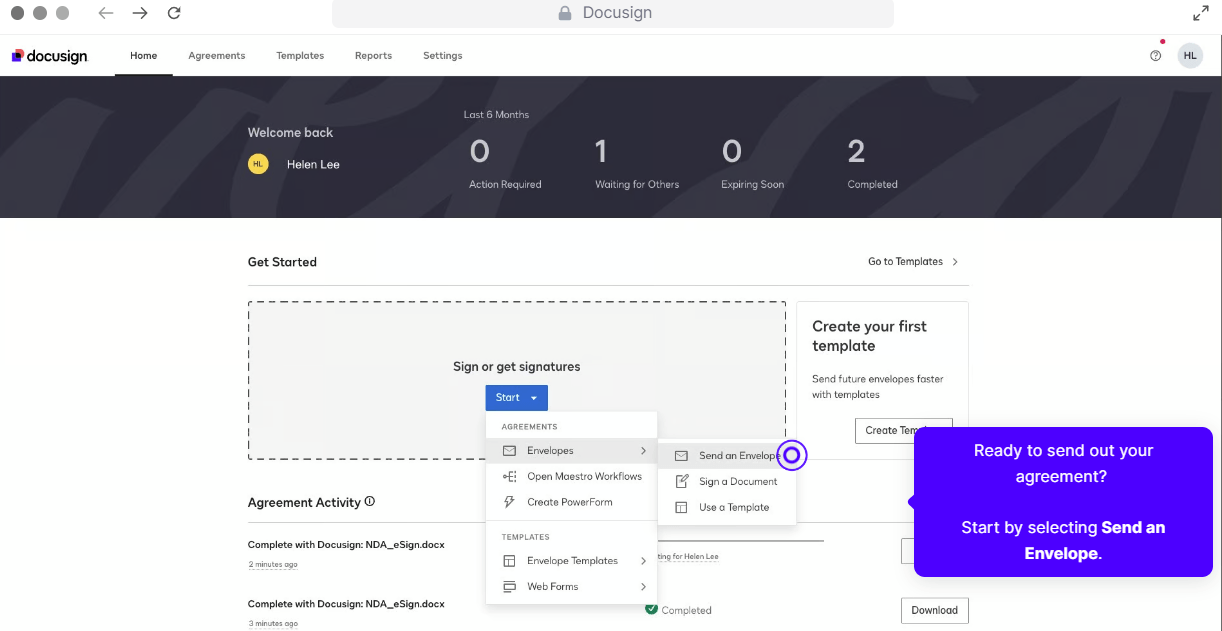
- E-signatures that can be customized to your client and your business. The platform also has enterprise-grade security and compliance controls.
- Contract lifecycle management software that helps you standardize your processes and improve your contract oversight.
- Generate agreements from ready-to-use templates that can be personalized to your prospects while looking professional.
Standout Feature: Agreement Workflow Automation
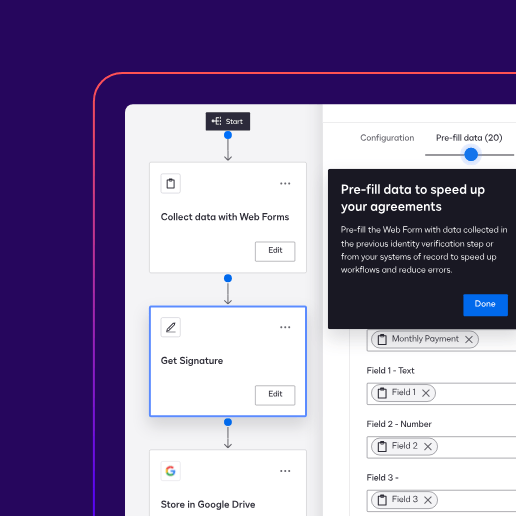
Docusign’s Maestro lets you build and deploy customized workflows that automate and improve your agreement processes.
The platform is code-free and you can connect with partner apps through the Docusign App Center.
Pricing
The software offers four paid tiers:
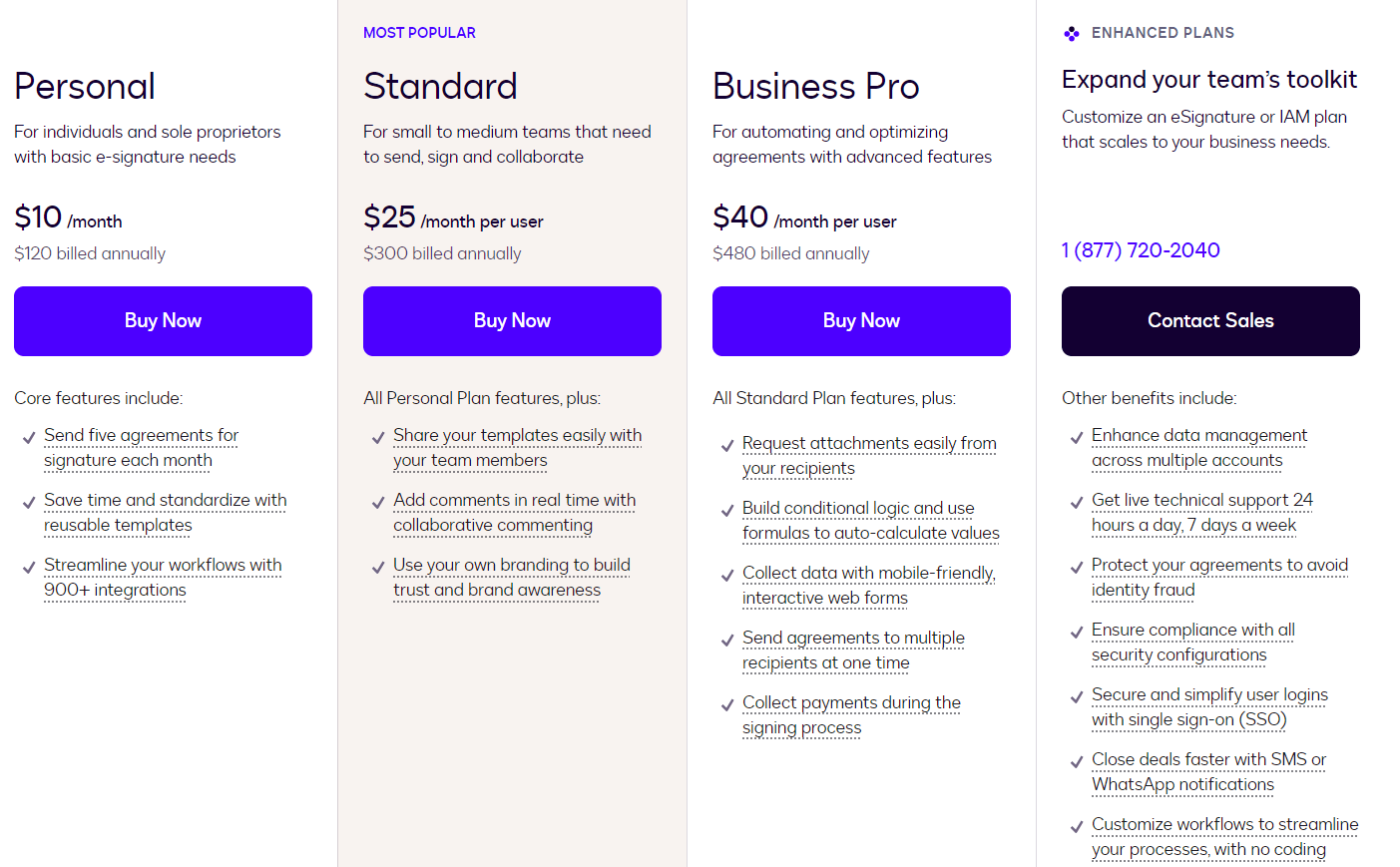
- Personal:$10/month when billed annually, which lets you send five agreements for signature each month, and use the tool’s templates.
- Standard: $25/month/seat when billed annually, which lets you share your templates with your team, collaborate, and use your own branding.
- Business Pro: $40/month/seat when billed annually, which lets you request attachments from recipients, build conditional logic, and collect data with interactive web forms.
- Enterprise: Custom pricing that adds SMS and WhatsApp notifications, customizable workflows with no coding required, and better data management.
Pros and Cons
✅ Automate your e-signatures.
✅ Affordable when compared to other alternatives.
✅ Develop agreement workflow automations.
⚠️ The user interface may not be very intuitive for customers new to creating contracts and e-signatures.
⚠️ Some customers have experienced issues with the tool’s saving function.
#5: Oneflow
Best for: Automating the entire contract process.
Similar to: DealHub.io, Docusign.

Oneflow lets you automate the entire contract process - from creating the contract to getting it signed and then managing it.
The platform helps you build out and send e-signatures on any device.
Features
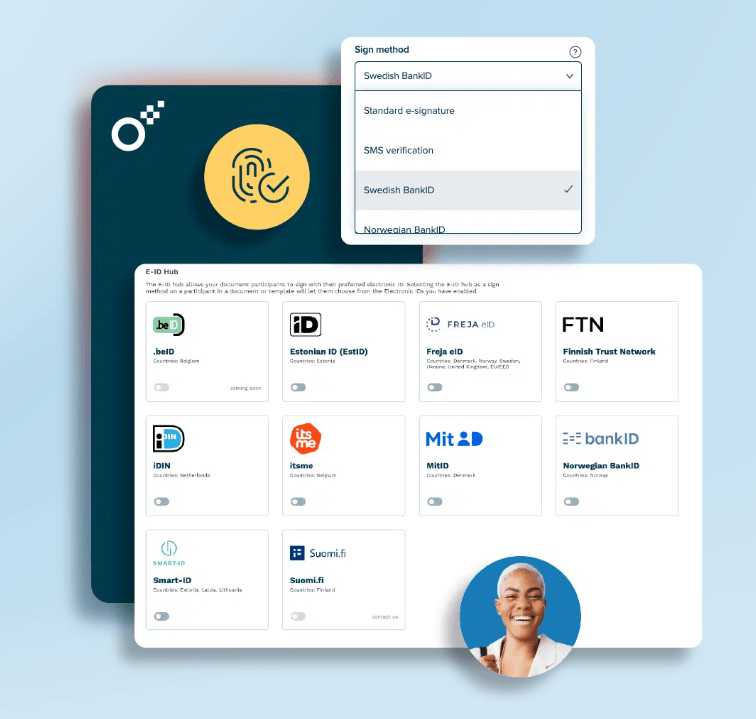
- Different contract signing methods with standard e-signature, bank verification, SMS verification, or others.
- Notification tracking lets you stay on top of each contract and get notified when prospects enter the contract and when they sign it or leave comments.
- Collaborate with your team in a digital workspace, where you can organize contracts and templates.
Standout Feature: Oneflow AI
Oneflow AI lets you write, review, and analyze contracts with its generative AI capabilities.
The AI model is also capable of revealing insights and time-saving opportunities with its contract intelligence features.
Pricing
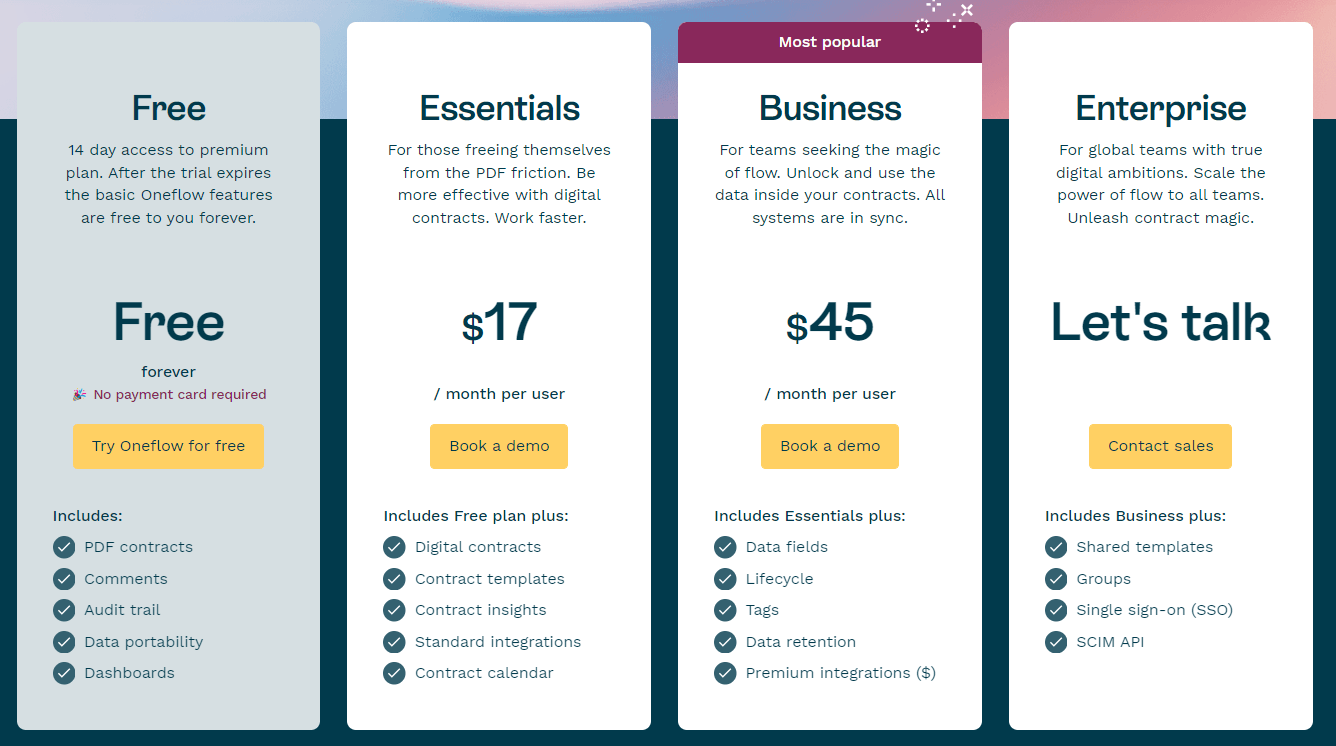
The platform has a free version of its proposal software that includes PDF contracts, comments, an audit trail, data portability, and a dashboard.
To get access to the tool’s advanced features, you’d have to be on one of their three paid tiers:
- Essentials: $17/month/user, which adds digital contracts, contract templates, insights, and standard integrations.
- Business:$45/month/user, which adds data fields, contract lifecycle management, tags, and data retention.
- Enterprise: Custom pricing, which adds shared templates, SSO, and SCIM API.
Pros and Cons
✅ Automate the entire proposal and contractual process.
✅ AI model for writing, reviewing, and analyzing contracts.
✅ Generous freemium version of the platform to test out the features.
⚠️ Some users report that the formatting and editing capabilities might be limited.
⚠️ The pre-built templates are not as customizable as other alternative template galleries.
#6: DocSend
Best for: Building and sending out secure documents and e-signatures.
Similar to: Docusign, Proposify.
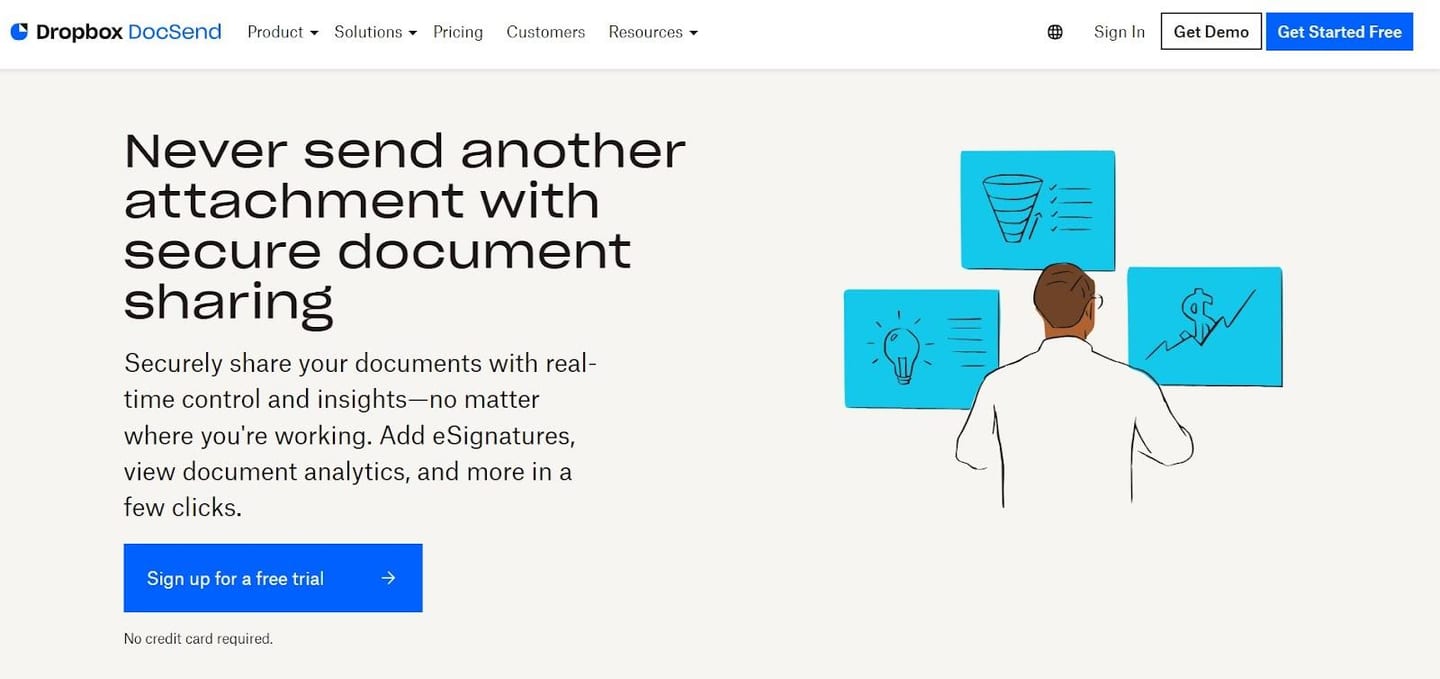
DocSend, a Dropbox tool, helps your sales team securely share proposals and documents with your prospects with real-time insights.
The platform is a viable alternative to GetAccept for organizations looking to share, manage, and track documents securely.
Features
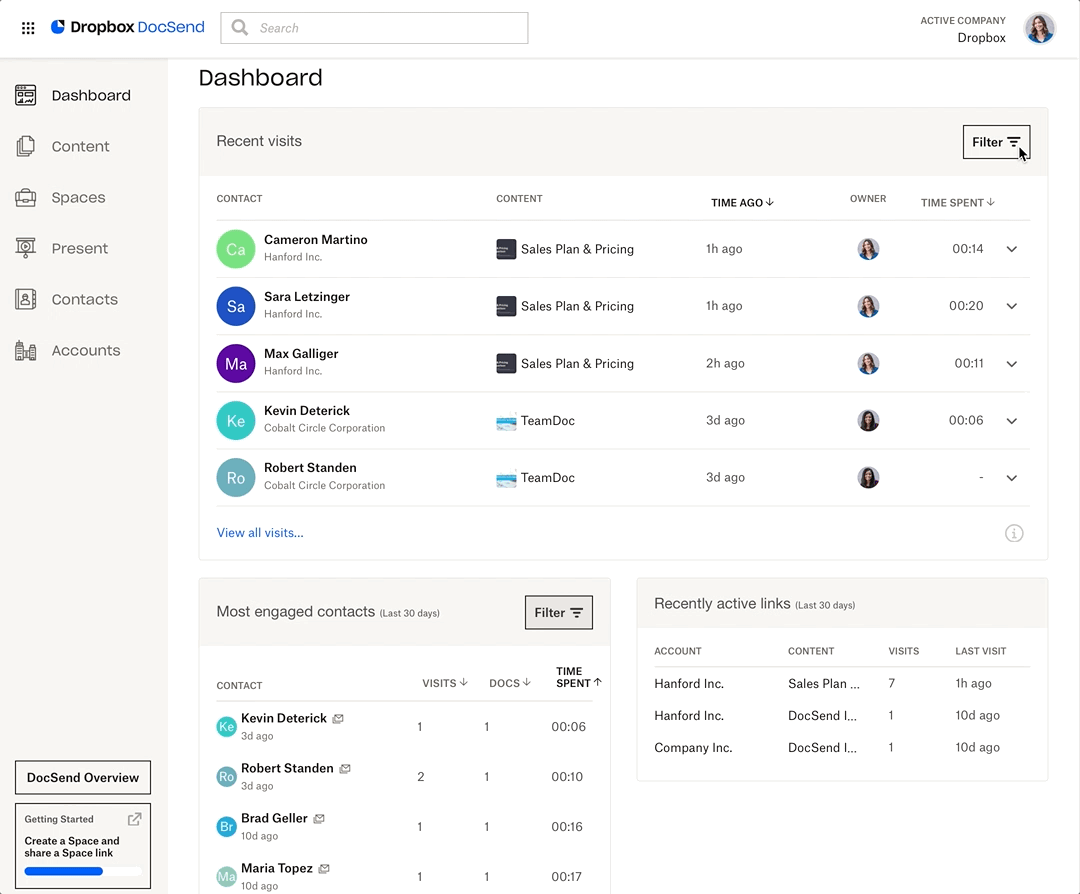
- Secure client portals that can be personalized to your clients and keep their confidential files secure.
- Virtual data rooms: Pitch, analyze and close more deals all in one place.
- One-click NDA: Enable your clients to sign NDAs with one click.
Standout Feature: Dynamic Watermarking
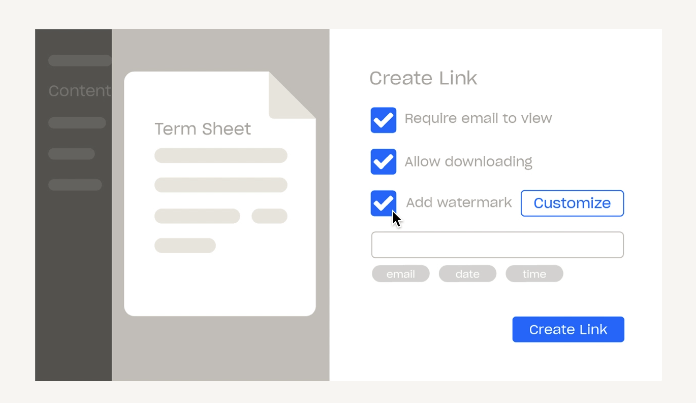
You can prevent unwanted sharing of your documents with DocSend’s dynamic watermarking that helps you protect your confidential documents.
Pricing
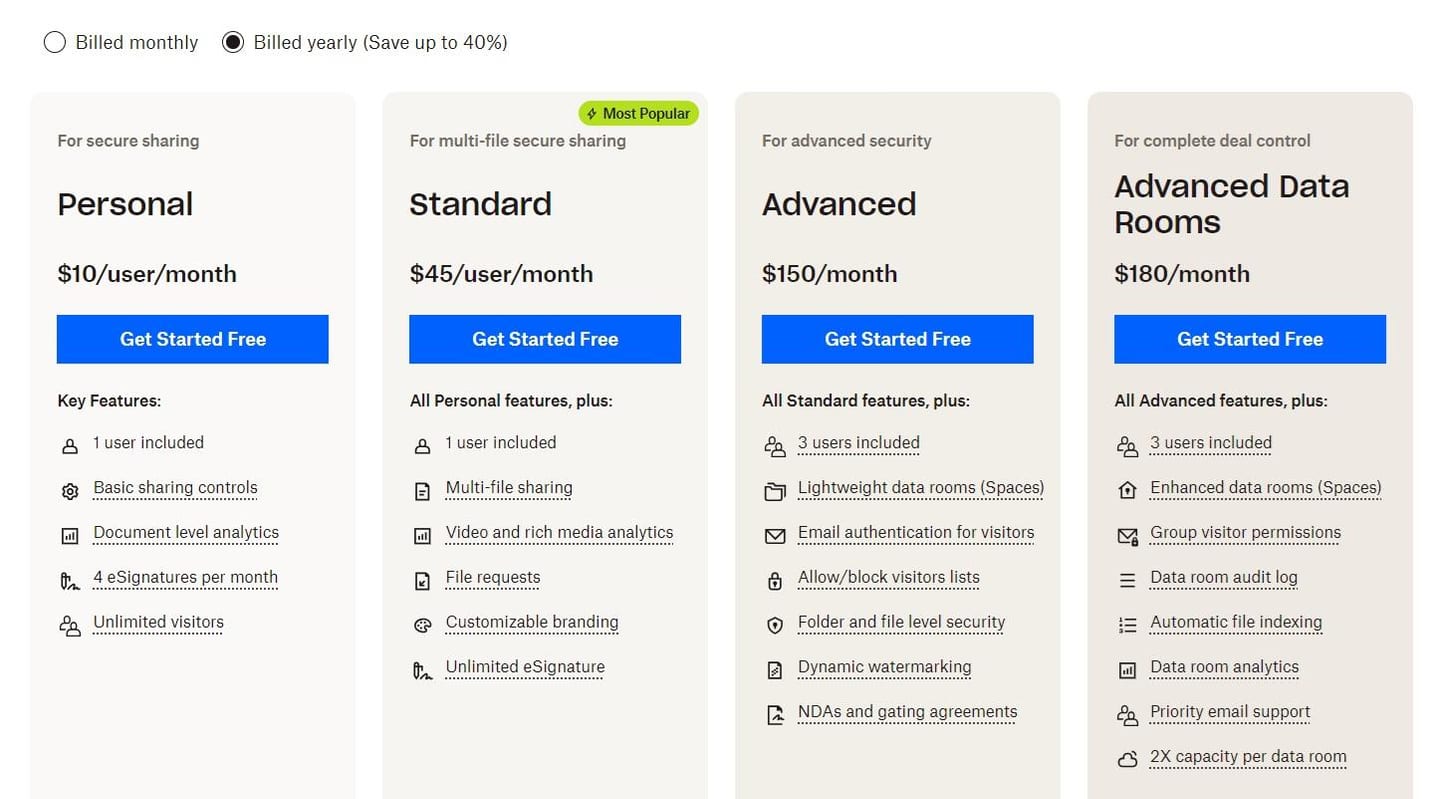
DocSend has four pricing tiers:
- Personal Plan:$10/month/user, which gives you access to basic sharing controls, document-level analytics, and four e-signatures per month.
- Standard Plan:$45/month/user, which adds access to multi-file sharing, file requests, rich media analytics, and customizable branding.
- Advanced Plan:$150/month for three users, which adds access to lightweight data rooms, folder & file-level security, and NDAs & gating agreements.
- Advanced Data Rooms:$180/month for three users, which adds access to enhanced data rooms, automatic file indexing, and data room analytics.
Pros and Cons
✅ Secure file-sharing with watermarks.
✅ One-click NDAs.
✅ Advanced data rooms.
⚠️ Enterprise plans are more expensive than other alternatives.
⚠️ Some users report uploading issues.
#7: PandaDoc
Best for: Getting in-depth document insights.
Similar to: DocSend.
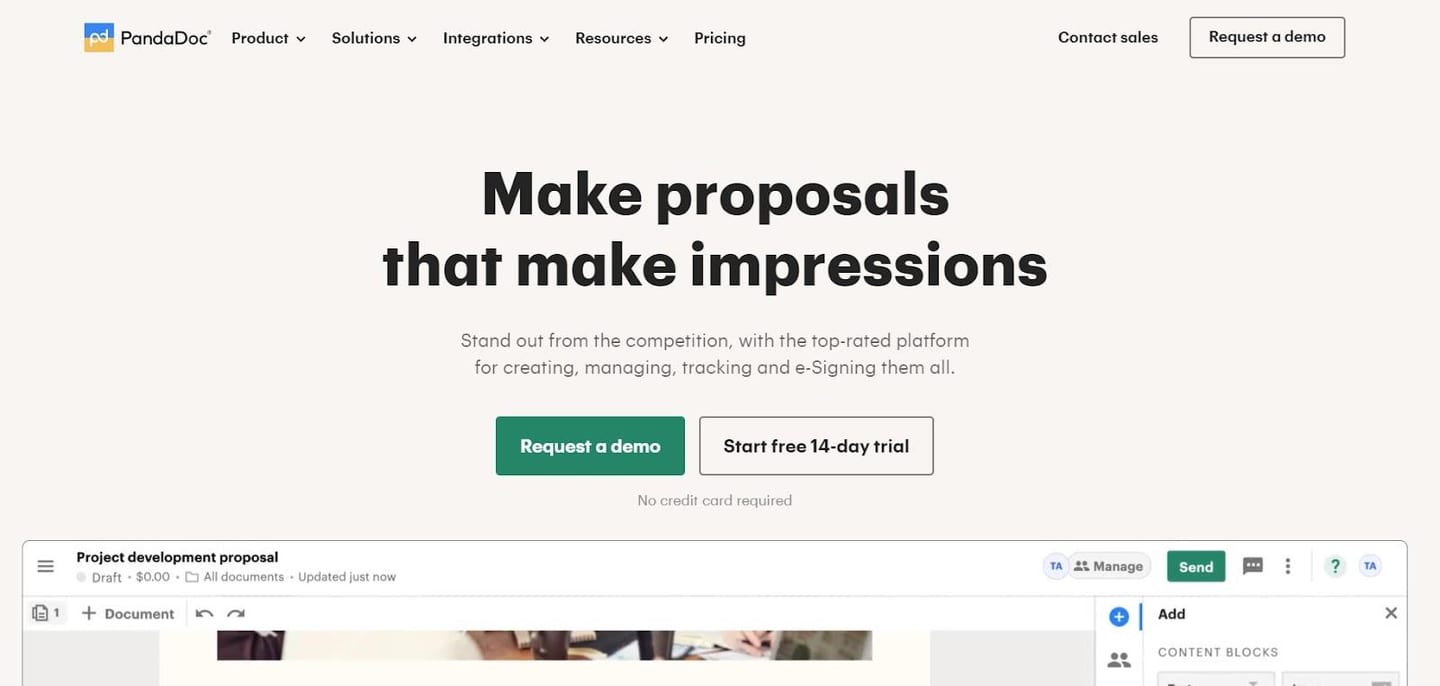
PandaDoc is a document automation platform that helps your sales team create proposals, contracts, and quotes with out-of-the-box templates.
The platform is a viable alternative to GetAccept for brands that need document management solutions with advanced workflow automation.
Features
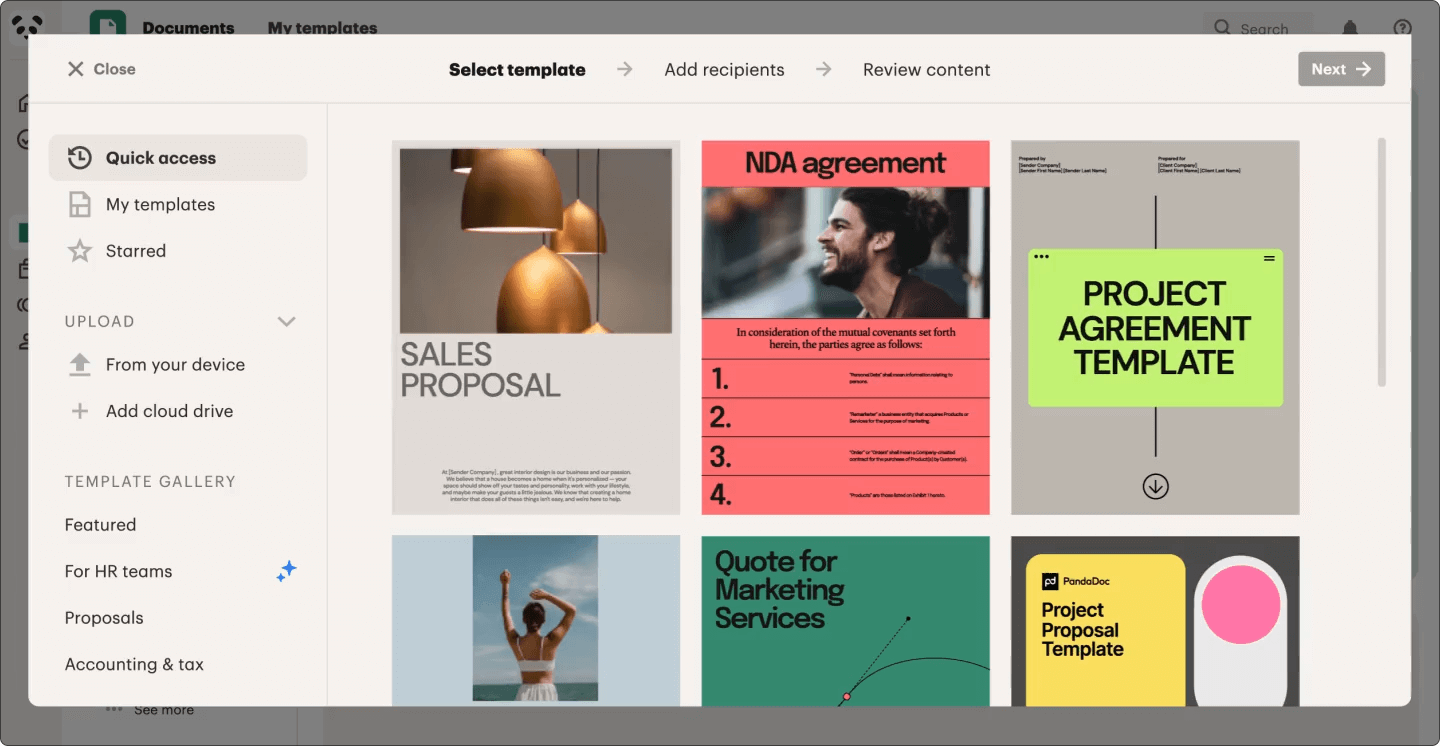
- Document generation software: Design and send out HIPAA, FERPA, and GDPR-compliant documents in minutes with customizable templates.
- Personalized deal rooms: Organize and share resources, collaborate with your prospects and stakeholders, and negotiate deals.
- Document analytics with insights, which give you access to data into how your leads interact with your documents.
Standout Feature: Smart Content
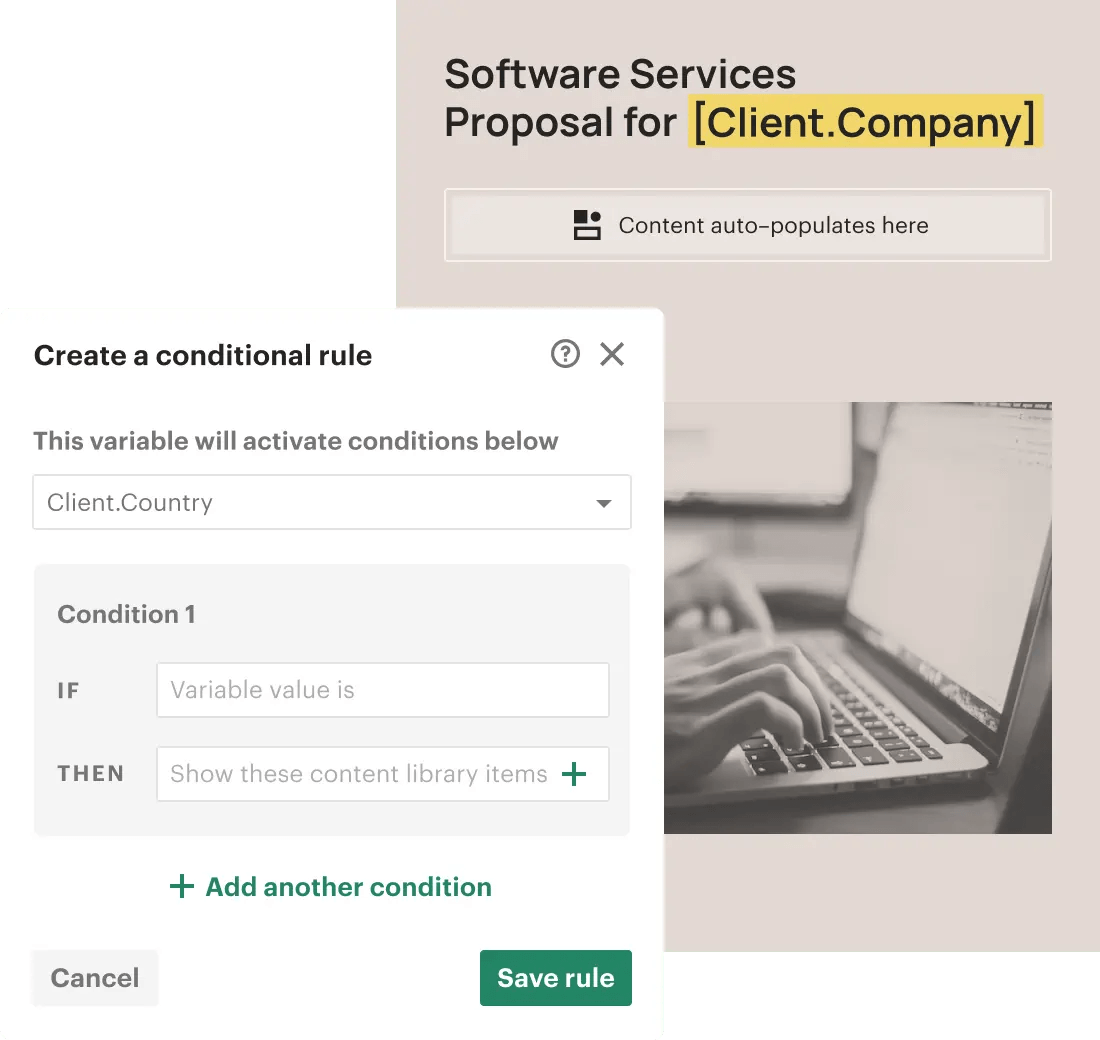
PandaDoc offers a smart content feature that ensures the right information is always added to every document while minimizing your document’s mistakes.
Pricing
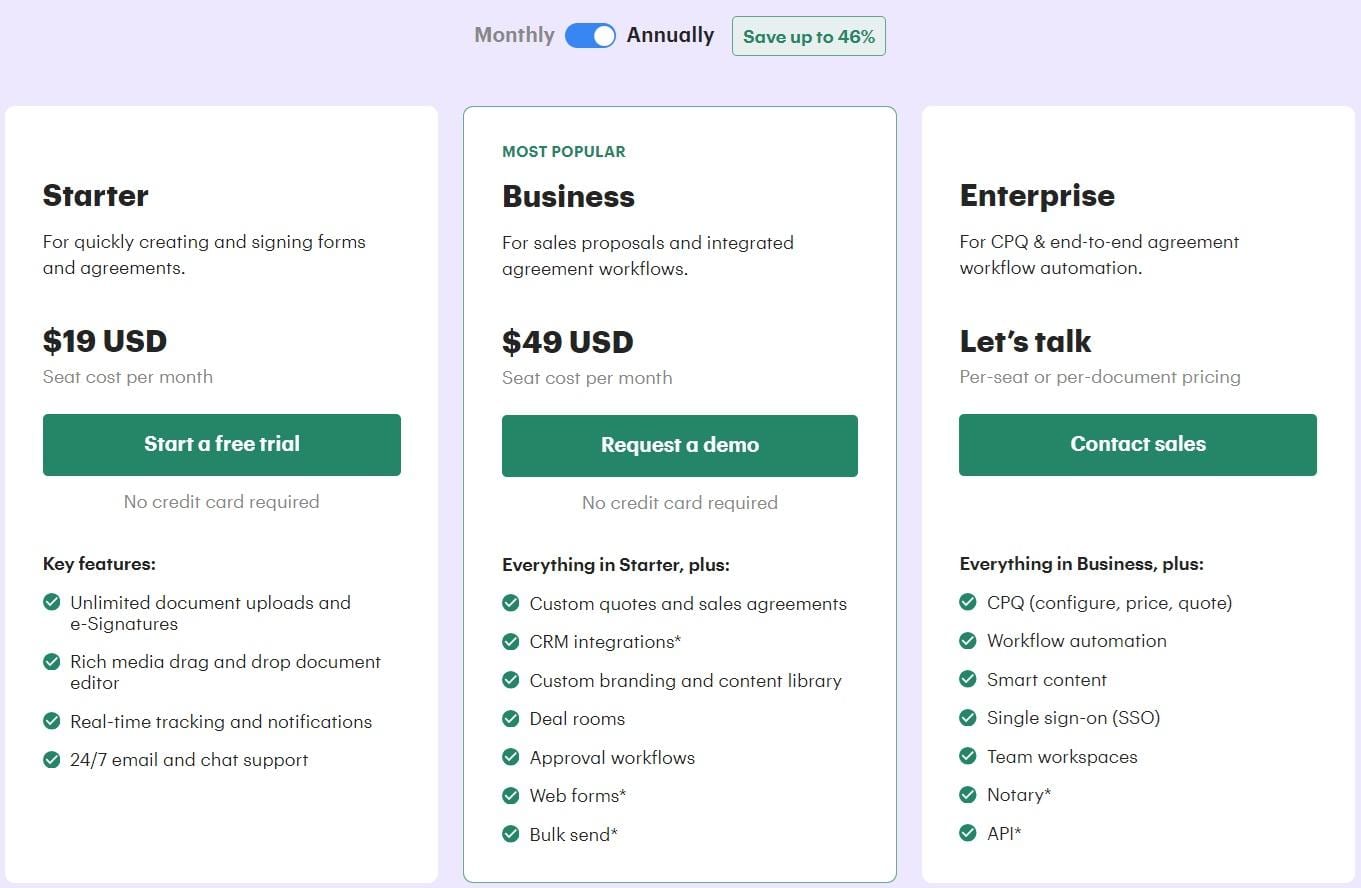
PandaDoc offers three paid plans:
- Starter Plan:$19/month/user, which gives you access to unlimited document uploads, e-signatures, rich media drag-and-drop document editor, and real-time tracking.
- Business Plan:$49/month/user, which gives you access to custom quotes and sales agreements, CRM integrations, deal rooms, and approval workflows.
- Enterprise Plan: Custom pricing that gives you access to workflow automations, CPQ, smart content, and SSO.
Pros and Cons
✅ Document automation with good analytics.
✅ Large library with easy-to-use templates.
✅ Personalized deal rooms.
⚠️ Templates are not as customizable as some users would want them to be.
⚠️ Integrations with CRM platforms are not deep enough when compared to other alternatives.
#8: DealHub.io
Best for: Building andsending out CPQs and invoices at scale.
Similar to: Qwilr.
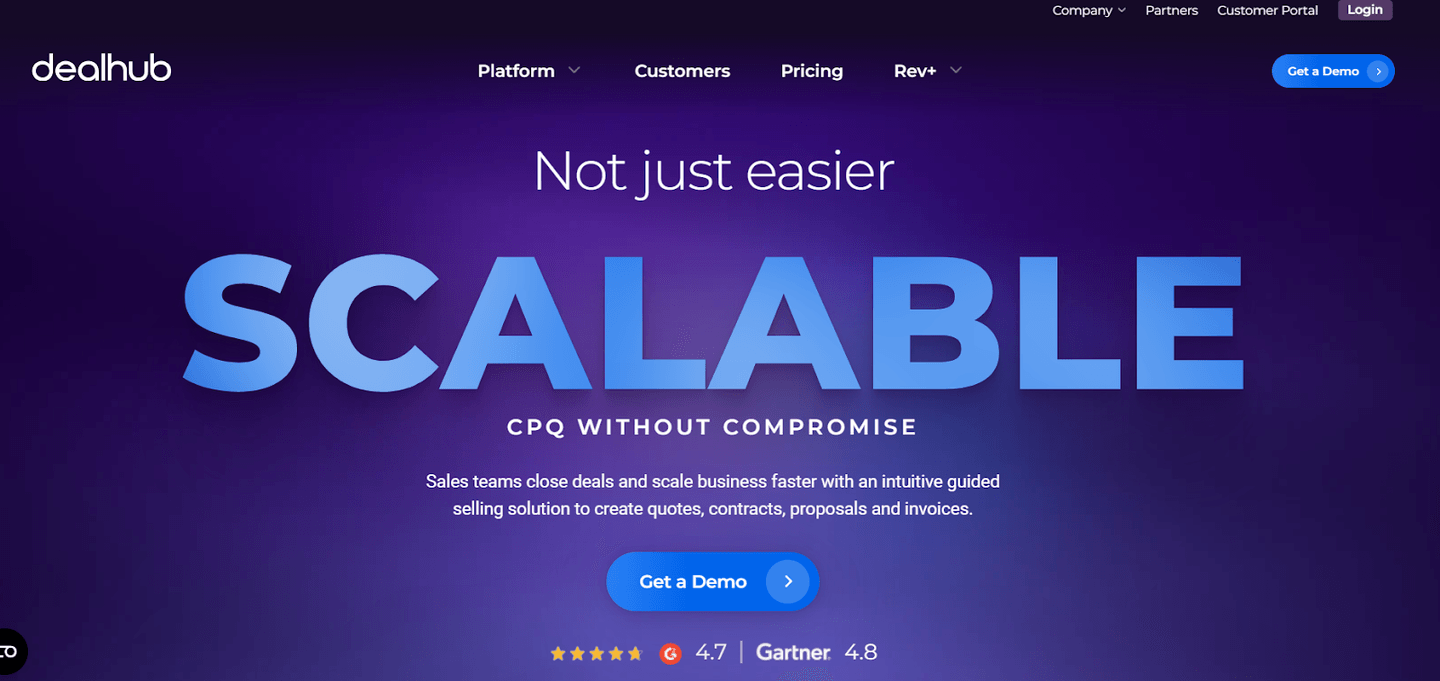
DealHub is a proposal platform that helps sales teams close more deals with a guided selling solution to create quotes, contracts, and proposals.
The sales enablement software is a good alternative to GetAccept for sales teams that are looking to create personalized proposals and send them at scale.
Top Features

- CPQ (configure price quote): Generate professional price quotes and proposals in minutes from ready-to-use templates.
- DealRoom: Accelerate your sales process by collaborating with your leads in a single digital sales room to close more deals.
- Contract management: Streamline your sales negotiations by automating the approval of contracts.
Standout Feature: DealHub Agile Billing

DealHub’s agile billing enables your finance team to control the revenue stream by managing customer subscriptions, amendments, tiers, and consumption-based pricing.
The platform connects with your accounting team’s ERP and/or accounting software and syncs data across these platforms to ensure data integrity.
Pricing
DealHub does not have public pricing, which means your team will have to contact them to get a product demo and a quote.
Pros and Cons
✅ Contract and invoice management.
✅ Create and send out tailored proposals, contracts, and invoices.
✅ Agile billing.
⚠️ Pricing is not transparent. Some users report the tool to have a complex pricing structure.
⚠️ The platform may be hard to set up for teams with less technical resources.
Next steps: comparing GetAccept competitors
The other seven tools on this list each handle the document side of a deal: proposals, quotes, contracts, or signatures.
The work around that document still falls to your reps: the prep before each call, the follow-up after it, the CRM updates, and the next stakeholder to bring in.
If you’re a sales leader who wants:
- Every deal worked from your team’s playbook, not only the ones your best reps have time for.
- Call prep, research, follow-up emails, and CRM updates done for your reps, with a rep approving each one before it sends.
- A sales room kept current with each deal’s next steps, working with the CRM and notetaker your team already uses.
Then you can book an agent kickoff to see how Arrows works today.