


We researched dozens of sales platforms, reviewed verified user testimonials on G2, and talked to sales managers to find out the best sales enablement solutions for B2B so you don’t have to.
In this article, we will review ten sales enablement tools that were built for B2B brands, going over their best features, pros and cons, and pricing models.
Before we begin, let’s discuss the factors to consider when evaluating B2B sales enablement tools. ⤵️
How to compare B2B sales enablement software
#1: Depth of Features & Automations
The most important factor for us when evaluating the platforms were their workflow automation capabilities and overall depth of sales features.
Automating sales tasks can save you time from repetitive tasks and enable your sales reps to focus on higher-value activities, such as relationship-building with prospects.
The best sales enablement platforms also offer additional deal management features, such as identifying potential risks and spotting opportunities.
💡 We also reviewed sales tools that aim to facilitate new sales rep onboarding by providing structured training paths and performance tracking.
#2: Integration Capabilities
One more thing to consider is the platform’s integration capabilities with your existing sales systems.
This may include compatibility with:
- CRM systems.
- Marketing automation tools.
- Internal and external collaboration tools like Slack.
➡️ Effective integration with existing systems makes sure that your data can flow between platforms so your team doesn’t have to spend time with manual data entry.
#3: Pricing Structure
Different sales enablement solutions have different pricing models for B2B brands.
Some sales platforms offer pricing based on the number of seats you’d need for your sales reps, while others are based on the features you will need.
The pricing model you go with can impact your bottom line and prove quite expensive in the long run if you plan on onboarding many sales reps.
💡 For the sales platforms that did not disclose their pricing, we tried to find data from third-party sources like Vendr.
What are the best B2B sales enablement tools?
Here are the best B2B sales enablement solutions out of all the software we reviewed:
#1: Arrows: Apply your team’s playbook to every deal and get the work between calls done for your reps.
#2: Dock- Set up an all-in-one sales enablement platform with buyer intent notifications.
#3: Dialpad- Manage internal and external phone communications.
#4: HubSpot- Set up an enterprise all-in-one sales CRM.
#5: Qwilr- Send out beautiful sales proposals from ready-to-use templates.
#6: Zoominfo- Manage deal risk.
#7: Membrain- Build a quality sales pipeline that does not rely on automation.
#8: Highspot- Measure the performance of your sales team and identify training opportunities.
#9: Guru- Set up a knowledge base for sales teams to act as a single source of truth.
#10: Aligned- Build personalized sales rooms with the help of an AI assistant.
#1: Arrows
Best for: B2B sales teams that want their playbook applied on every deal, not stored in a content library reps have to go find.
Arrows is promptless AI for account executives. It keeps a gameplan for every deal: a path to close for each deal, built from your playbook and from what’s actually happening on that deal.
Full disclosure: Arrows is our product. Here’s what it does and where it fits in a B2B sales enablement stack.
A content library helps when a rep goes looking. Arrows brings the playbook to the deal instead. It reads your call transcripts, emails, CRM, and notes, and does the work your playbook calls for on each deal.
Feature #1: A gameplan for every deal, built from your playbook
Your best reps carry a plan in their head for their top deals. The rest get improvised.
Arrows keeps your playbook in plain English: how your team works its best deals. We build it with your team at kickoff. Every time something happens on a deal (a call ends, an email arrives, a meeting moves, a new person shows up on a thread), Arrows reads the playbook and decides the best next action for that deal. The gameplan stays current as the deal moves.
Feature #2: The work before and after every call, done for your reps
Arrows does the work you expect reps to do, and the work you wish they did:
- Call prep before every meeting.
- Deep research on the account.
- Follow-up emails drafted from what the buyer said on the call.
- CRM updates written back to the deal.
- Multi-threading, so a deal doesn’t rest on one contact.
- Every date tracked from your calls, with nudges when a deal goes quiet.
- The right case study and Loom videos sent between calls.
- Sales rooms kept current, so your buyer always sees the next steps.
That’s enablement where the deal happens. The right case study goes out because the playbook calls for it, not because a rep remembered to look.
There’s no prompt to write. Reps approve every email, CRM update, and sales room change before it sends.
Feature #3: Works with the CRM and notetaker you already use
Arrows works with HubSpot, Salesforce, Pipedrive, Close, and Attio, and with notetakers like Gong, Fathom, Granola, Grain, and Fireflies. It also connects to Gmail, Outlook, and Google Calendar.
It reads the deal context and writes approved changes back, so your CRM stays current without reps typing updates. See the CRM integrations.
Getting started takes one kickoff call, and the agents start on your open deals that same day.
Pricing
Arrows doesn’t publish prices. It’s priced on the work, not the seats. See how pricing works.
Not sure where Arrows fits in your enablement stack? Book an agent kickoff to see how it works.
What stands out
✅ Your team’s playbook applied on every deal, not only the ones a rep has time for.
✅ A gameplan for each deal that stays current as the deal moves.
✅ Promptless: call prep, research, follow-ups, and CRM updates arrive done, ready for a rep to approve.
✅ Case studies reach the buyer without reps digging through a library.
✅ Works with the CRM and notetaker your team already has.
#2: Dock
Best for: Setting up an all-in-one sales enablement platform with buyer intent notifications.
Similar to: Aligned, Qwilr.
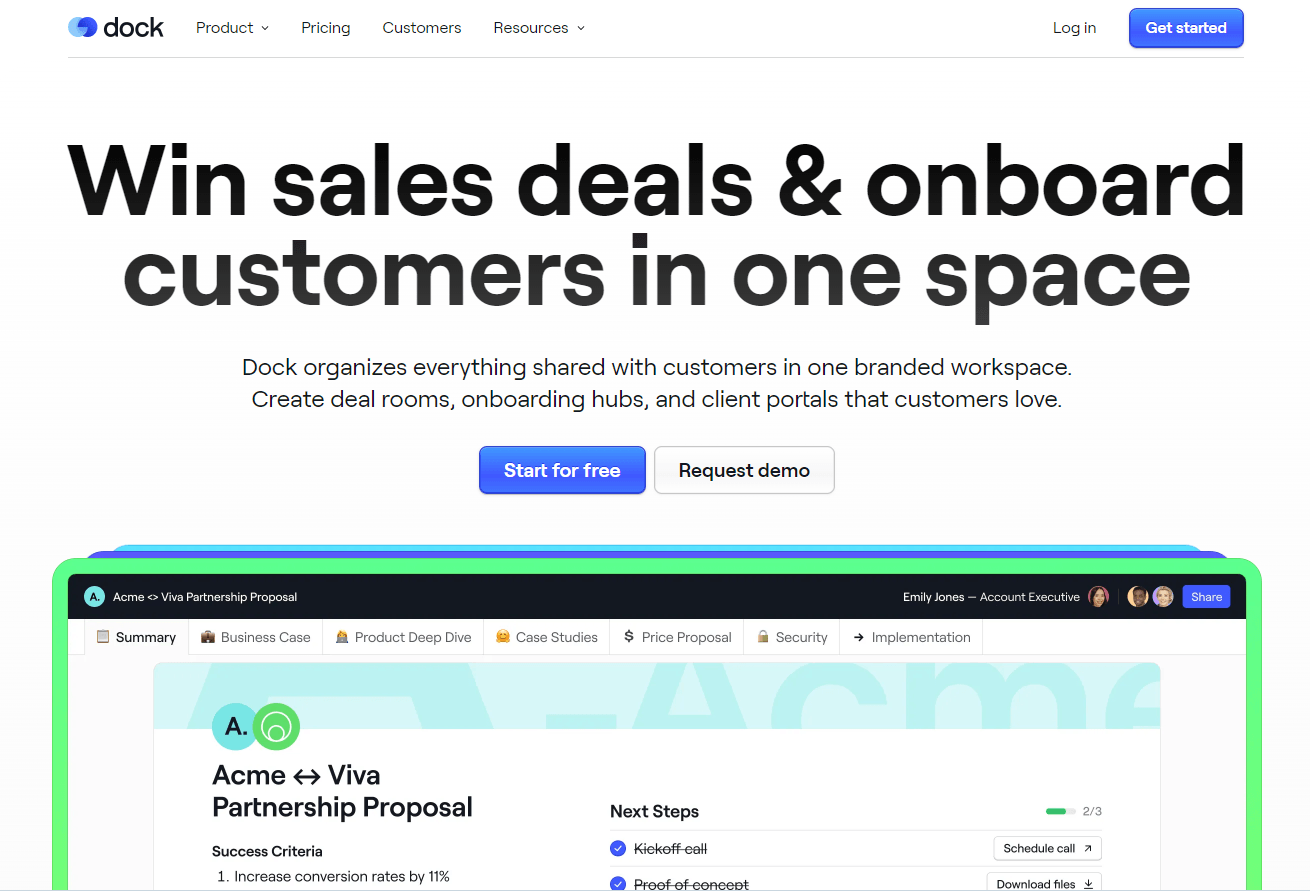
Dock is a B2B sales enablement software that lets you organize everything shared with your new users in one unified platform.
Features
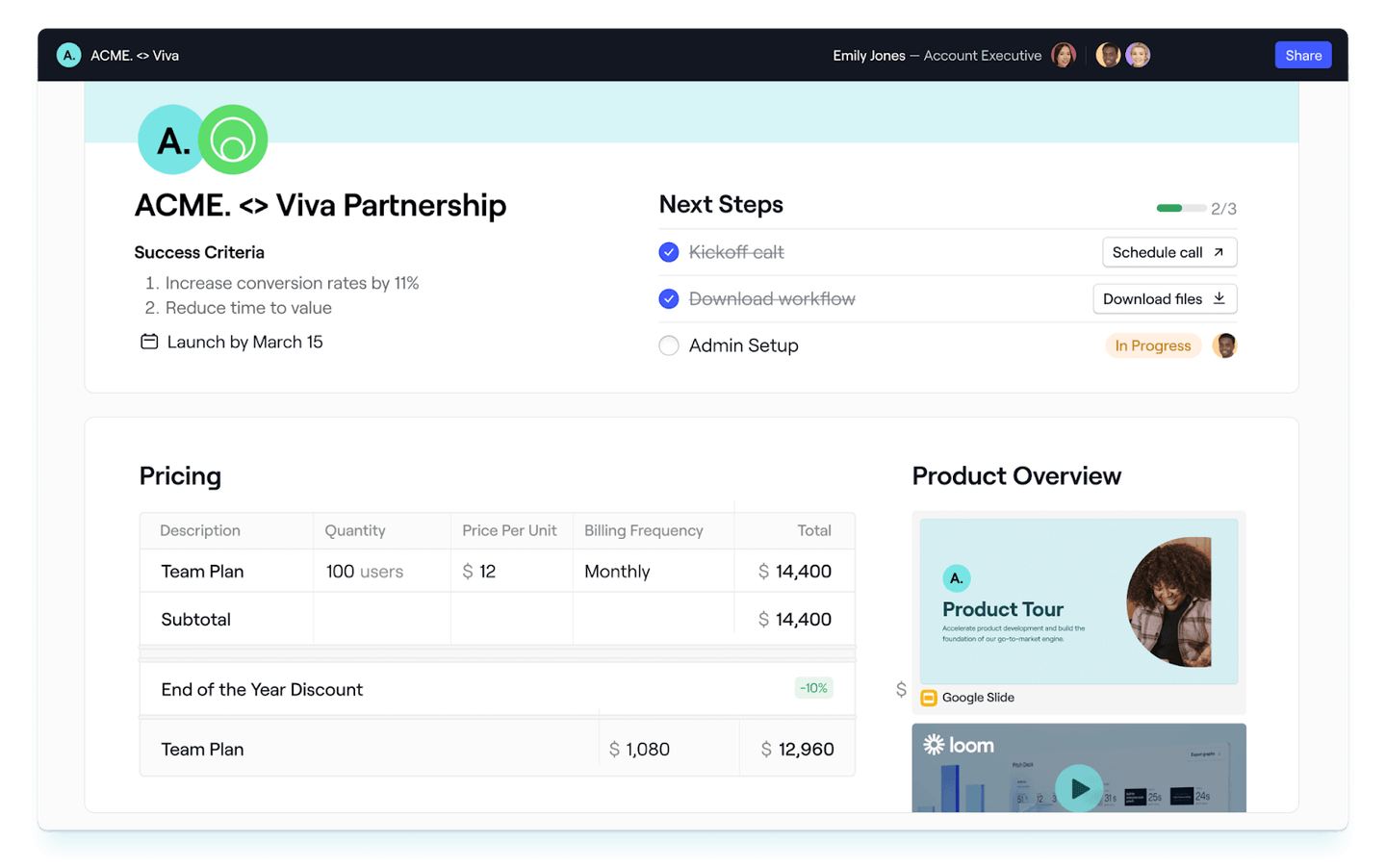
- Personalized sales deal rooms: Add sales content, action plans, price quotes, and order forms.
- New client onboarding portals: Share project plans, onboarding content, and forms.
- Client portals: Organize everything for your customers in one place to deliver a white-glove customer experience.
💡 The platform offers a comprehensive range of features, but some users have been looking for alternatives to Dock because the UI can be buggy at times and the software is not mobile-friendly.
Standout Feature: Sales Order Forms
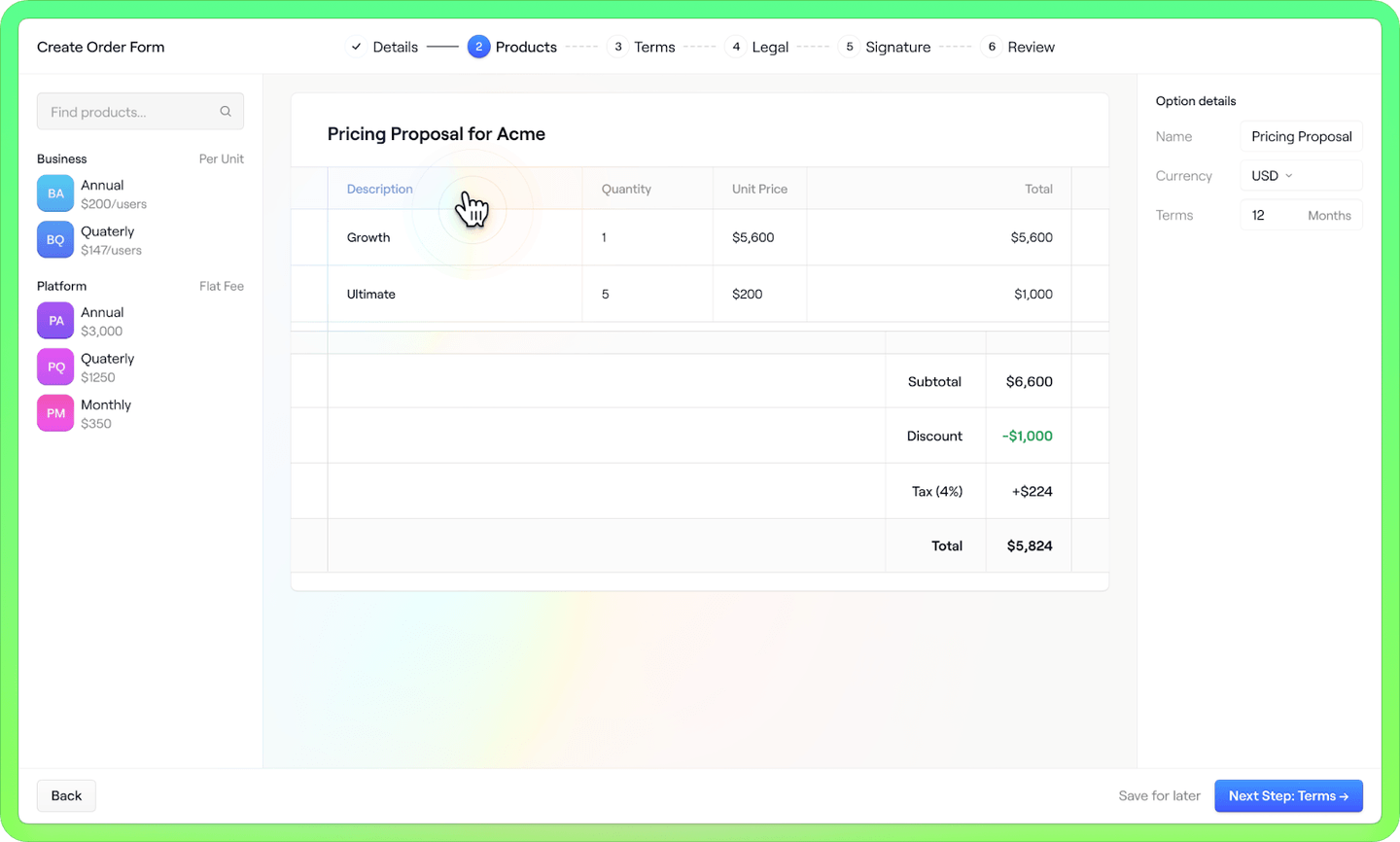
With Dock, you can create sales order forms and send them to your new clients for signing in only a few clicks.
Pricing
Dock has a free version that lets you access five workspaces for unlimited users.
To access the platform’s advanced features, you’d have to be on one of their three paid plans:
- Starter plan: $49/user/month, which gives you access to sales deal rooms, customer onboarding, client portals, and sales content management.
- Growth plan:$59/user/month + $250/month platform fee, which gives you access to HubSpot integration, custom dashboards, and page visibility controls.
- Enterprise plan: Custom pricing that lets you access Salesforce integration, custom domain, SSO, and automations.
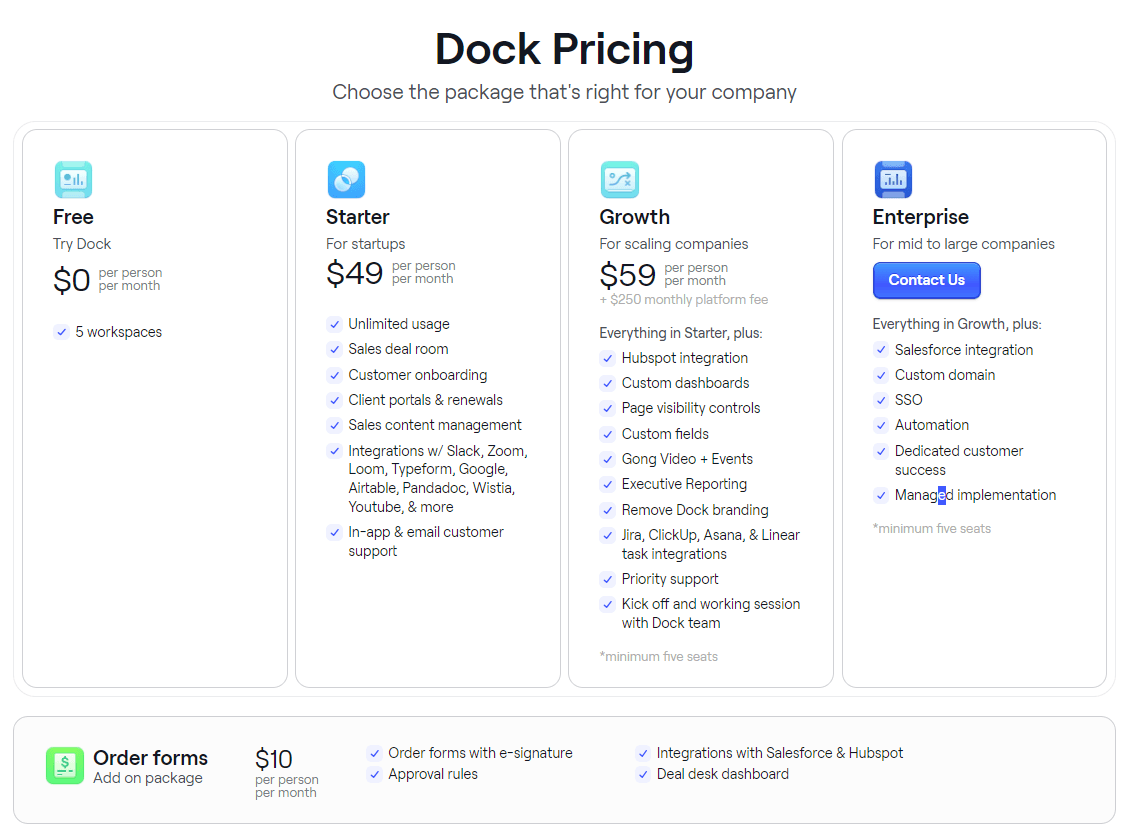
Note: Sales order forms are available as an add-on package that costs $10/user/month and gives you access to e-signatures, approval rules, and the deal desk dashboard.
Pros and Cons
✅ Sales enablement solution that lets you access client portals, sales rooms, and onboarding plans.
✅ Generous freemium plan, unlike other alternatives.
✅ Sales order forms.
⚠️ Set up can be time-consuming.
⚠️ The platform is not mobile-friendly yet.
#3: Dialpad
Best for: Managing internal and external phone communications.
Similar to: Qwilr.
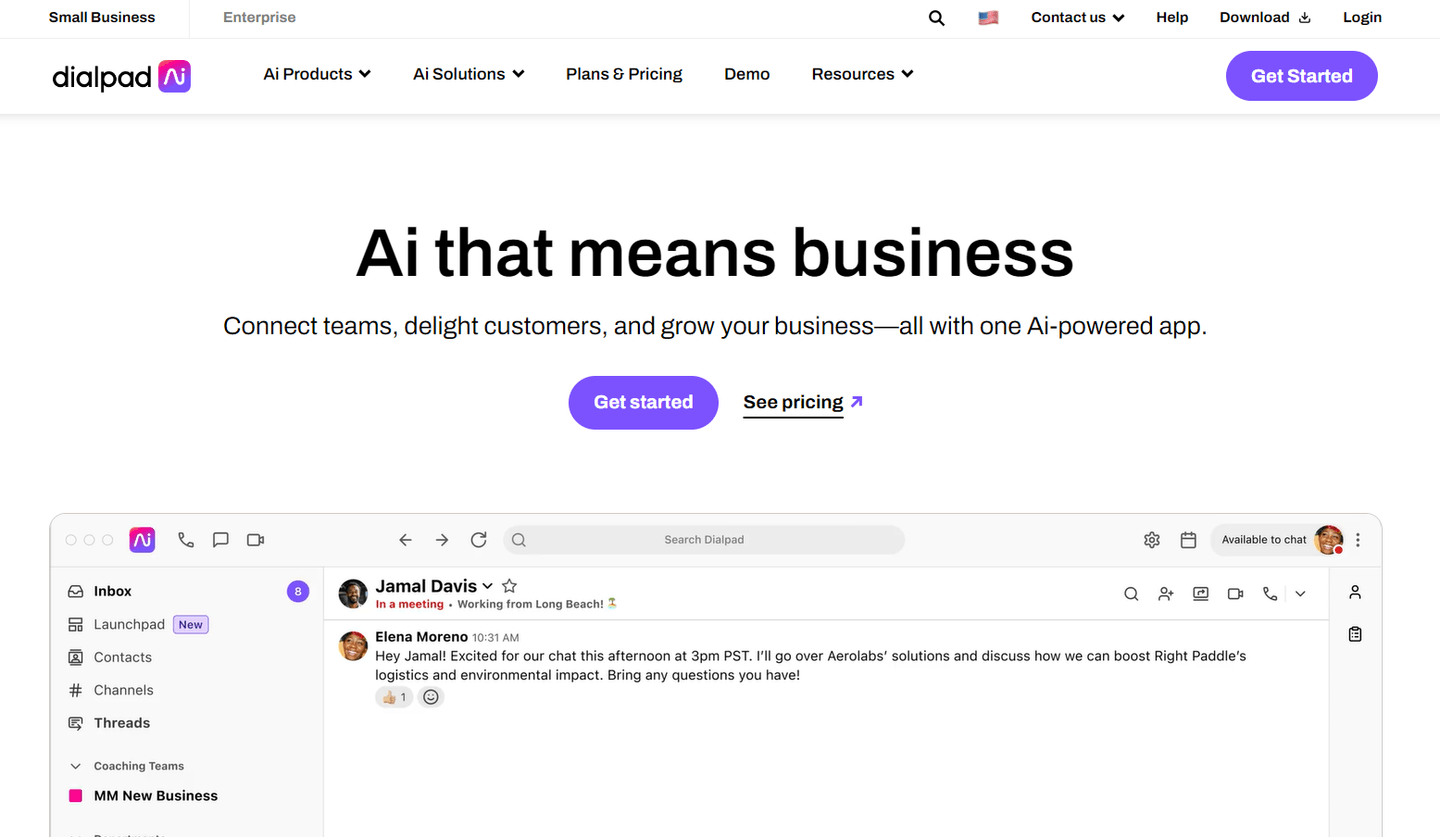
Dialpad is an AI-powered sales engagement platform that helps sales teams with high-velocity cold calling and internal conversations.
Features
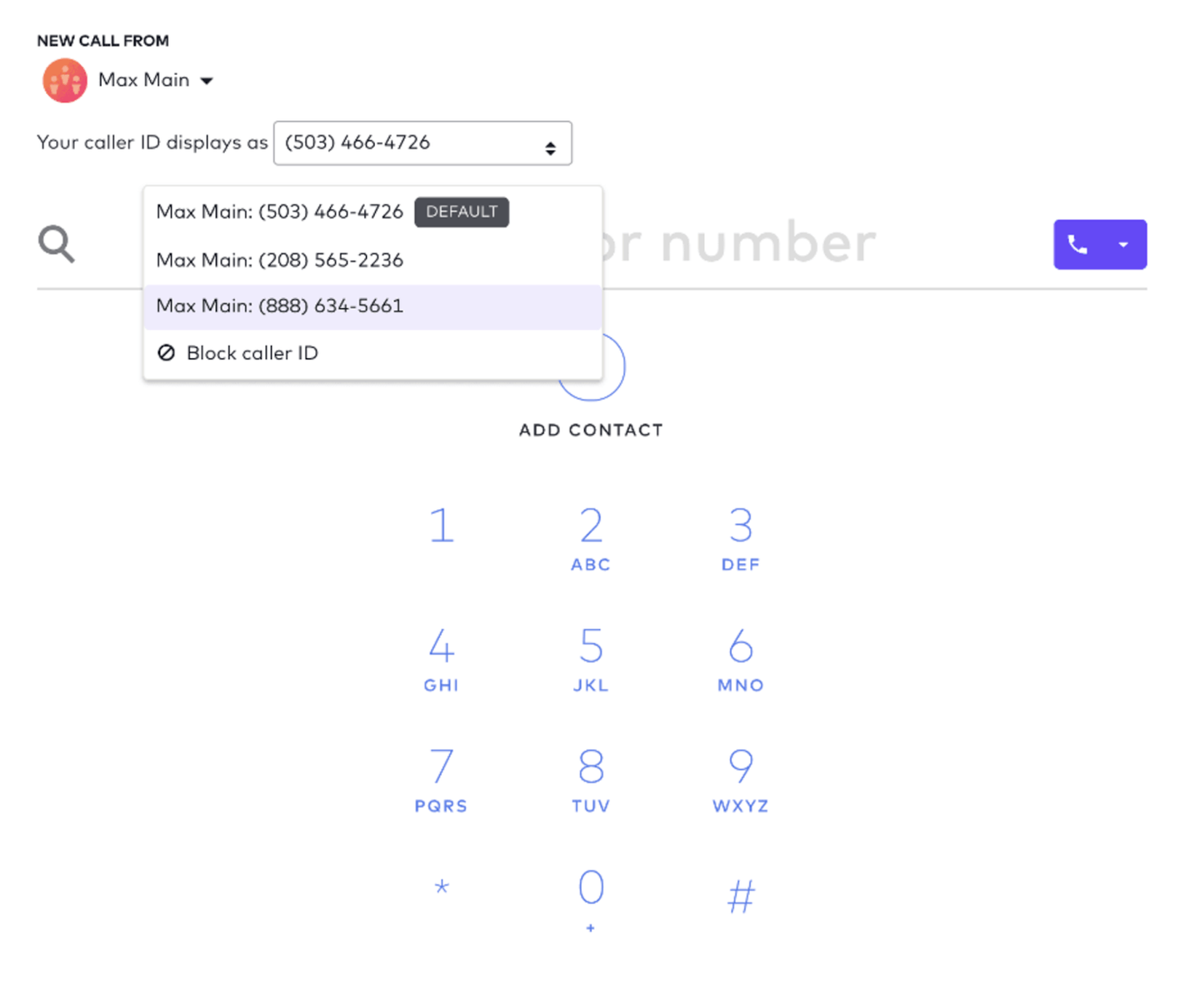
- Dialpad AI Sales: Automatically evaluate sales conversations and analyze the customer experience.
- AI Coaching Hub: Monitor sales tactic adherence, and identify coaching opportunities for your sales reps.
- AI Playbooks: You can customize, standardize, and support your sales training with playbooks that can get your new sales reps up to speed with your process.
Standout Feature: AI Scorecards
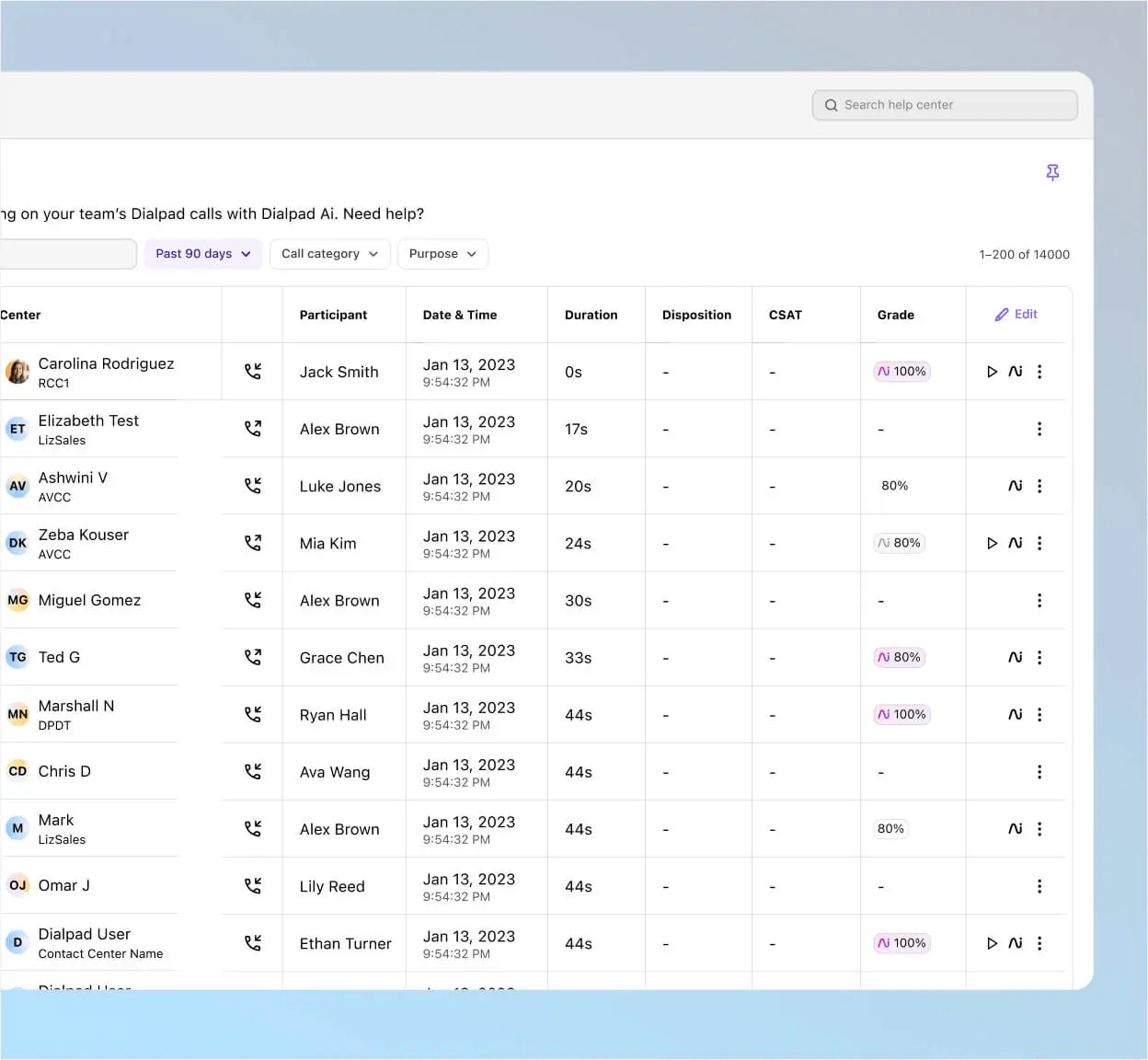
Dialpad offers AI-powered sales scorecards that help you optimize your sales team’s cold outreach performance.
The platform lets you spot issues that require coaching and evaluate conversations at scale.
Pricing
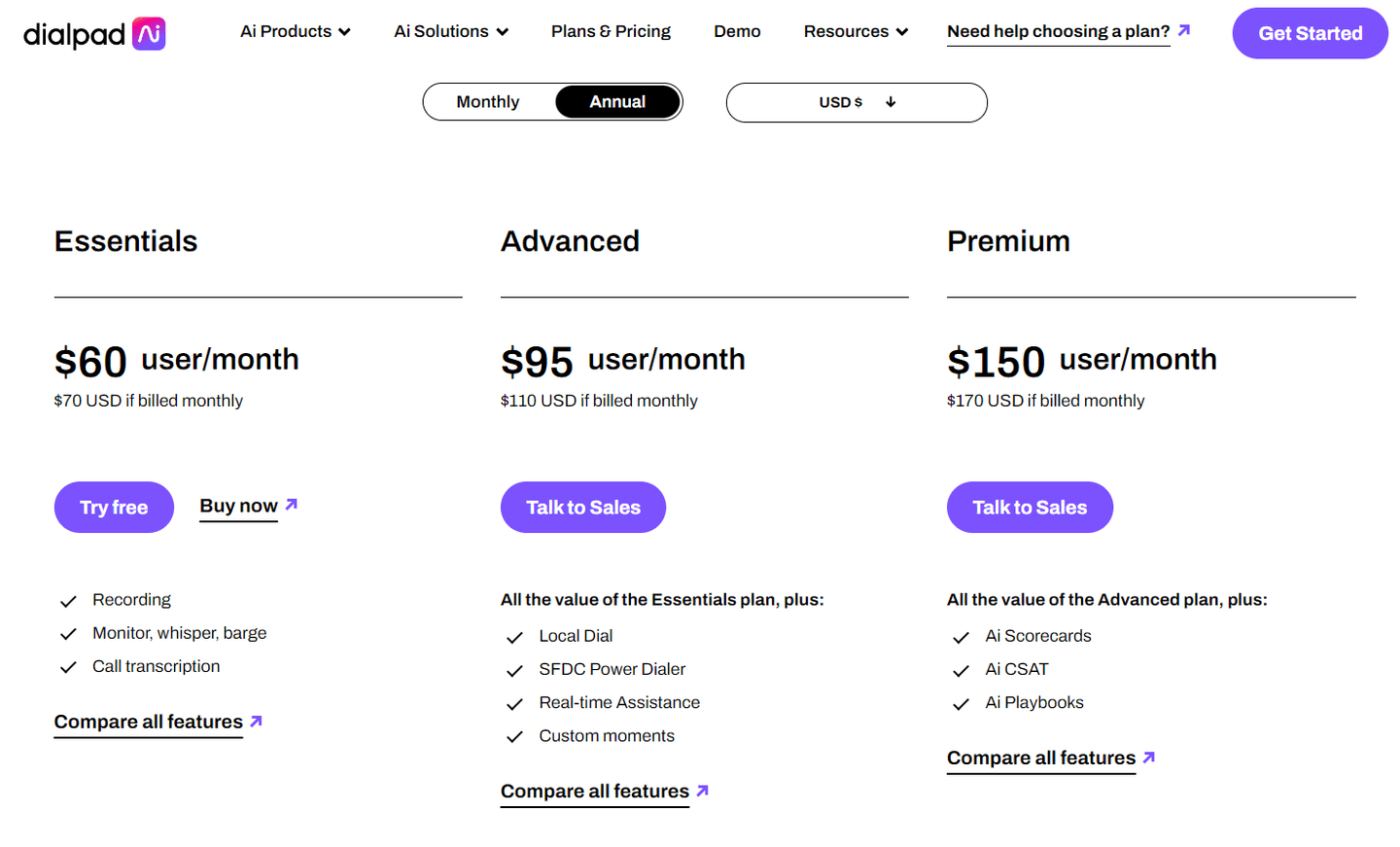
Dialpad has three paid tiers:
- Essentials:$60/month/user when billed annually lets you record sales calls, monitor their performance, and get access to call transcriptions.
- Advanced:$95/month/user when billed annually lets you get custom moments, real-time assistance, and a local dial.
- Premium:$150/month/user when billed annually lets you get AI scorecards, AI playbooks, and AI CSAT.
Pros and Cons
✅ Training of new sales reps by identifying issues.
✅ Recording and monitoring the quality of sales calls.
✅ You can use a local dial.
⚠️ Toll-free numbers can cost extra.
⚠️ AI scorecards and playbooks on the Premium plan only.
#4: HubSpot
Best for: Setting up an enterprise all-in-one sales CRM.
Similar to: Salesforce, Pipedrive.
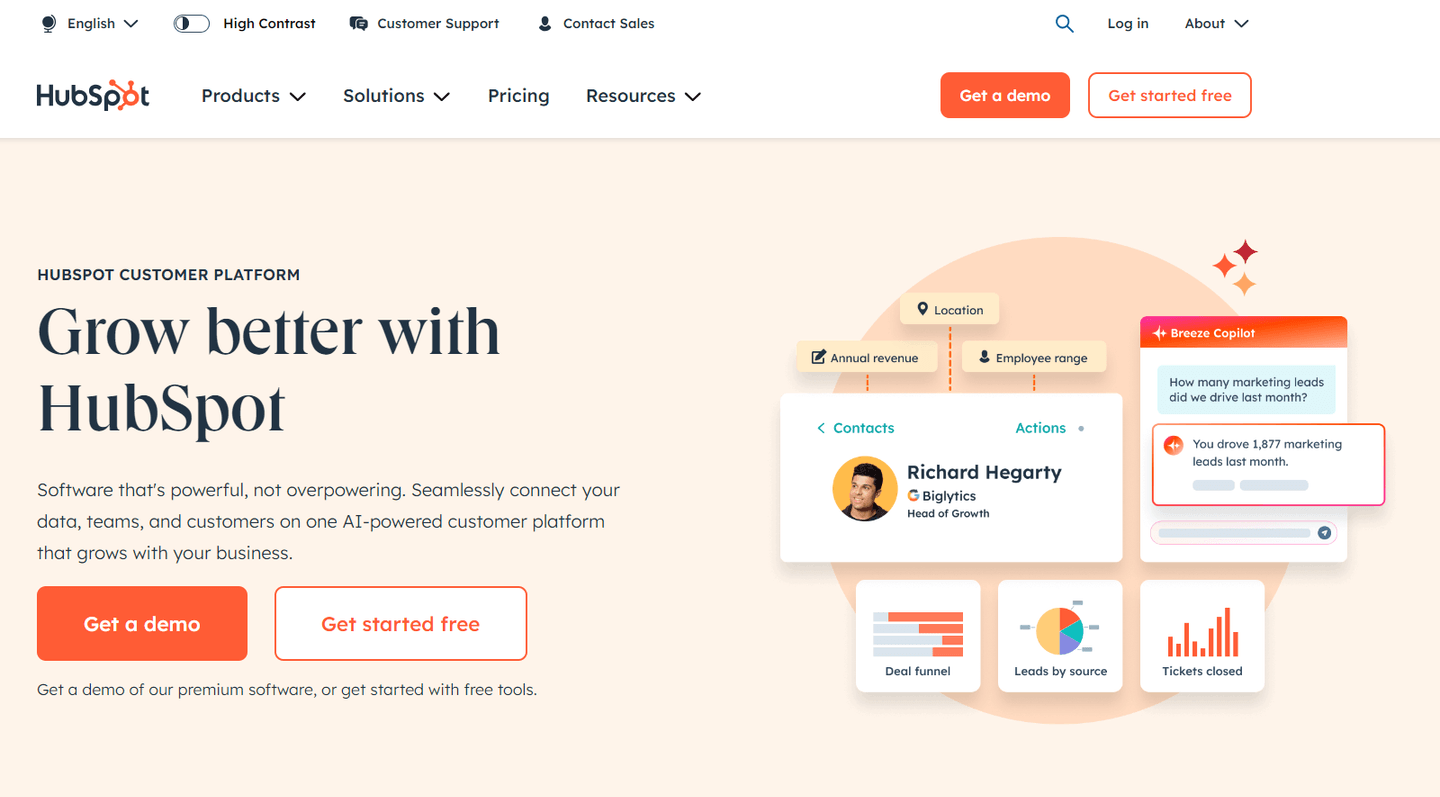
HubSpot is a sales CRM that lets you sync your sales data into one place and get access to detailed analytics and automations.
Top Features
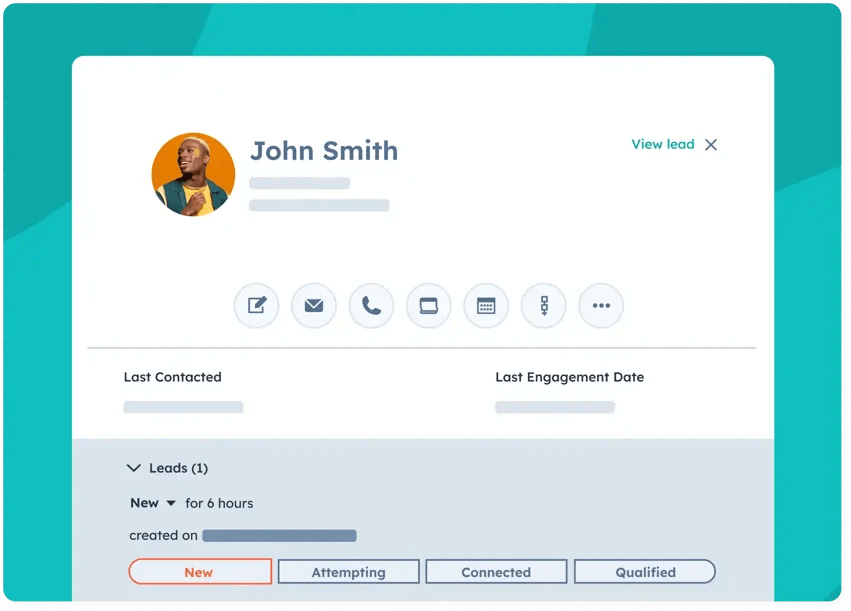
- Sales hub, where you can get access to sales engagement features, deal management, reporting, and analytics.
- Sales automations that helps your sales team scale cold outreach with personalized email sequences.
- Breeze lets you analyze the buyer intent of your prospects and act as your sales assistant.
Standout Feature: Deal Management
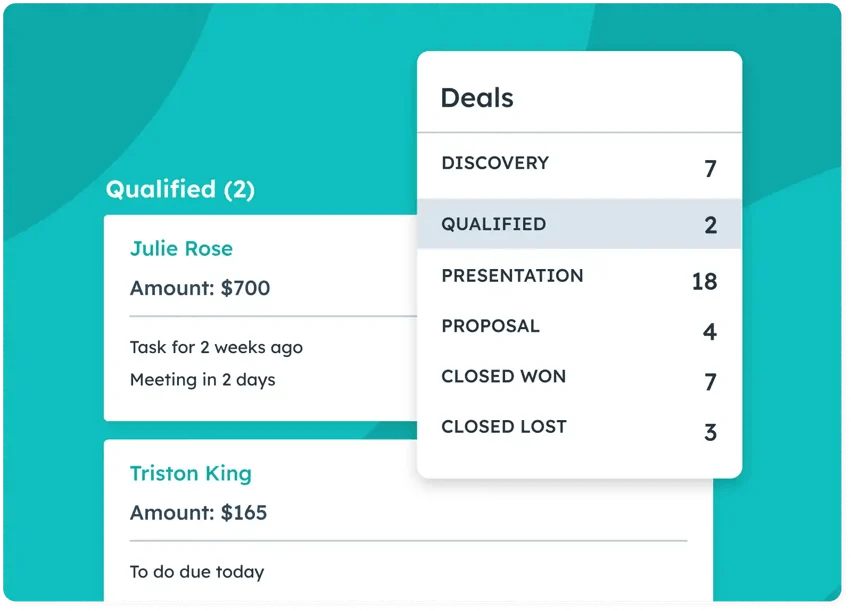
HubSpot helps your sales reps win more deals with guided selling features that prevent missed opportunities due to inaction by your sales team.
This feature lets sales teams work on the right deal at the right time and ensure that no good deal is lost.
Pricing
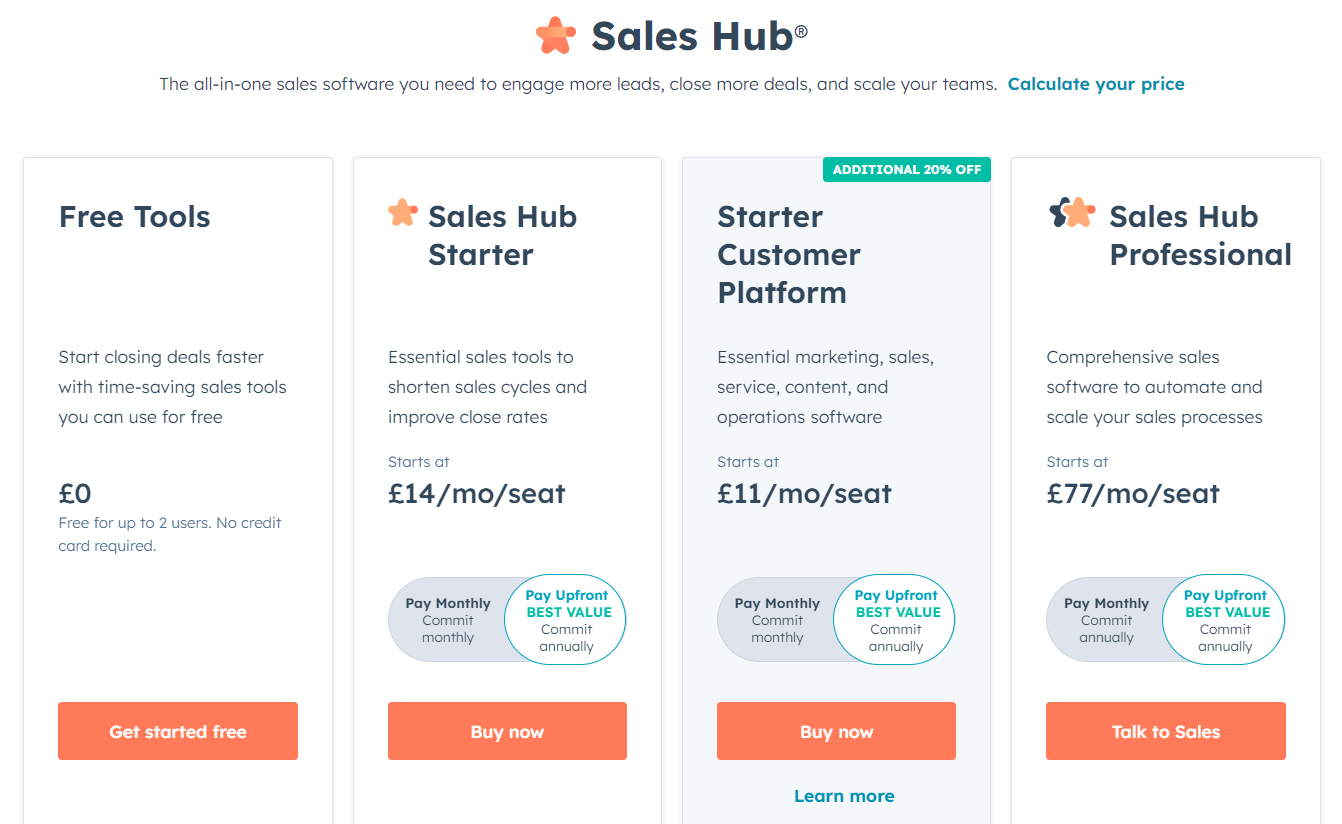
HubSpot has a free version that gives you access to its free marketing, operations and sales tools.
To access the platform’s advanced features, you will need to sign up for one of its three paid tiers:
- Starter:$20/month/seat, which adds access to 50 active lists, no HubSpot branding, 5,000 email templates, and email scheduling.
- Professional: $100/month/seat, which adds access to 1,200 active lists, up to 100 inboxes, and up to 15 deal pipelines per account.
- Enterprise:$150/month/seat, which adds access to 2,000 active lists, up to 200 inboxes, and recurring revenue tracking.
Pros and Cons
✅ Get access to workflow automations and advanced analytics.
✅ AI-powered sales assistant.
⚠️ The templates are not very customizable compared to other competitors.
⚠️ The platform may not be easy to navigate initially.
#5: Qwilr
Best for: Sending out beautiful sales proposals from ready-to-use templates.
Similar to: Dock.
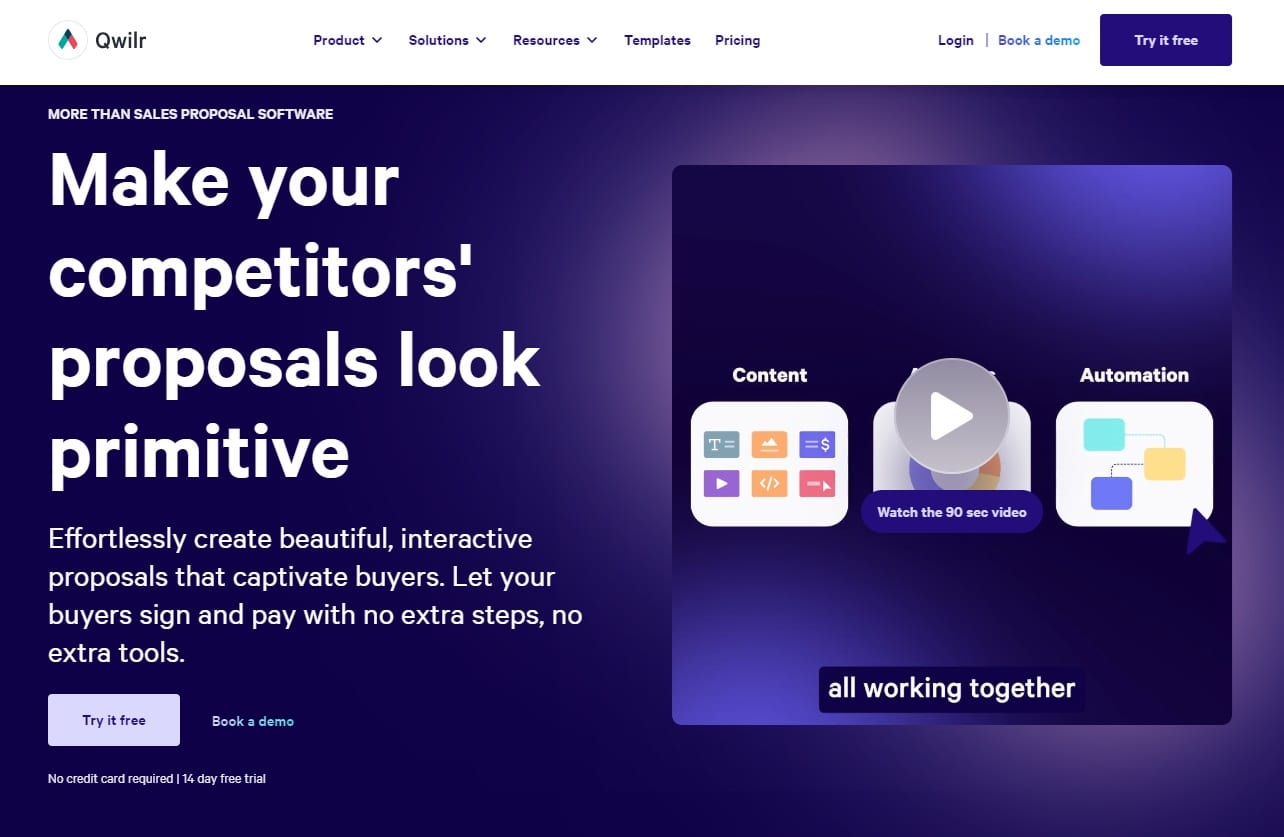
Qwilr is a sales proposal software that lets you create sales proposals in web format to convert your prospects.
Features
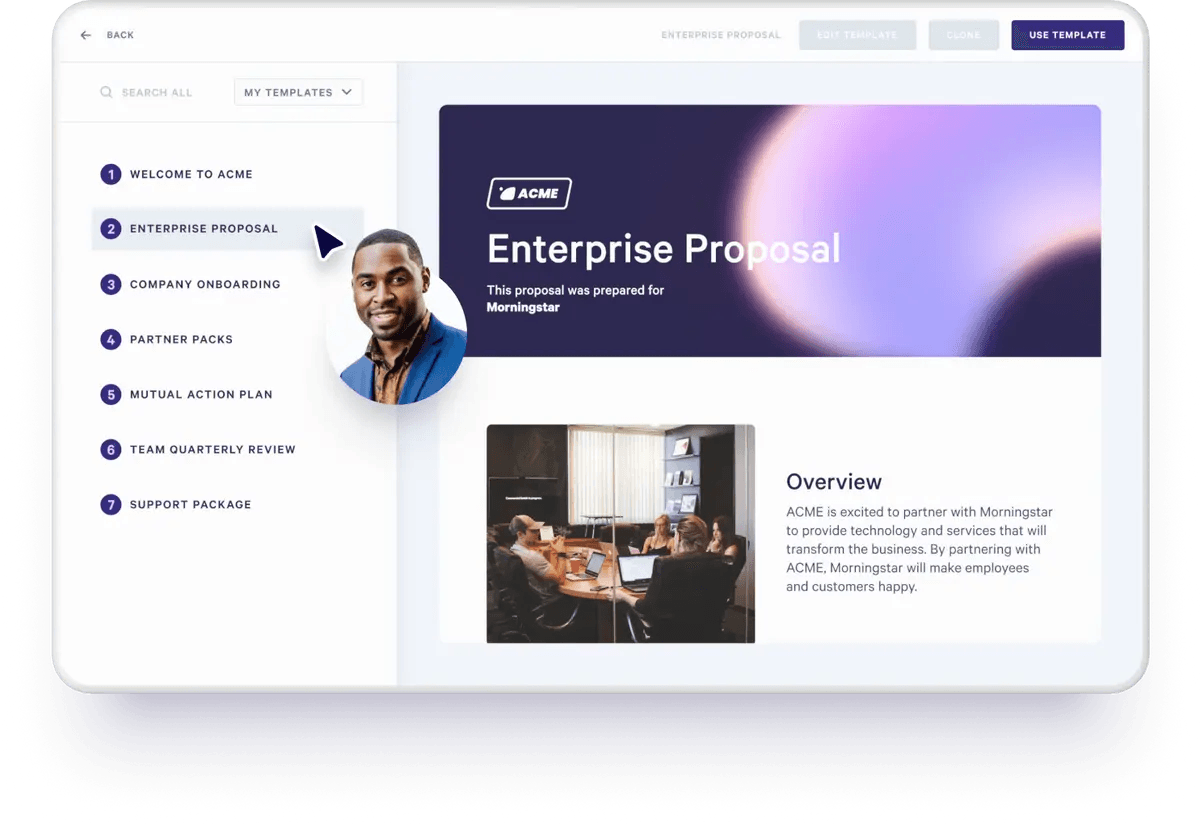
- Sales proposal web editor that you can customize with ready-to-use templates, enabling you to create sales materials quickly.
- Accepting payments faster by combining the sign-off, agreement, pricing quote, and payment into one interactive page.
- Advanced engagement analytics that tracks buyer engagement (e.g., when a quote or proposal has been viewed) across all your sales material.
Standout Feature: Template Gallery
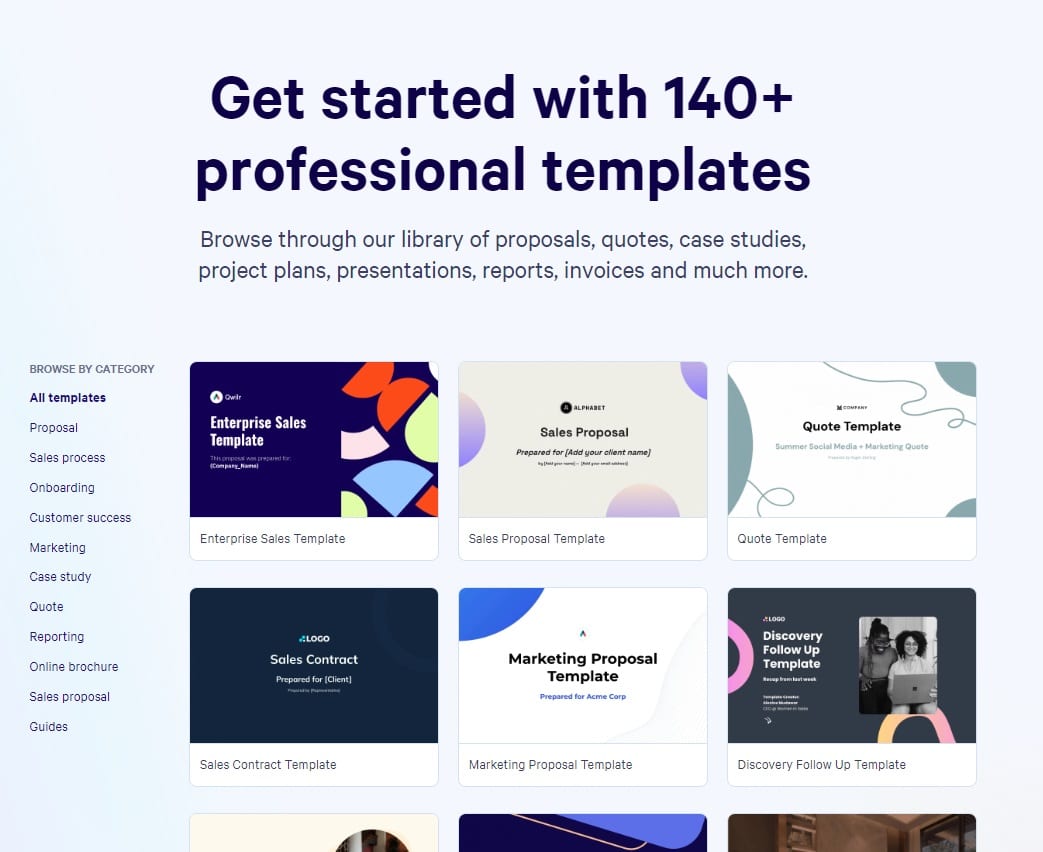
Qwilr lets you create beautiful sales proposals out of ready-to-use templates.
You can access the platform’s 140+ professional templates that include proposals, quotes, case studies, and sales presentations.
Pricing
Qwilr has two pricing plans:
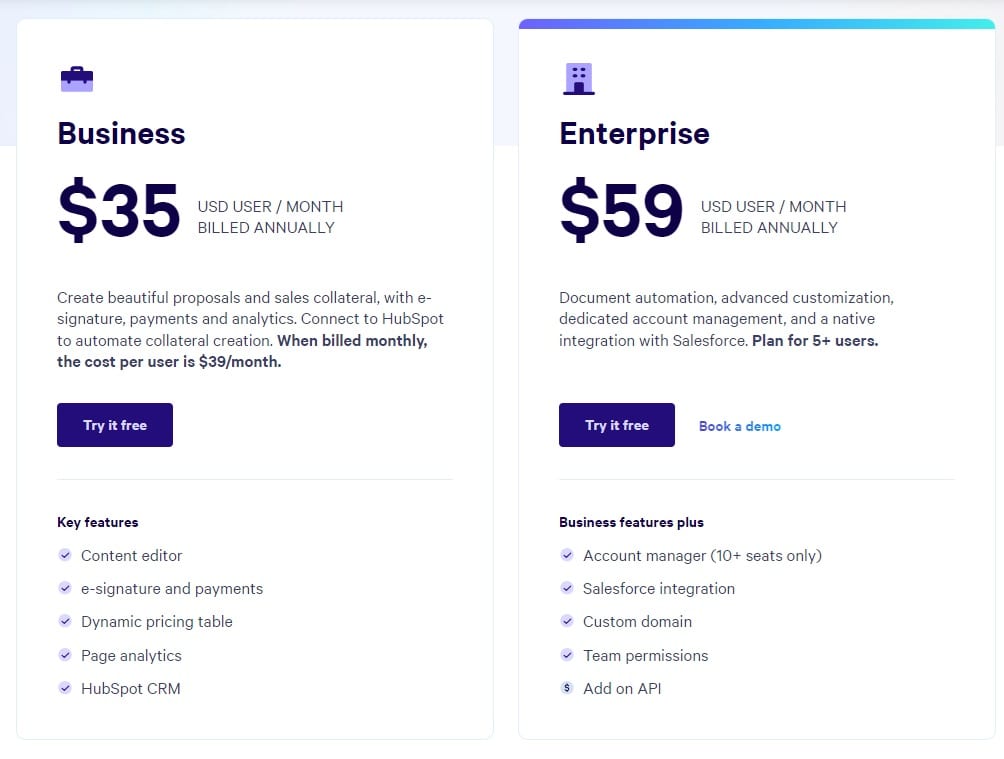
- Business plan: $35/month/seat, which gives you access to the tool’s content editor, e-signatures, dynamic pricing table, page analytics, and HubSpot CRM integration.
- Enterprise plan:$59/month/seat for a minimum of five seats, which adds access to document automation, advanced customization, and dedicated account management.
Pros and Cons
✅ Pre-made templates that you can personalize to your prospects.
✅ Good HubSpot and Salesforce integrations.
✅ Analytics and insights into customer engagement.
⚠️ Not as good editing and customization options as other competitors to Qwilr.
⚠️ Lack of reporting and dashboard functionality.
#6: Zoominfo
Best for: Managing deal risk.
Similar to: Highspot, Membrain.
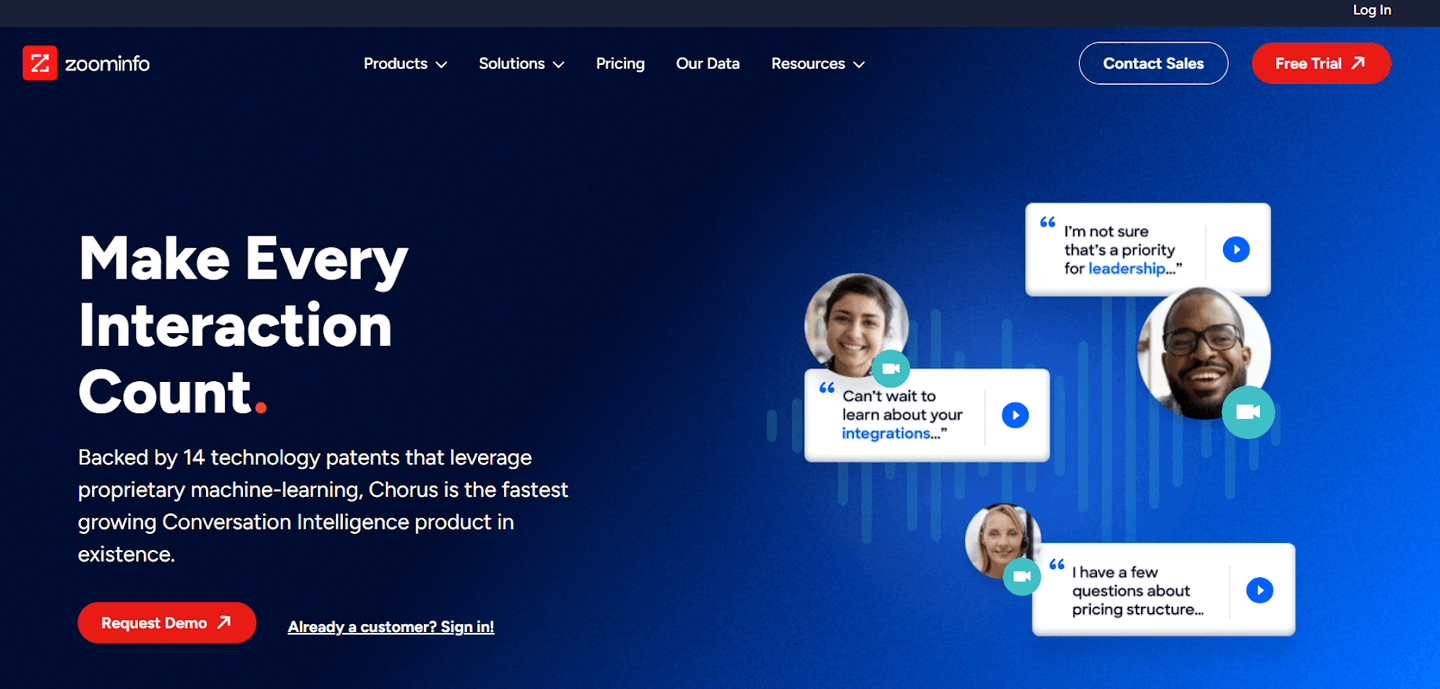
Zoominfo (Chorus) is a conversation intelligence tool that helps sales teams get insights into their past interactions and enables them to uncover factors underpinning sales deals.
Features
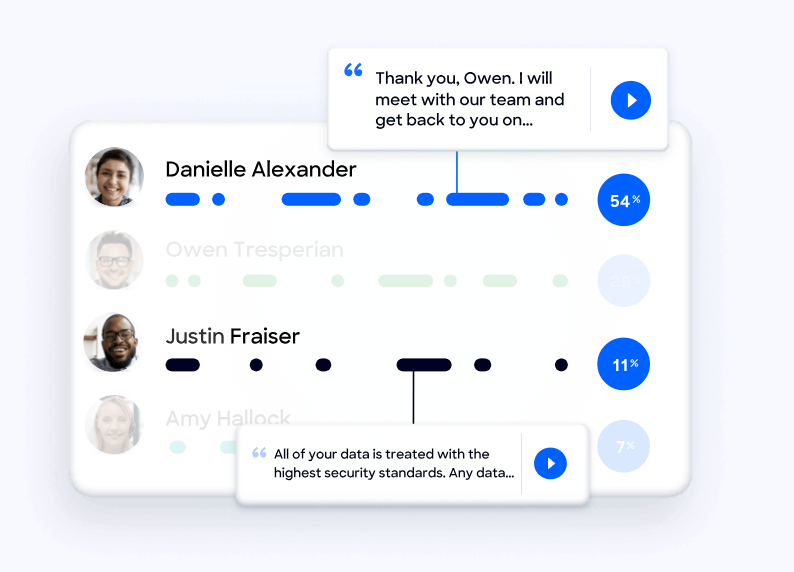
- Access sales transcriptions: Zoominfo lets you access sales call transcriptions and get insights into customer calls.
- Improve your sales team’s performance by identifying winning behaviors and coaching opportunities (e.g., objection handling).
- Deal forecasting and relationship management features that automatically capture and sync contacts and communications from the field to your CRM.
Standout Feature: Market Intelligence
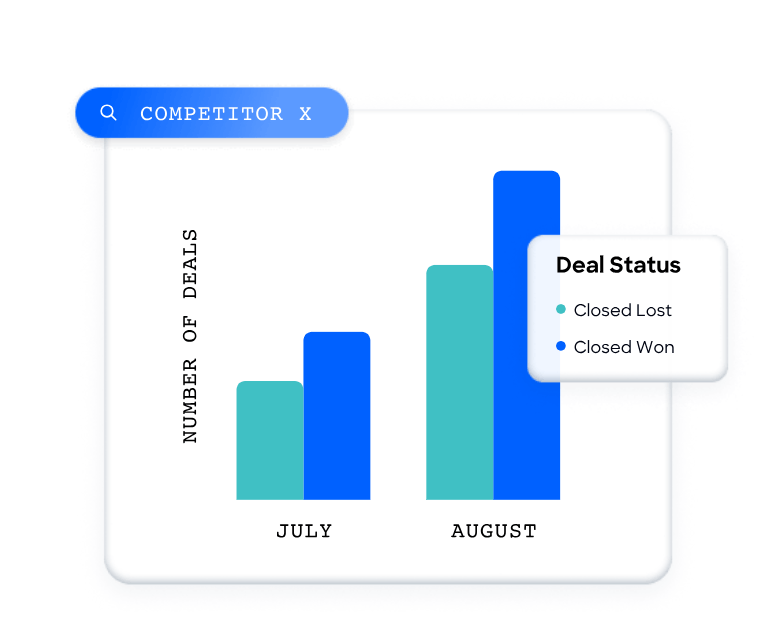
Zoominfo’s market intelligence features enable you to discover why you are winning or losing deals.
The platform captures and analyzes your customers’ voices and messages to better understand the trends impacting your deals.
Pricing
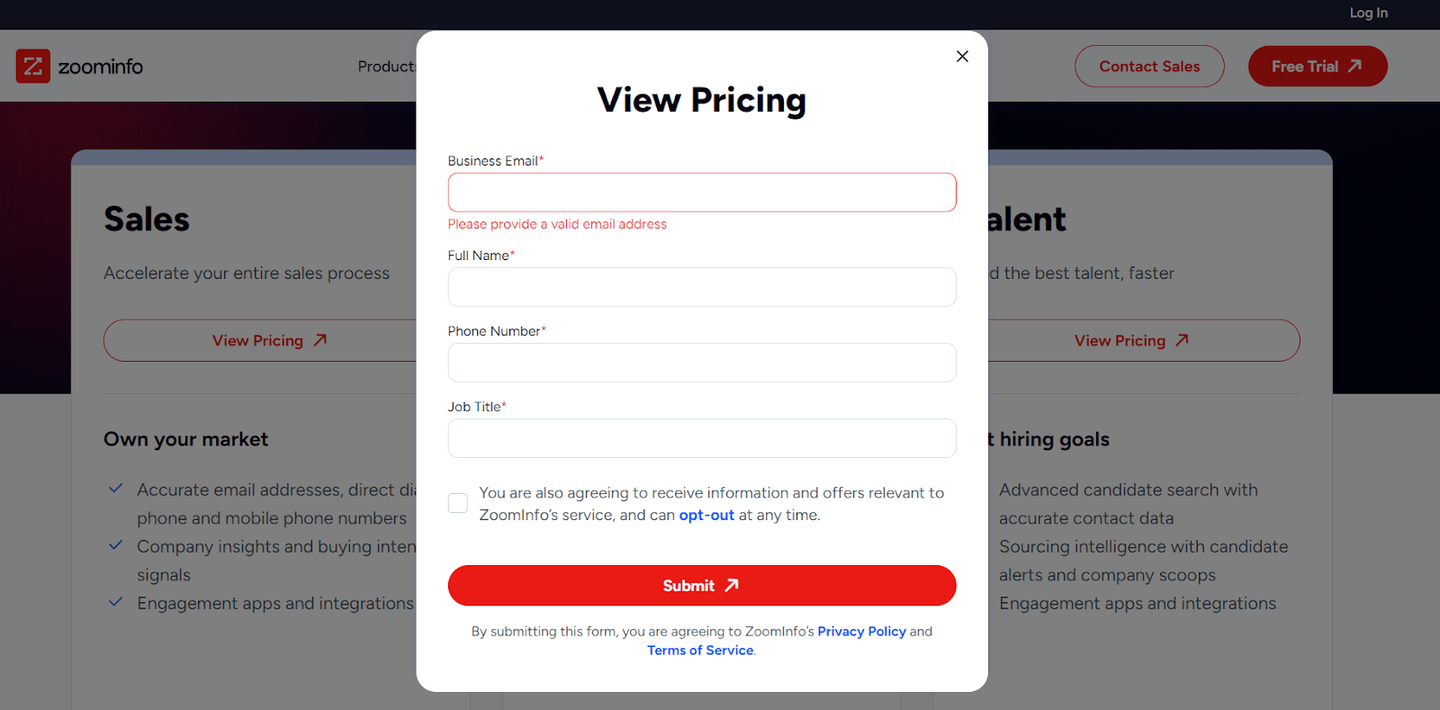
Unlike competitors, Zoominfo does not disclose its pricing. You’d have to contact them to receive a quote.
However, we were able to find 3rd party data from Vendr that the sales platform’s pricing is based on the number of seats and ranges between $24,800 to $161,900 per year.
Pros and Cons
✅ You can spot deal risks.
✅ Identify coaching opportunities for your sales reps.
✅ Uncover why your customers are choosing competitors.
⚠️ More expensive than other alternatives on the market.
⚠️ Data accuracy may not be the best, according to some users of the platform.
#7: Membrain
Best for: Building a quality sales pipeline that does not rely on automation.
Similar to: Zoominfo.
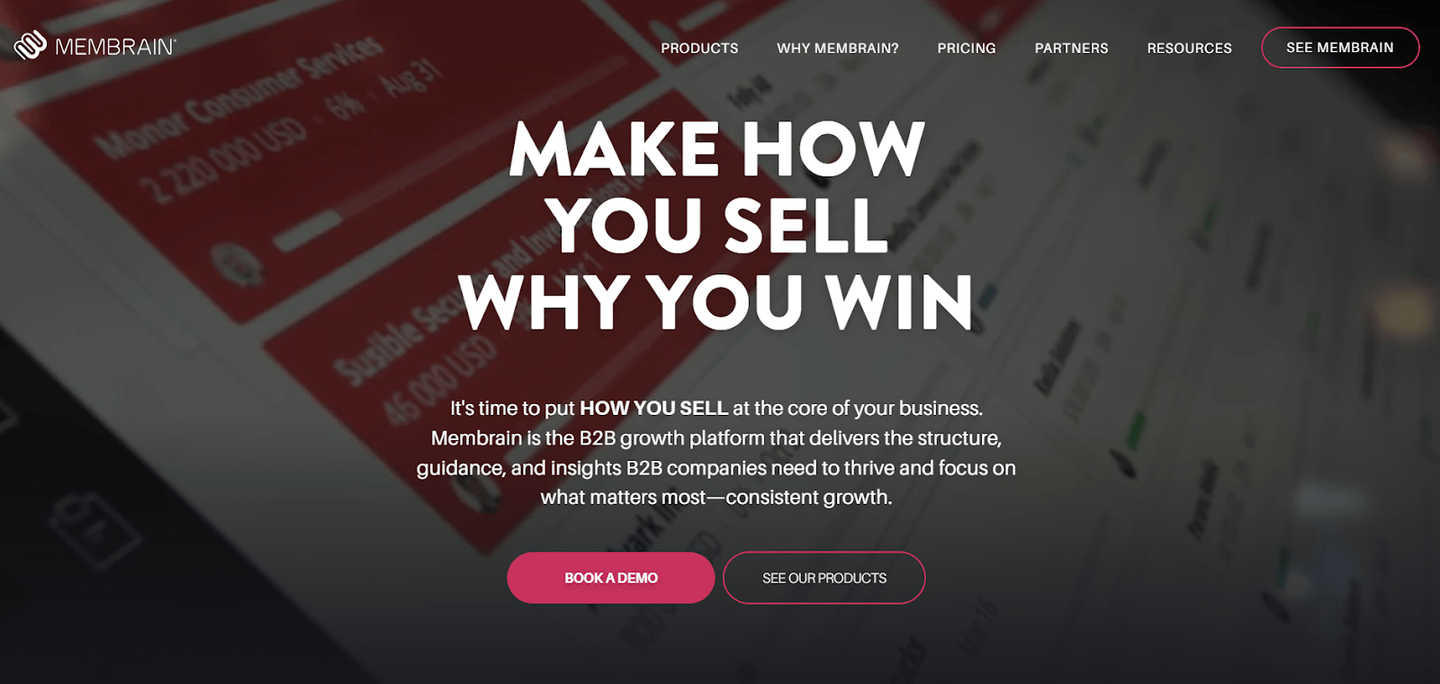
Membrain is a sales platform that lets you build a better sales pipeline with a comprehensive range of features, such as sales coaching, strategy optimization, and process execution.
Features
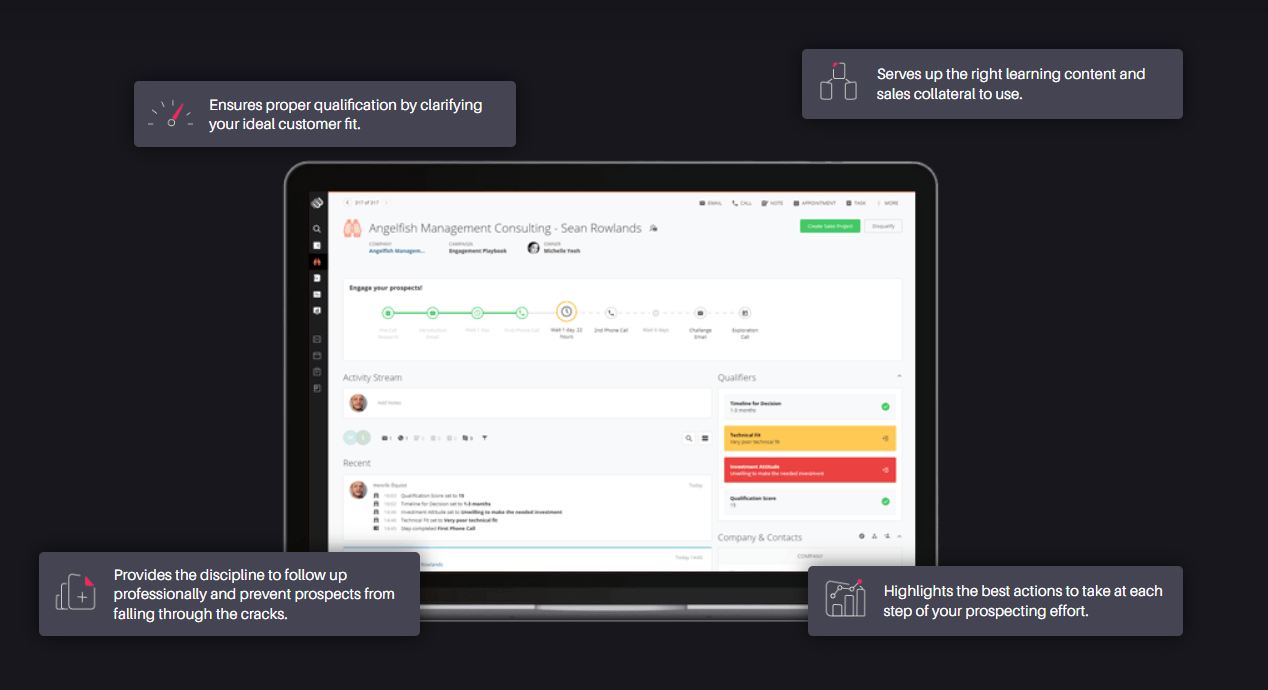
- Build a quality pipeline out of your leads that does not rely on automations and that you can connect on a human level.
- Improve your win rates by executing your sales strategy by actively guiding your team with an easy-to-use process.
- Grow your best accounts by expanding relationships, better understanding your customers, and executing your plans.
Standout Feature: Elevate Your Sales Team
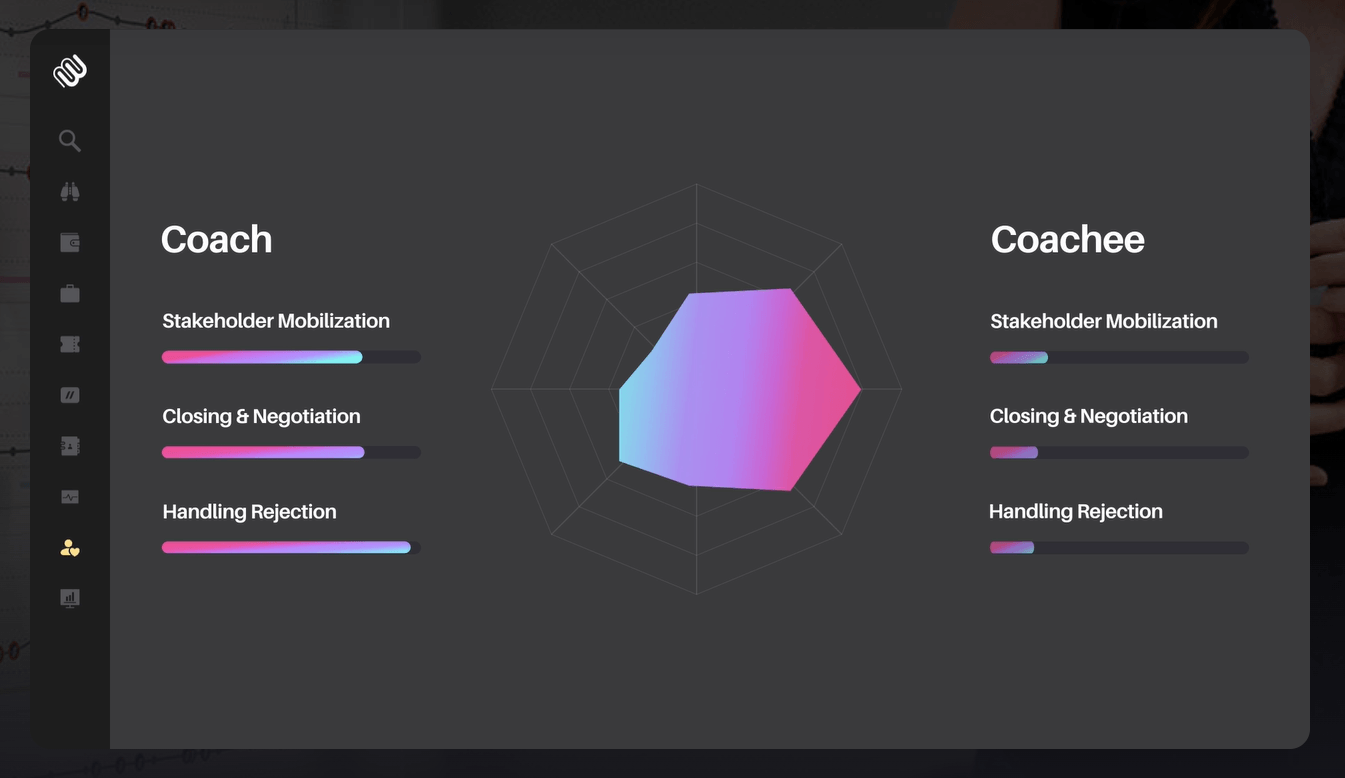
Elevate your sales team by getting access to team performance graphs, skill gap identification charts, and the ability to visualize improvements.
You can not only up-skill your team but also boost their motivation by visualizing their month-on-month performance.
Pricing
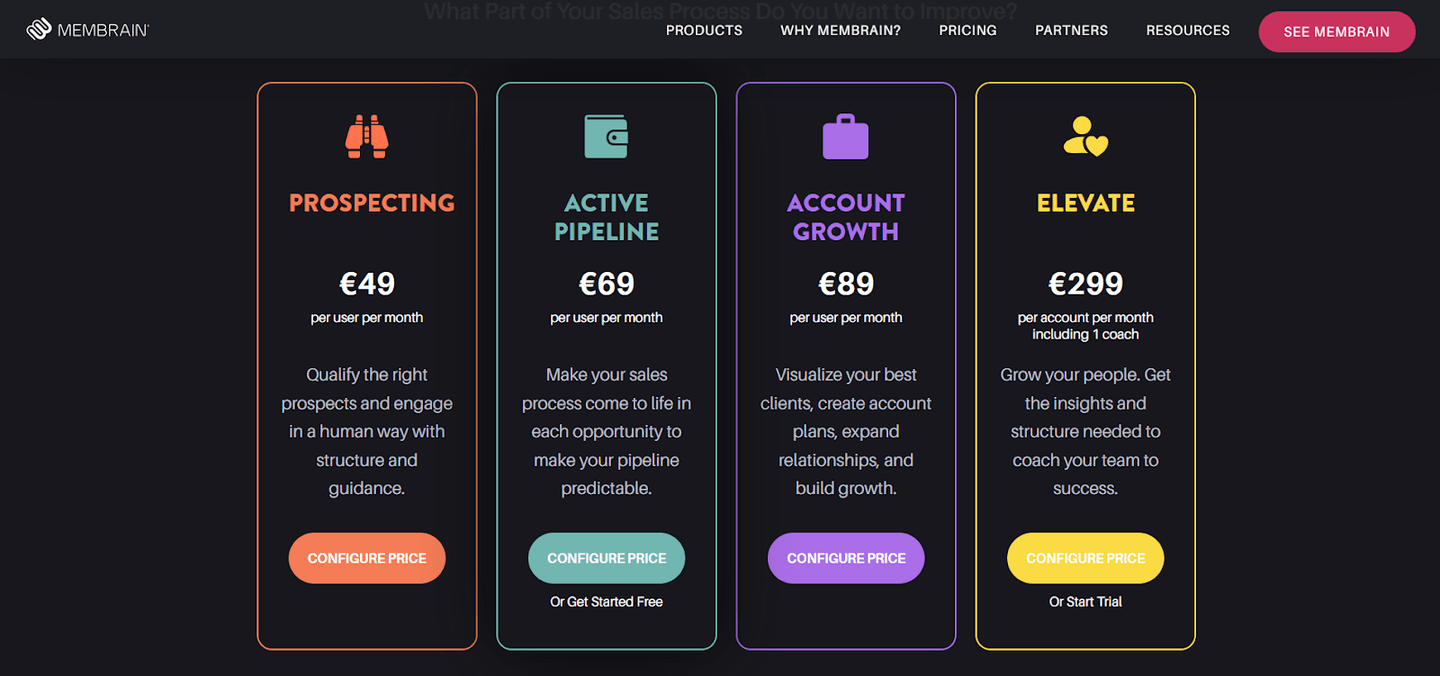
Membrain offers its four tools separately:
- Prospecting:$49/month/seat, which helps you qualify the right prospects and engage them in a human way without relying on automations.
- Active Pipeline:$69/month/seat, which improves your sales process by making your sales pipeline more predictable.
- Account Growth:$89/month/seat, which lets you visualize your best clients and create account plans.
- Elevate:$299/month with 1 coach that lets you nurture your sales team.
Pros and Cons
✅ Easily manage your contacts, emails, and tasks.
✅ Coach your sales team.
✅ Standardize your sales pipeline.
⚠️ Importing data from another CRM can be tricky.
⚠️ May be difficult to use at the beginning.
#8: Highspot
Best for: Measuring the performance of your sales team and identifying training opportunities.
Similar to: Membrain, Zoominfo.
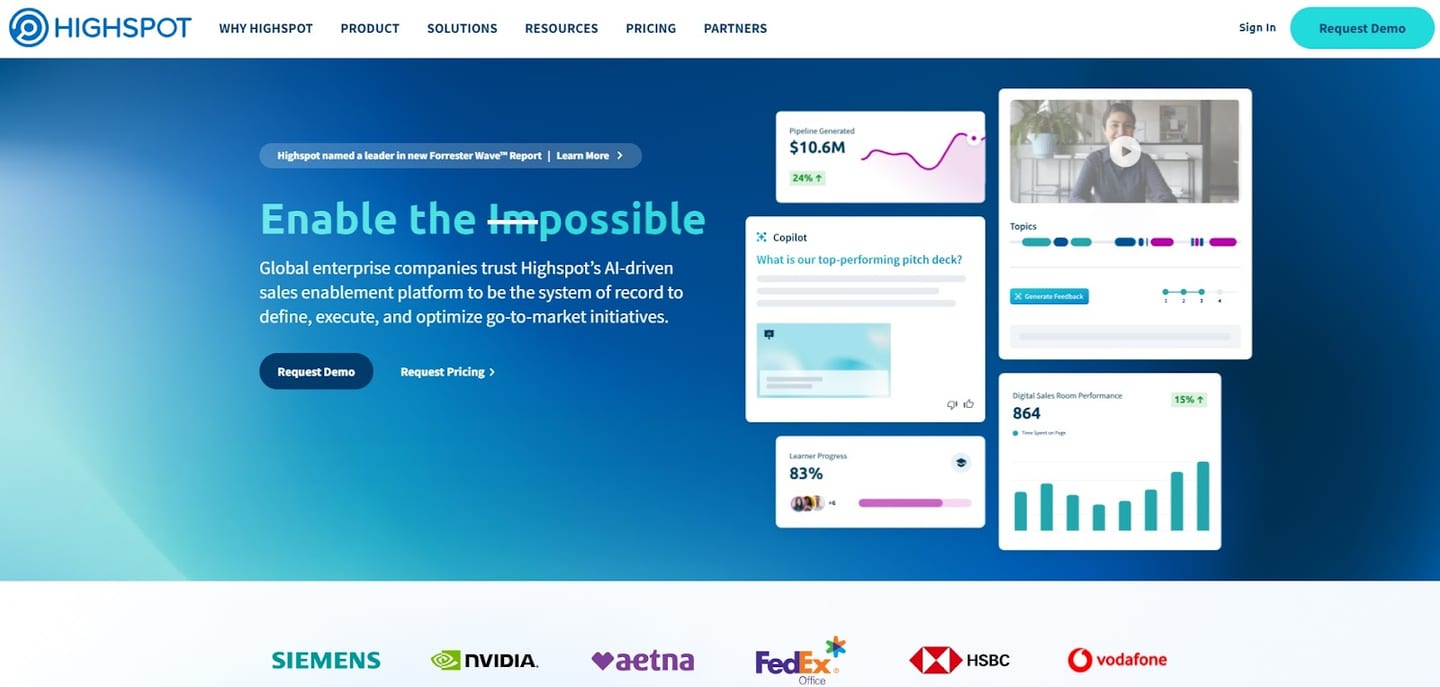
Highspot is a sales enablement tool that offers conversation intelligence and analytical capabilities to measure the performance of your sales team.
Top Features
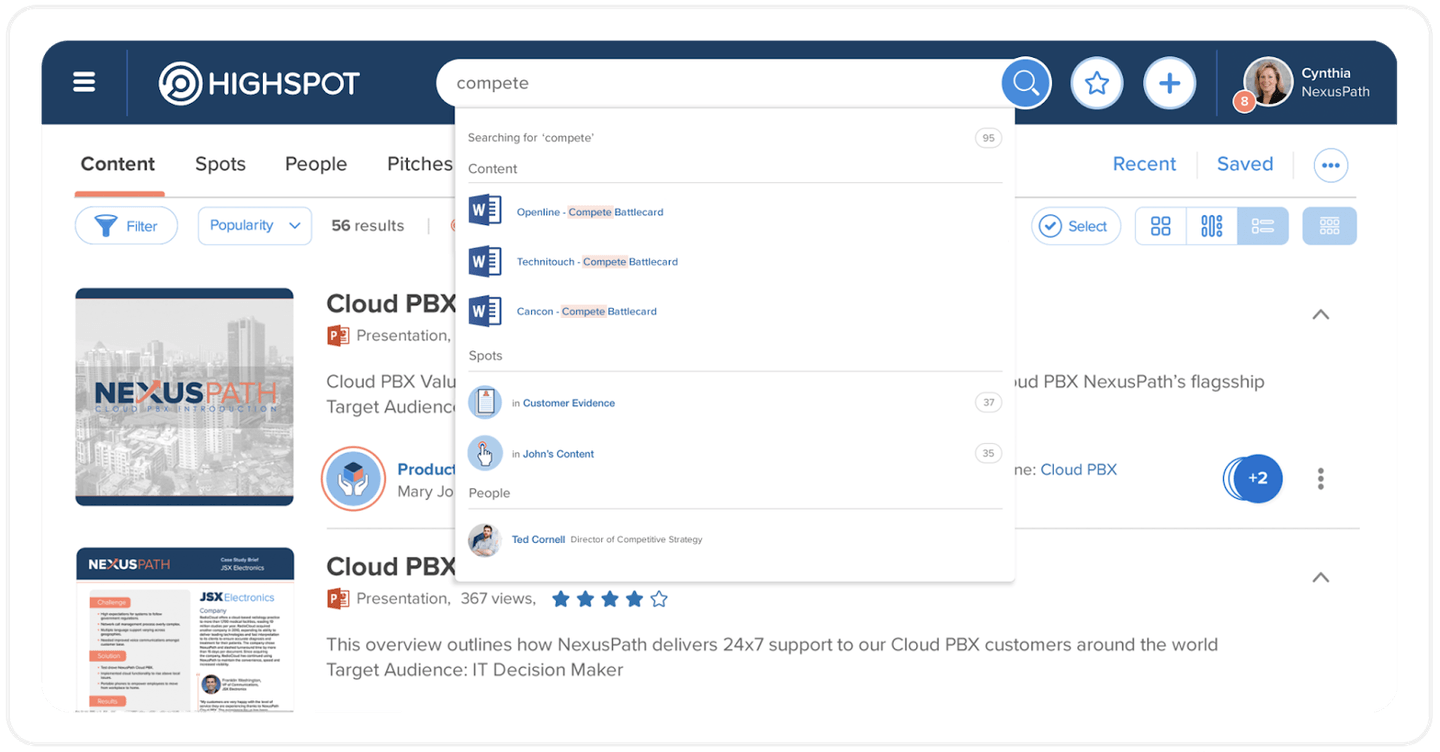
- Prepare your sales reps with the right content at the right time to help them engage and convert leads more effectively.
- Conversation intelligence: Analyze customer conversations to boost your sales teams’ close rates.
- Advanced analytics that measures the usage and effectiveness of the sales content and revenue strategy.
Standout Feature: AI-Powered Sales Coaching
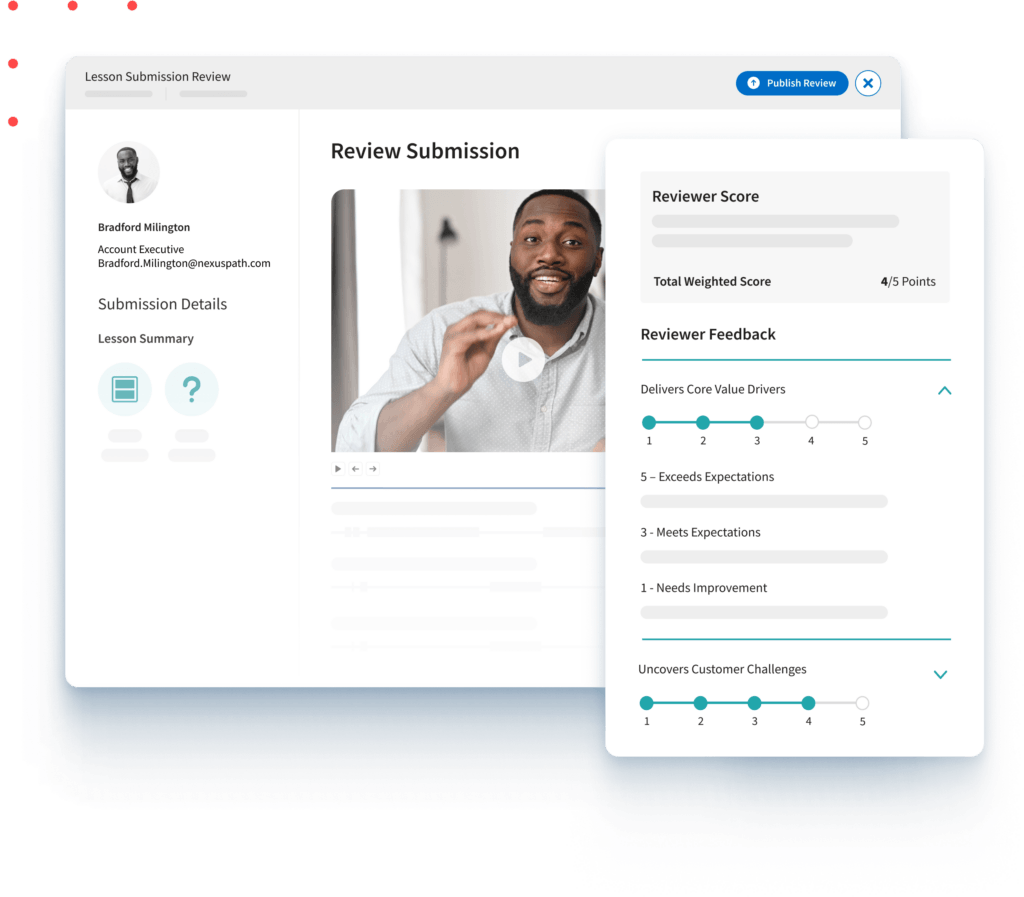
Highspot helps you coach and skill up your sales team by using AI to analyze sales calls and the performance of your sales playbooks.
Pricing
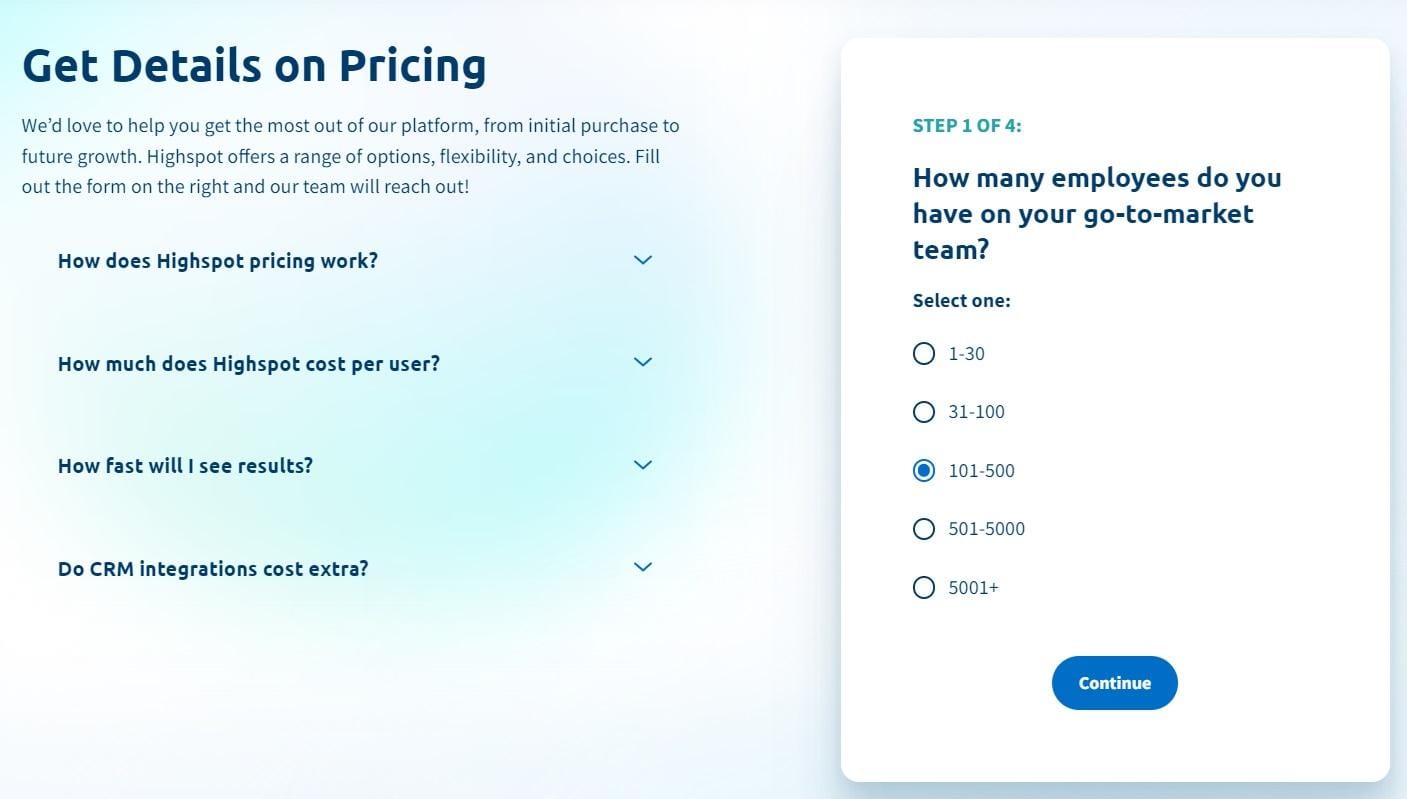
Highspot does not disclose its pricing, so your team will have to contact them to get a quote.
💡 In our Highspot pricing guide, we uncover how much the platform really costs, as well as the tool’s paid add-ons.
Pros and Cons
✅ Train your sales reps with AI-fuelled coaching.
✅ Evaluate the performance of your sales playbooks.
✅ AI-powered copilot that helps you find what you need in the CMS.
⚠️ The platform might have a steep learning curve for new users.
⚠️ Set up and maintenance can be time-consuming for smaller teams.
#9: Guru
Best for: Setting up a knowledge base for sales teams to act as a single source of truth.
Similar to: Highspot.
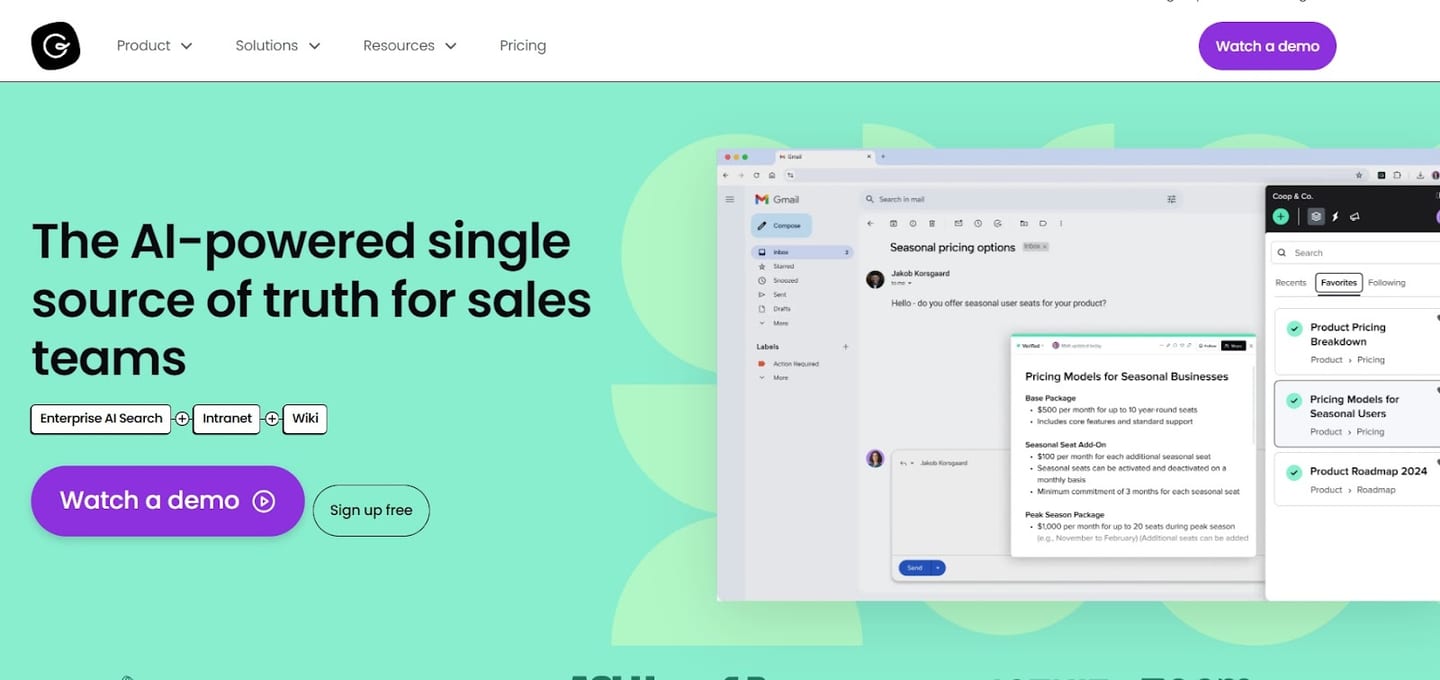
Guru offers AI-powered search functionality and a copilot that combines an enterprise AI search, intranet, and wiki to give sales reps quick access to what they need.
Features
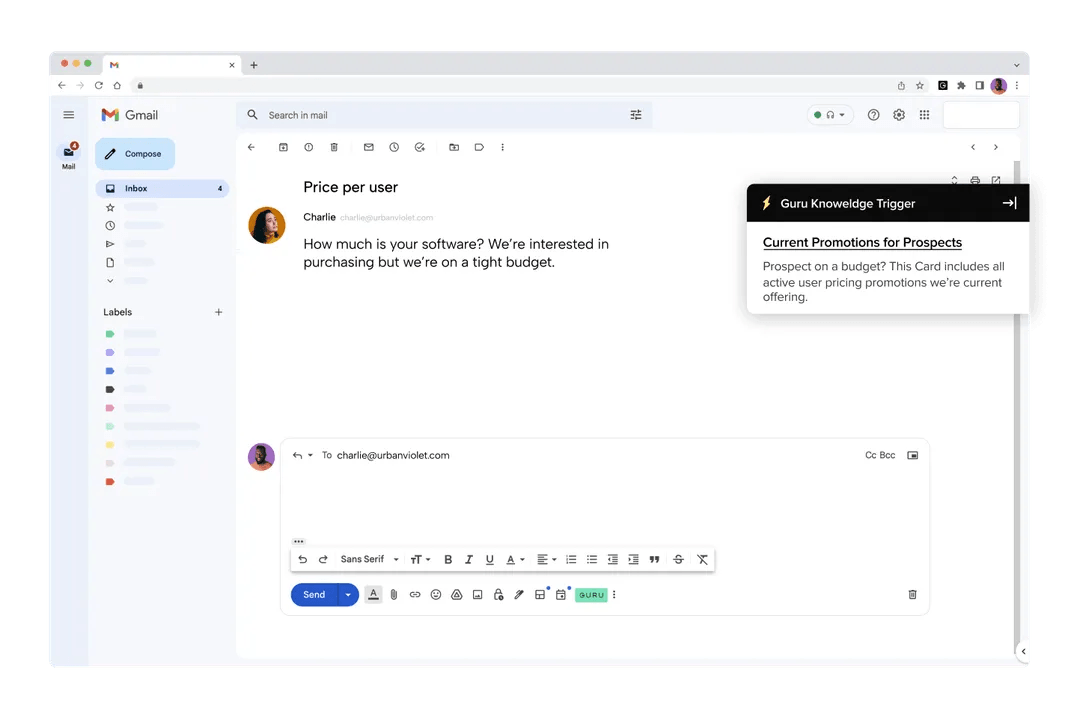
- Smart content recommendations: Get personalized sales collateral recommendations to insert into your conversations based on customer history.
- Identify outdated sales collateral: Maintain a trusted and up-to-date content knowledge base.
- Get instant AI answers from your content: Your sales reps can get quick and trustworthy answers about your company’s information when needed.
Standout Feature: AI-Powered Content Assistant
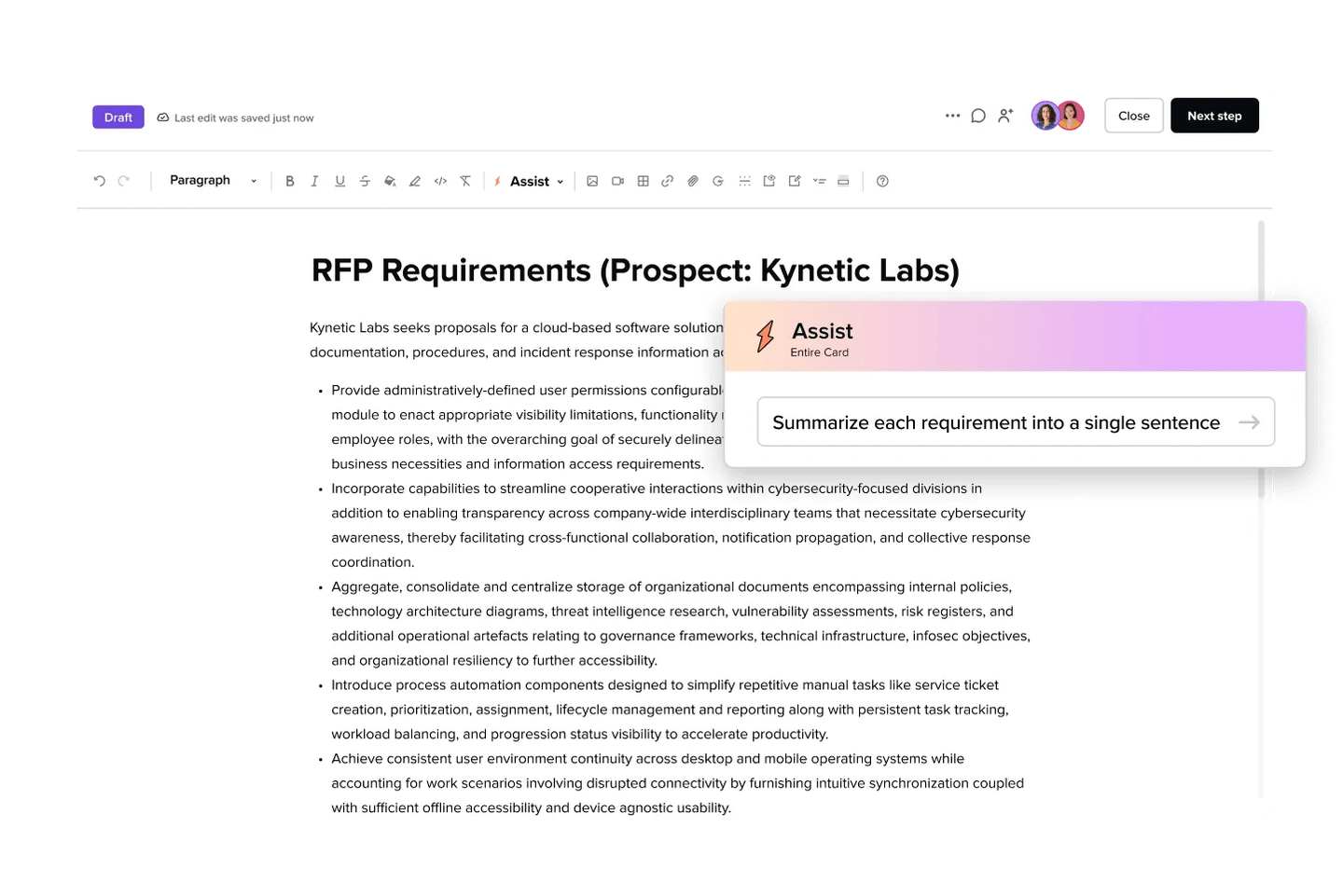
Guru’s AI content assistant can create, translate, improve, and summarize content to help your sales team better communicate with leads.
Pricing
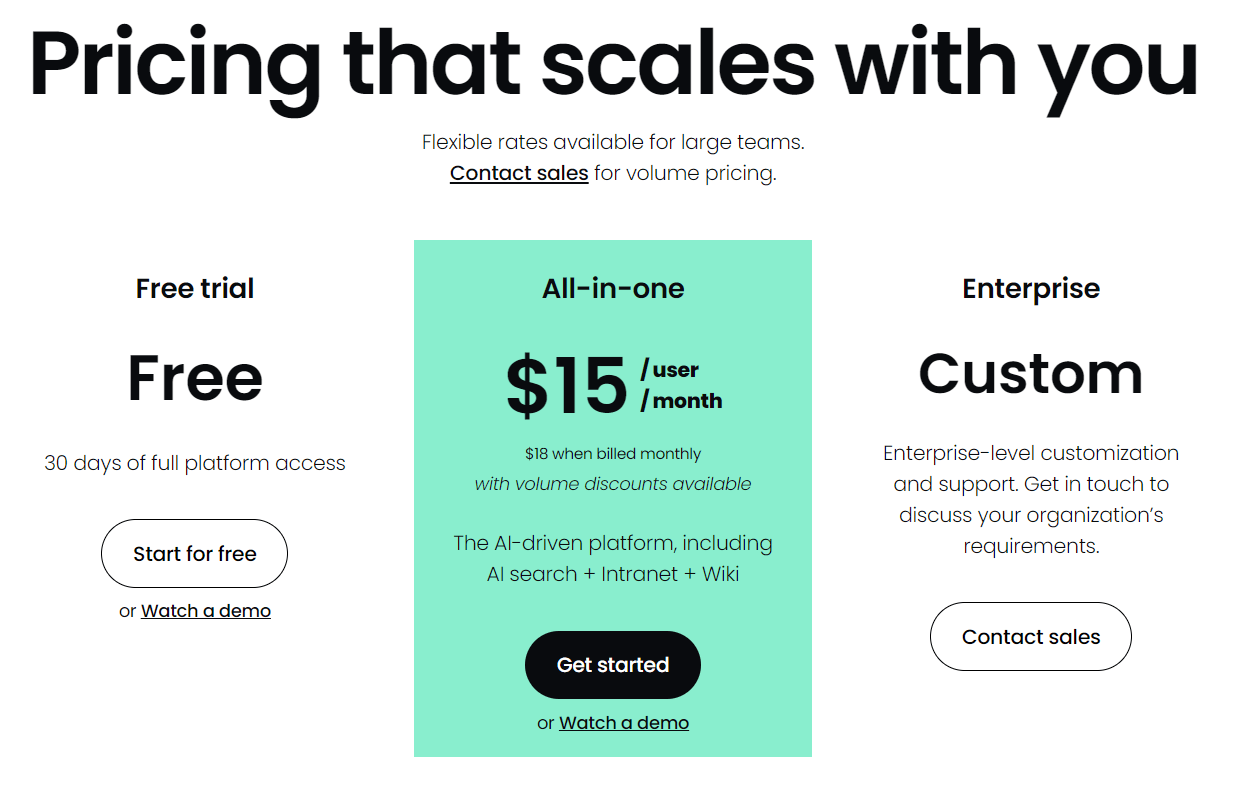
The B2B sales enablement platform offers a free 30-day trial that includes full platform access.
To access Guru’s features for a longer period, you’d have to be one of their two paid plans:
- All-in-one plan:$15/month/seat, which gives you access to the tool’s AI-driven platform, AI search, Intranet, and Wiki.
- Enterprise plan: Custom price, which adds access to a higher level of customization and support.
Pros and Cons
✅ Organize your sales content and access it at any time.
✅ AI-powered search, intranet, and company wiki.
✅ Generative AI that can support your sales reps write content.
⚠️ Some users have experienced search functionality challenges.
⚠️ Less integrations than other alternatives on the market.
#10: Aligned
Best for: Building personalized sales rooms with the help of an AI assistant.
Similar to: Dock.
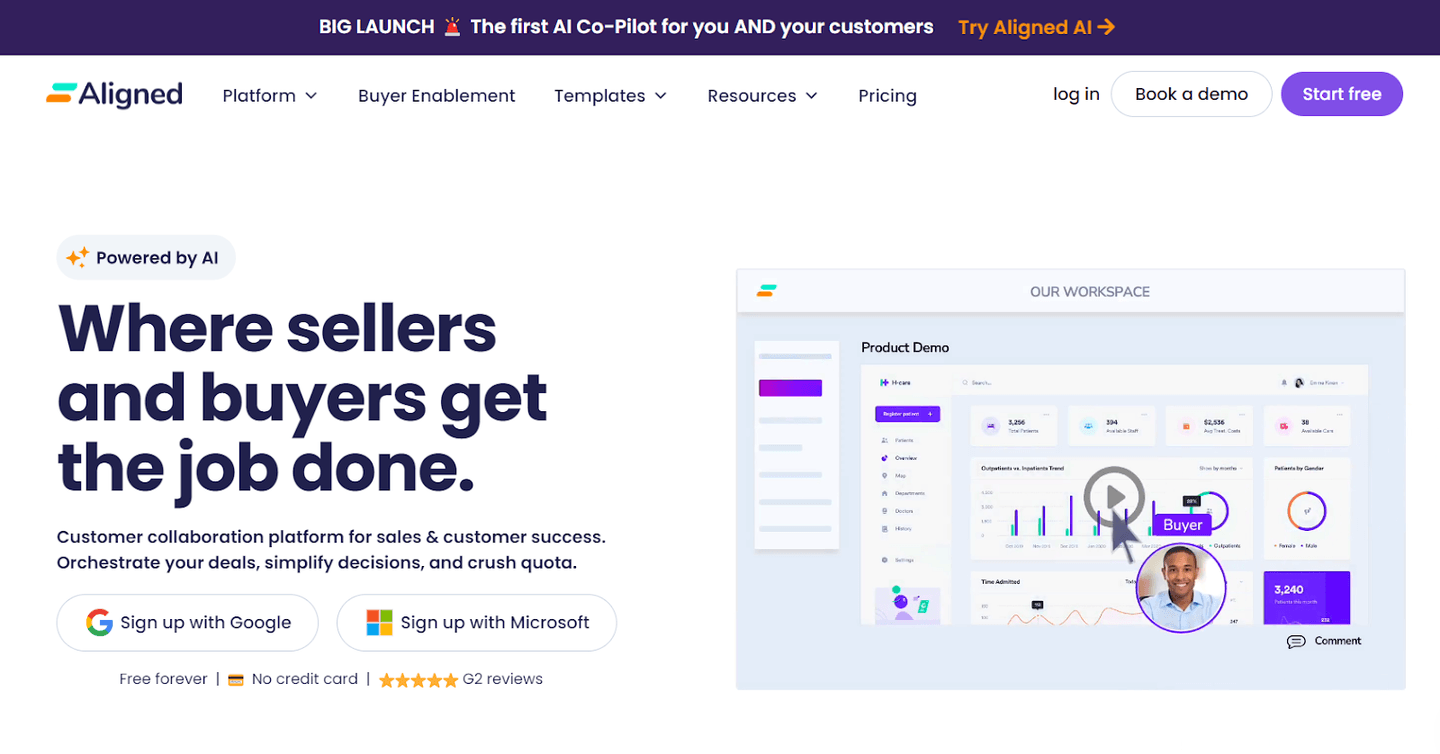
Aligned offers digital sales room software for sales teams that helps them better manage their deals.
Features
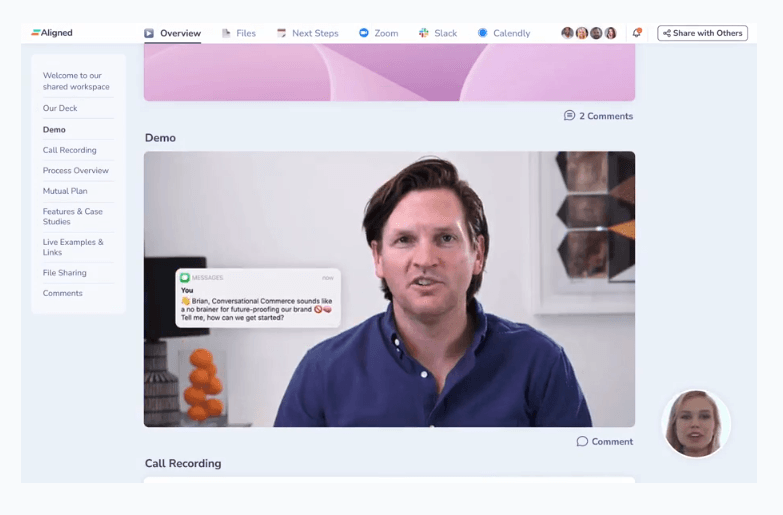
- Share all sales content in a tailored sales room with no login required from your customers.
- Mutual action plans to help your team gain control over customer processes and timelines to convert your prospects quicker.
- Revenue intelligence that lets you make better decisions, and identify risks in your deals, and buyer intent.
Standout Feature: Aligned AI (Chatbot)
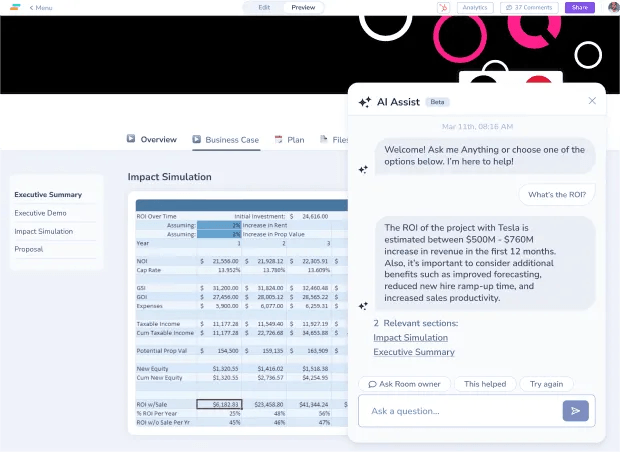
With Aligned, you can get access to an AI pilot that helps your sales team keep the momentum going by answering your prospects’ urgent questions.
The chatbot can summarize the project scope, ask about the ROI, and help all of your sales reps catch up on a deal.
Pricing
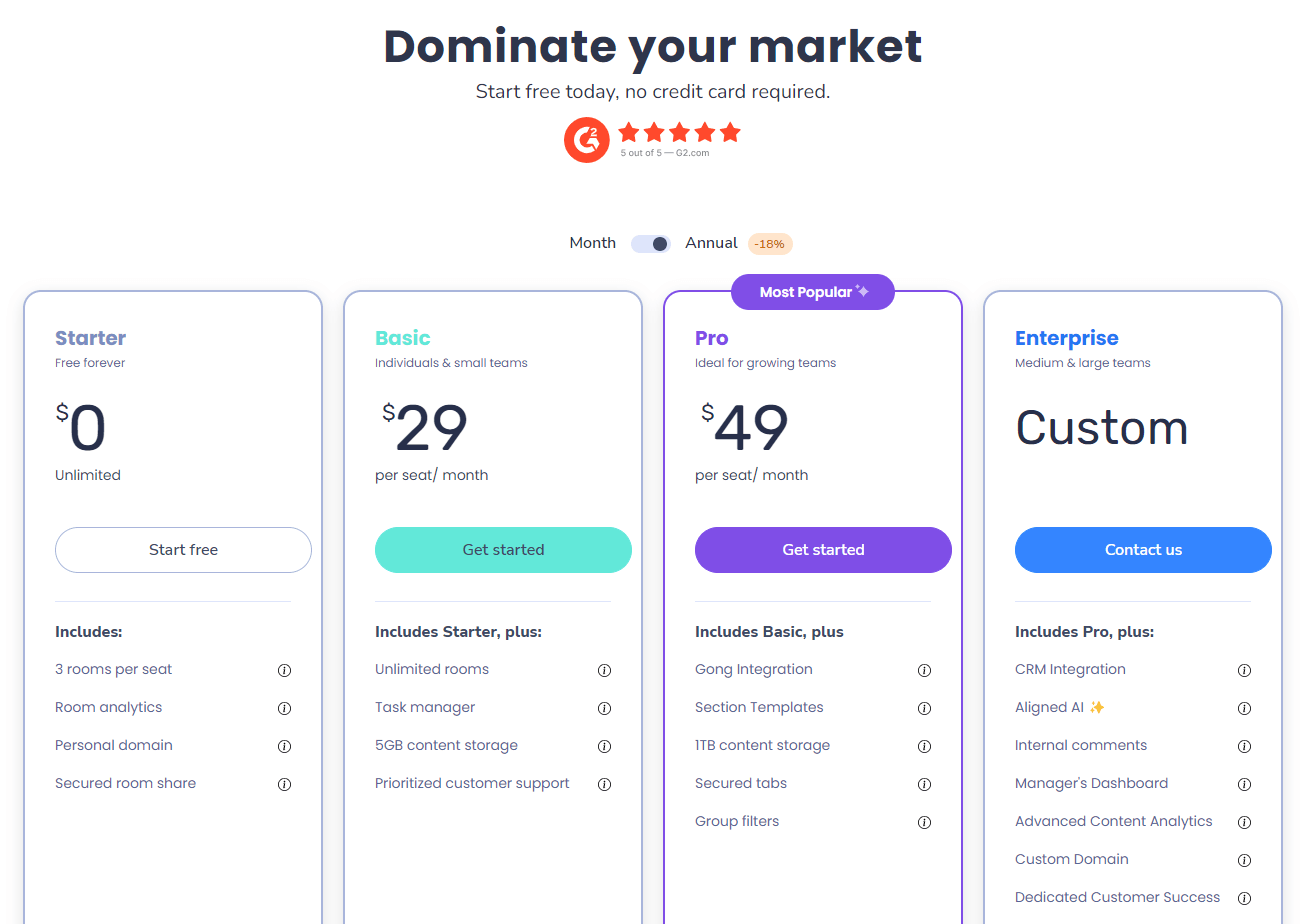
The sales enablement platform offers a free version that includes 3 rooms per seat, room analytics, access to a personal domain, and secured room sharing.
To access Aligned’s more advanced features, you’d need to sign up for one of its three paid tiers:
- Basic:$29/month/user, which adds unlimited sales rooms, a centralized dashboard, 5GB content storage, and better customer support.
- Pro:$49/month/user, which adds a Gong integration, section templates, 1TB of content storage, secured tabs, and group filters.
- Enterprise: Custom pricing, which adds Aligned AI, CRM integrations, internal comments, advanced content analytics, and more.
Pros and Cons
✅ AI copilot that lets you answer your prospects’ urgent questions.
✅ Free forever plan that lets you get 3 sales rooms per seat.
✅ Good analytics of the sales rooms.
⚠️ CRM integrations are on the Enterprise plan, unlike competitors to Aligned.
⚠️ Users of the platform note that there could be more customizable options.
Next steps: apply your sales playbook to every deal
A sales playbook only helps on the deals where someone follows it. Your best reps do that on their top deals. The rest get improvised.
If you’re a sales leader who wants:
- Your team’s playbook applied to every deal, with a gameplan that stays current as each deal moves.
- Call prep, research, follow-up emails, and CRM updates done without a prompt, with a rep approving each one before it sends.
- Case studies and sales room updates sent between calls, all working with the CRM and notetaker your team already uses.
Then you can book an agent kickoff to see how Arrows works today.