


We researched dozens of sales tools, went through user reviews on G2 and Capterra, and talked to sales managers to find out the best software for SDRs so you don’t have to.
This article will review 10 SDR tools, going over their top features, pros and cons, and pricing models.
Before we begin, let’s go over a few factors to consider when evaluating solutions for sales development representatives. ⤵️
How do you choose SDR tools?
#1: Range of Sales Features For SDRs
When evaluating software for sales development representatives, our team looked at which platforms have features that make SDRs’ work more efficient, such as:
- Email and outreach features so your sales reps can build and nurture relationships with your prospects.
- Lead management functionality to access customer data and track the performance of your sales pipeline. As a bonus, we looked at whether the tools have lead prioritization and forecasting capabilities.
- The ability to automate repetitive tasks to save time. Some tools have AI copilots that help you take care of that, and also let you access pre-built automations.
💡 We’ll review fundamentally different sales tools that cater to different needs, from prospecting to closing.
#2: Integrations With Sales Systems
The 2nd most important aspect of software for SDRs is how well they integrate with your existing sales CRMs.
We researched sales tools that can natively integrate with CRM systems, marketing automation tools, and internal/external collaboration tools like Slack.
➡️ This would help your SDRs better manage the pipeline and wouldn’t spend too much time with manual data entry.
#3: Pricing Structure
Different sales solutions for SDRs have different pricing models, which make sense for different use cases and sales rep counts.
Some tools offer pricing models based on user seats, while others are based on the number of features you want to access.
The pricing model you choose can turn out to be quite expensive in the long run if you plan on onboarding many sales development representatives.
💡 For the platforms that did not disclose their pricing, we found data from third-party sources like Vendr.
What are the best SDR tools?
Here are the best sales solutions for sales development representatives out of all the software we reviewed:
#1: Arrows: Work every deal your SDRs book, with a gameplan, call prep, follow-up, and CRM updates after the meeting.
#2: Salesforce- Connect your prospect data across different platforms to help your SDRs track and engage with leads.
#3: Gong- Analyze client interactions across multiple sales platforms.
#4: LinkedIn Sales Navigator - Find and engage with the right prospects.
#5: Qwilr- Build and send out personalized sales proposals from out-of-the-box templates.
#6: Flowla- Build a workspace for your sales development reps to collaborate with customer success teams.
#7: Aligned- Build and send out digital sales rooms with an in-built AI assistant.
#8: Close- Good for smaller SDR teams looking for an all-in-one sales CRM platform.
#9: Cognism- Get access to good quality leads across the EMEA, NAM, and APAC markets.
#10: SalesScreen- Motivate your SDRs with gamification and friendly competitions to meet their quotas.
#1: Arrows
Best for: Sales teams that want every deal their SDRs book worked after the first meeting, from AE call prep to follow-up and CRM updates.
Arrows is promptless AI for account executives. It keeps a gameplan for every deal: a path to close for each deal, built from your team’s playbook and from what’s actually happening on that deal.
Full disclosure: Arrows is our product. Here’s what it does and where it fits in an SDR stack.
Arrows is where SDR-sourced deals go next. Once your SDR books the meeting, Arrows preps the AE, writes the follow-up, keeps the CRM current, and works the deal from there. It reads your call transcripts, emails, CRM, and notes to do it.
Feature #1: A gameplan for every deal your SDRs source
Your SDRs work hard to book each first meeting. After the handoff, that deal joins an AE’s pipeline. Their top five deals get a plan. The rest get improvised.
Arrows applies your team’s playbook to every deal, including the ones your SDRs just sourced. The playbook is written in plain English: how your team works its best deals. Every time something happens on a deal, like a call ending or a new person showing up on a thread, Arrows reads the playbook and decides the best next action. Each gameplan stays current as the deal moves.
Feature #2: The work after the meeting is booked, done for your AEs
Arrows does the work you expect reps to do, and the work you wish they did:
- Call prep before the first meeting and every one after it.
- Deep research on the account.
- Follow-up emails drafted from what the buyer said on the call.
- CRM updates written back to the deal.
- Multi-threading, so a deal doesn’t hang on the one contact your SDR booked.
- Every date tracked from your calls, with nudges when a deal goes quiet.
- Loom videos and the right case study sent between calls.
- Sales rooms kept current, so your buyer always sees the next steps.
There’s no prompt to write. Today, reps approve every email, CRM update, and sales room change before it sends.
Feature #3: Works with the CRM and notetaker you already use
Arrows works with HubSpot, Salesforce, Pipedrive, Close, and Attio, and with notetakers like Gong, Fathom, Granola, Grain, and Fireflies. It also connects to Gmail, Outlook, and Google Calendar.
Your SDR tools keep filling the pipeline. Arrows reads each deal in your CRM and writes approved changes back, so the record stays current without reps typing updates. See the CRM integrations.
Pricing
Arrows doesn’t publish prices. It’s priced on the work, not the seats. See how pricing works.
Getting started takes one kickoff call, and the agents start on your open deals that same day. Book an agent kickoff to see how it works.
What stands out
✅ A gameplan for every deal your SDRs book, built from your team’s playbook.
✅ Promptless: call prep, research, follow-ups, and CRM updates arrive done, ready for a rep to approve.
✅ Picks up where prospecting tools stop, so SDR-sourced deals get worked after the first meeting.
✅ Works with the CRM and notetaker your team already has.
✅ Sales rooms that stay current with each deal’s next steps.
#2: Salesforce
Best for: Connecting your prospect data across different platforms to help your SDRs track and engage with leads.
Similar to: Close.
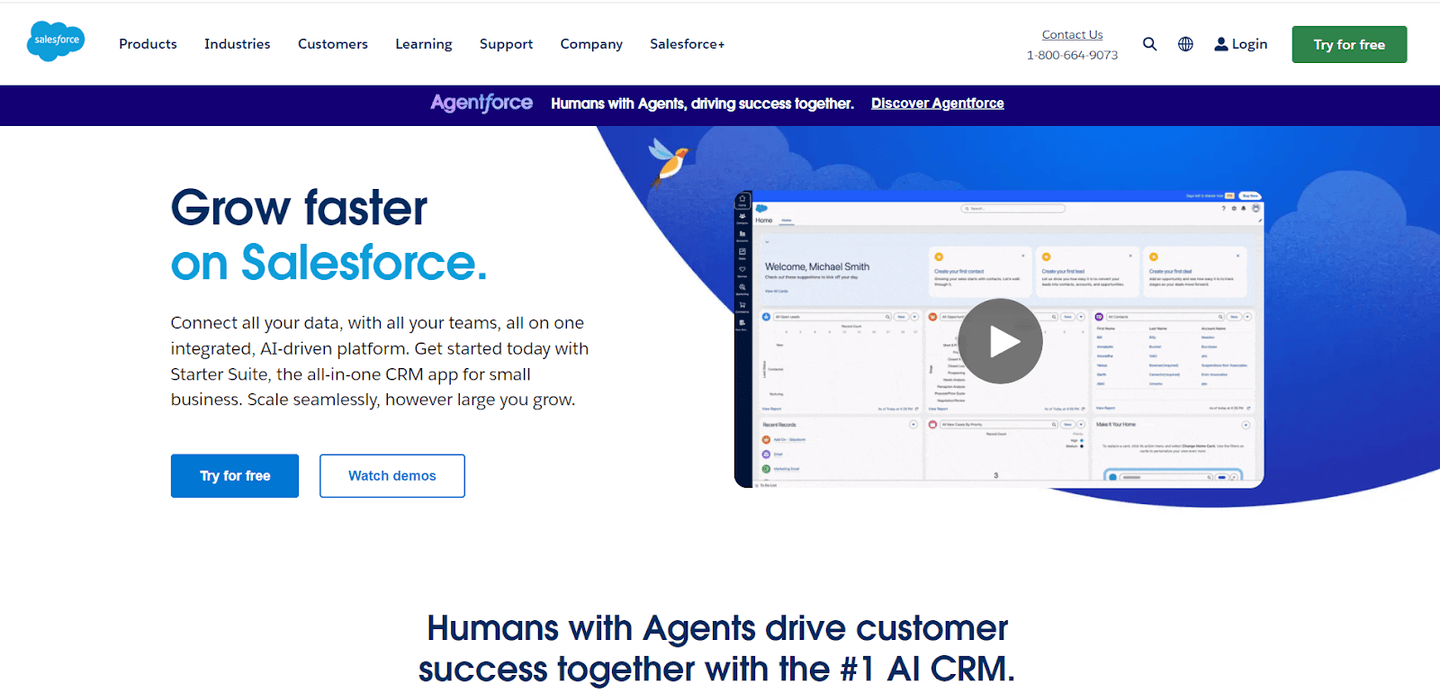
Salesforce is an all-in-one SDR platform that lets you sync your sales data back into the CRM and set up sales automations.
Top Features
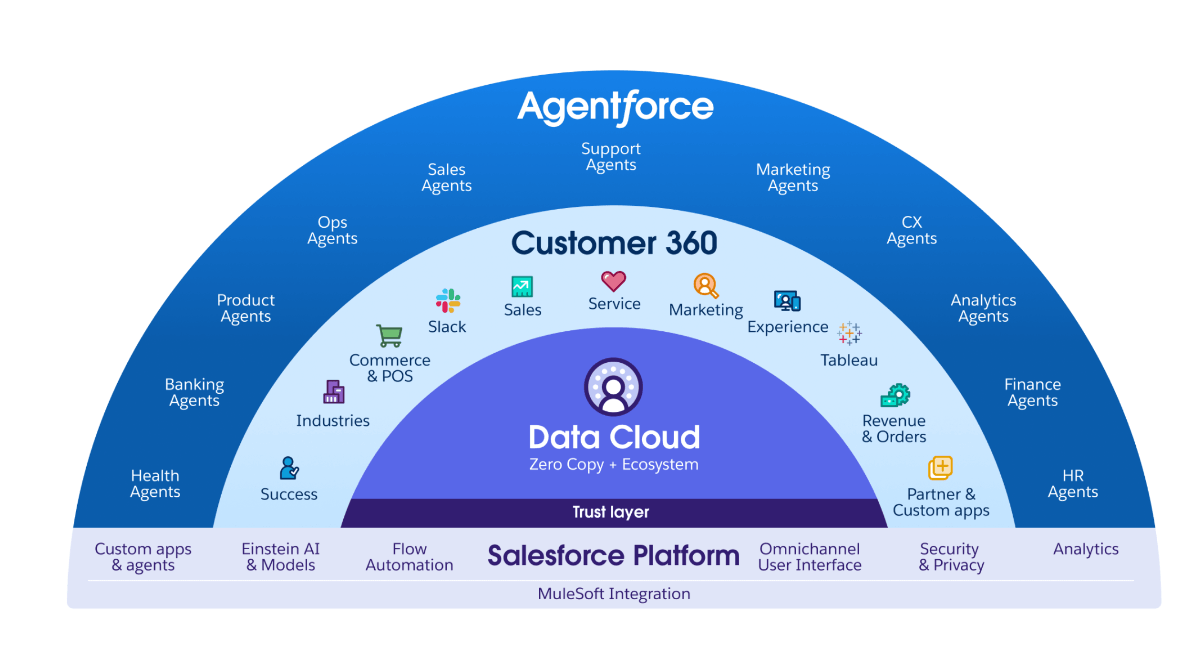
- Salesforce has a generative AI tool called Einstein AI that helps users make better decisions using its sales analytics platform.
- Data-driven sales automations: Your SDRs can use AI to build scalable sales processes that help you save time and money, such as Slack notifications.
- Sales analytics: Get an overview of your save development representatives’ performance with bonus deal inspection capabilities and rich visualizations to improve forecasting.
Standout Feature: Revenue Lifecycle Management
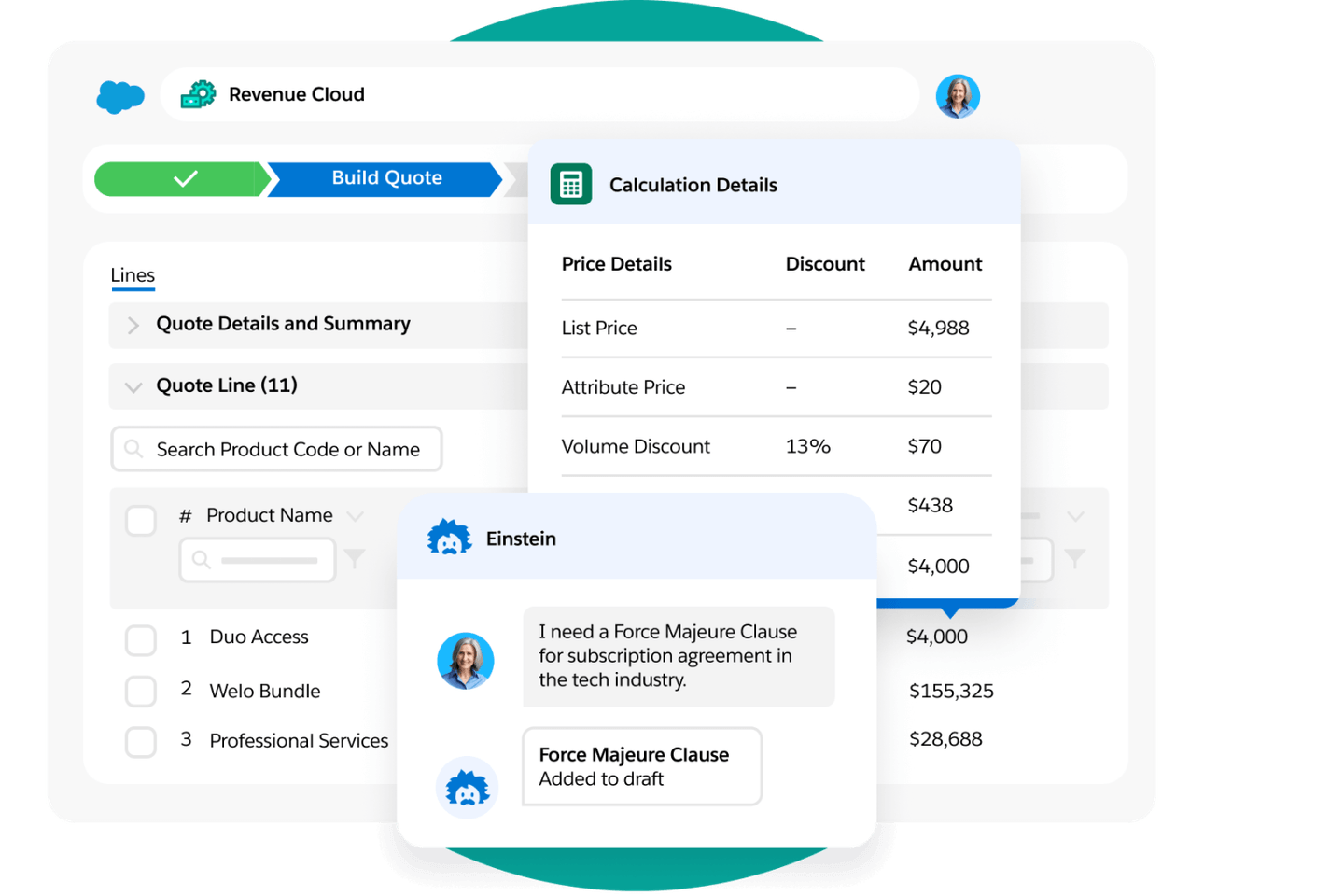
Your sales reps can deliver a seamless buying and selling experience to your clients to win more deals with AI-powered guided quoting and generative AI.
It is possible to manage the quote-to-cash process and the contract lifecycle, orders, and billing from Salesforce.
Pricing
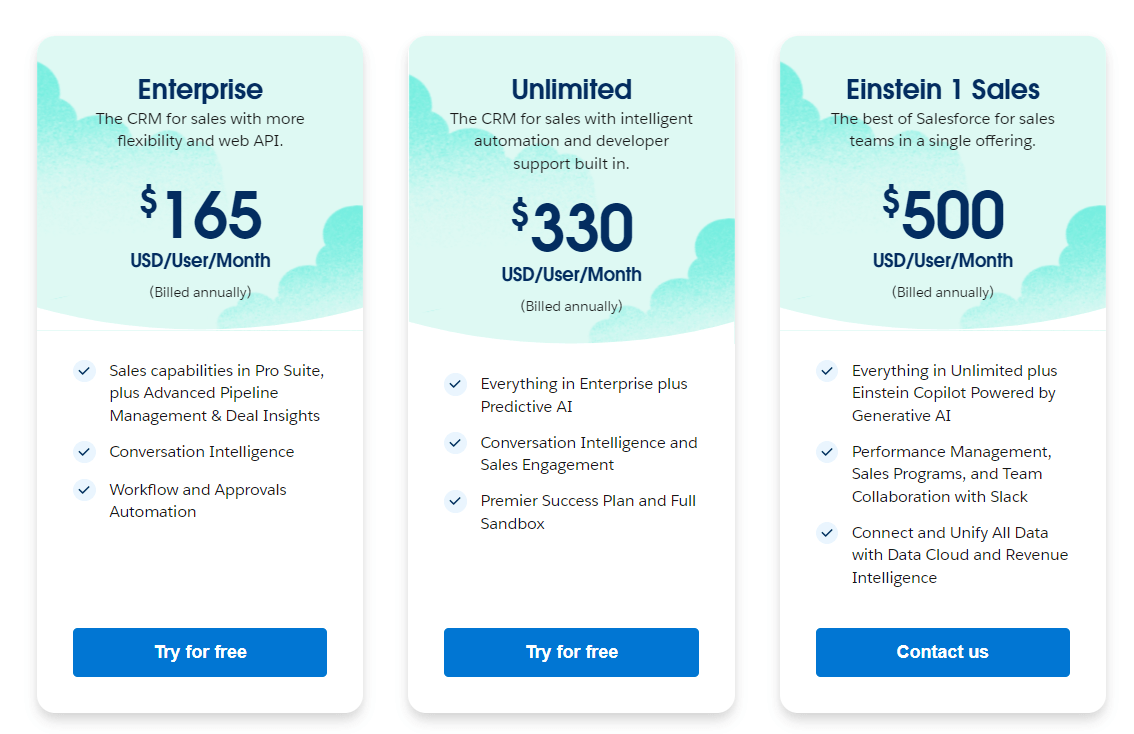
Salesforce’s enterprise platform for SDRs has three paid tiers:
- Enterprise:$165/month/seat when billed annually, which gives you access to advanced pipeline management, conversation intelligence, and workflow automations.
- Unlimited: $330/month/seat when billed annually, which adds predictive AI, conversational intelligence, and sales engagement features.
- Einstein 1 Sales:$500/month/seat when billed annually, which adds Einstein AI, team collaboration with Slack, and revenue intelligence.
Pros and Cons
✅ All-in-one sales CRM platform that lets you sync your lead data.
✅ AI-powered features for generating text and making predictions.
✅ Scalable sales automations.
⚠️ The software can get pricey if you need to onboard many sales development reps.
⚠️ Limited customization when compared to other sales management platforms on the market.
#3: Gong
Best for: Analyzing client interactions across multiple sales platforms to better understand your customers.
Similar to: N/A.
Gong is a sales platform for sales development representatives that helps you analyze client interactions across phone, email, and the web to improve your team’s decision-making.
Features
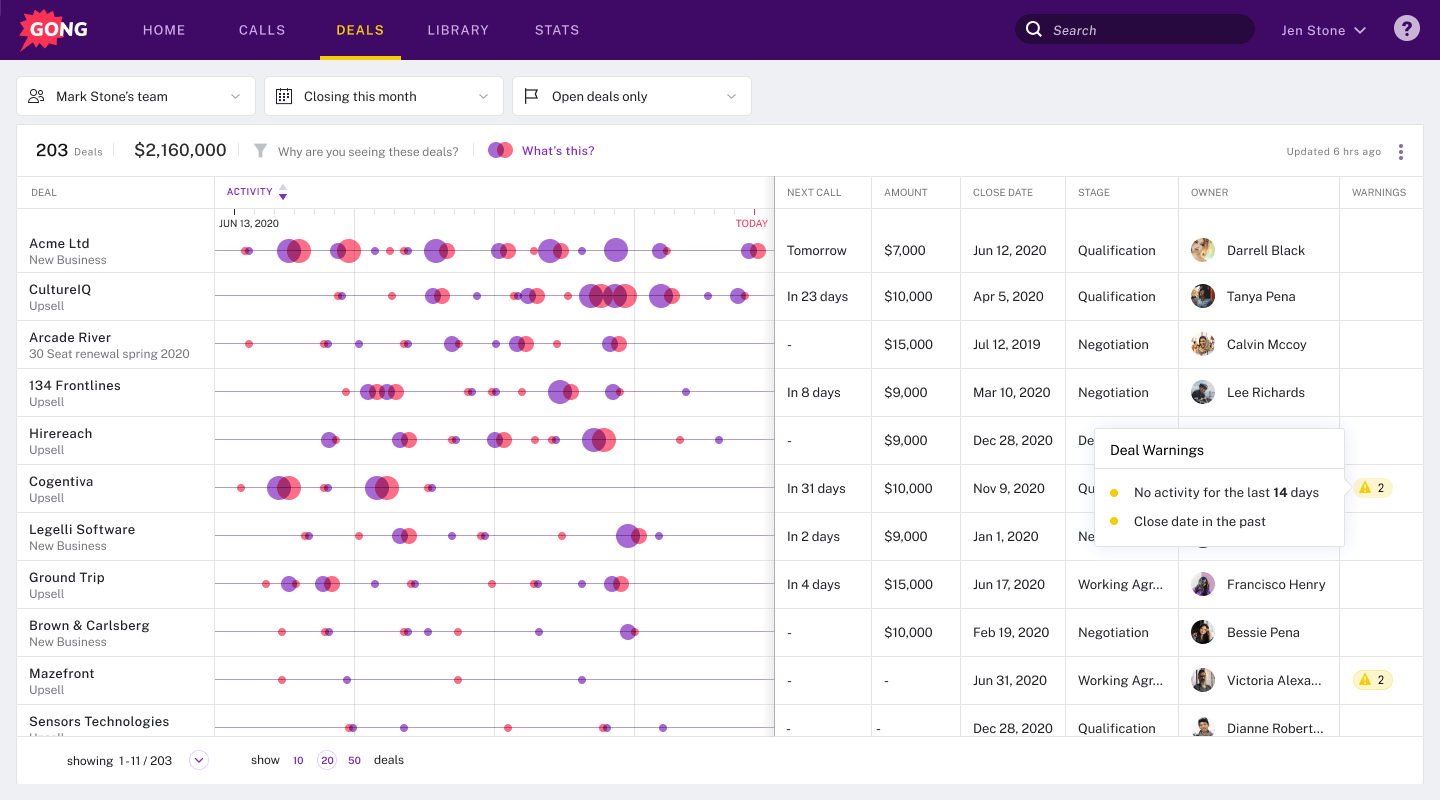
- Gong Insights, where your SDRs can track all of their deals through the sales pipeline. There are risk identification and opportunity analysis features as well.
- Recording, transcription and analysis of client interactions to identify patterns and tap into AI-driven insights to improve SDR performance over time.
- Sales feedback and coaching: Access real-time feedback on sales calls to upskill your sales development reps.
Standout Feature: Gong AI
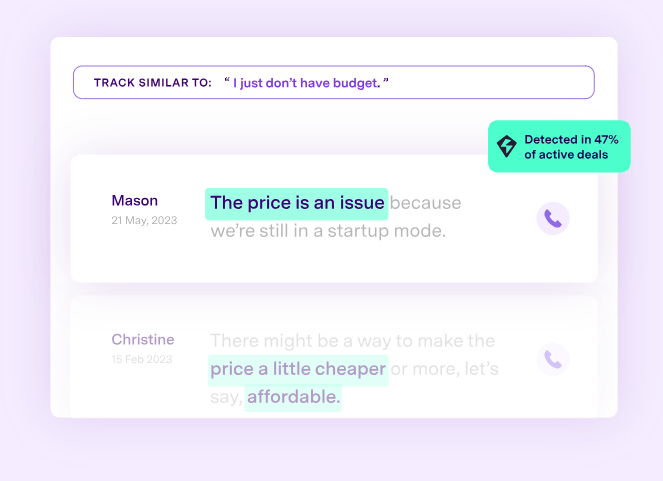
Gong AI helps your SDRs analyze data, track initiatives and dive deeper into client conversations.
The AI tool can also be customized with its user-trainable system to analyze more complex data sets.
Pricing
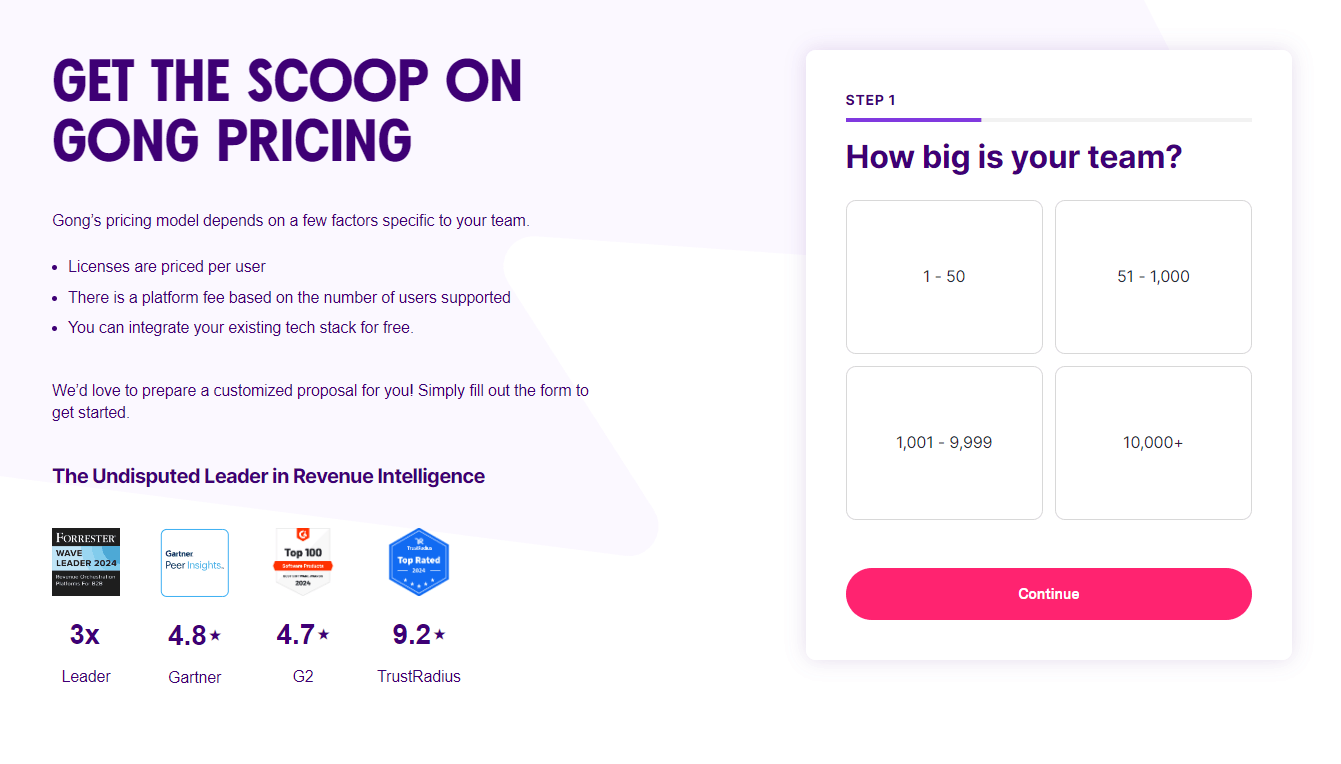
Gong does not currently disclose its pricing on its website, so you’d have to contact them to get a quote and a product demo.
We were able to find 3rd party data from Vendr that suggests the tool bases its pricing per user and it is between $1,000 - $2,000 per seat a year.
Out of the 181 deals Vendr has handled for Gong, the average contract value was $105,530/year.
Pros and Cons
✅ Easy-to-use sales call recording platform to help your SDRs make better decisions.
✅ Sales feedback to your SDRs to help you train and level up them.
✅ Trainable generative AI tool to assist your sales team with forecasting and data analysis.
⚠️ Some platform users note that the call scripts to text may not be 100% accurate.
⚠️ Not every user of the platform is satisfied with the tool’s search functionality.
#4: LinkedIn Sales Navigator
Best for: Finding and engaging with the right prospects.
Similar to: Cognism.
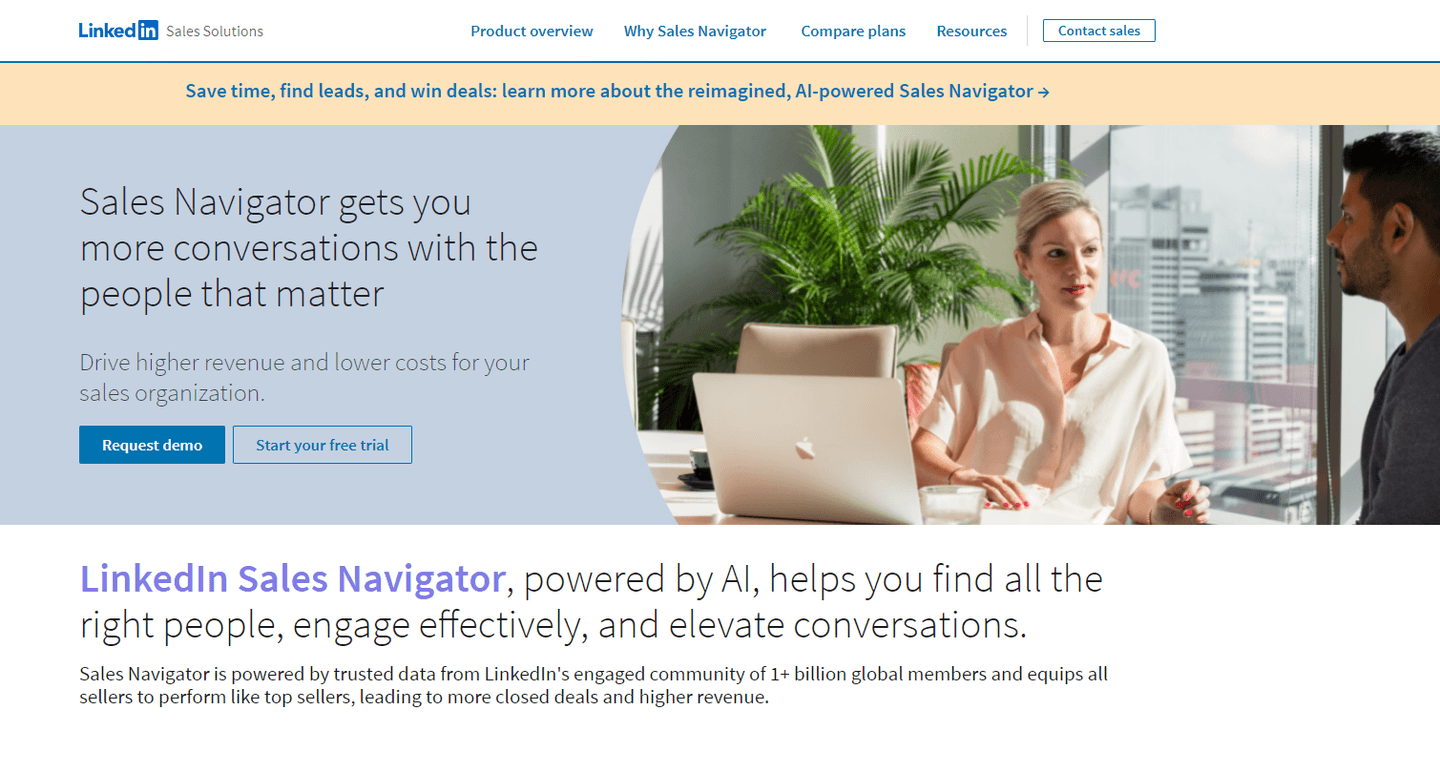
LinkedIn Sales Navigator is a B2B sales tool for SDRs to help them find the right prospects for your brand and engage with them directly.
Features
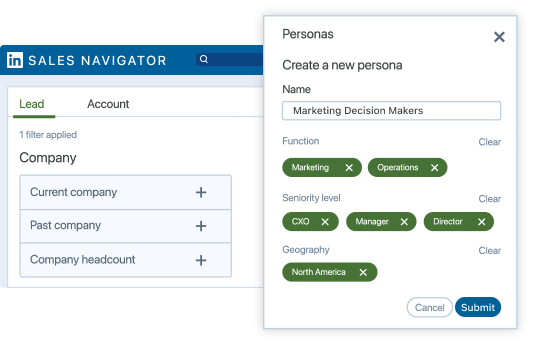
- Find the decision-makers of any company with the tool’s advanced filters. You can use LinkedIn’s 50+ search filters, such as seniority level, company size, and location.
- Engage these decision-makers with personalized messages that resonate with them, as the platform provides insights about each prospect.
- Discover deep insights about a company’s hiring trends, department headcount, and recent hires to build rapport and send more relevant messages.
Standout Feature: Account IQ
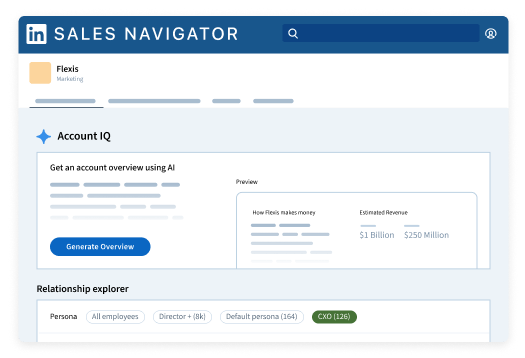
You can reduce preparation time from hours to secondswith LinkedIn Sales Navigator’s Account IQ.
The AI-powered feature equips your sales reps with a deeper understanding of their accounts to build deeper relationships.
Pricing
LinkedIn Sales Navigator is a product of LinkedIn Premium and there are 3 paid tiers:
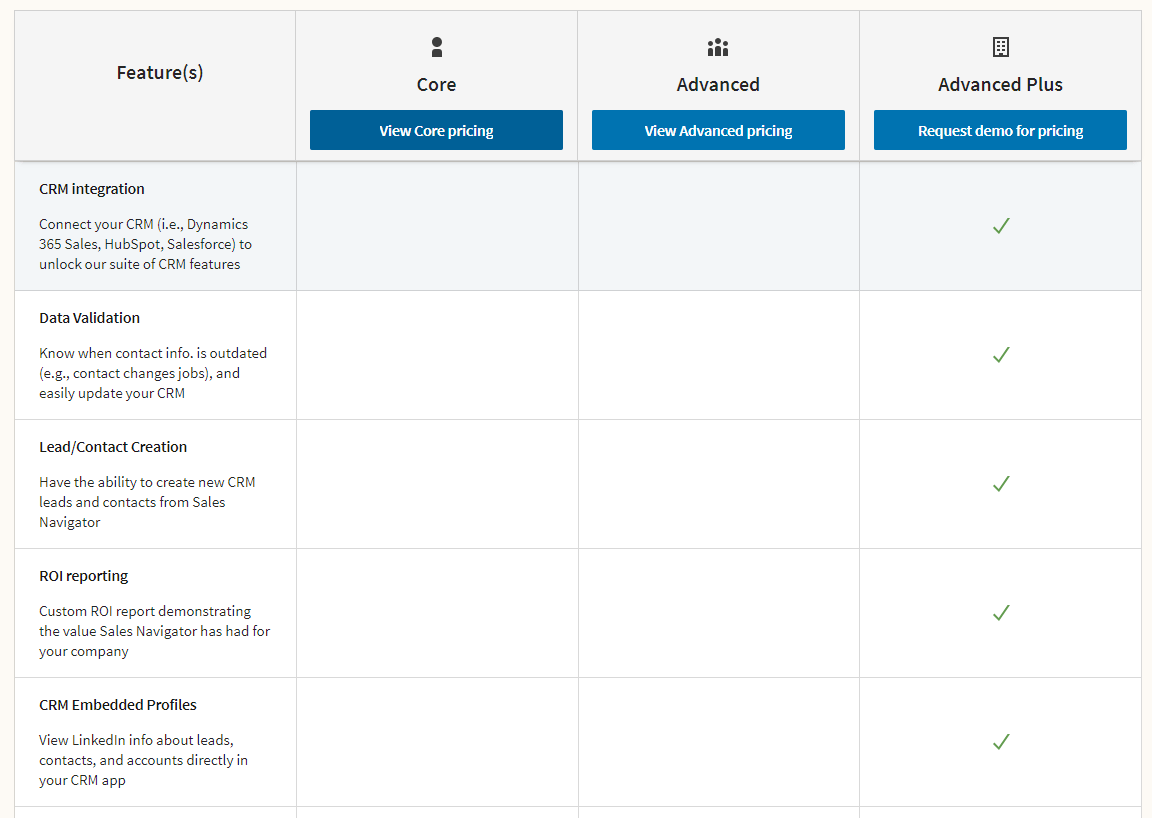
- Core:$99/month/seat that gives you access to advanced search features for leads and company profiles and to find and export emails and data points about leads.
- Advanced:$149/month/seat, which adds buyer interest alerts, and smart links that can bundle up to 15 documents or web links.
- Advanced Plus:$1,600/month/seat, which adds CRM sync, and advanced CRM integrations with platforms like Salesforce and Microsoft Dynamics 365.
Pros and Cons
✅ Lead and account recommendations that are based on your saved leads and mutual connections.
✅ Buyer intent signals to see which buyer has expressed interest in your company.
✅ Account IQ that helps you with account research and planning.
⚠️ More expensive than other alternatives on the market.
⚠️ CRM integration is only available at the most expensive plan.
#5: Qwilr
Best for: Building and sending out personalized sales proposals from out-of-the-box templates.
Similar to: Flowla.
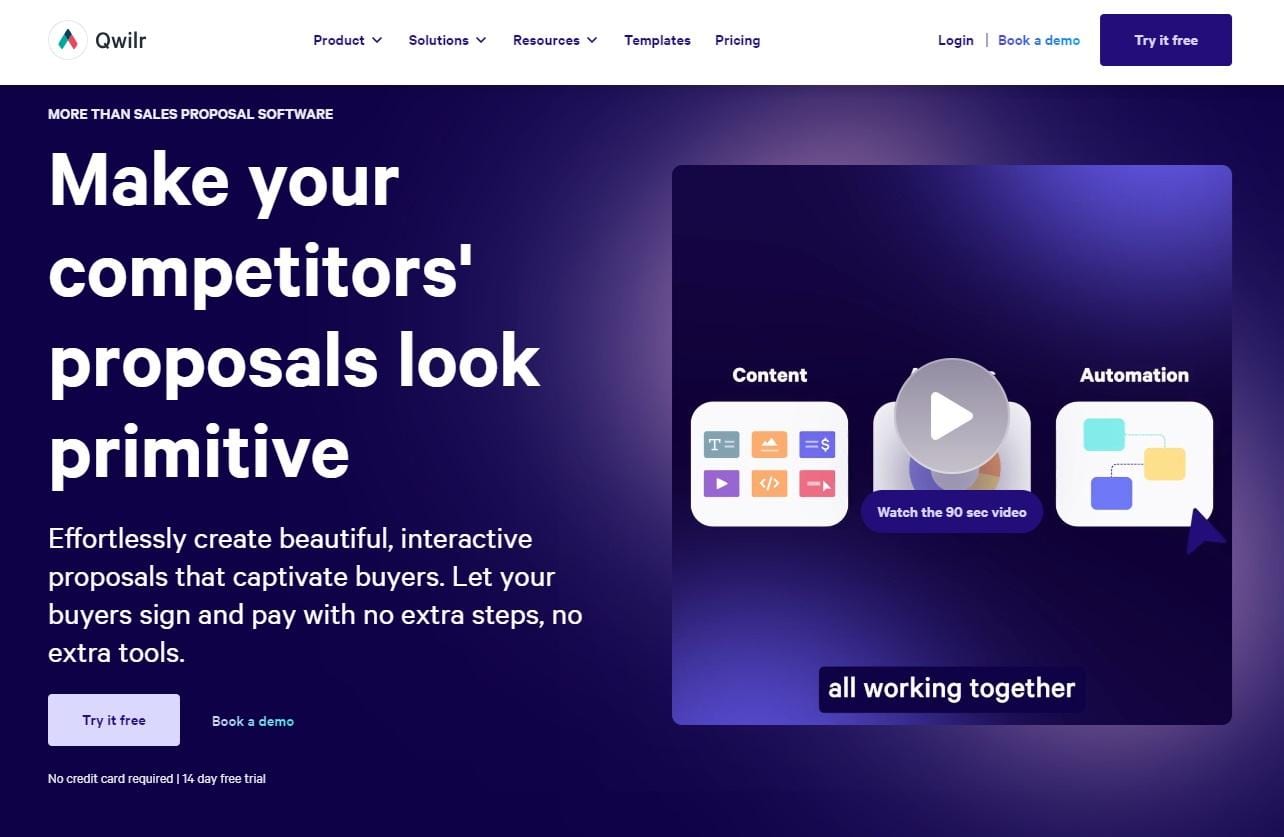
Qwir is a sales proposal software that lets your SDRs create sales proposals in web format to convert and up-sell your leads.
Features
-
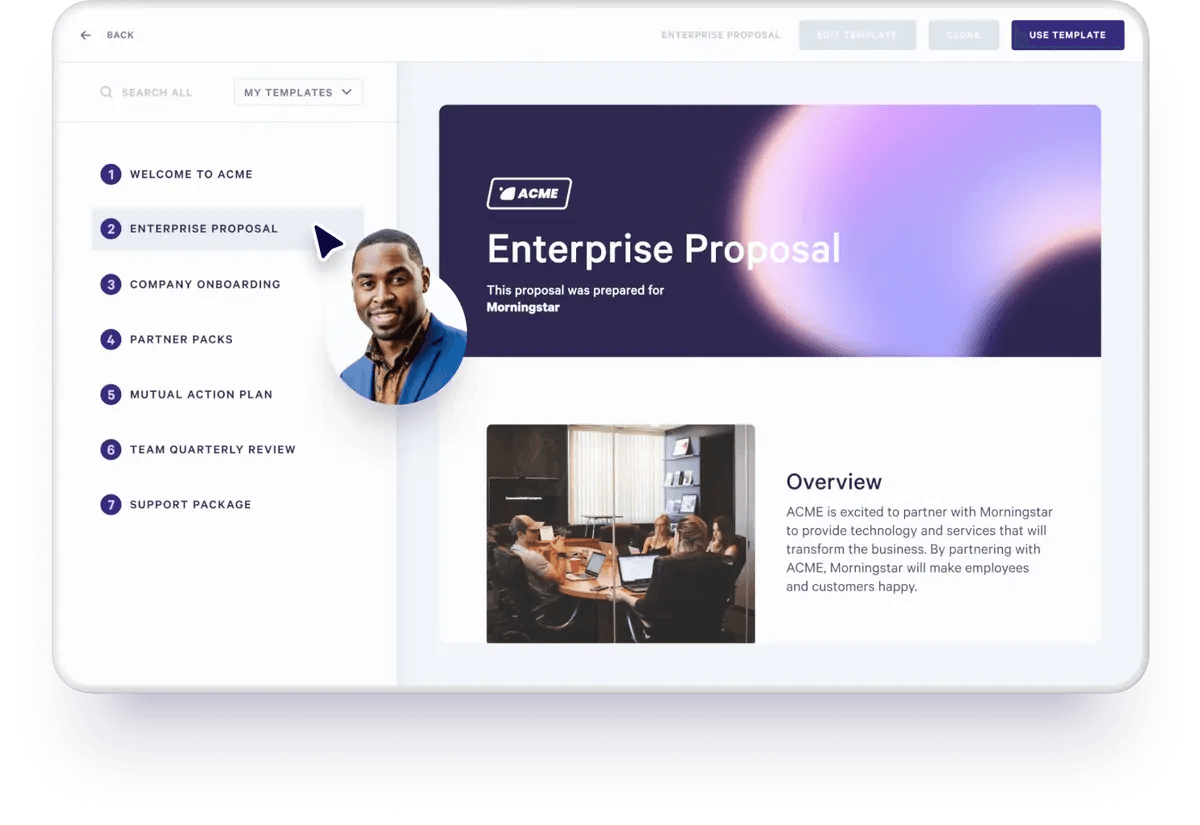
Sales proposal web editor with ready-to-use templates that you can personalize and create sales materials quickly.
-
Make the process of accepting payments by your clients quicker by combining the sign-off, agreement, pricing quote, and payment into one interactive page.
-
Advanced engagement analytics that tracks buyer engagement across all your sales collateral. The tool notifies you when a quote or proposal has been viewed, signed, etc.
Standout Feature: Template Gallery
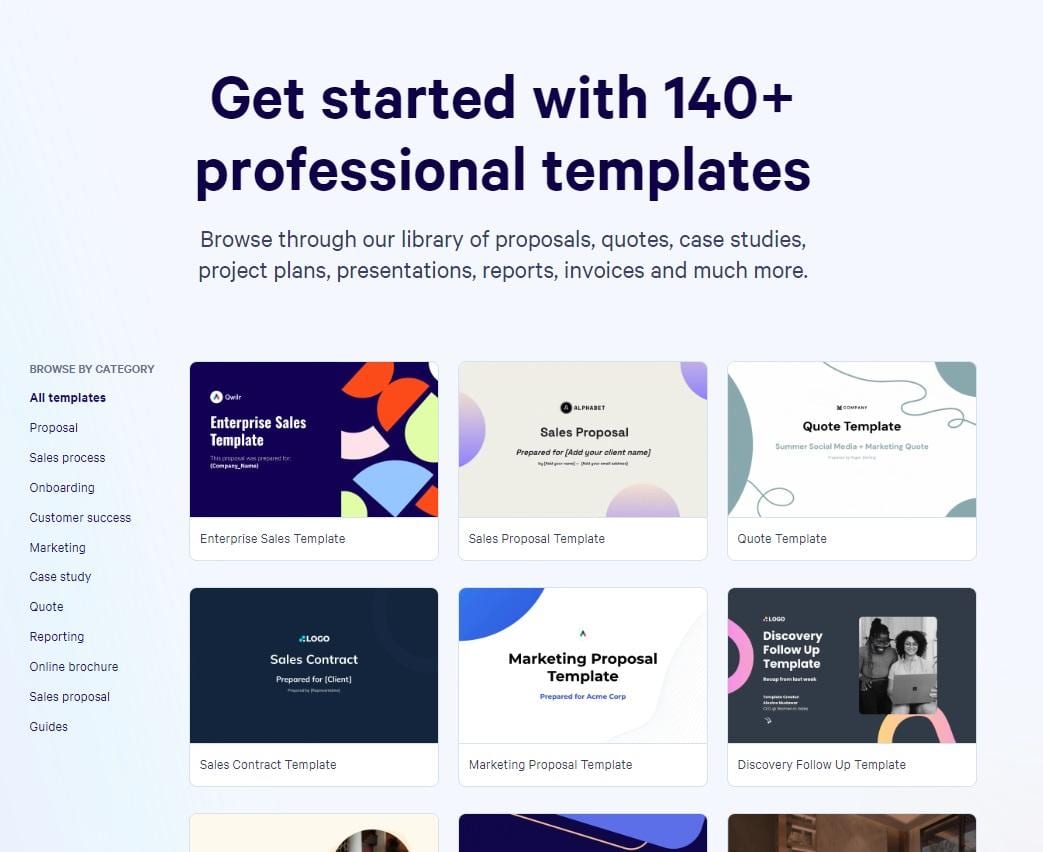
Qwilr helps you create beautiful sales proposals from ready-to-use templates.
Your sales development representatives would get access to discovery follow-up, sales contracts, and enterprise sales templates.
Pricing
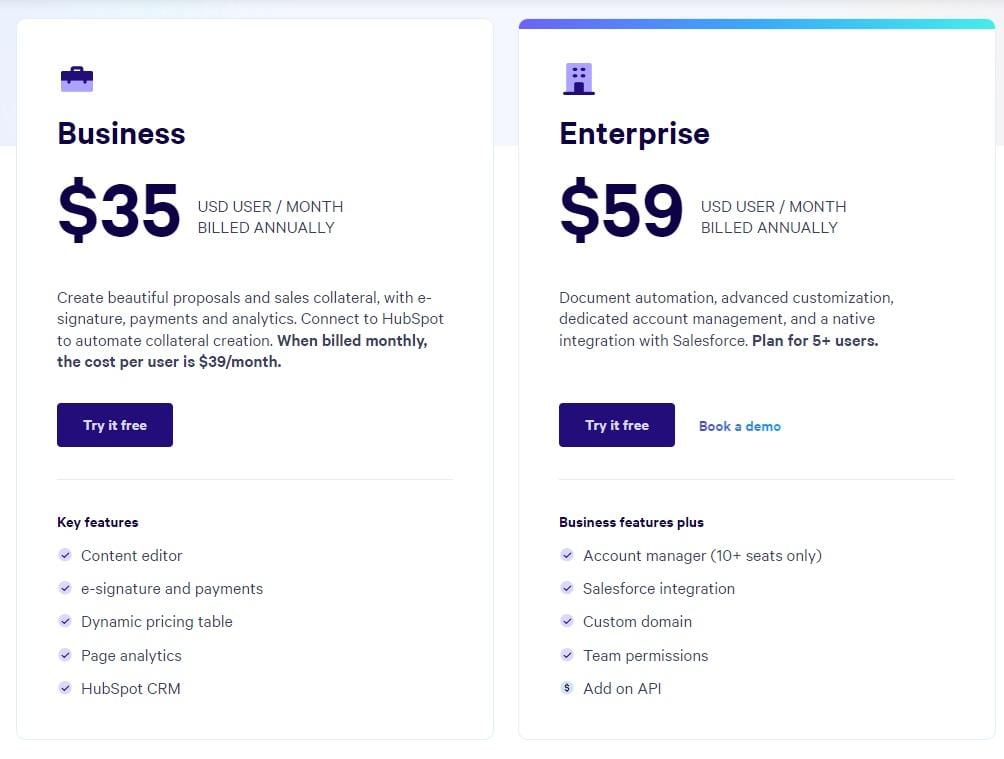
Qwilr bases its pricing on user seats and has two pricing tiers:
- Business plan: $35/seat/month, which gives you access to the tool’s content editor, e-signatures, dynamic pricing table, page analytics, and HubSpot CRM integration.
- Enterprise plan:$59/seat/month for at least five seats, which adds access to document automation, advanced customization, and dedicated account management.
Pros and Cons
✅ Pre-made templates that you can tailor to your clients.
✅ Good HubSpot and Salesforce integrations that you will get with the first plan.
✅ Advanced analytics and insights into customer engagement.
⚠️ Not as good editing and customization options as other competitors of Qwilr.
⚠️ Lack of reporting and dashboard functionality.
#6: Flowla
Best for: Building a workspace for your sales development reps to collaborate with customer success teams.
Similar to: Qwilr.
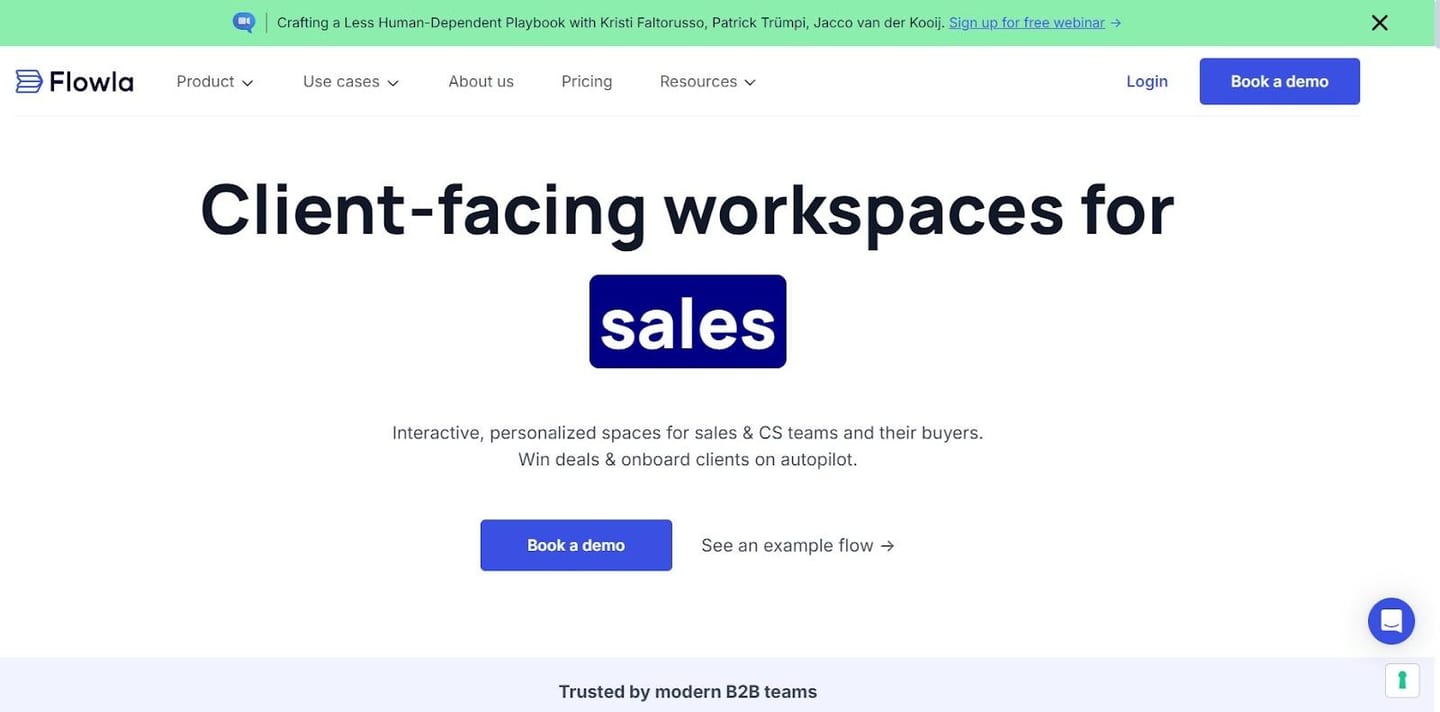
Flowla is a sales enablement solution that helps sales leaders create client-facing workspaces for your SDRs, customer success team and clients.
Features
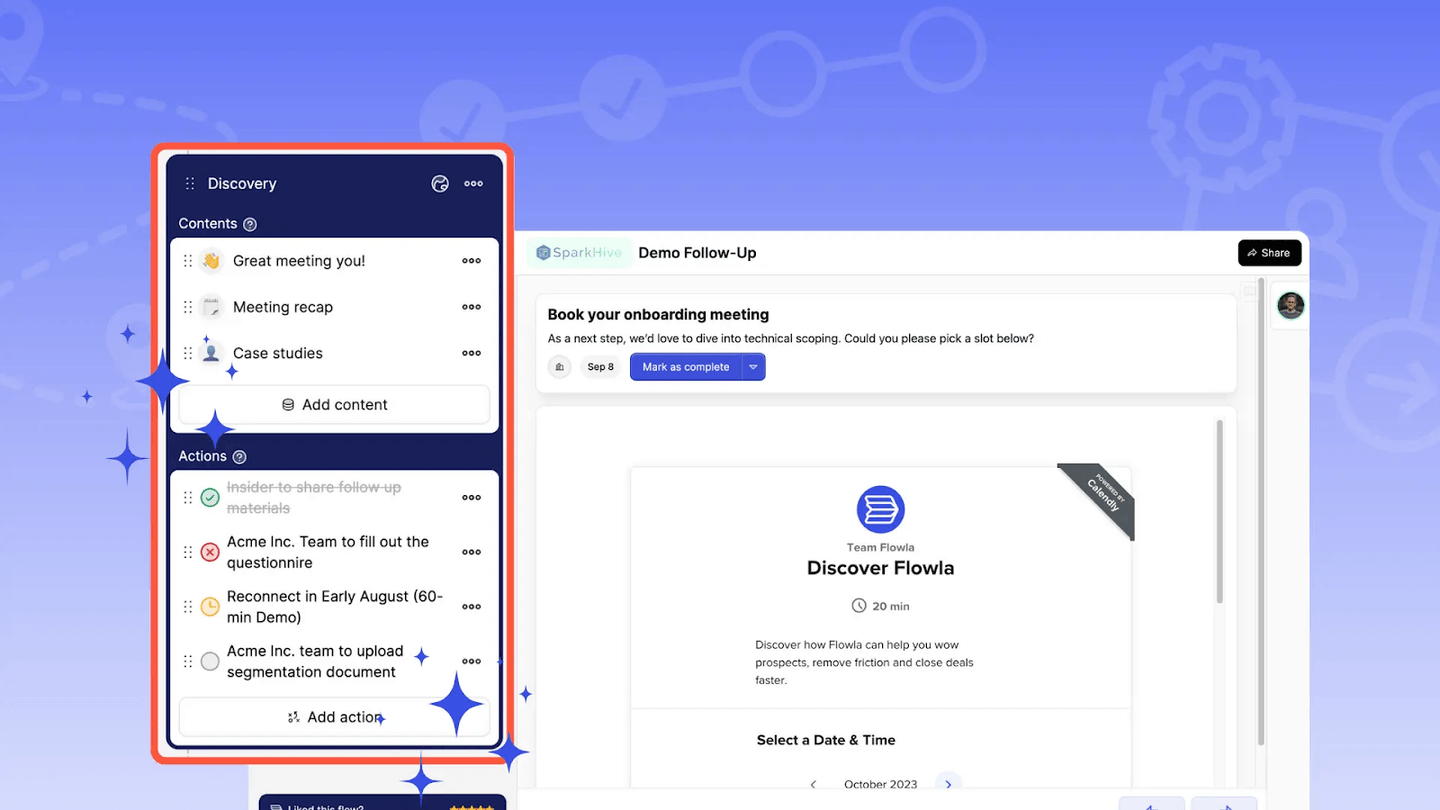
- Customizable sales rooms: A single, unified space to manage all client-facing processes.
- Mutual action plans: Turn complex processes into a single, actionable, and collaborative flow alongside your clients. You can set deadlines, assign tasks, and track progress to keep everyone accountable.
- Revenue intelligence: Make data-driven decisions with detailed analytics into unique views, client engagement, and shares.
Standout Feature: Flowla AI
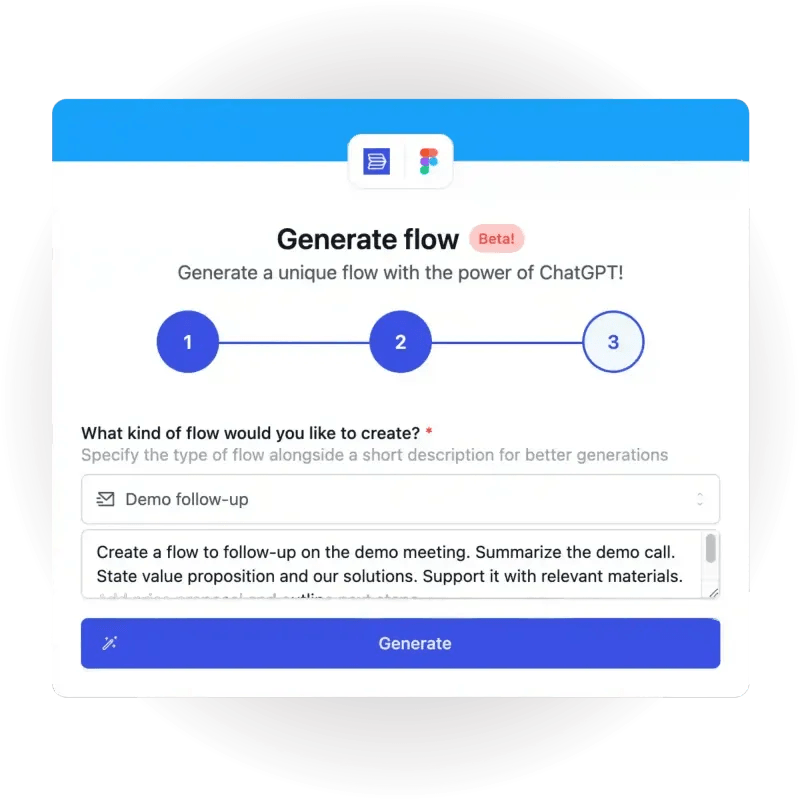
Flowla AI helps your SDRs build onboarding flows with the power of ChatGPT.
The platform can build custom flows from scratch, generate text, and pull the design from your client’s website.
Pricing
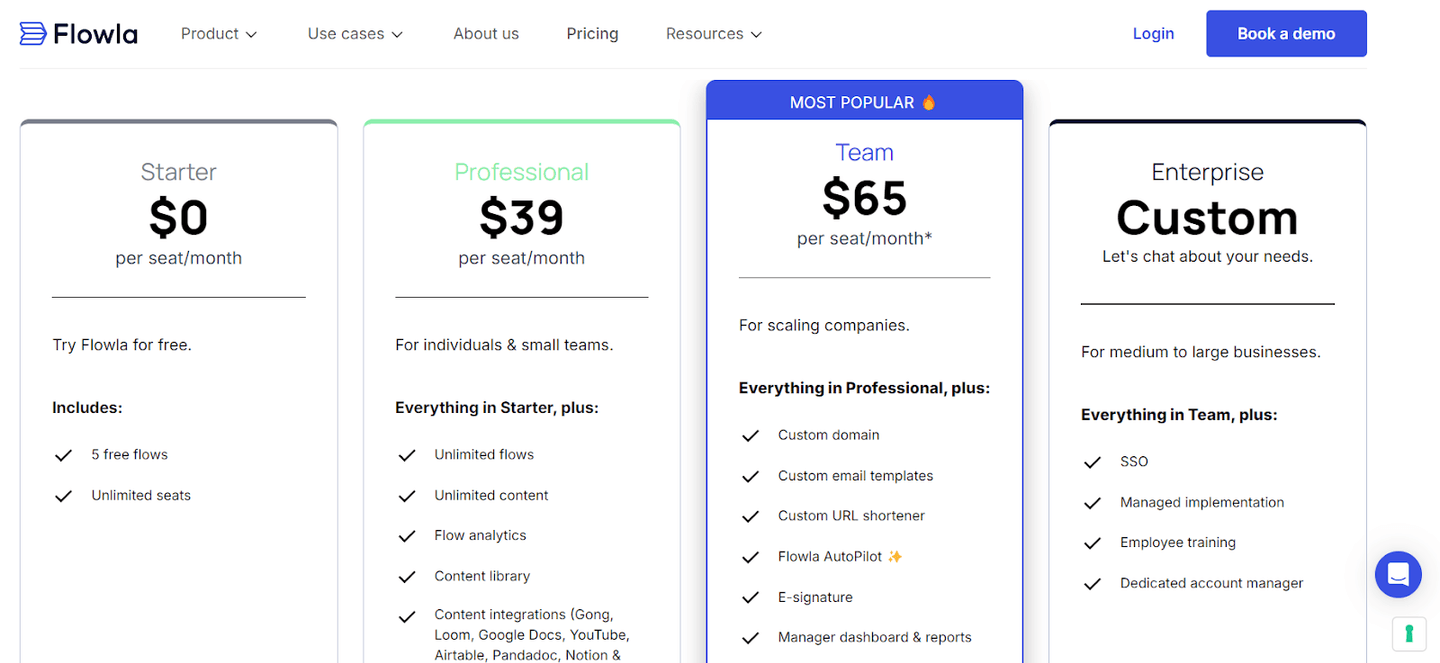
Unlike other competitors, Flowla offers a free version that lets you try the software for free and create up to five free flows with unlimited seats.
To access the sales platform’s more complex features, you would need to be one of their three paid tiers:
- Professional plan:$39/seat/month, which gives you access to unlimited flows, unlimited content, flow analytics, and content library.
- Team plan:$65/seat/month, which adds access to a custom domain, custom email templates, e-signatures, and Flowla AutoPilot.
- Enterprise plan: Custom pricing, which adds additional support, such as employee training, a dedicated account manager, and a managed implementation.
Pros and Cons
✅ Shorten your deal cycles with customizable sales rooms.
✅ Set up mutual action plans to move your clients quicker to value.
✅ Craft onboarding plans with the power of AI.
⚠️ Customization is limited when compared to other alternatives.
⚠️ Some users note that they’ve had integration issues with their CRMs.
#7: Aligned
Best for: Building and sending out digital sales rooms with an in-built AI assistant.
Similar to: Flowla, Qwilr.
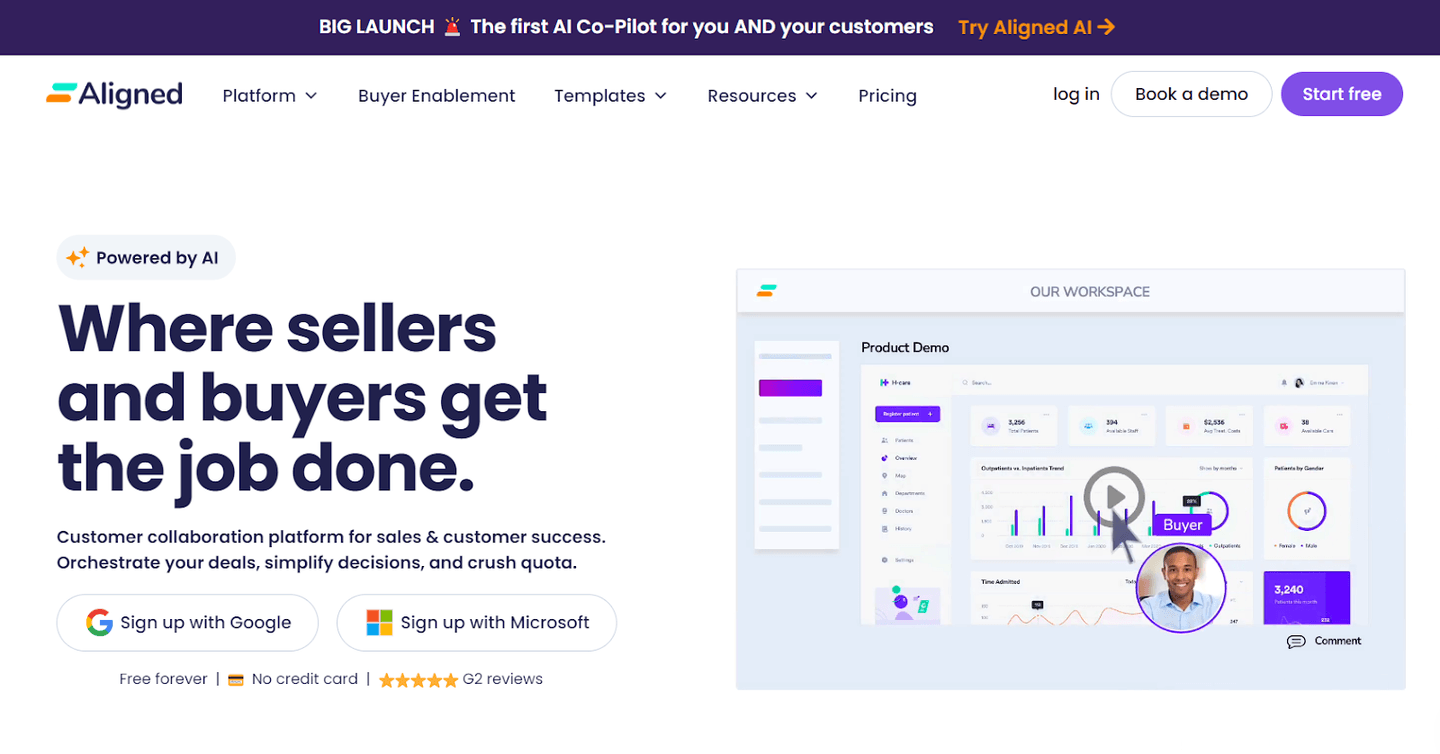
Aligned offers digital sales room software for SDRs that helps them close more deals by consolidating all sales collateral in one place.
Features
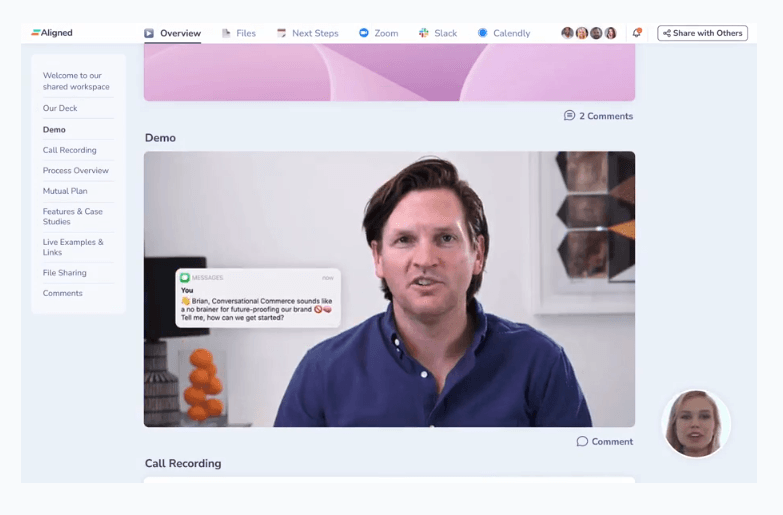
- Share all sales content in a customized sales room with no login required from your customers.
- Mutual action plans to help your sales reps gain control over customer processes and timelines to convert your leads quicker.
- Revenue intelligence: Make better decisions, identify risks in your deals, and get access to buyer intent notifications.
Standout Feature: Aligned AI (Chatbot)
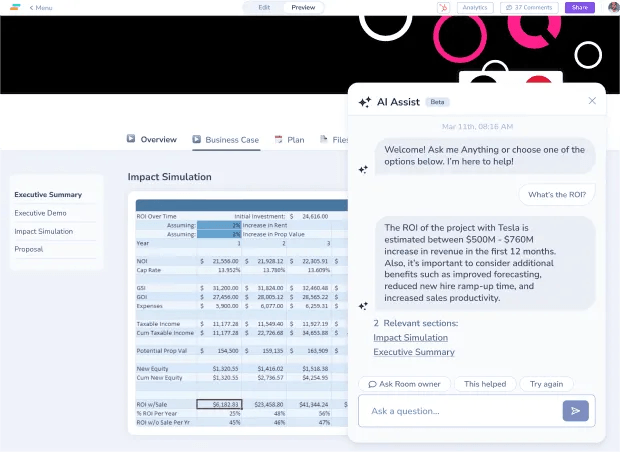
Aligned’s AI copilot helps your SDRs keep the momentum going by answering your prospects’ urgent questions as they arise.
The AI-driven chatbot can summarize the project scope, ask about the ROI, and help all of your sales development reps catch up on a deal.
Pricing
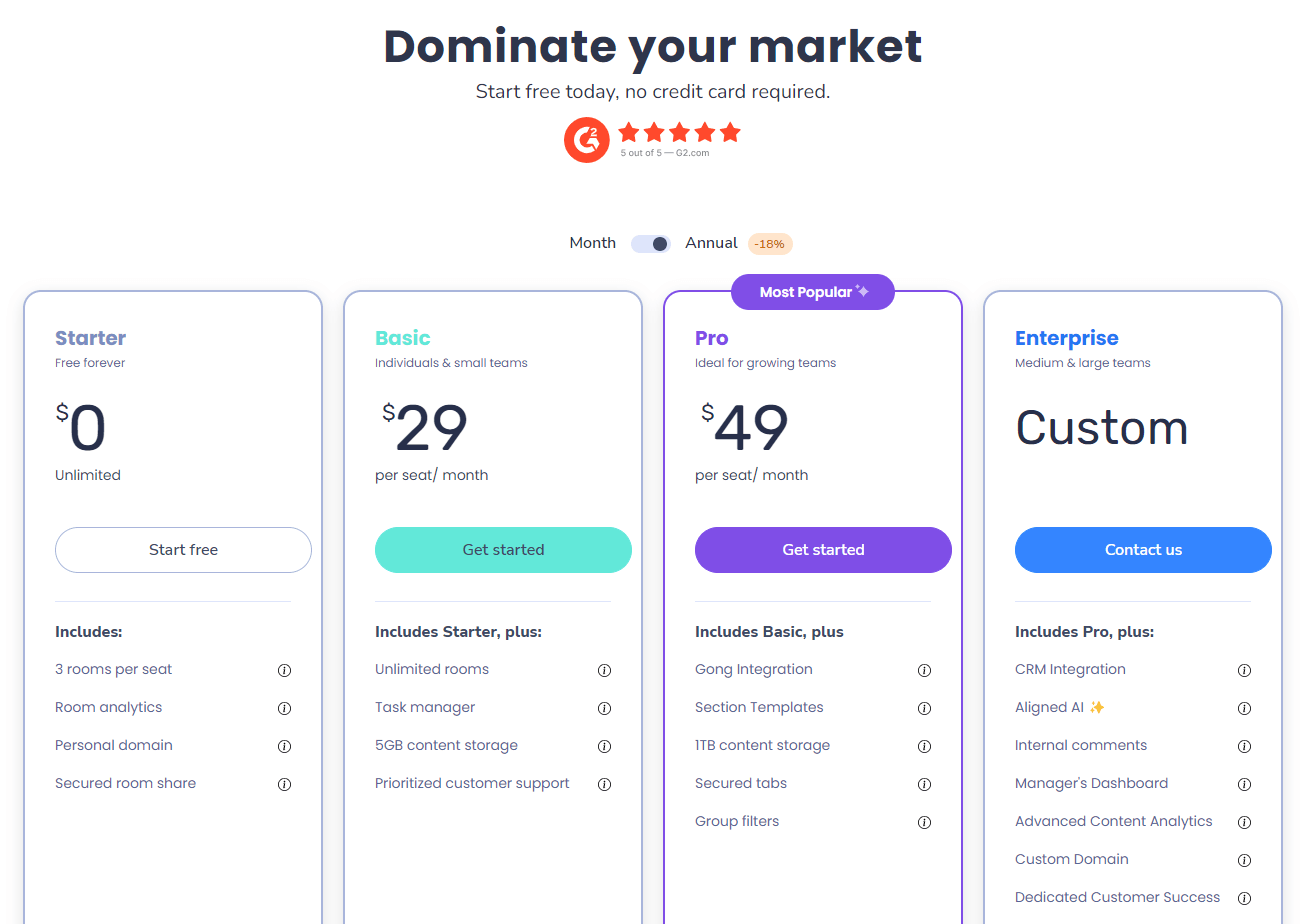
The SDR solution offers a free plan that includes 3 rooms per seat, room analytics, access to a personal domain, and secured room sharing.
To access Aligned’s more advanced features, you’d need to sign up for one of its three paid tiers:
- Basic:$29/month/seat, which adds unlimited sales rooms, a centralized dashboard, 5GB content storage, and better customer support.
- Pro:$49/month/seat, which adds a Gong integration, section templates, 1TB of content storage, secured tabs, and group filters.
- Enterprise: Custom pricing, which adds Aligned AI, CRM integrations, internal comments, advanced content analytics, and more.
Pros and Cons
✅ AI-powered chatbot that lets you answer your prospects’ urgent questions.
✅ Free forever plan that lets you get 3 sales rooms per seat.
✅ Good analytics of the personalized sales rooms.
⚠️ CRM integrations with HubSpot and Salesforce are on the Enterprise plan, unlike alternatives to Aligned.
⚠️ Some customers of the platform note that there could be more customizable options.
#8: Close
Best for: Smaller SDR teams looking for an all-in-one sales CRM platform.
Similar to: Salesforce.
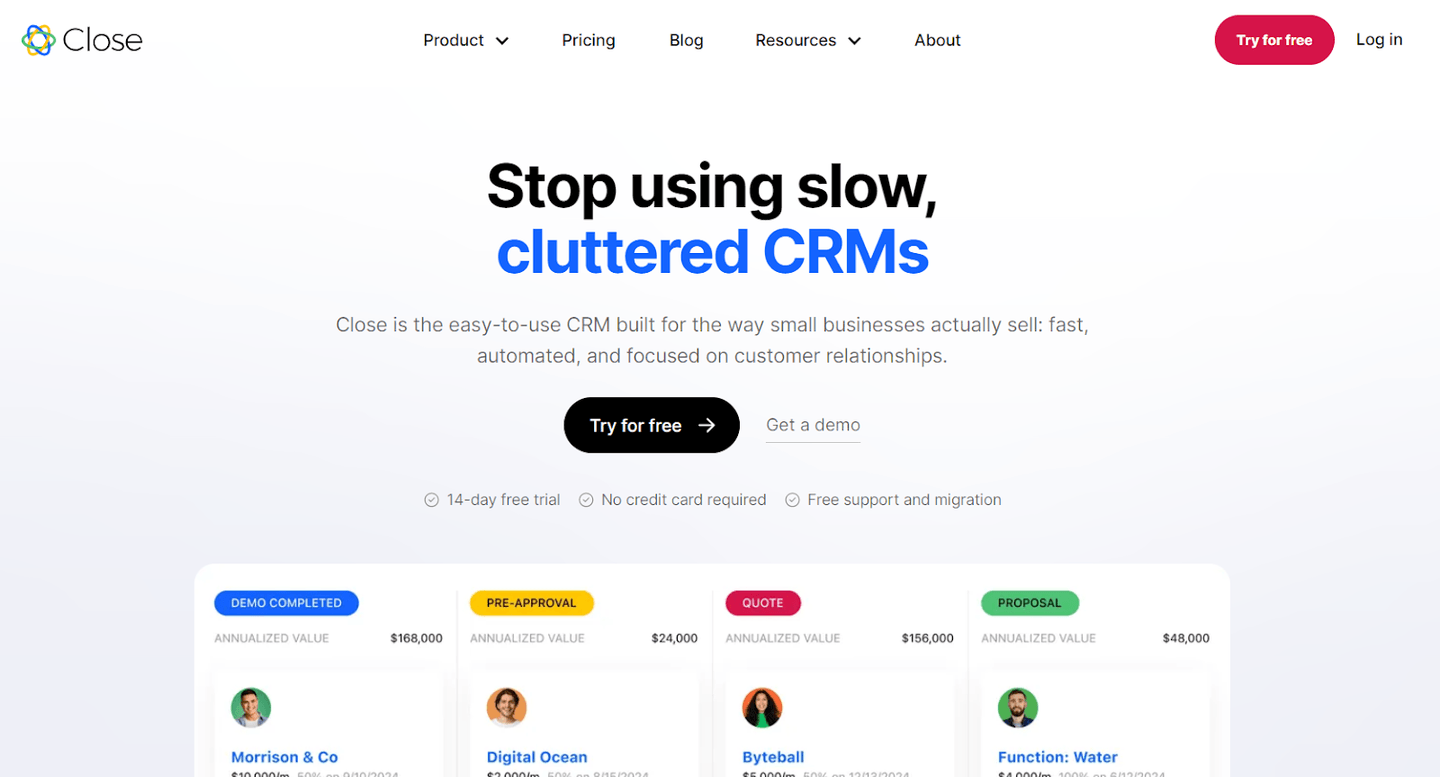
Close is a relatively affordable sales CRM for SDRs that gives you access to automations and relationship-building features with an easy-to-navigate interface.
Features
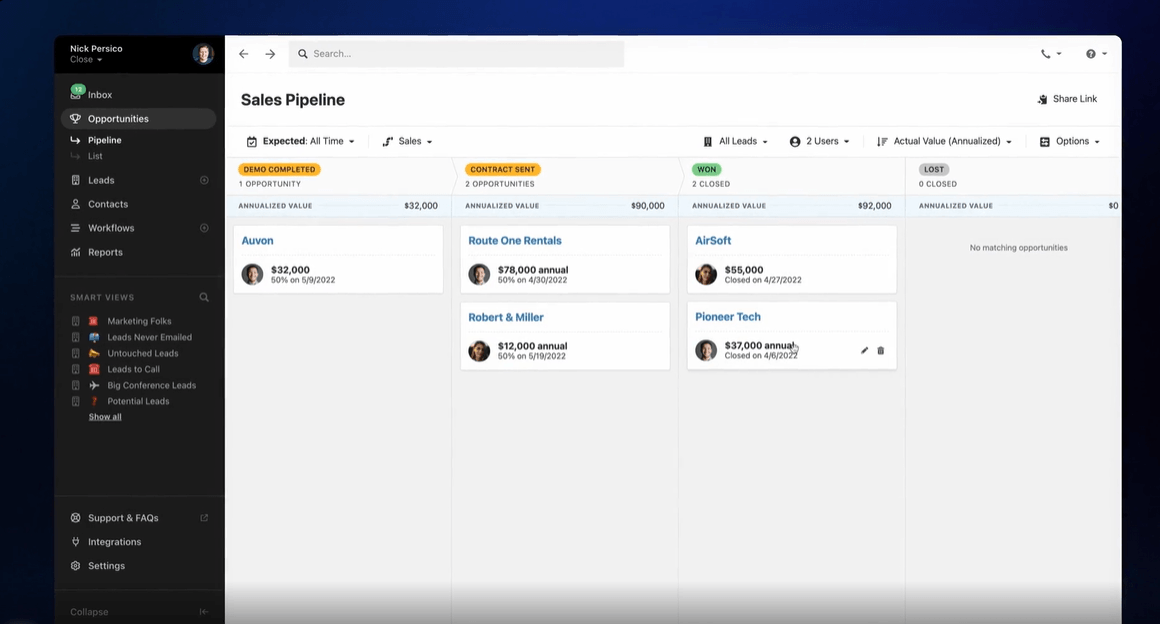
- Sync Gmail and Outlook into one unified place to centralize your client workflows and build automations on email.
- Multi-channel sales outreach: Your SDRs can combine email, call, and SMS steps on their workflows to increase their reach rate and schedule more calls.
- Deep integrations with AI tools like CloseGPT, HubSpot, Calendly, and Zapier for more advanced automations.
Standout Feature: AI CRM
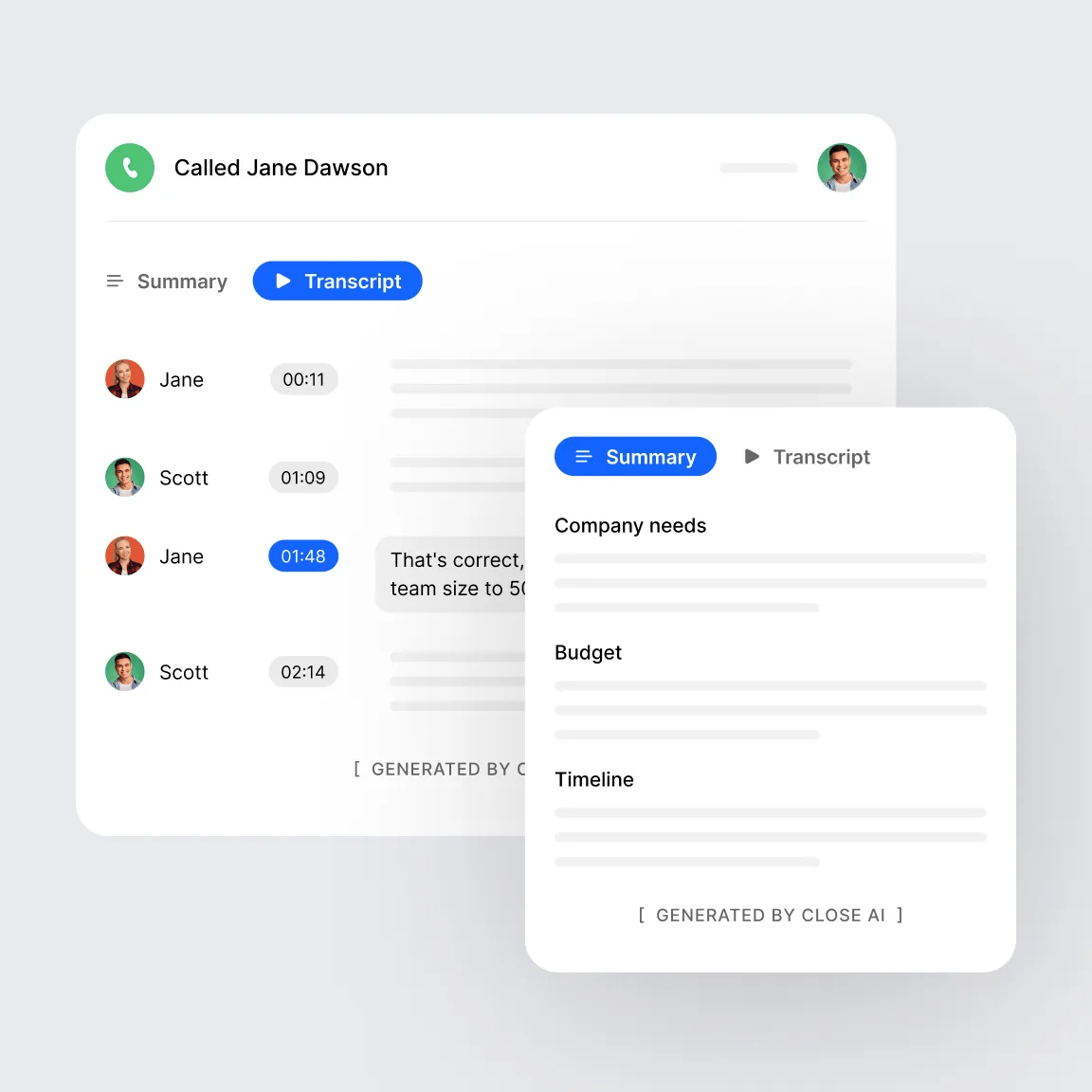
Close’s AI CRM enables your sales team to work faster and smarter by incorporating AI into your CRM.
➡️ You can also bring in your custom AI model from CloseGPT to generate prospecting lists, create meeting agendas, and summarize customer relationships.
Pricing
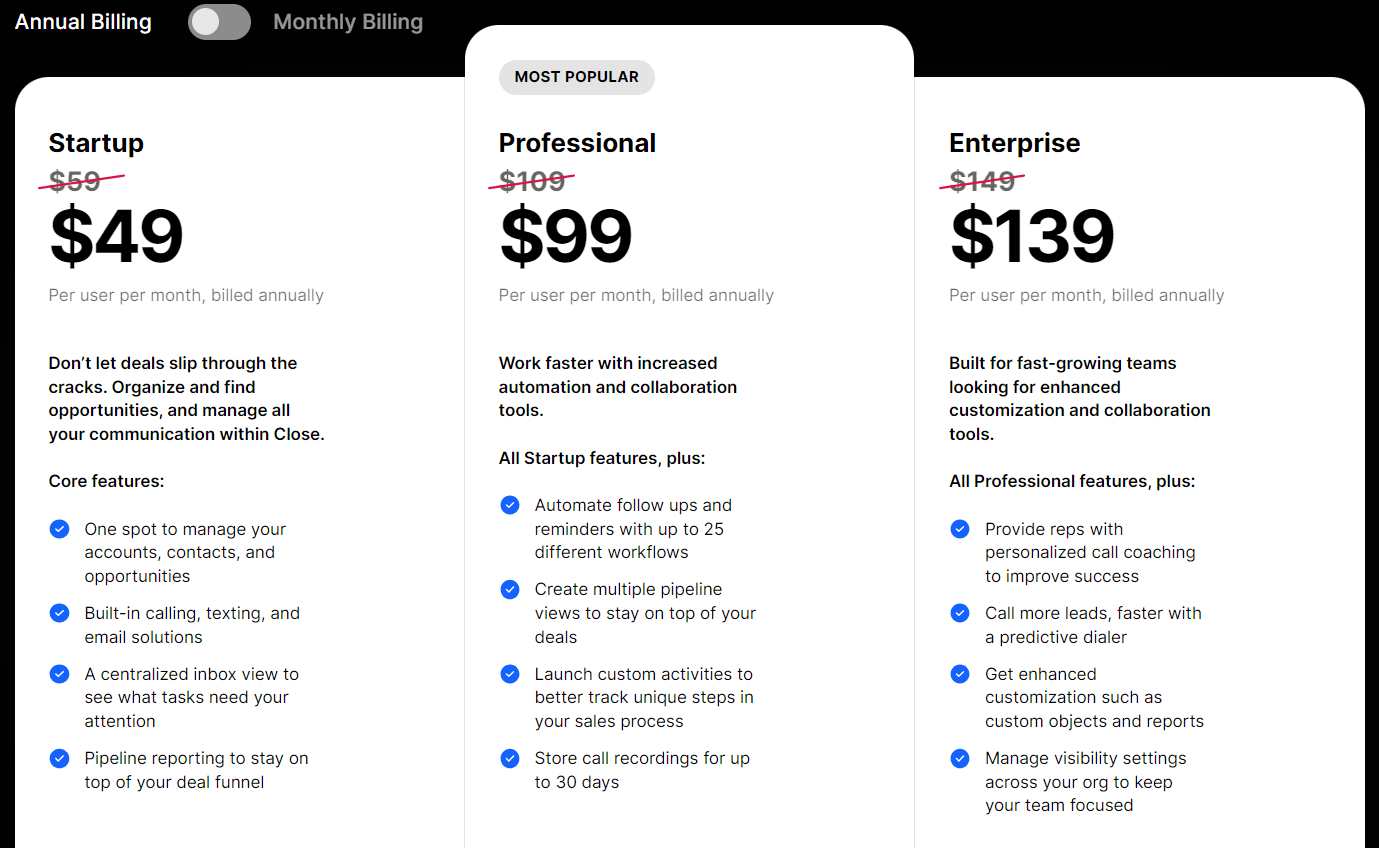
Close offers three paid plans:
- Startup: $49/month/seat, which gives you access to one unified place to manage your accounts, contacts, and opportunities with built-in calling, texting, and email solutions.
- Professional: $99/month/seat, which gives you access to automations and the ability to create multiple pipeline views to stay on top of your deals.
- Enterprise: $139/month/seat, which provides your sales reps with personalized call coaching and the ability to call more leads faster with a predictive dialer.
Pros and Cons
✅ All-in-one sales CRM to manage leads and new customers at a cheaper price point than other alternatives.
✅ Good pipeline reporting for your SDRs.
✅ Your organization can bring your own AI model into the platform.
⚠️ Might have a steep learning curve for new sales reps.
⚠️ Less integrations when compared to other alternatives.
#9: Cognism
Best for: Getting access to good quality leads across the EMEA, NAM, and APAC markets.
Similar to: LinkedIn Sales Navigator.
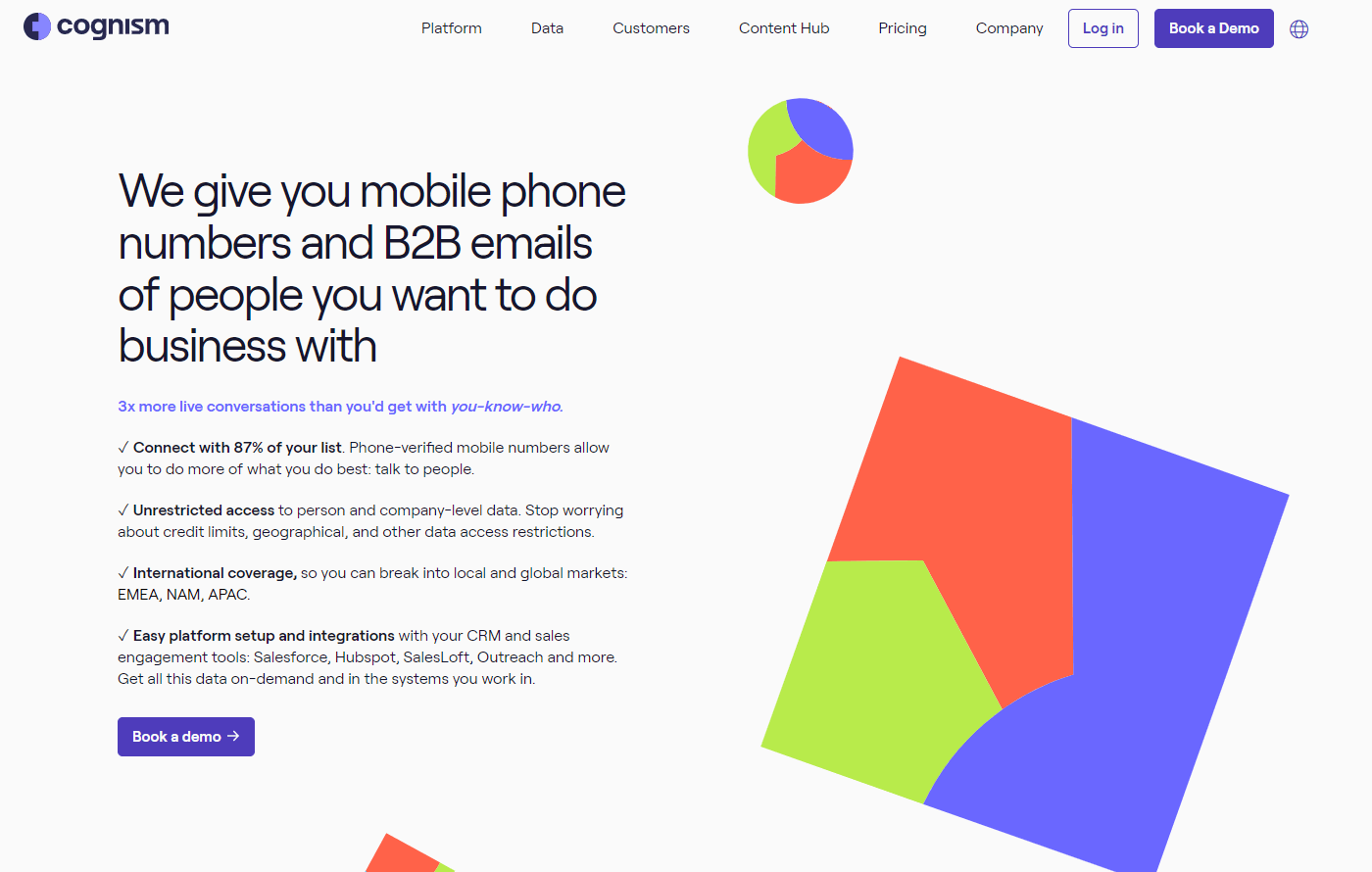
Cognism solves the issue of SDRs wasting time researching bad-quality prospects by providing you with a compliant database of leads.
Features
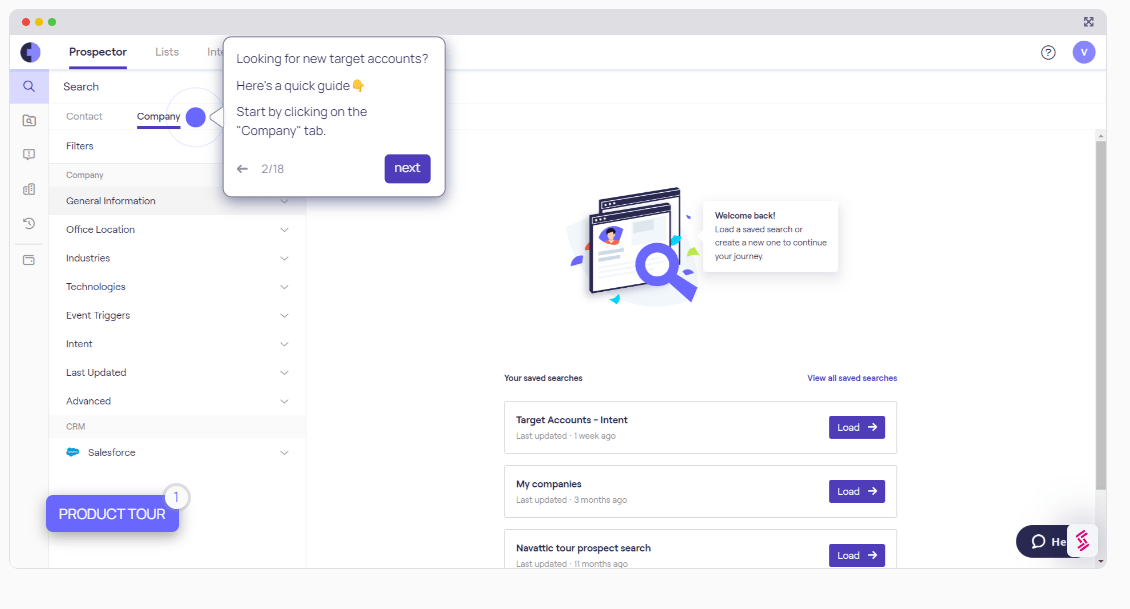
- Access to on-demand verified mobile and email data set to ensure that you’re always calling the right contact.
- Chrome extension that lets you enrich LinkedIn profiles and Sales Navigator prospect lists.
- International coverage of leads across EMEA, NAM, and APAC.
Standout Feature: Intent Data
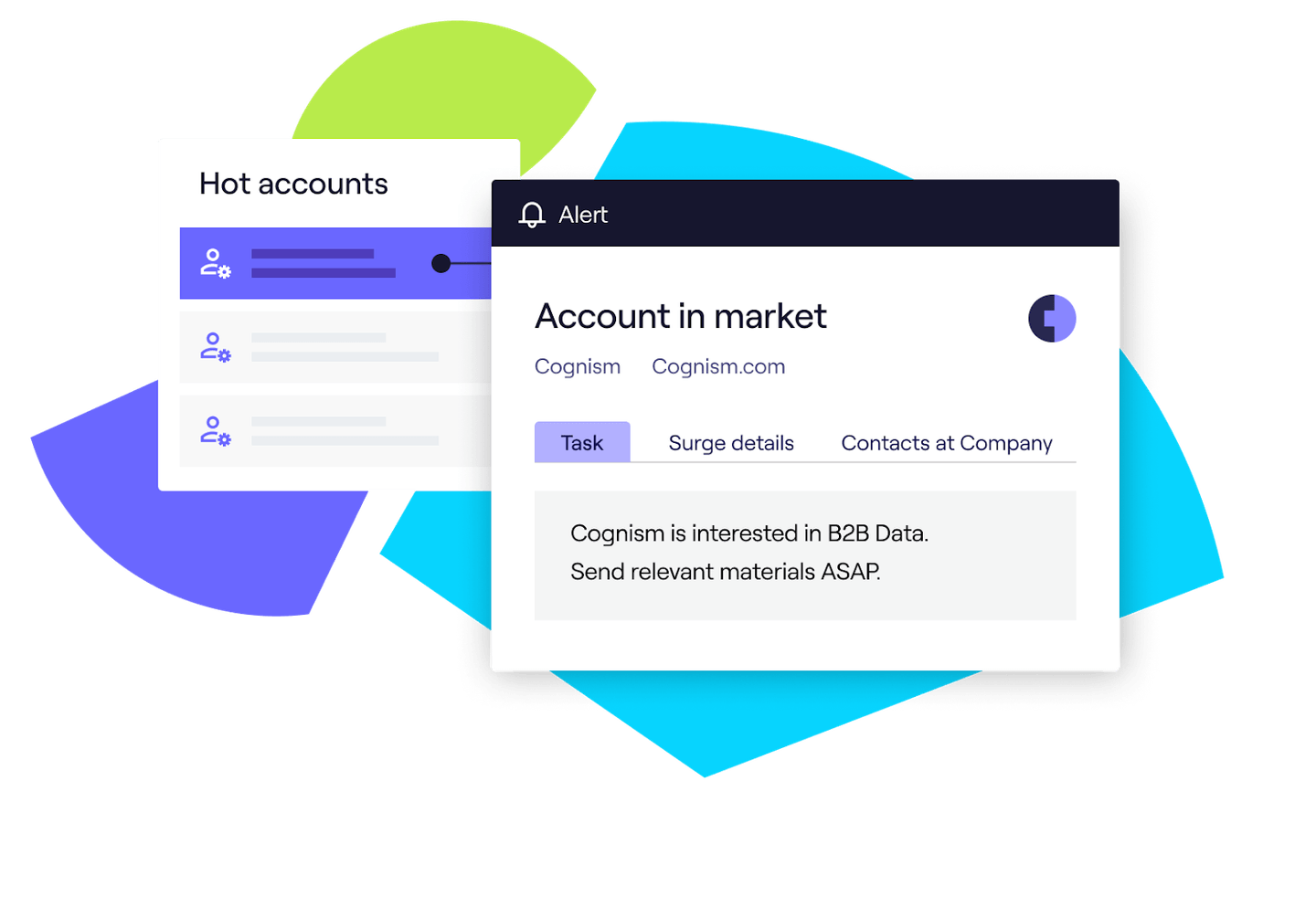
Cognism’s intent datahelps your SDRs connect with warm leads who are searching for solutions like yours.
The platform lets you capture warm opportunities in their early buying stage and be able to reach them via phone, email, social media, or paid ads.
Pricing
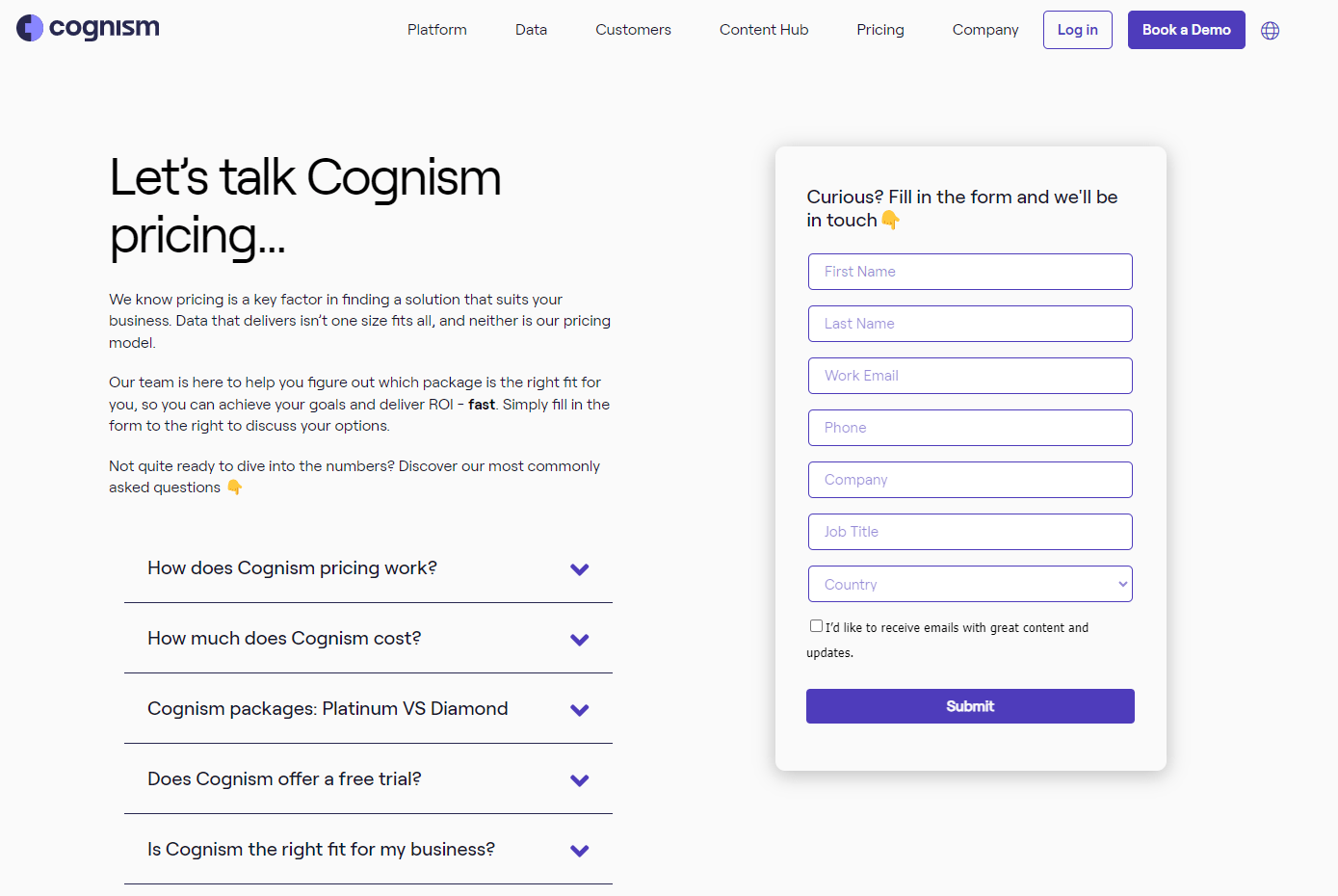
Cognism does not disclose its pricing on its website, which means you’d have to contact them to get a quote.
Third-party data from Vendr suggests that the price range falls between $15,100 to $103,000 a year.
On average for the 27 deals they’ve handled, the average contract value was $51,876.
Pros and Cons
✅ Leads with verified phone numbers.
✅ Advanced intent data to let you reach targets early on.
✅ International coverage.
⚠️ Some users claim that not all of the data provided is accurate.
⚠️ There are not as many outreach features as some of its competitors.
#10: SalesScreen
Best for: Motivating your SDRs with gamification to meet their quotas.
Similar to: N/A.
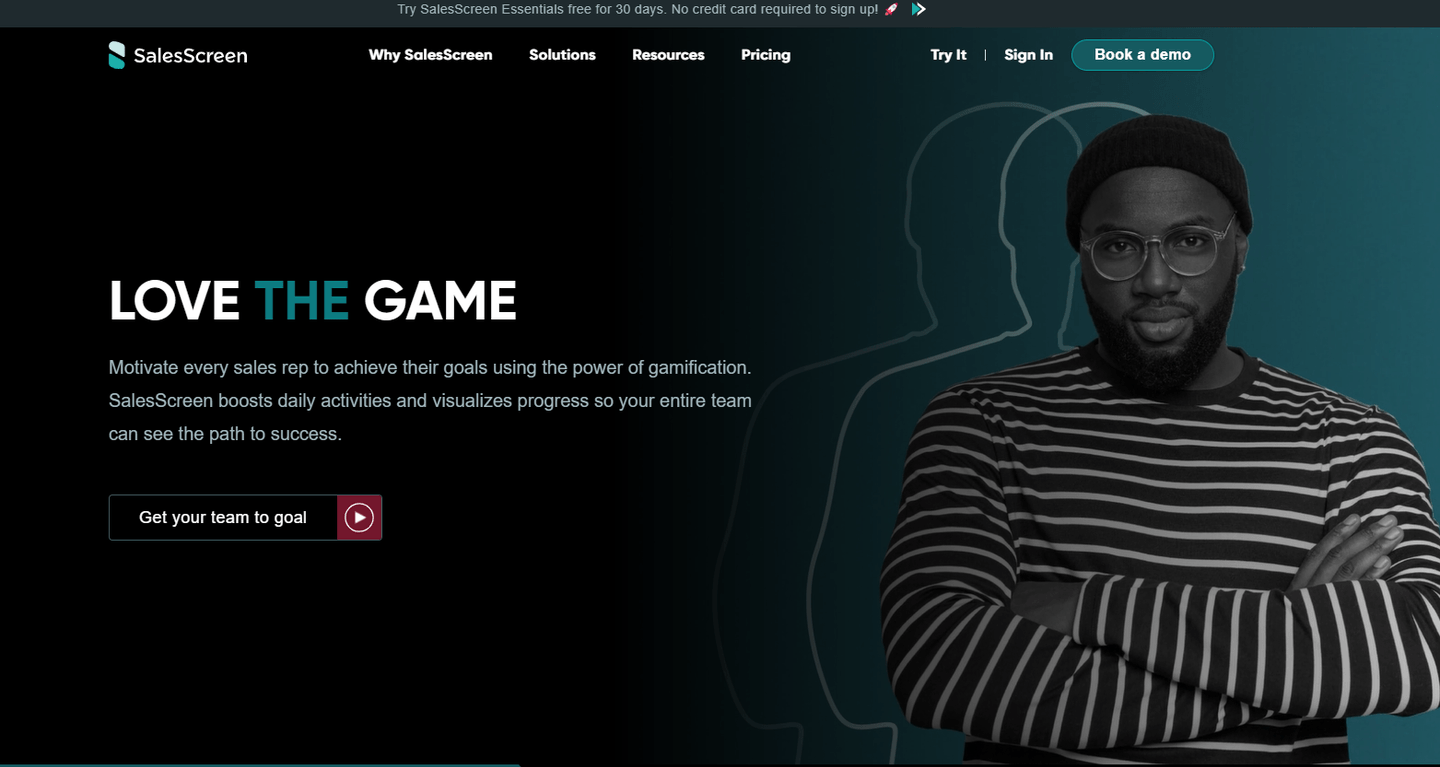
SalesScreen is a sales performance management tool for sales leaders that helps you visualize your SDR’s performance and reward it.
Features
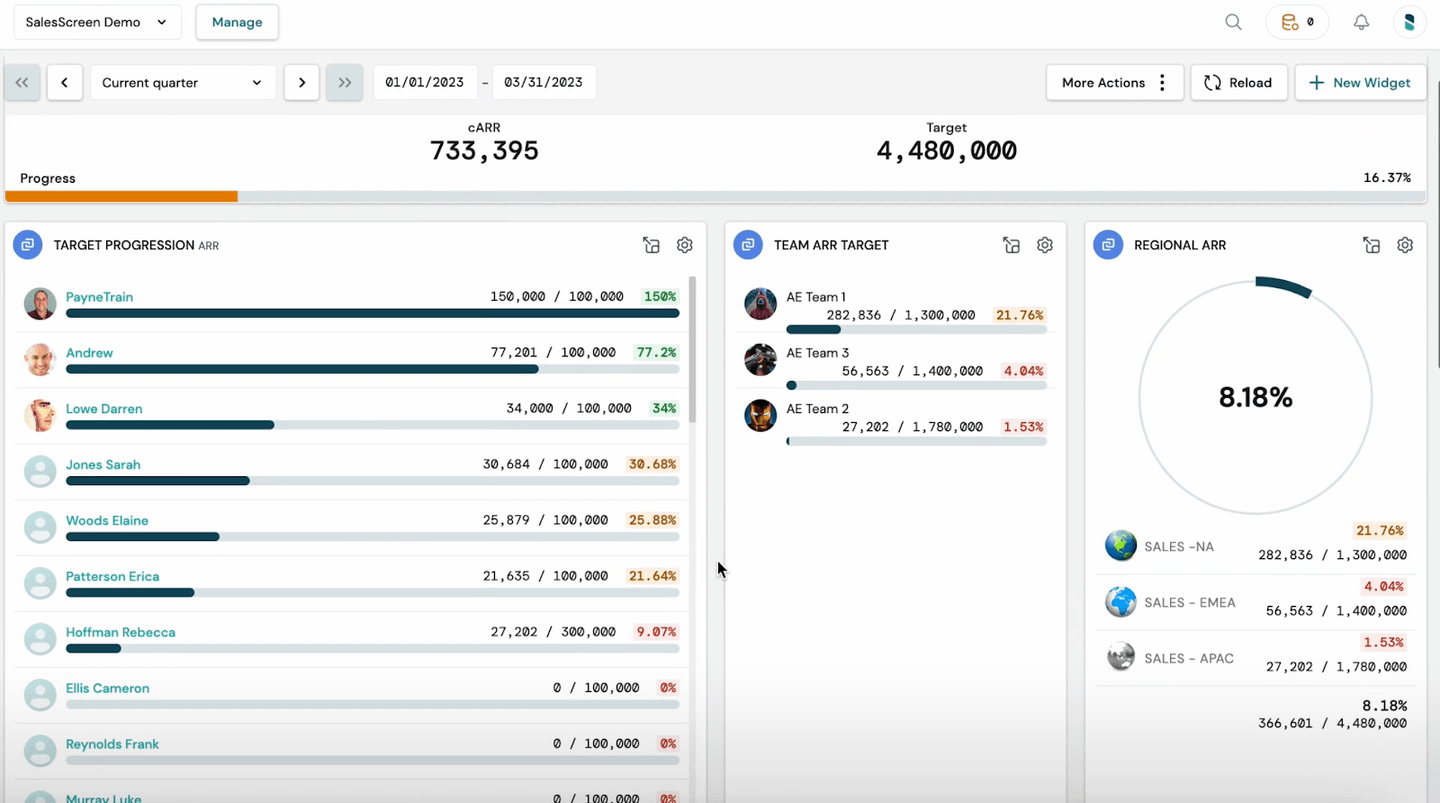
- Motivate your sales reps to meet quotas with competitions, rewards, and celebrations when they win.
- Visualize the account performance of each SDR to instil accountability within your sales team.
- Recognize wins by rewarding your champions with more than just quarterly bonuses.
Standout Feature: Gamification
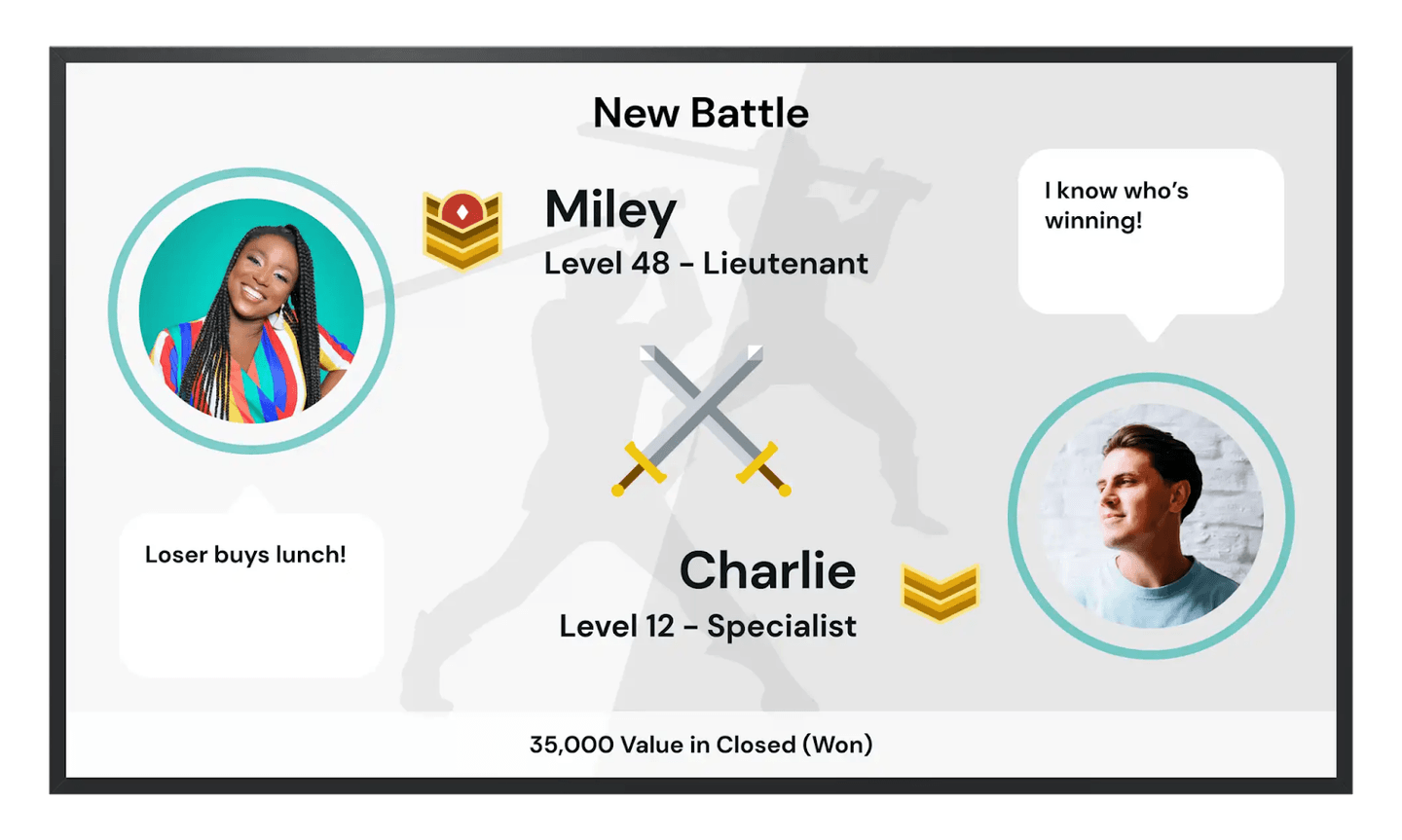
You can motivate your SDRs by creating healthy competitions and handing out virtual rankings.
The platform lets you award your best-performing sales reps with award badges of honor and physical rewards, such as food or electronics.
Pricing
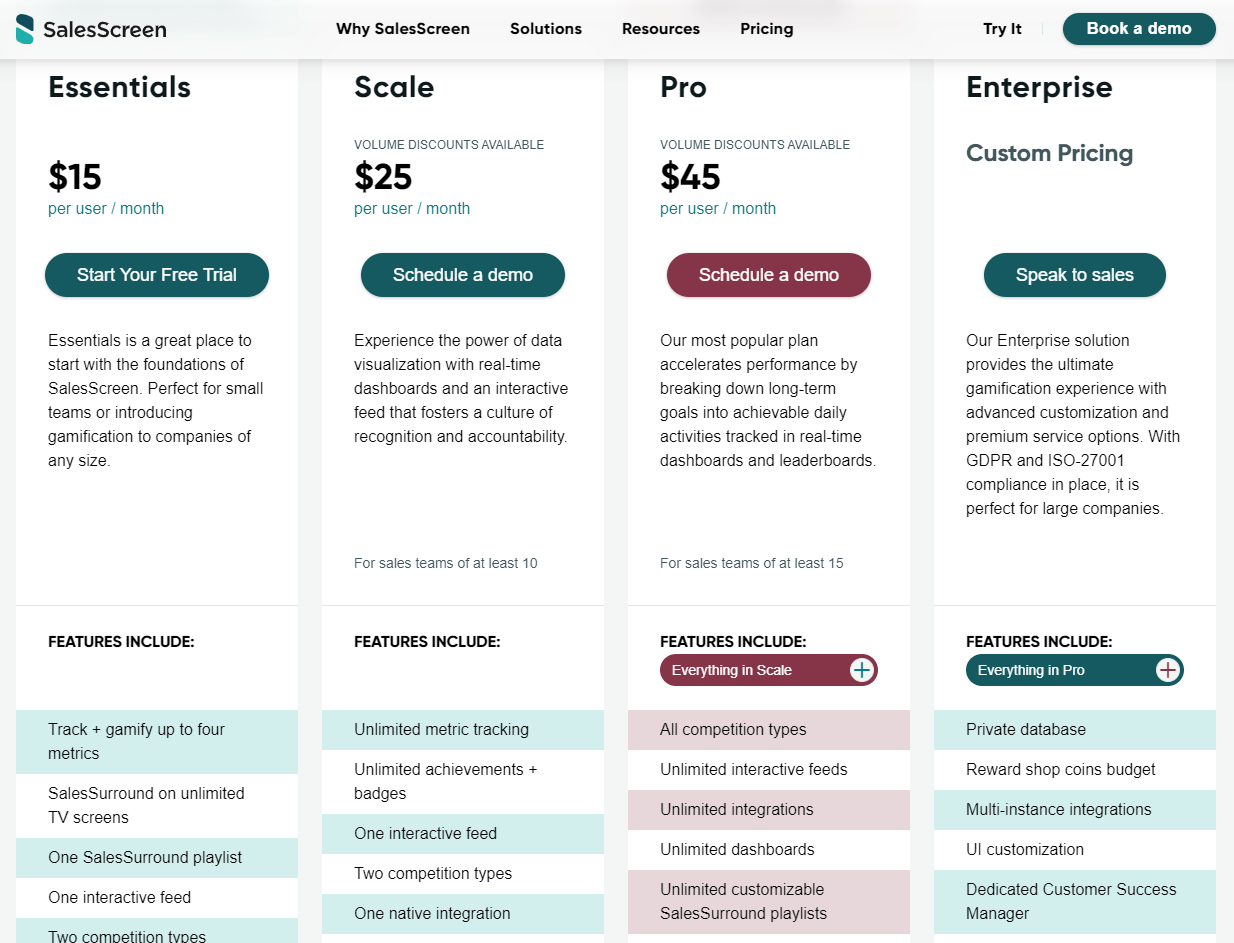
SalesScreen has 4 paid plans:
- Essentials: $15/month/seat that lets you track and gamify up to 4 sales metrics and get access to the platform’s interactive feed.
- Scale: $25/month/seat for sales teams of at least 10, which adds unlimited metric tracking and one native integration.
- Pro:$45/month/seat for sales teams of at least 15, which adds unlimited interactive feeds, unlimited integrations, and unlimited dashboards.
- Enterprise: Custom pricing, which adds a private database, reward shop coins budget, and UI customization.
Pros and Cons
✅ Motivate and reward your SDRs through interactive gamification.
✅ Set up friendly competitions between your sales reps.
✅ CRM integrations with Salesforce, Microsoft Dynamics, and Pipedrive.
⚠️ Some users claim that it might create unnecessary pressure.
⚠️ Customers of the tool note the interface might not be as user-friendly as it could be.
Next steps: what happens after your SDRs book the meeting?
Most SDR tools help your team find prospects and book meetings. The work that follows falls to your AEs: the prep, the follow-up, the CRM updates, and the next stakeholder to bring in.
If you’re a sales leader who wants:
- A gameplan for every deal your SDRs source, built from your team’s playbook.
- Call prep, research, follow-up emails, and CRM updates done for your AEs, with a rep approving each one before it sends.
- One tool that works with the CRM and notetaker you already use, and keeps your sales rooms current.
Then you can book an agent kickoff to see how Arrows works.