


In this guide, we’ll go over 12 actionable sales tactics that you can incorporate into your sales strategy right away.
What sales tactics actually help teams close more deals?
Here are the 12 sales tactics we sourced from our sales team and industry-leading experts:
#1: Give every deal one shared plan with the buyer
Plenty of deals don’t stall on a call. They stall between calls, in a long email thread where nobody can find the pricing, the next step, or who still needs to sign off.
So give each buyer one organized place for the deal. A shared doc works. So does sales room software. What matters is what goes in it:
- The problem in the buyer’s own words, so a stakeholder who missed every call understands why this deal exists.
- A mutual action plan: every step to signature, who owns it, and the date.
- The resources each stakeholder asked for, like the proposal, the pricing, the case study that matches their industry, and the answers to their security questions.
Then keep it current. After every call, update the next steps and add whatever the buyer asked for. A plan with last month’s dates tells the buyer the deal has stalled.
➡️ Write it so your champion can forward it to their internal team without rewriting anything. That’s how you close more high-ticket deals with people you’ll never meet.
Arrows (that’s us) keeps a gameplan for every deal: a path to close built from your team’s playbook and from what’s actually happening on that deal. After each call, it updates the deal’s sales room with the new next steps, and your rep approves every change before it goes out.
#2: Build An Effective Sales Process
The sales process is the structured series of steps that your sales team follows to generate leads, pitch prospects your solution, and convert them to paying customers.
An effective B2B sales process will improve your team’s selling efficiency and ensure consistency across all sales reps, which would also make your onboarding process easier.
Here is what our proposed 9-stage B2B sales process looks like:
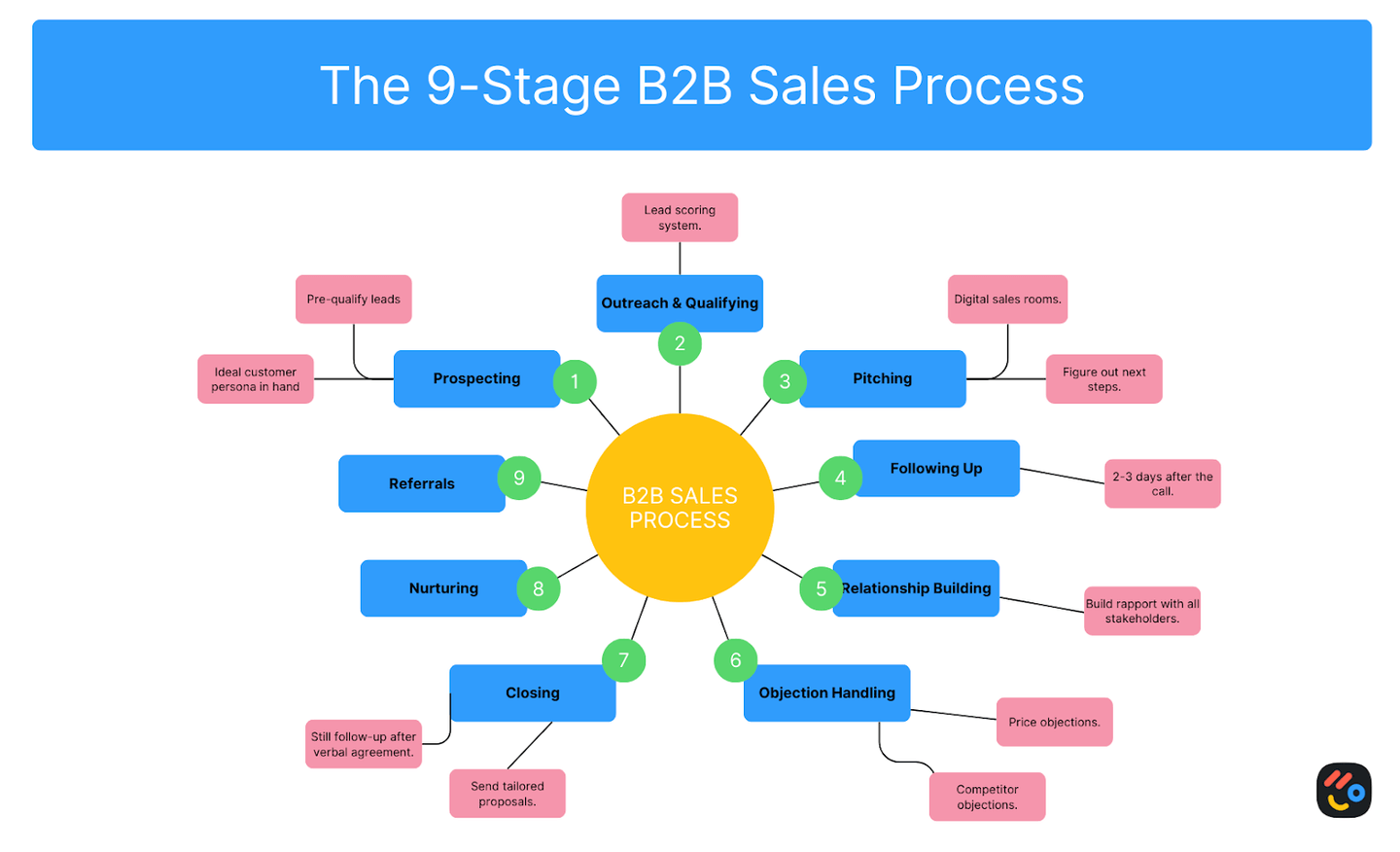
- Prospecting: Pre-qualifying leads that your brand can target for outreach.
- Outreach & Qualifying: Reaching out to the potential leads that you’ve short-listed and further qualifying them.
- Pitching: Showing your customers how your solution works during the discovery call while learning more about their challenges.
- Following Up: Reaching out to your leads to see what they think about your solution and if they’ve had enough time to think about it.
- Relationship Building: Further building of relationships (rapport) with your prospect(s).
- Objection Handling: Handling pricing-related and solution-related objections that come along your way.
- Closing: Negotiate the final terms of the contract.
- Nurturing: Checking in with your customers and retaining the relationship.
- Referrals: Ask your customers for a referral after they are satisfied with your solution.
#3: Think Like A Doctor
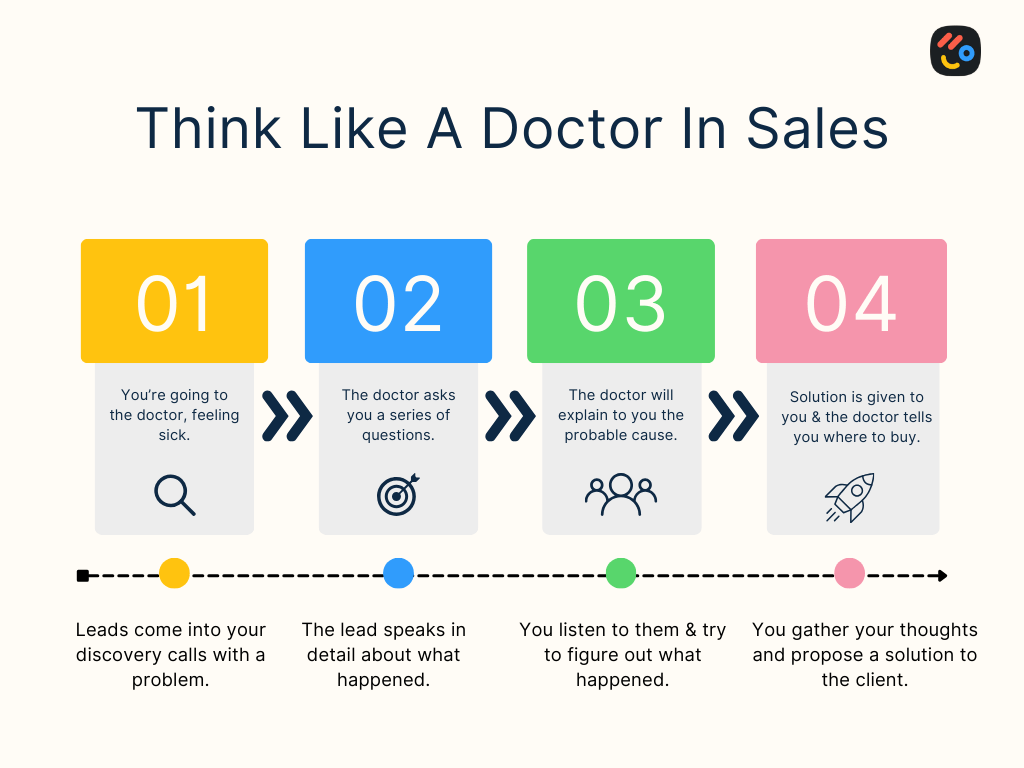
Imagine that you’re going to the doctor and you’re feeling sick.
The doctor is not jumping to conclusions about what has caused the sickness, instead, they are asking you a series of questions, such as what you have eaten recently and if you’ve been out in the cold.
After you tell the doctor about your story, they will tell you about a probable cause of what happened and then prescribe you medicine (solution).
Lastly, the doctor will tell you where to buy the medicine, how long the treatment will take, and when you can expect to get back to your normal life.
This is pretty much how B2B sales should go as well:
- Your leads come into your discovery calls with you asking them questions to learn more about their problems.
- The prospects then speak in great detail about what happened.
- Your sales team listens closely to what they have to say and tries to figure out what is the source of their problems.
- The sales teams gather their thoughts and propose a solution to the client.
In its article on sales discovery, Salesman%20Zero%20Judgment%20%E2%80%93%20A%20doctor,asking%20leads%20for%20their%20info.) gives a few bonus tips on selling like a doctor, such as showing zero judgment to your prospects.
Doctors do not judge patients when they come with their problems, and they accept the facts that are presented to them.
Moreover, doctors are not conmen – if they cannot help you resolve your issue, they will refer you to another doctor who will offer them another solution.
#4: Be Prepared To Face Any Objections
No matter how good your product or solution might be, there will always be some prospects that will have objections about:
- The price of your product or services.
- The solution that you are offering them.
- The competition and how they are different or better than you.
This is why you and your sales team need to be prepared with pre-built answers to common objections – if not any possible objections.
Anas Ramadan, the founder of Sales Cafe, speaks about the problem of lacking proper objection handling.
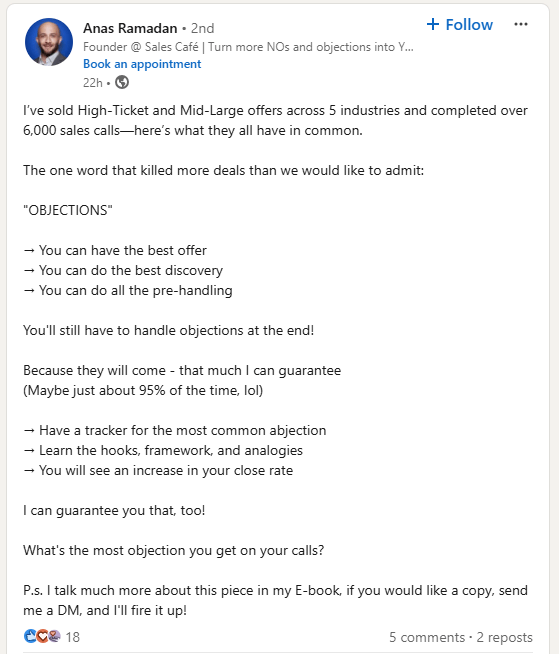
The founder argues that objection handling is important even though your company has a good offer.
Anas recommends the following tips for dealing with objections to win more high-ticket deals:
- Keep track of the most common objections that your prospects have.
- Learn frameworks for handling objections, such as the LAARC framework, which stands for listening, acknowledging, assessing, responding, and confirming clients’ objections.
- Learn how to use analogies to portray the value of your solution.
#5: Create Emotional Connection Via Storytelling
Instead of covering the features of your product and waiting for your leads to be amazed, you can try to create an emotional connection with storytelling.
According to Estyflix, prospects in 2025 trust stories, and not just sales pitches.
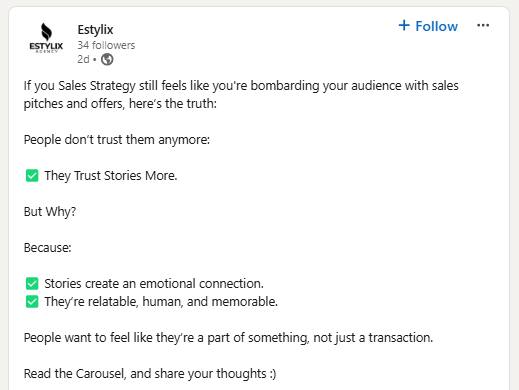
The brand argues that most salespeople fail to build trust with their customers because they are ignoring the power of their brand’s story.
The sales experts at Estyflix recommend:
- Sharing your brand’s origin story or a personal challenge that you have overcome.
- Showing how your solution has helped similar customers in a similar or the same industry that your prospect is in.
- Making your prospects the hero by moving the direction of the story to their use case and how you can help them resolve their problem.
#6: Learn How To Follow-Up Effectively
Follow-ups are where B2B deals can be won – or lost.
According to Michael Prince, the first contact with the customer rarely closes the deal.
But the sales expert argues that there’s a multi-touch paradox, because:
- Follow-ups are crucial to closing more deals.
- But too much persistence is also not that good, which is why patience is more important.
This is why your team need to find the balance between spamming your prospects’ emails with follow-ups and staying top-of-mind to close the deal.

#7: Build Trust With All Decision-Makers
Even though all salespeople understand the importance of building trust and relationships with customers – in B2B sales, there might be more than 1 decision-maker in the deal process.
That means not accommodating one of them could result in losing the high-ticket deal altogether.
According to Gartner, there can be 6 to 10 decision-makers in complex B2B deals.
This is how the term sales multithreading came into existence, which is the act of creating, nurturing, and building relationships with multiple decision-makers across your buyer’s organization.
➡️ Sales multithreading helps you solidify the deal and minimize the risk of losing the client because you would not be dependable on that one point of contact (POC) being on your side or staying in the company.
#8: Learn As Much As Possible About Each Client
You’ll need to understand each one of your prospects so you can address their specific needs and build trust.
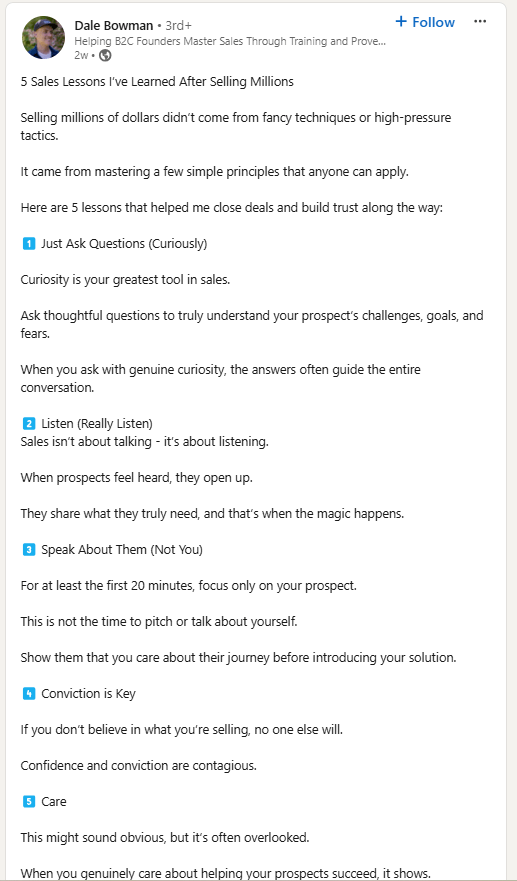
According to Dale Bowman, curiosity is your greatest tool in sales.
The sales expert recommends asking thoughtful questions to understand your prospects’ challenges, goals, and fears.
That also requires active listening and making prospects feel heard so they can open up.
Instead of pushing prospects to buy, you need to help your prospects find what their problems are and propose a plan to solve them.
#9: Focus On The Transformation Experience, Not The Product
Instead of talking about how many features your product has, your sales team should focus on the transformational experience of your prospects:
How they can go from 0 to 1.
You are essentially trying to change the way they work and do business using your solution or product.
From adopting AI to becoming more data-driven in their sales approach, B2B sales reps need to lead the change management for prospects.
➡️ For example, a sales team that buys a new tool is changing how every rep works a deal, from the first call to the signature. Your job is to lead that change with them.
#10: Send Out Powerful Sales Proposals
A good sales proposal that is personalized to your prospect’s needs and budget will help your sales team close more deals.
Effective proposals are organized and concise to portray the value of your solution to your prospect’s problems and how much it will cost them to resolve these issues.
💡 You can check out our guide on how to create a winning sales proposal.
In the sales proposal, you can include:
- A personalised quote that you’ve created for the client based on their needs.
- Interactive pricing tables so your prospects can select what kind of features or hours of work they would prefer.
- Integration with an e-signature so your prospects can sign on the spot if they see that there’s a fit.
You can also use sales proposal platforms to help you build and customize proposals from ready-to-use templates.
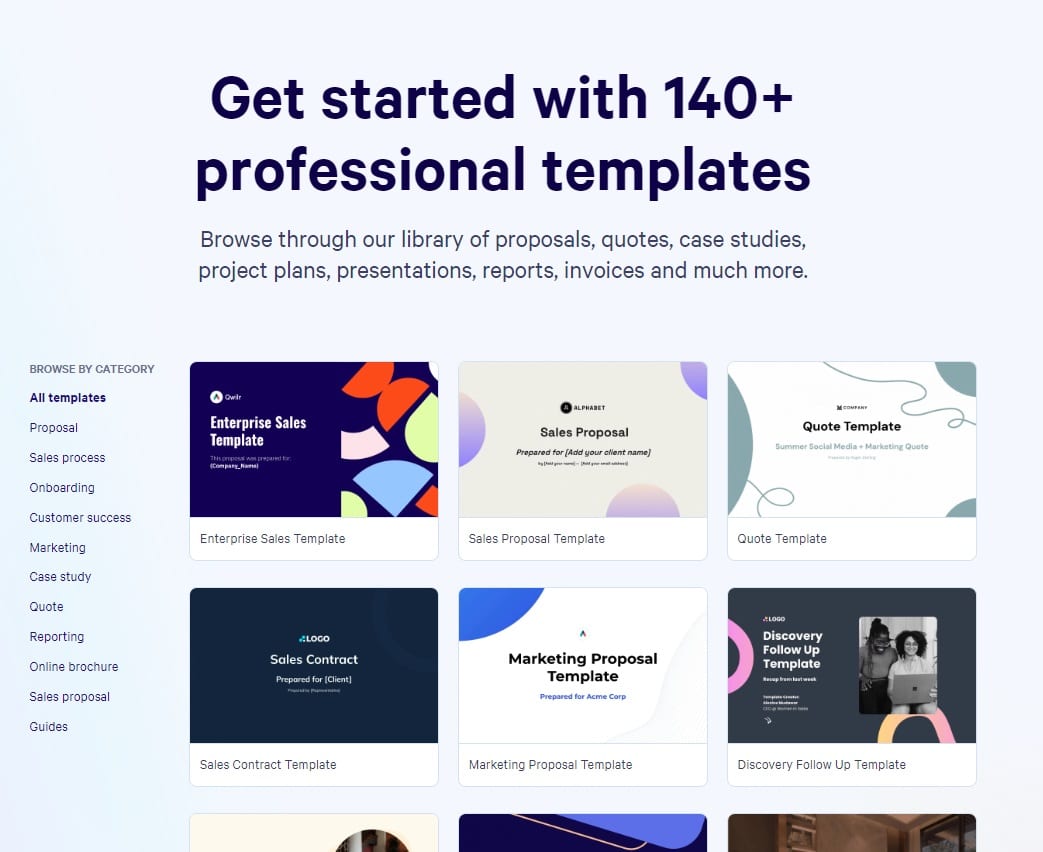
These tools also enable you to track the engagement inside of the proposals to see who has viewed the proposals and engaged with them.
#11: Use Interactive Demo Platforms (For SaaS Sales)
Interactive demo platforms are a presale tool that helps your team build interactive walkthroughs of your SaaS product.
Instead of waiting for your prospects to schedule a demo with your sales team, you can embed interactive product demos on your website to educate potential buyers and close deals faster.
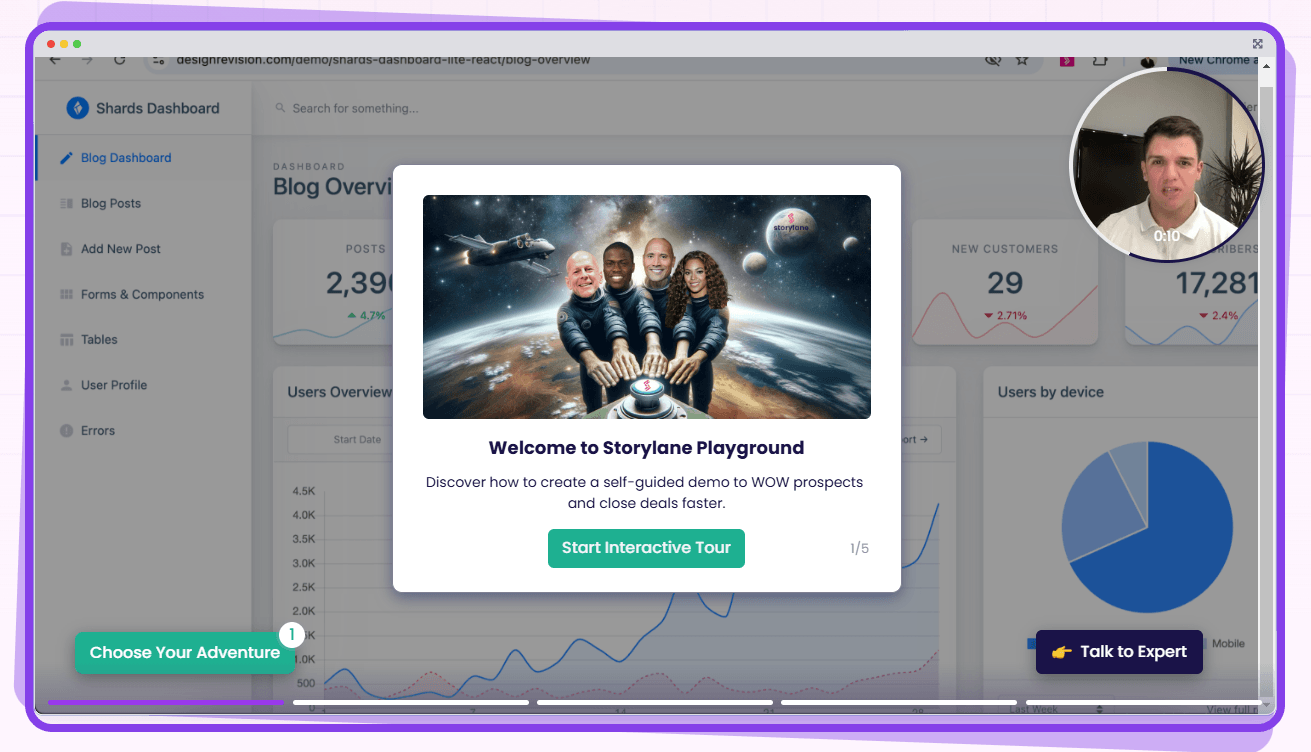
➡️ The way these interactive demo platforms work is that you can take screenshots of your platform and put them together with voiceover and text.
It is also possible to clone your product and enable your customers to experiment with it without a pre-built path for them.
💡 Interactive demos also enable your brand to stand out while enterprise businesses are doing due diligence on various platforms.
If your competitors are yet to start implementing product demos, you might be the pioneer in your niche with that technology.
#12: Ask For Referrals
Last but not least, your sales team can ask for referrals from happy existing customers of your brand.
But that’s easier said than done. Your sales team will need to keep nurturing relationships with your clients so they can ask them for referrals.
The onboarding process is also an important part of retaining your customers in the long run and being able to ask them for referrals.
Ask when results are starting to show for your new customer, not the day they sign. Then make the ask easy: name the kind of company you’d like an intro to, and give them a two-line blurb they can forward.
What tools help sales teams close deals faster?
You can run every tactic above by hand. The hard part is running them on every deal, every week. For the proposal and the contract, see our guide to sales proposal software. For the collateral your reps share with buyers, see our list of B2B sales enablement tools.
The work between calls is where deals slip: a follow-up that goes out late, a stakeholder nobody met, a date nobody tracked. Your best rep keeps a gameplan in their head for their top deals. The rest get improvised.
Arrows is promptless AI for account executives. It reads each deal’s calls, emails, CRM, and notes, applies your team’s playbook, and does the work that keeps the deal moving.
If you’re a sales leader who wants:
- A gameplan for every deal, built from the way your best reps sell.
- Call prep, follow-up emails, and CRM updates done for your reps, with a rep approving each one before it sends.
- Multi-threading, every date from your calls tracked, and nudges when a deal goes quiet.
- The right case study sent, and each deal’s sales room kept current after every call.
- All of it working with the CRM and notetaker you already use, like HubSpot, Salesforce, Gong, or Fathom.
One kickoff call, and the agents start on your open deals that same day. To see it on your own pipeline, book an agent kickoff.