


Sales teams need a sales proposal solution to make the proposal creation process easy and interactive, to improve collaboration with clients, and increase the close rate.
We researched 30+ proposal tools, went over verified customer reviews on G2, and talked to sales managers to find the best sales proposal software on the market.
This article will review 10 sales proposal tools, their top features, pros and cons, and pricing models.
Before we begin, let’s go over a few factors to consider when evaluating sales proposal platforms. ⤵️
Sales proposal software features and pricing: what to look for
#1: Comprehensive Range of Sales Proposal Features
When we were evaluating sales proposal tools, we looked at which platforms had key functionalities, such as:
- Template library, where you can generate proposals from ready-to-use templates in minutes.
- Analytics and tracking of proposal engagement and client interactions.
- A built-in or integration with e-signature tools.
- Interactive elements, such as interactive pricing tables, allow your clients to customize their pricing.
💡 We then evaluated if all of these features are easy to use and navigate.
#2: Integrations With Existing Sales Systems
A second key factor to consider for us was how well the sales proposal solutions are integrating with your existing sales management software.
Your sales proposal platform should sync data back to your CRM and/or marketing automation systems, which will be important for your sales team to track data.
➡️ Data consistency across platforms is important for saving your sales reps from manual data entry between different tools.
#3: Cost Structure
Different sales proposal management solutions have different ways of pricing their products.
For example, some tools offer pricing models based on the number of seats you will need, while others are based on the number of features you want to access.
The pricing model you opt for can impact your bottom line and can become expensive in the long run if you plan on onboarding many sales reps.
💡 Smaller teams normally benefit from tools that base their pricing on seats, while bigger sales teams would benefit more from platforms that base their pricing on features.
The 10 best sales proposal tools and their top features
Here are the best sales proposal tools out of all the software we reviewed to close more deals:
#1: Arrows: Keep a gameplan for every deal and get the follow-up, case studies, and sales room updates around each proposal done for your reps.
#2: Qwilr- Send out sales proposals from out-of-the-box templates.
#3: GetAccept- Build and send out personalized proposals.
#4: Dock- Set up an all-in-one sales proposal platform with buyer intent notifications.
#5: Prospero- Build sales proposals with a drag-and-drop menu.
#6: DocSend- Send out secure documents with e-signatures.
#7: FactSpring IQ- Simplify pricing conversations with interactive pricing elements.
#8: Proposify- Send out professional-looking proposals to your prospects.
#9: Nusii- Send out proposals with e-signatures.
#10: PandaDoc- Get in-depth document insights about customer engagement.
#1: Arrows
Best for: B2B sales teams that want the work around every proposal done: the follow-up, the right case study, and a deal that doesn’t go quiet after the proposal goes out.
Arrows is promptless AI for account executives. It keeps a gameplan for every deal and does the work that keeps deals moving.
Full disclosure: Arrows is our product. Here’s what it does and where it fits in a sales proposal stack.
Your proposal tool builds the document. Arrows does the work around it. It reads your call transcripts, emails, CRM, and notes to do it.
Feature #1: A gameplan for every deal, before and after the proposal
A proposal is one step in a deal, not the end of it. Your best rep knows what comes next on their top five deals. The rest get improvised.
Arrows applies your team’s playbook to every deal. Each deal gets a gameplan: a path to close, built from the playbook and from what’s actually happening on that deal. When a call ends, an email arrives, or a new person shows up on a thread, Arrows reads the playbook and decides the best next action for that deal.
Feature #2: The work around every proposal, done for your reps
Arrows does the work you expect reps to do, and the work you wish they did:
- Call prep before every meeting, including the one where you walk through the proposal.
- Deep research on the account.
- Follow-up emails drafted from what the buyer said on the call.
- The right case study and Loom videos sent between calls.
- Multi-threading, so the proposal doesn’t sit with one contact.
- Every date tracked from your calls, with nudges when a deal goes quiet.
- CRM updates written back to the deal.
- Sales room updates, so your buyer always sees the current next steps.
There’s no prompt to write. Reps approve every email, CRM update, and sales room change before it sends.
Feature #3: Works with the CRM and notetaker your team already uses
Arrows works with HubSpot, Salesforce, Pipedrive, Close, and Attio, and with notetakers like Gong, Fathom, Granola, Grain, and Fireflies. It also connects to Gmail, Outlook, and Google Calendar.
It reads the deal context and writes approved changes back, so your CRM stays current without reps typing updates. See the CRM integrations.
Pricing
Arrows doesn’t publish prices. It’s priced on the work, not the seats. See how pricing works.
Want to see what Arrows would do on your open deals? Book an agent kickoff. One kickoff call, and the agents start on your open deals that same day.
What stands out
✅ A gameplan for every deal, built from your team’s playbook.
✅ Follow-up emails and case studies ready after every call, for a rep to approve.
✅ Nudges when a deal goes quiet.
✅ Sales rooms that stay current with each deal’s next steps.
✅ Sits next to your proposal tool, CRM, and notetaker instead of replacing them.
#2: Qwilr
Best for: Sending out sales proposals from out-of-the-box templates.
Similar to: Dock.
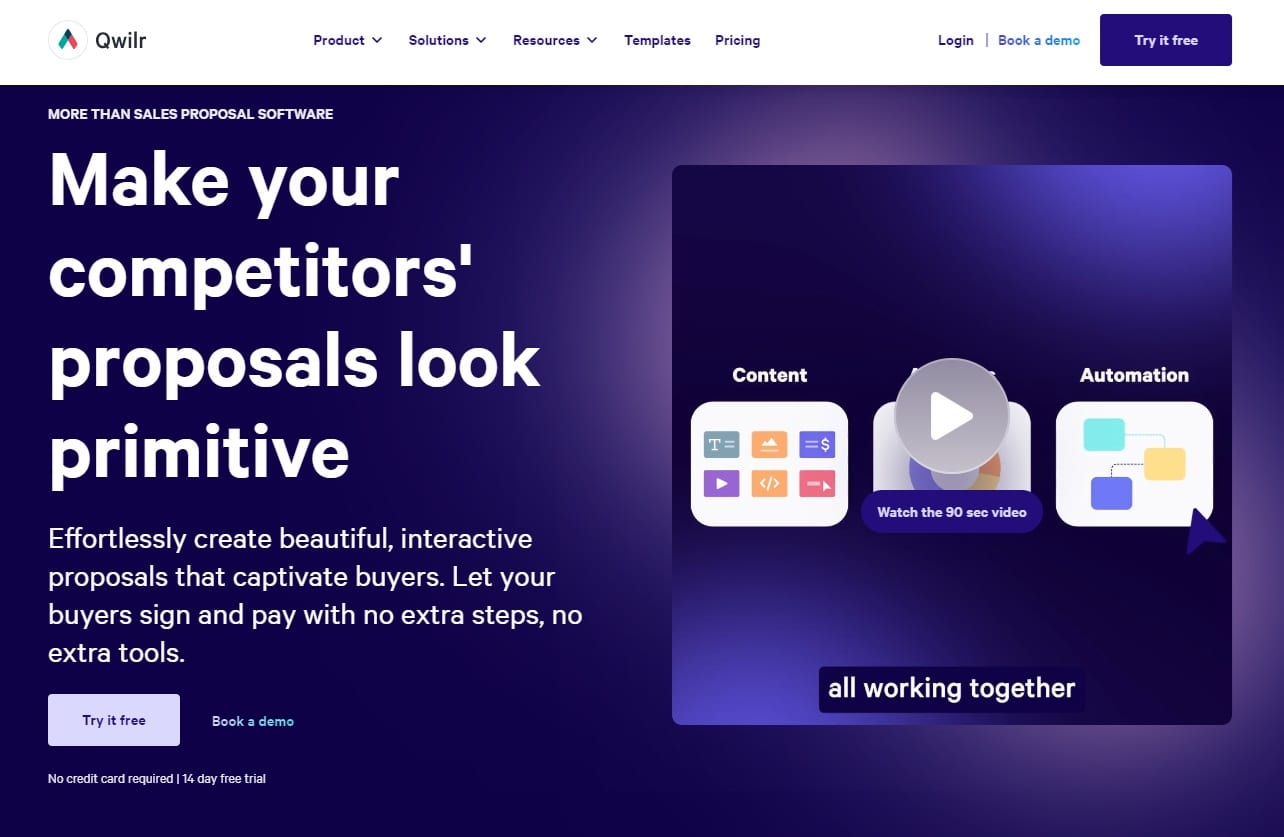
Qwilr is a sales proposal software that lets you create beautiful and interactive sales proposals in web format to convert your prospects.
Features
-
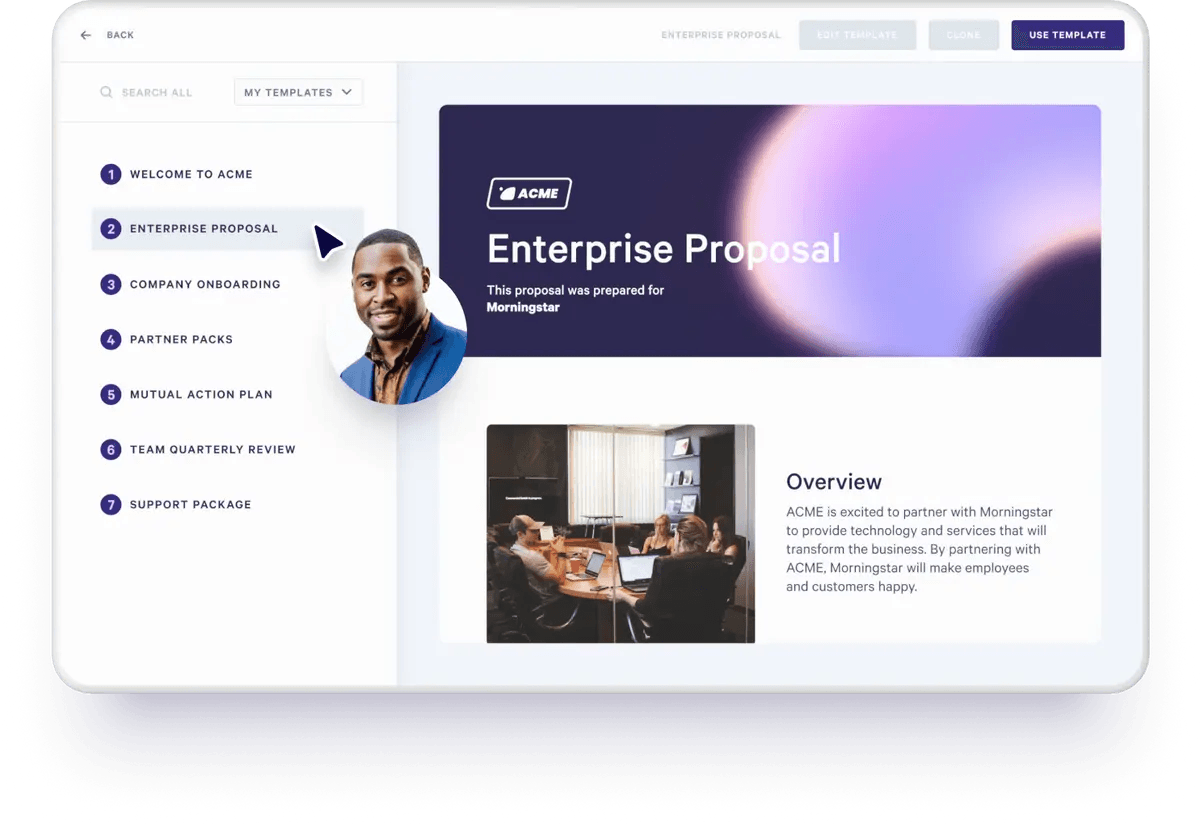
Sales proposal web editor: You can build and customize proposals from ready-to-use templates.
-
Accepting payments by combining the sign-off, agreement, pricing quote, and payment into one interactive web page.
-
Advanced engagement analytics: Track buyer engagement (such as when a quote or proposal has been viewed) across your proposals.
Standout Feature: Gallery With 140+ Ready-To-Use Templates
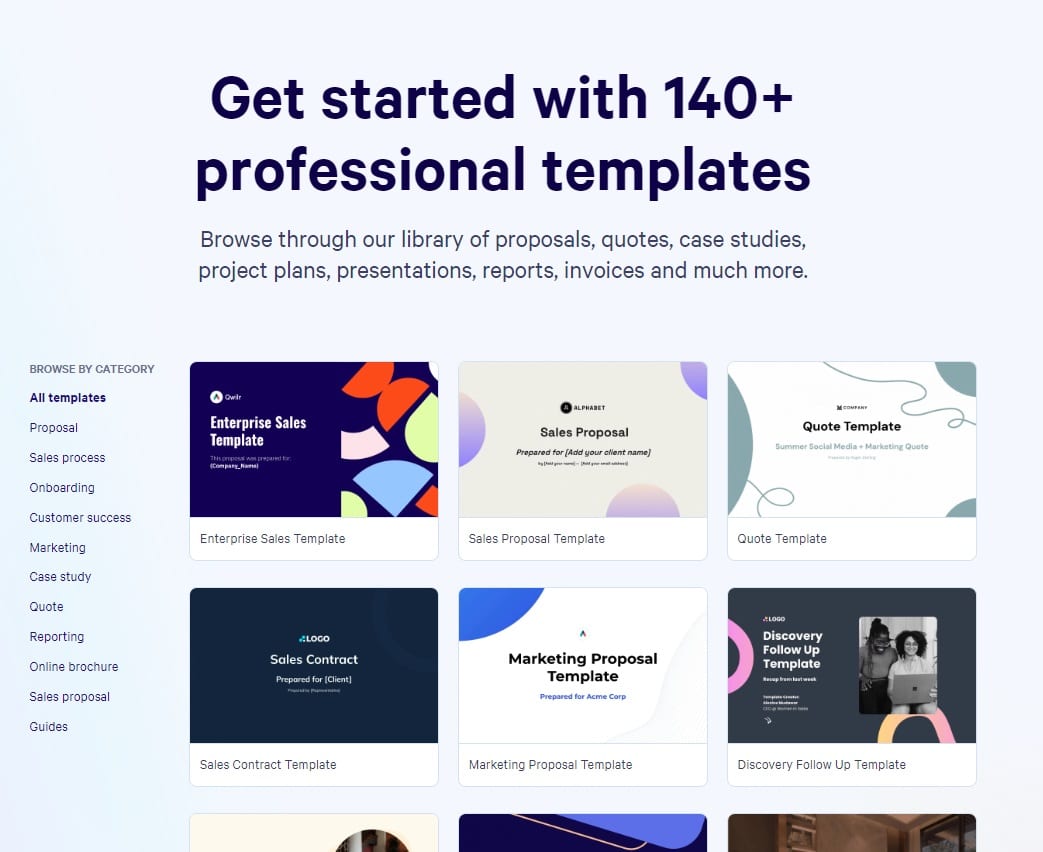
Qwilr lets you create beautiful sales proposals out of 140+ professional templates.
The platform’s customizable templates include proposals, quotes, case studies, and sales presentations.
Pricing
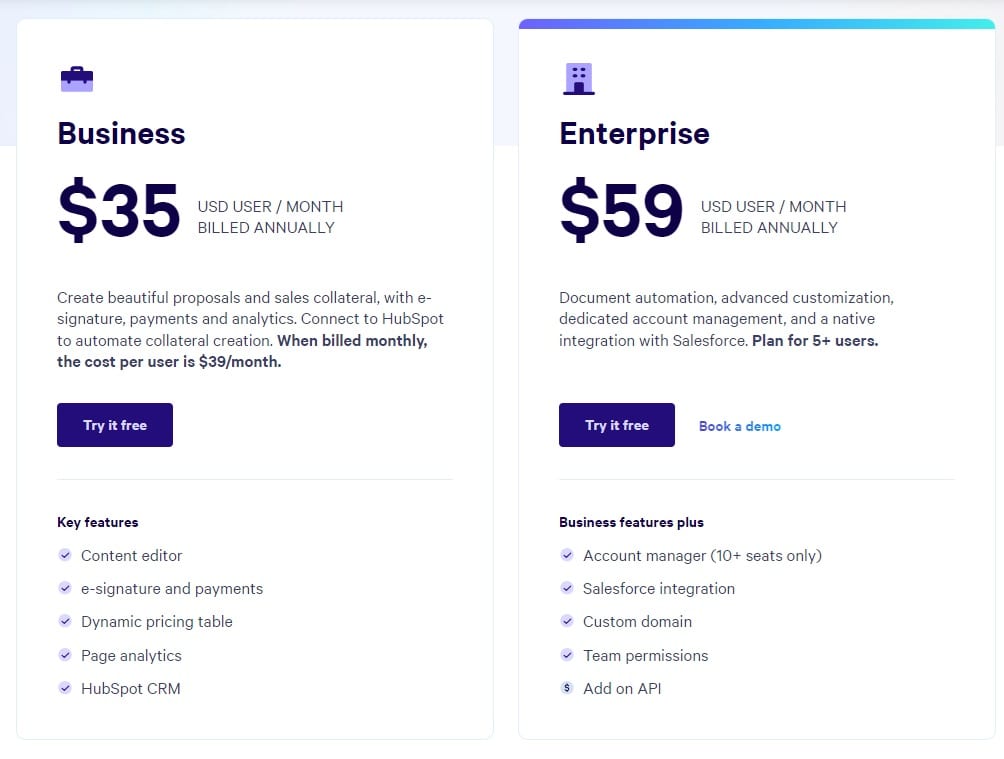
Qwilr’s pricing is based on user seats and has two pricing tiers:
- Business plan: $35/user/seat, which gives you access to the tool’s content editor, e-signatures, dynamic pricing table, page analytics, and HubSpot CRM integration.
- Enterprise plan:$59/user/seat for a minimum of five seats, which adds access to document automation, advanced customization, and dedicated account management.
Pros and Cons
✅ Customizable templates that you can personalize to your prospects.
✅ Good HubSpot and Salesforce integrations.
✅ Advanced analytics and insights into proposal engagement.
⚠️ Not as good editing and customization options as other Qwilr competitors.
⚠️ Lack of reporting and dashboard functionality.
#3: GetAccept
Best for: Building and sending out personalized proposals.
Similar to: Qwilr.
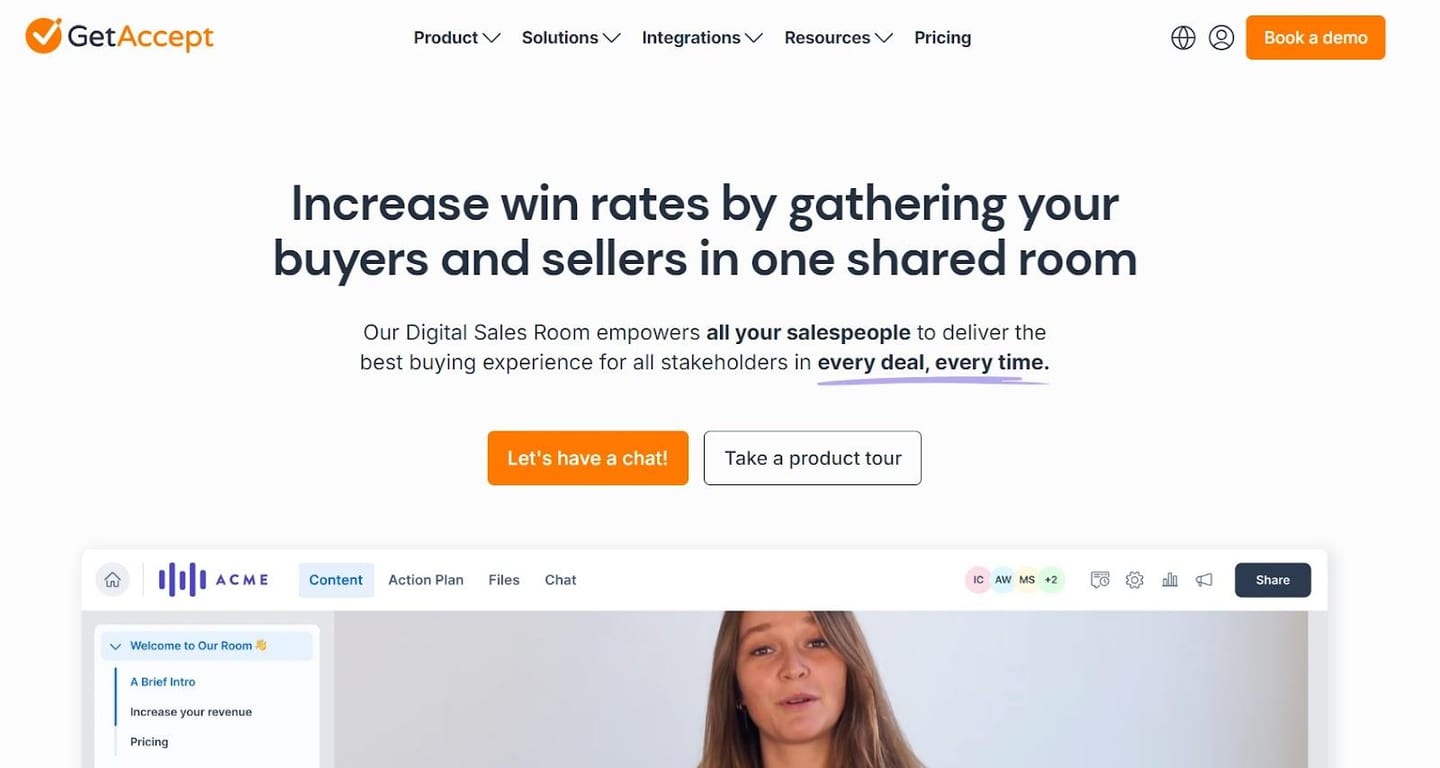
GetAccept is a proposal software that provides your sales team with document tracking, e-signatures, and interactive presentations to close more deals.
Features
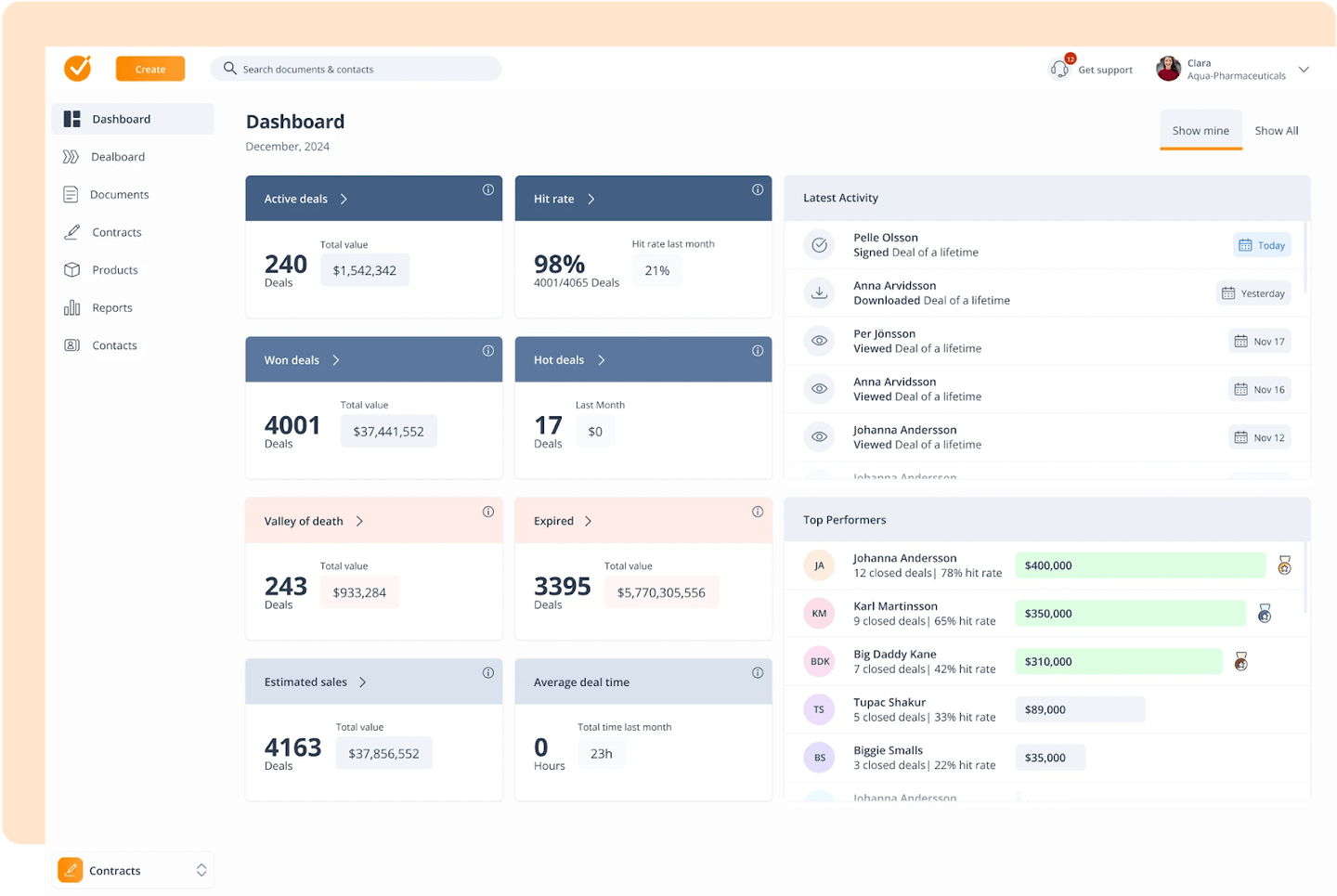
- Contract management feature: Add personalized quotes and e-signatures off pre-made templates.
- Mutual action plans: Provide a better onboarding experience and have more clarity over your new customer pipeline.
- Sales content management: Give your sales team a unified and user-friendly content repository to find and share the right content at the right time with their prospects.
Standout Feature: Sales Engagement
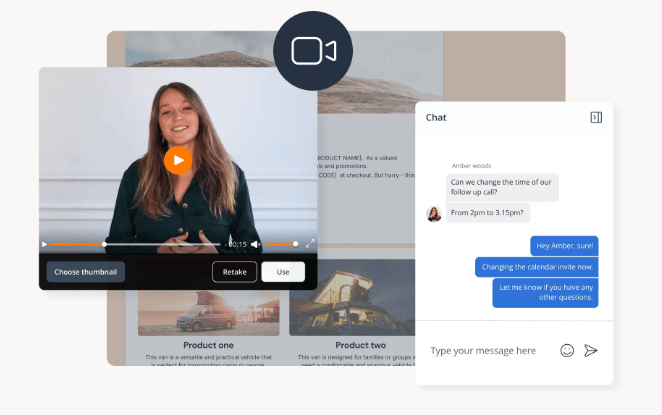
GetAccept helps you start engaging your buyers with its sales engagement features that let you:
- Insert personalized videos.
- Chat with your prospects in real-time.
- Comment on the documents.
- Create shareable links.
Pricing
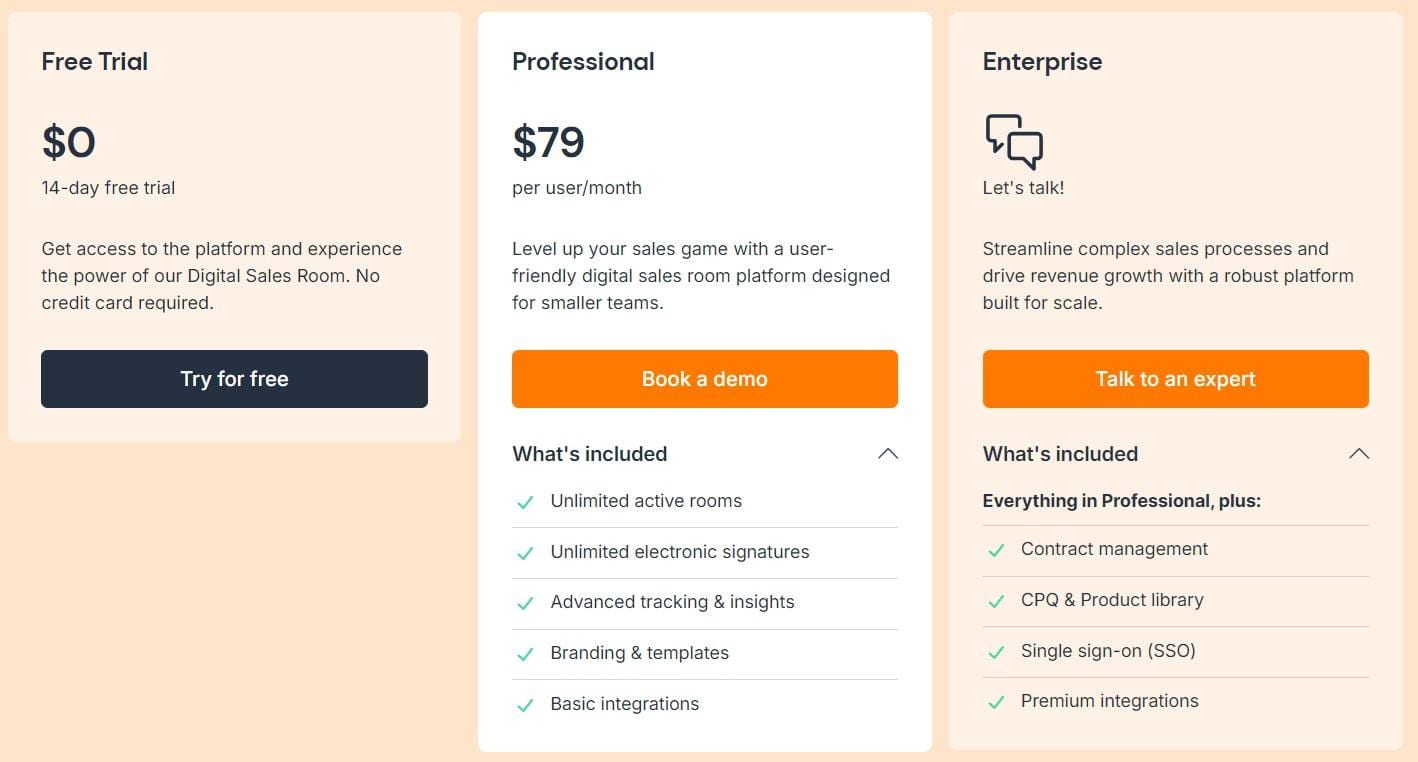
The software offers a 14-day trial where you can test out the platform for free.
Other than that, GetAccept offers two paid plans:
- Professional:$79/month/user, which gives you access to unlimited active rooms, e-signatures, advanced tracking, and templates.
- Enterprise: Custom pricing, which adds access to contract management features, CPQ, SSO, and premium integrations.
Pros and Cons
✅ Easy to use intuitive platform.
✅ Mutual action plans for a better onboarding experience.
✅ Good analytics into how prospects are interacting with your proposals.
⚠️ CRM integrations are not as deep as other alternatives to GetAccept.
⚠️ Creating proposals without templates can be too hard.
#4: Dock
Best for: Setting up an all-in-one sales proposal platform with buyer intent notifications.
Similar to: Qwilr.
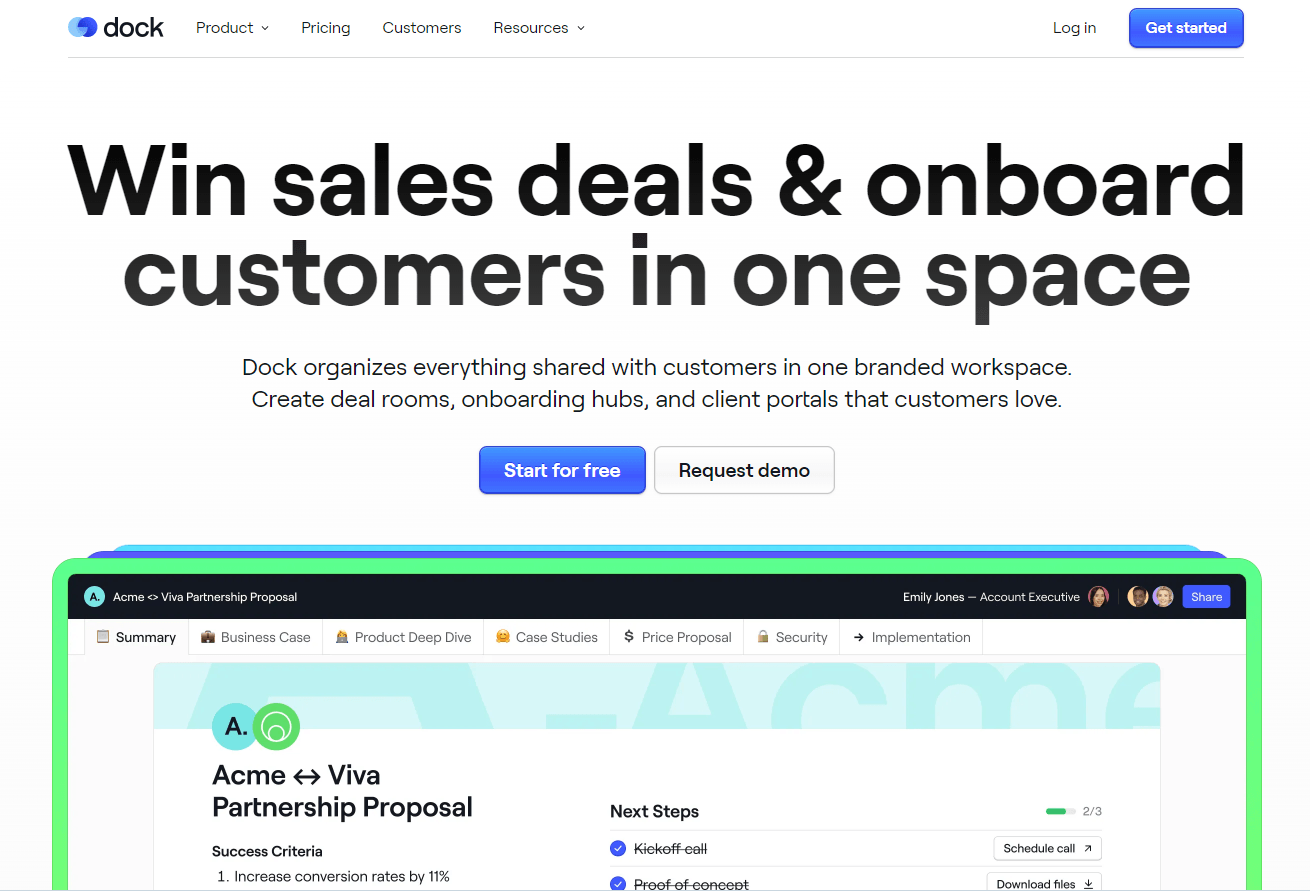
Dock is a sales proposal platform that lets you organize everything shared with your new customers in one place.
Features
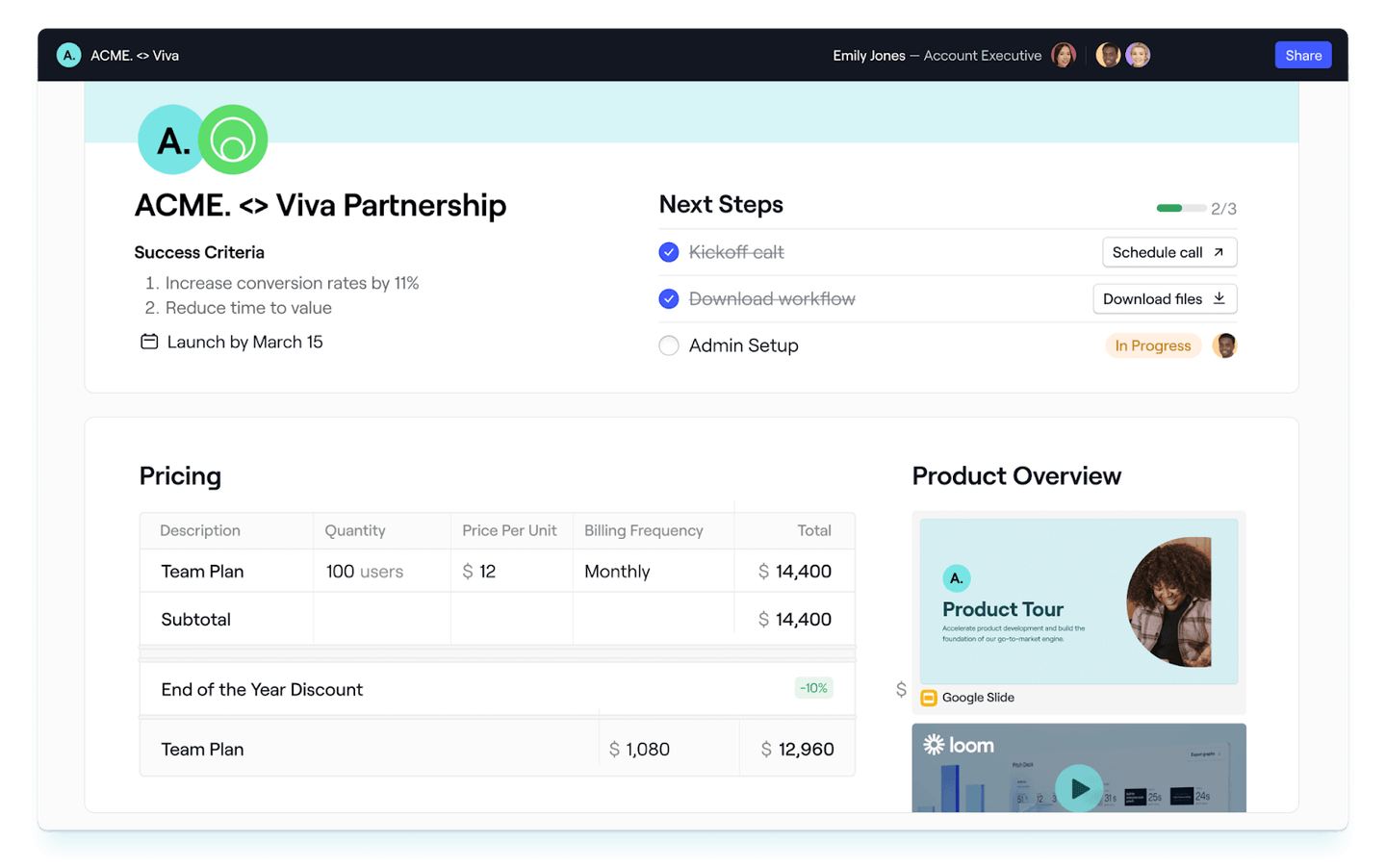
- Personalized sales deal rooms: You can add sales collateral, action plans, price quotes, and order forms.
- New client onboarding portals: Share project plans, onboarding content, and forms.
- Client portals: Your sales team organize everything for customers in one place to deliver a white-glove customer experience.
💡 The software may offer a comprehensive range of features, but some customers have been looking for Dock competitors because the UI may be buggy at times and the software is not mobile-friendly.
Standout Feature: Sales Order Forms
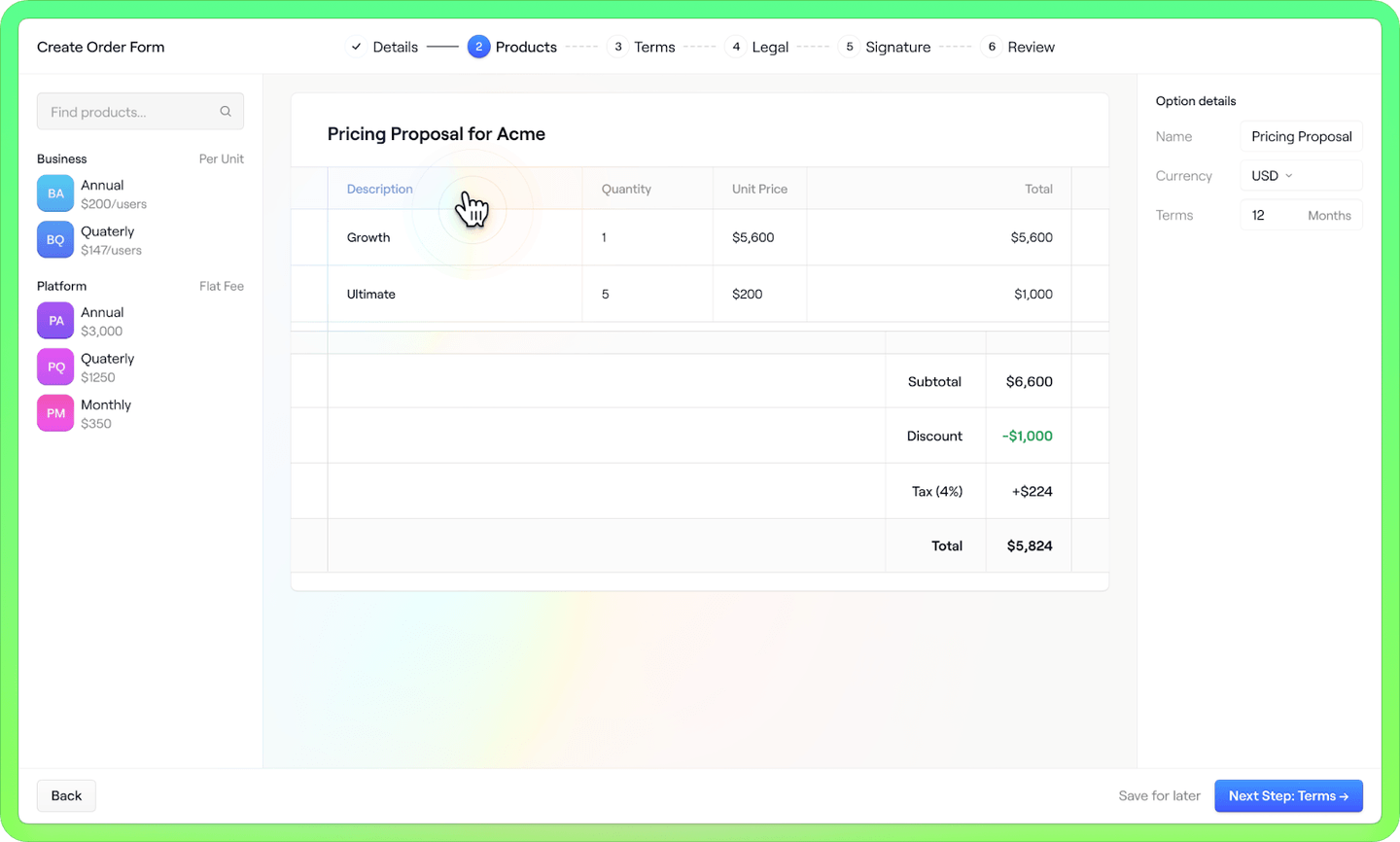
You can create sales order forms with Dock and send them to your new customers for signing in only a few clicks.
Pricing
Dock has a freemium version that lets you access five workspaces for unlimited users.
To access the platform’s advanced features, you’d have to be on one of their three paid plans:
- Starter plan: $49/month/seat, which gives you access to sales deal rooms, customer onboarding, client portals, and sales content management.
- Growth plan:$59/month/seat + $250/month platform fee, which adds access to HubSpot integration, custom dashboards, and page visibility controls.
- Enterprise plan: Custom pricing that adds access to Salesforce integration, custom domain, SSO, and automations.
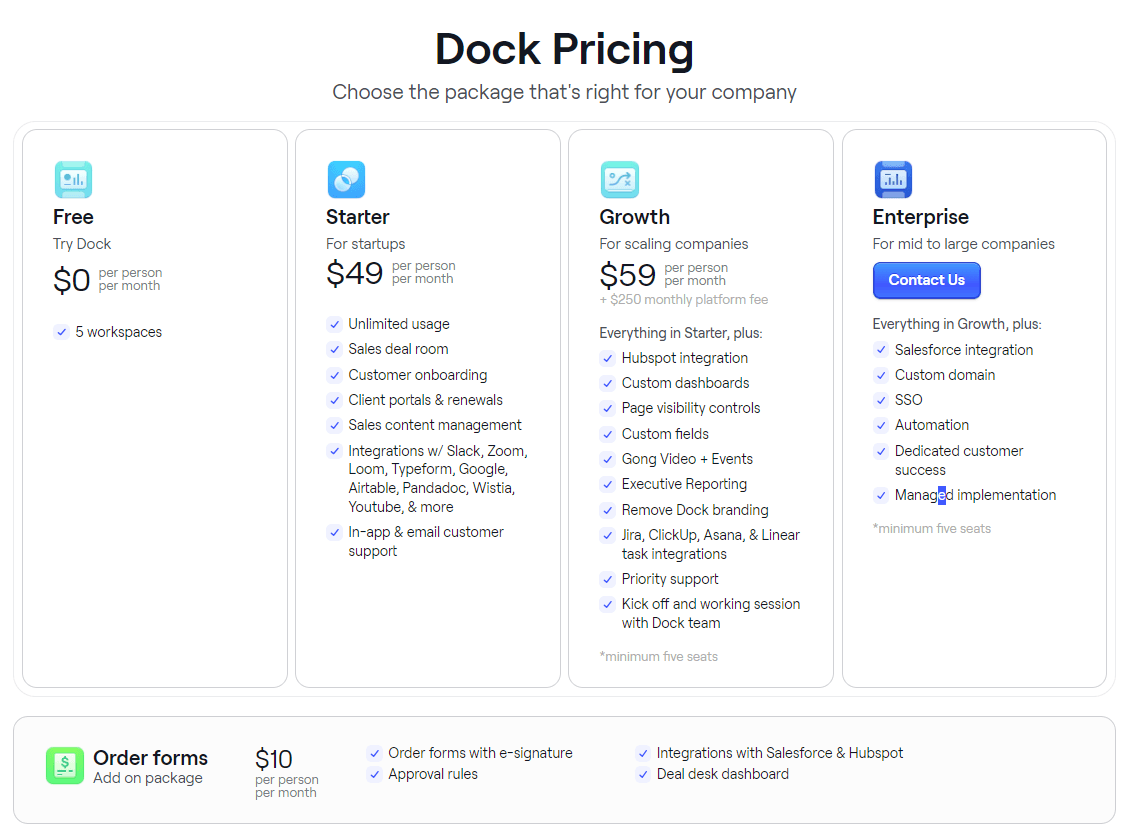
Note: Sales order forms are available as an add-on package that costs $10/month/seat and gives you access to e-signatures, approval rules, and the deal desk dashboard.
Pros and Cons
✅ Comprehensive sales proposal solution that lets you access onboarding plans.
✅ Generous free plan, unlike other solutions.
✅ Sales order forms.
⚠️ Set up can be time-consuming.
⚠️ The platform is not mobile-friendly yet.
#5: Prospero
Best for: Building sales proposals with a drag-and-drop menu.
Similar to: Qwilr.
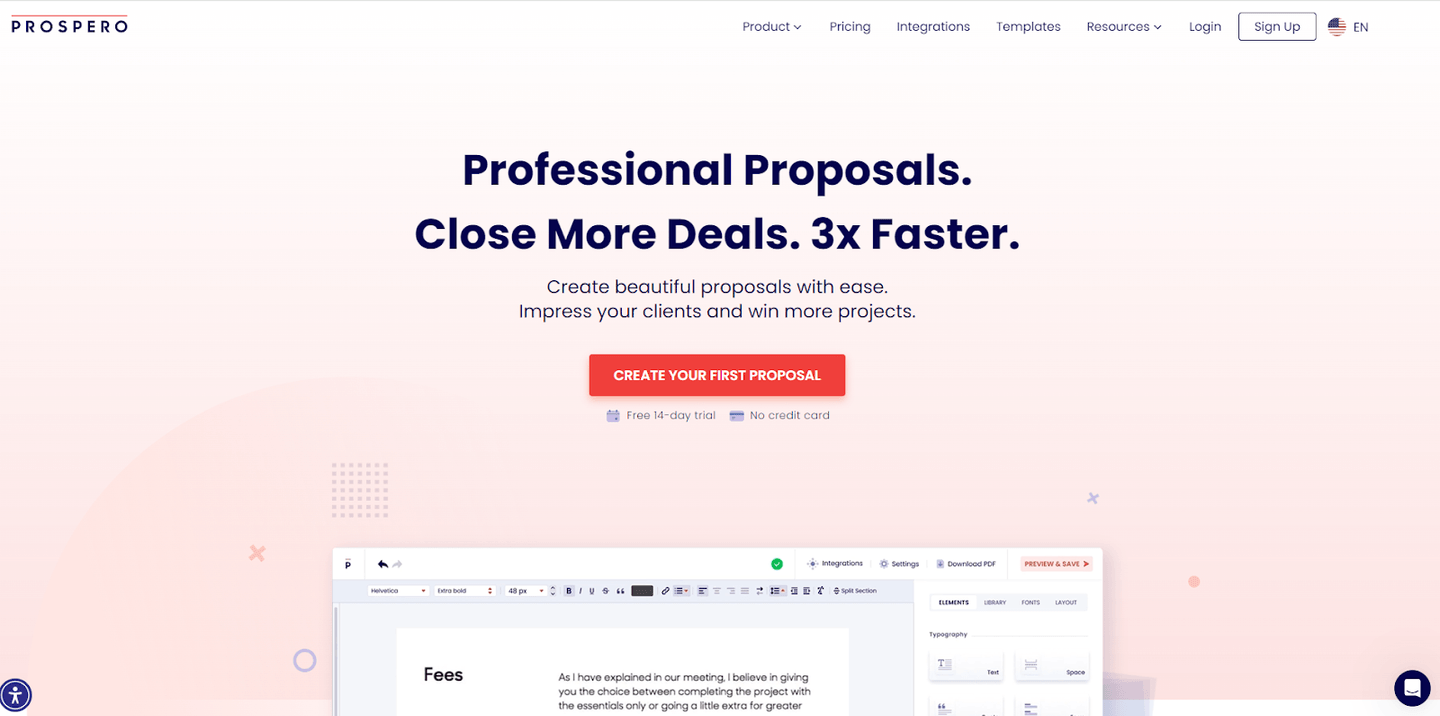
Prospero lets you create beautiful and professional sales proposals with its drag-and-drop proposal builder to win more deals.
Features
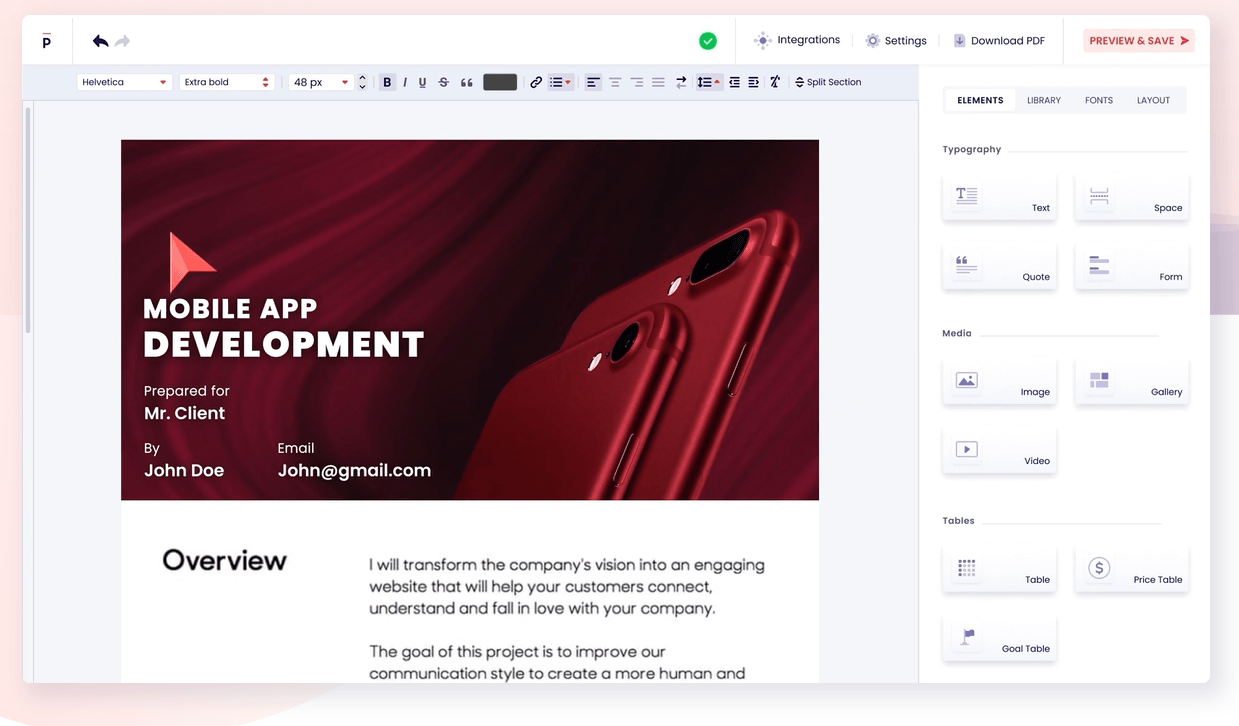
- Create winning proposals with Prospero’s proposal editor, where you can also collaborate with your team.
- Access the tool’s content library, where you can create, save, and reuse high-quality modules and dynamic pricing sections.
- Add e-signatures to your proposals. Your clients can sign the proposals on their preferred devices.
Standout Feature: Track & Monitor Progress
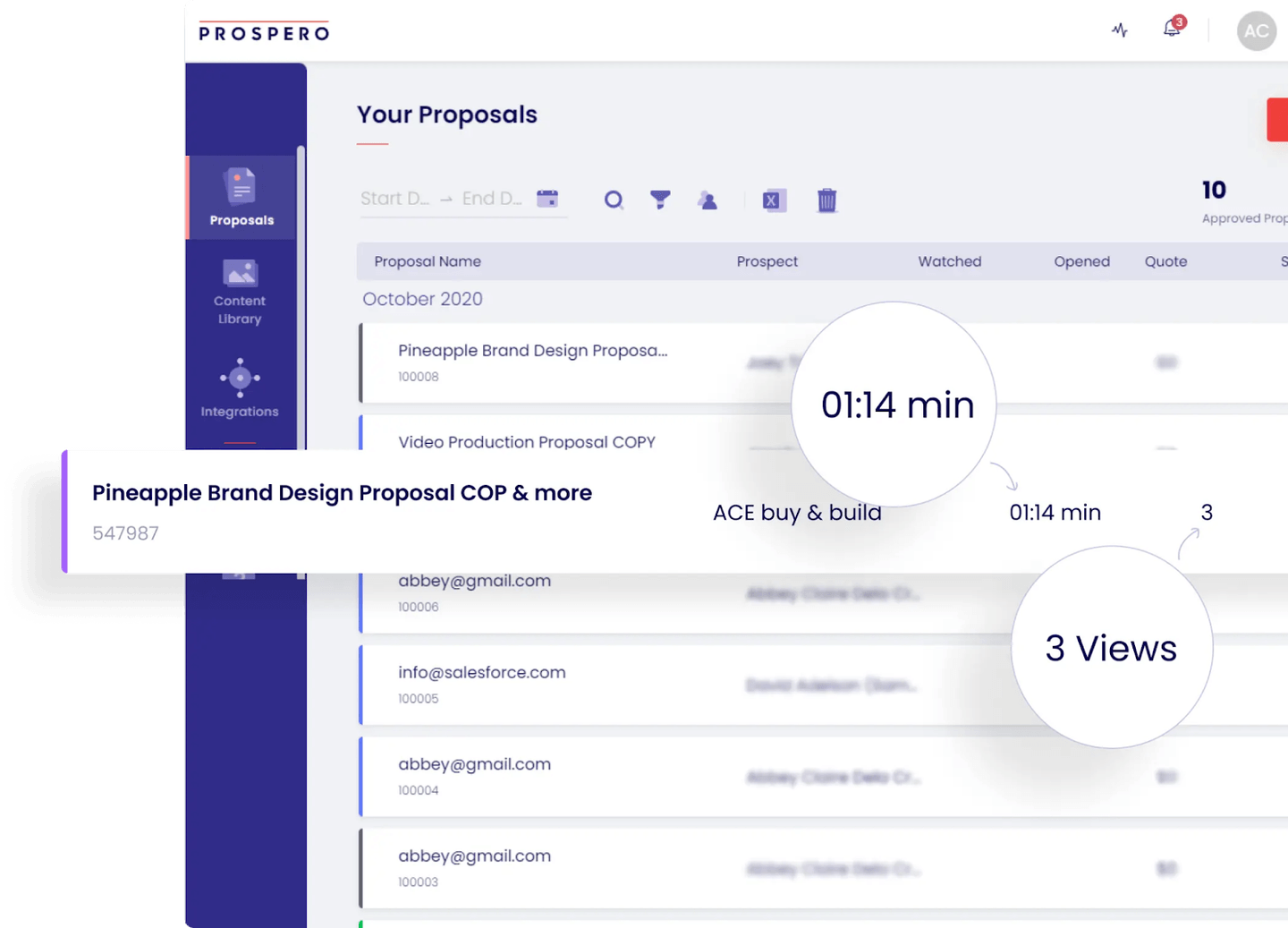
Prospero offers advanced tracking and progress monitoring of your proposals’ performance.
The platform lets you keep track of:
- How your recipients engage with the proposals.
- When the proposals are being opened and how long they spent time reading.
- The browser and device the prospects are using for the proposals.
Pricing
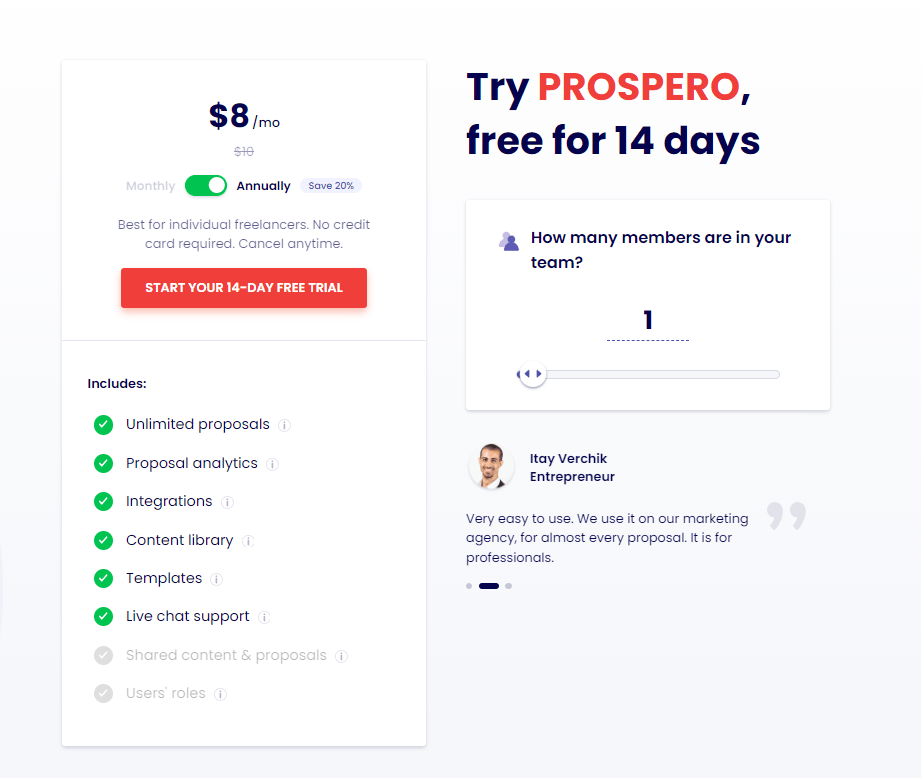
Prospero has only 1 paid plan, which includes unlimited proposals, analytics, integrations, templates, and all other features of the platform.
The price starts from $8/month/seat when billed annually and is ideal for smaller teams and freelancers.
Pros and Cons
✅ Built-in e-signatures.
✅ Good integrations with Stripe, Quickbooks and other services.
✅ Affordable for smaller teams and freelancers.
⚠️ Template library has fewer modules than other alternatives.
⚠️ Newer software that has not been as battle-tested as other tools.
#6: DocSend
Best for: Sending out secure documents with e-signatures.
Similar to: GetAccept, Proposify.
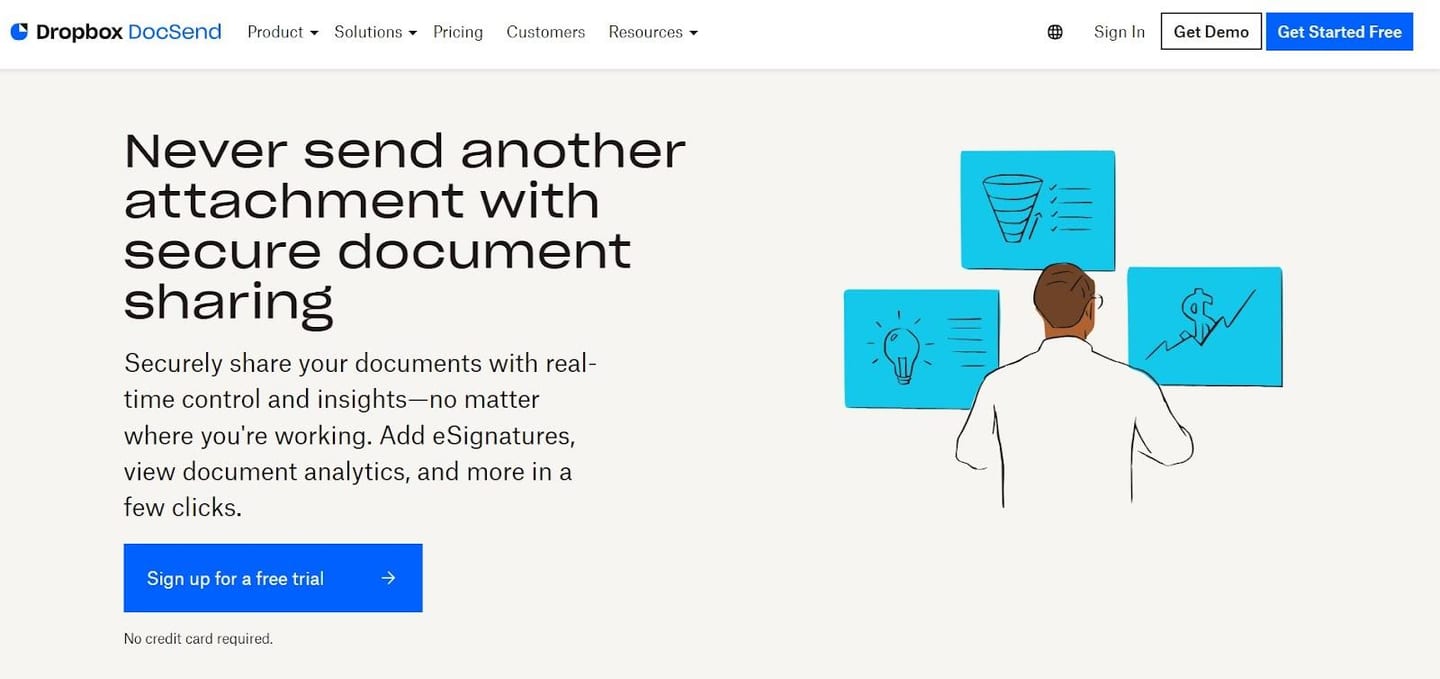
DocSend helps your sales team securely share secure proposals and documents with your prospects with real-time insights.
Features
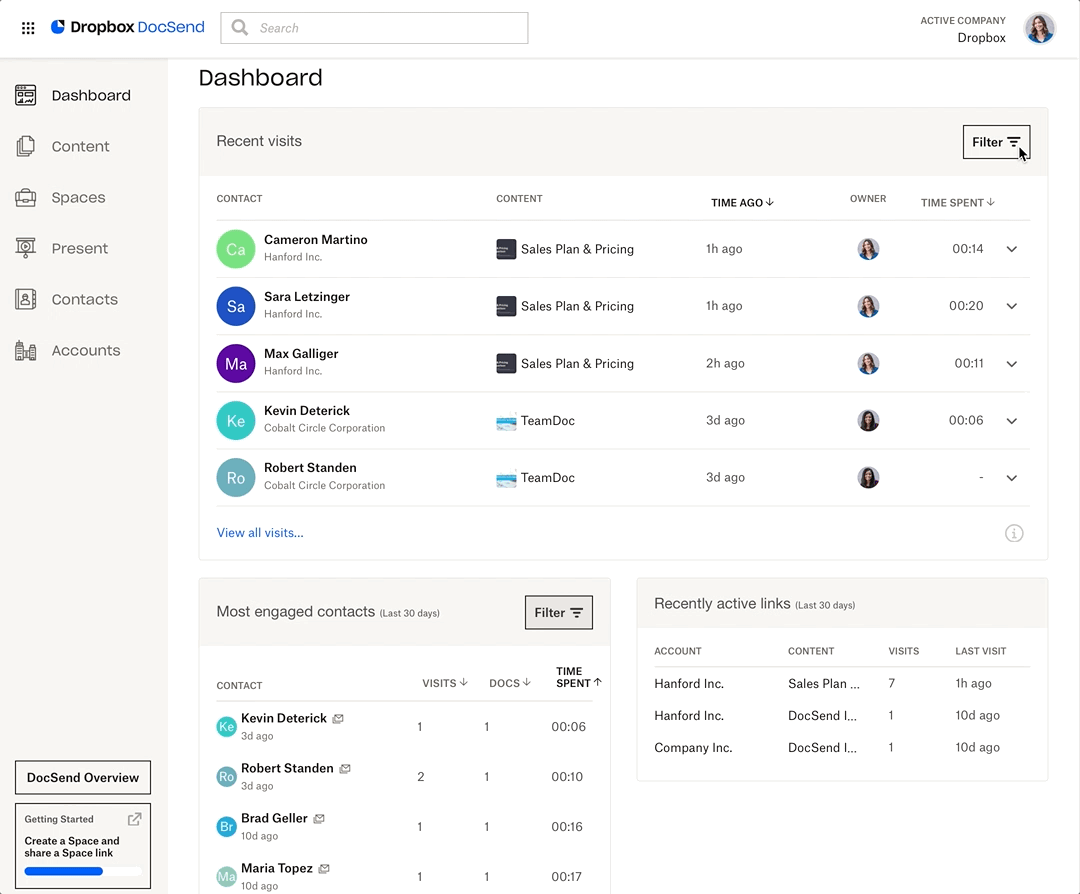
- Secure client portals, which can be tailored to your clients and keep their confidential files secure.
- Virtual data rooms, where you canpitch, analyze and close more deals all in one place.
- One-click NDA to let your clients sign NDAs with one click.
Standout Feature: Dynamic Watermarking
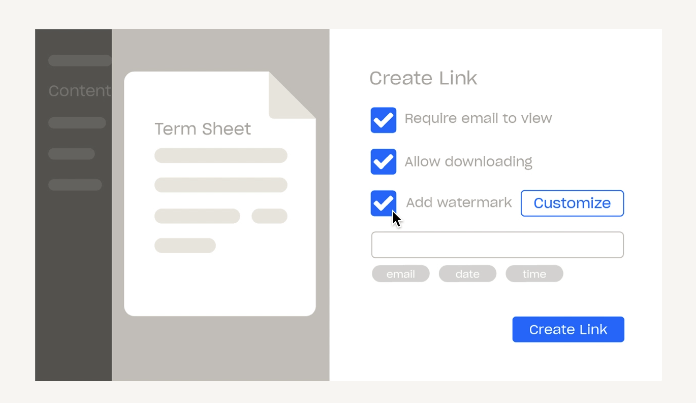
Prevent unwanted sharing of your documents with DocSend’s dynamic watermarking that lets you protect your confidential documents.
Pricing
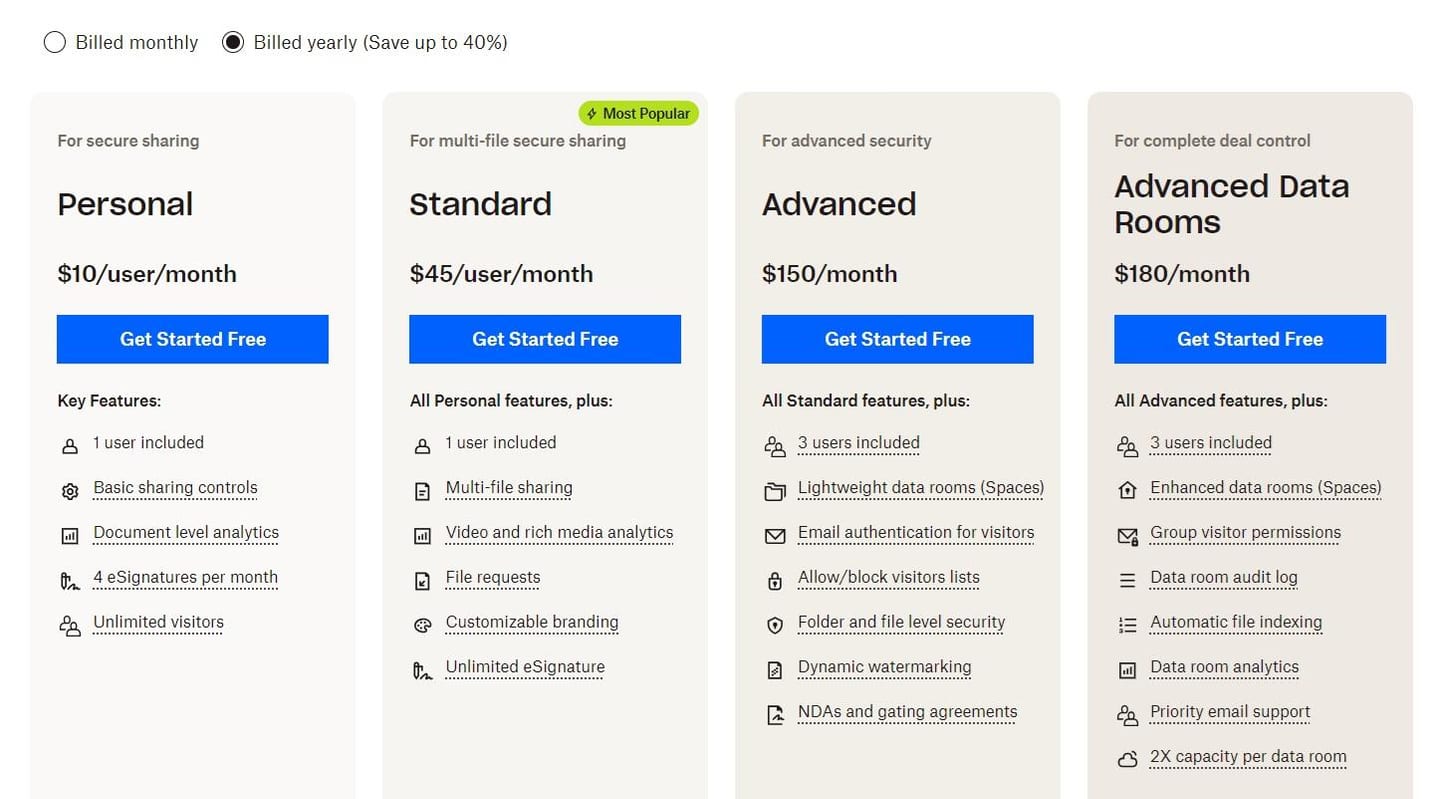
DocSend has four paid plans:
- Personal Plan:$10/month/seat, which gives you access to basic sharing controls, document-level analytics, and four e-signatures per month.
- Standard Plan:$45/month/seat, which adds access to multi-file sharing, file requests, rich media analytics, and customizable branding.
- Advanced Plan:$150/month for three seats, which adds access to lightweight data rooms, folder & file-level security, and NDAs & gating agreements.
- Advanced Data Rooms:$180/month for three seats, which adds access to enhanced data rooms, automatic file indexing, and data room analytics.
Pros and Cons
✅ Secure file-sharing with watermarks.
✅ One-click NDAs.
✅ Good data rooms.
⚠️ Enterprise plans are more expensive than other alternatives.
⚠️ Some customers report uploading issues.
#7: FastSpring IQ
Best for: Simplifying pricing conversations with interactive pricing elements.
Similar to: GetAccept, Qwilr.
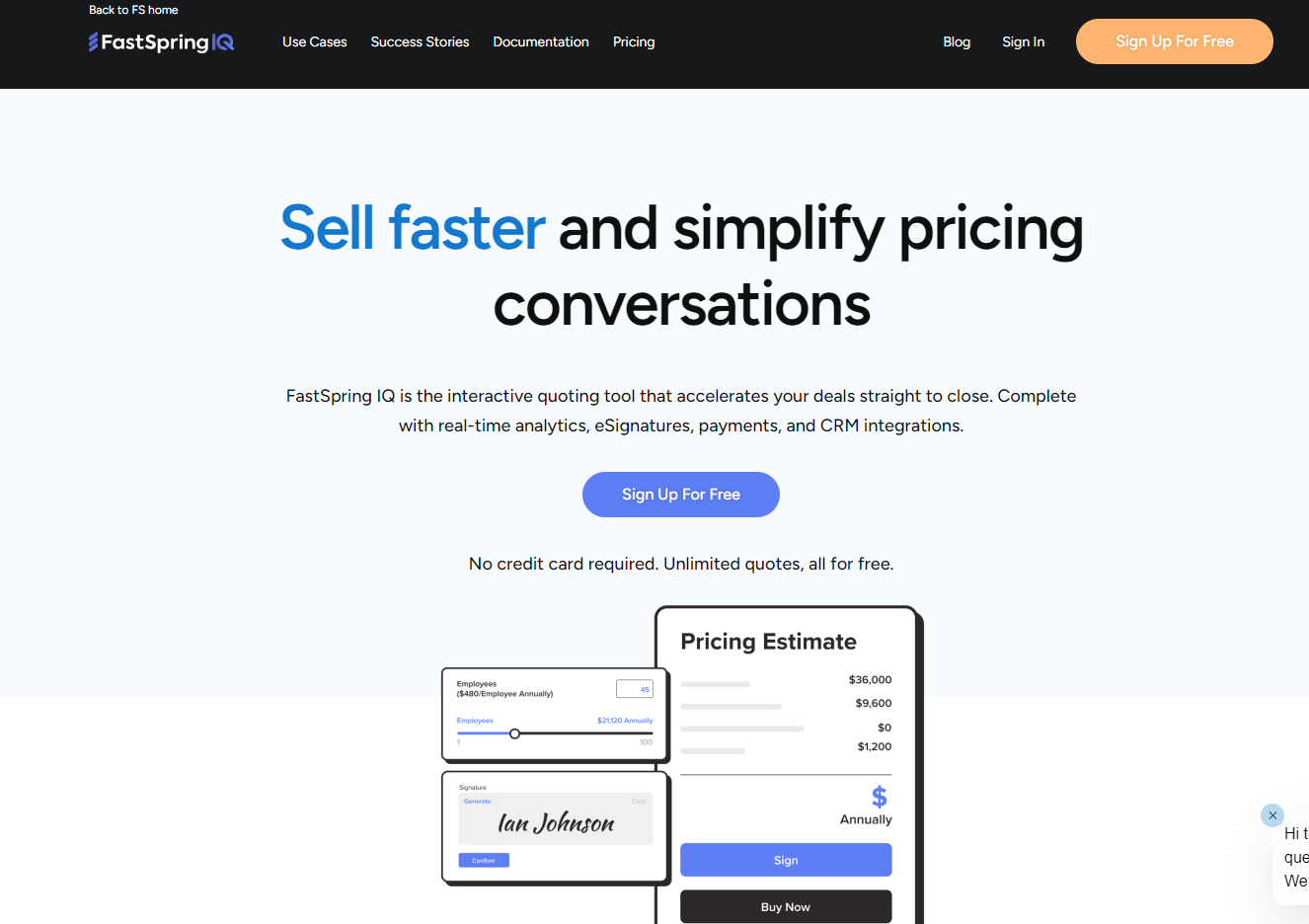
FastSpring IQ is an interactive quoting platform which helps you close more deals with e-signatures, dynamic pricing, and payment integrations.
Features
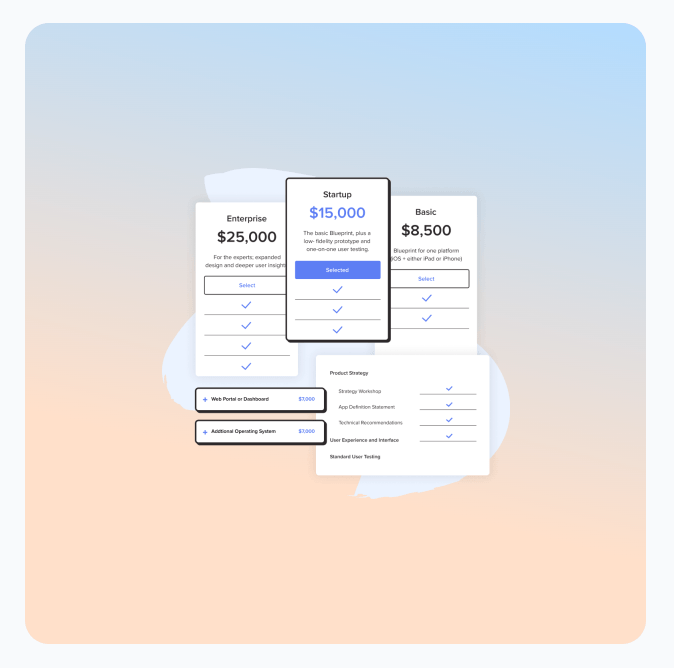
- Configurable quotes with an intuitive and beautiful design with the option to add paid add-ons.
- You can set a variable pricing scale that matches your offering to enable your prospects to choose the features they need most.
- E-signatures that can be customized and with a custom call to action to accept, sign, or set up a redirect to another URL.
Standout Feature: Deal Insights
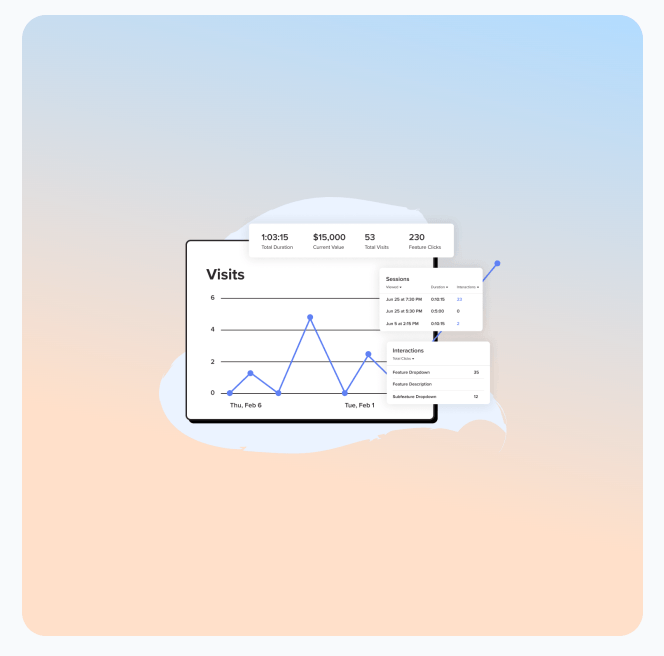
FastSpring IQ lets you access its advanced deal analytics to better understand how your prospects are interacting with your personalized quotes.
Your team will also be able to track quote inactivity and notifications when your prospects have not yet viewed or signed the contract so you can follow up.
Pricing
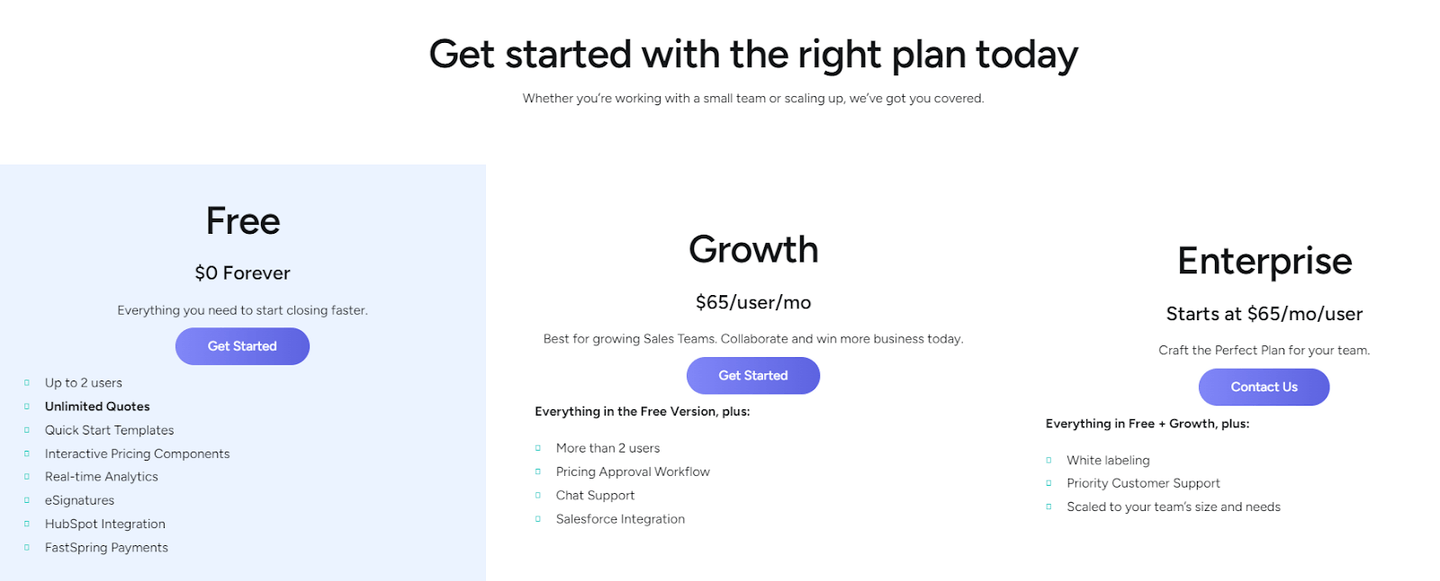
FastSpring IQ has a free forever plan that lets you create and send out unlimited quotes for up to 2 users.
To access the tool’s advanced integrations and features, you’d have to be on one of their 2 paid plans:
- Growth: $65/month/user, which adds pricing approval workflows, chat support, and a deep Salesforce integration.
- Enterprise: Starting at $65/month/user, you will receive priority customer support, white-labeling, and a more scaled solution.
Pros and Cons
✅ E-signature and payment integrations.
✅ Good CRM integrations with HubSpot and Salesforce.
✅ Generous free forever plan that lets you send out unlimited quotes.
⚠️ You’d have to be on their Growth plan to access the Salesforce integration.
⚠️ More expensive than other alternatives on the market.
#8: Proposify
Best for: Sending out professional-looking proposals to your prospects.
Similar to: DocSend, PandaDoc.
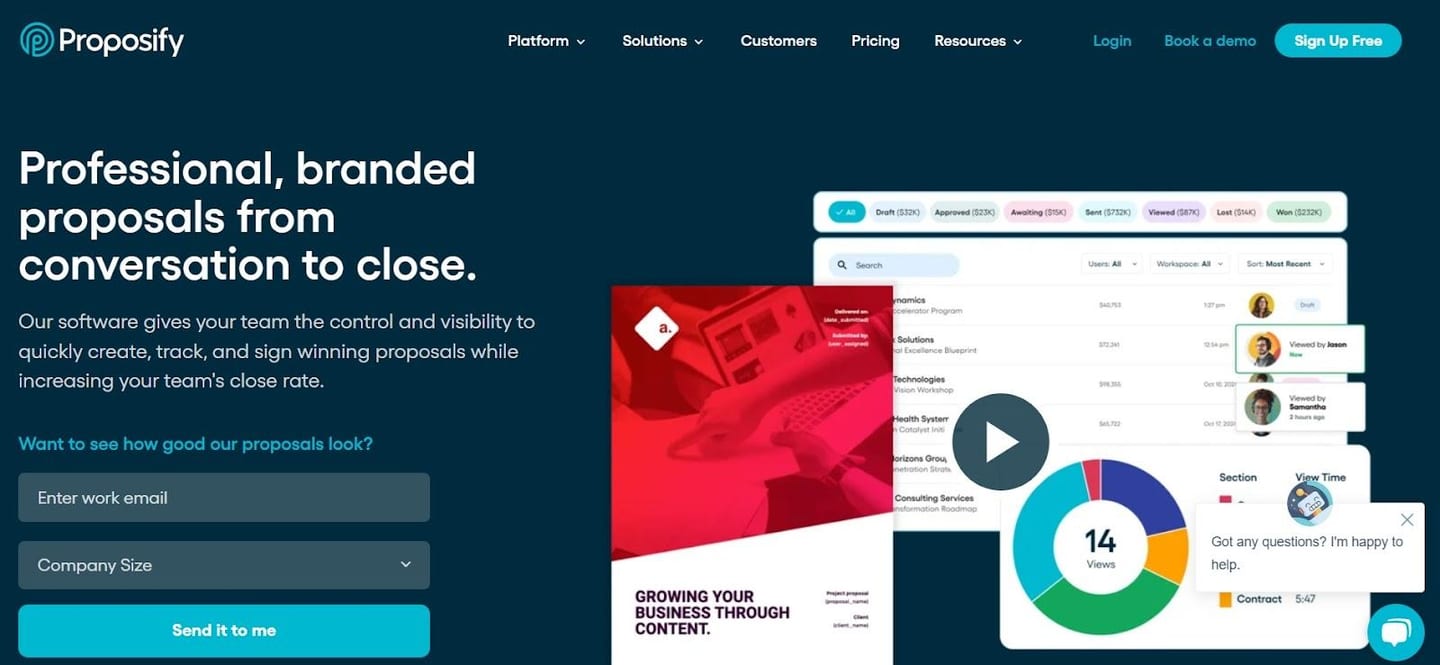
Proposify is a sales proposal platform that lets your sales team create, track, and send out professional proposals.
Features
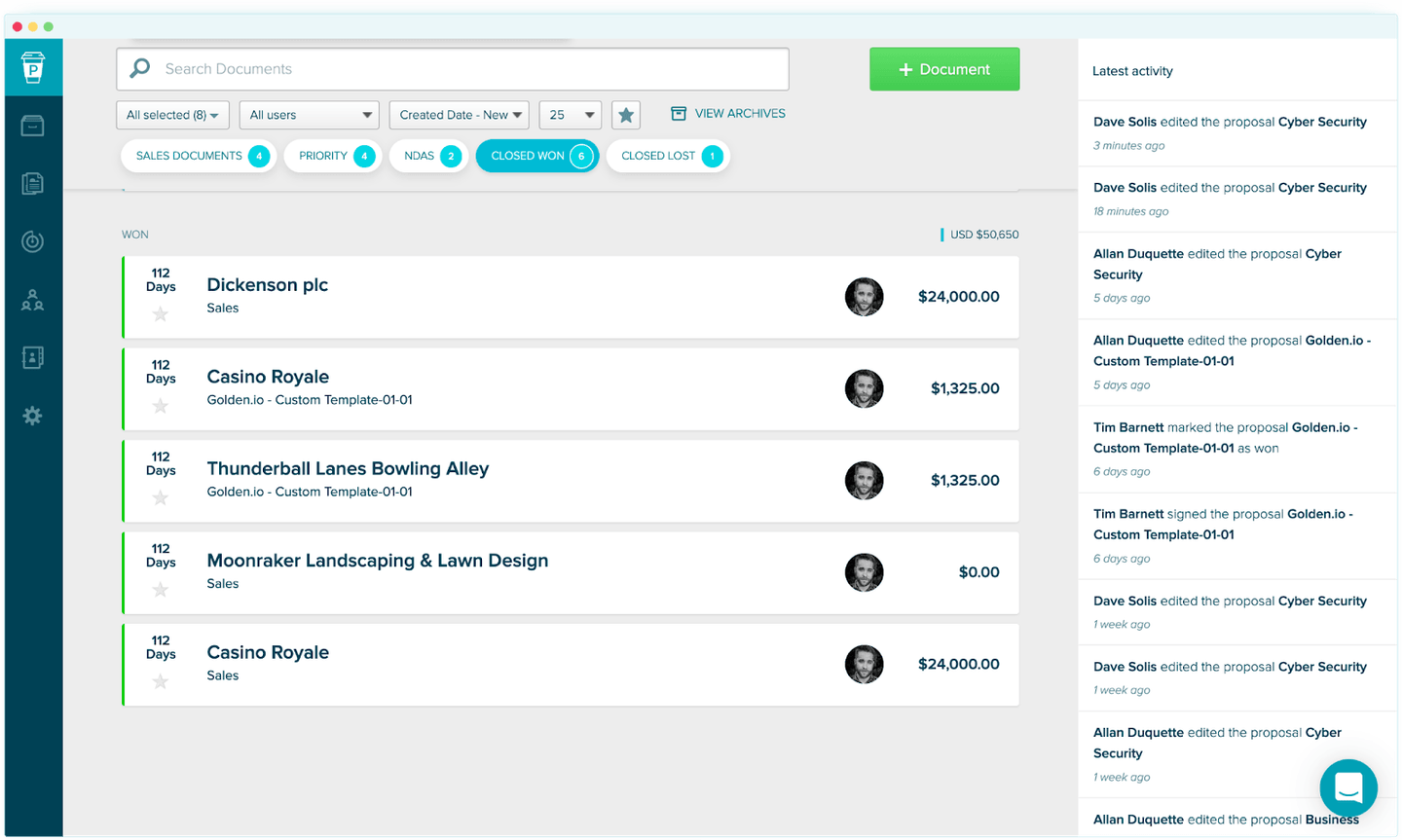
- Sales proposal platform, which can be accessible from any device and exported as a PDF.
- Proposal templates to automate your proposal process and send out professional-looking templates.
- Integrations with popular CRMs like Agile, HubSpot, and Salesforce.
Standout Feature: Interactive Quoting Software
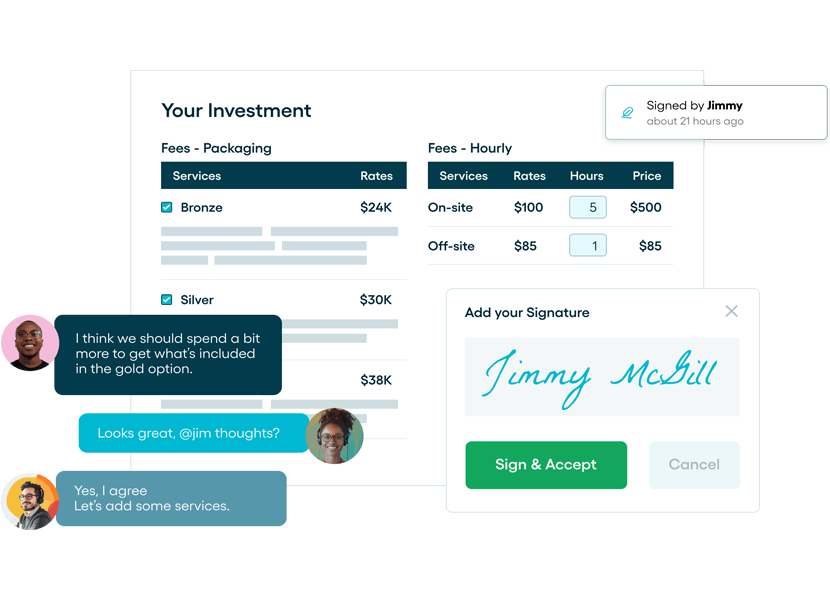
You can create and send out tailored quotes with dynamic pricing.
Your sales team can use these customizable quotes to up-sell your prospects.
Pricing
Proposify has three pricing tiers:
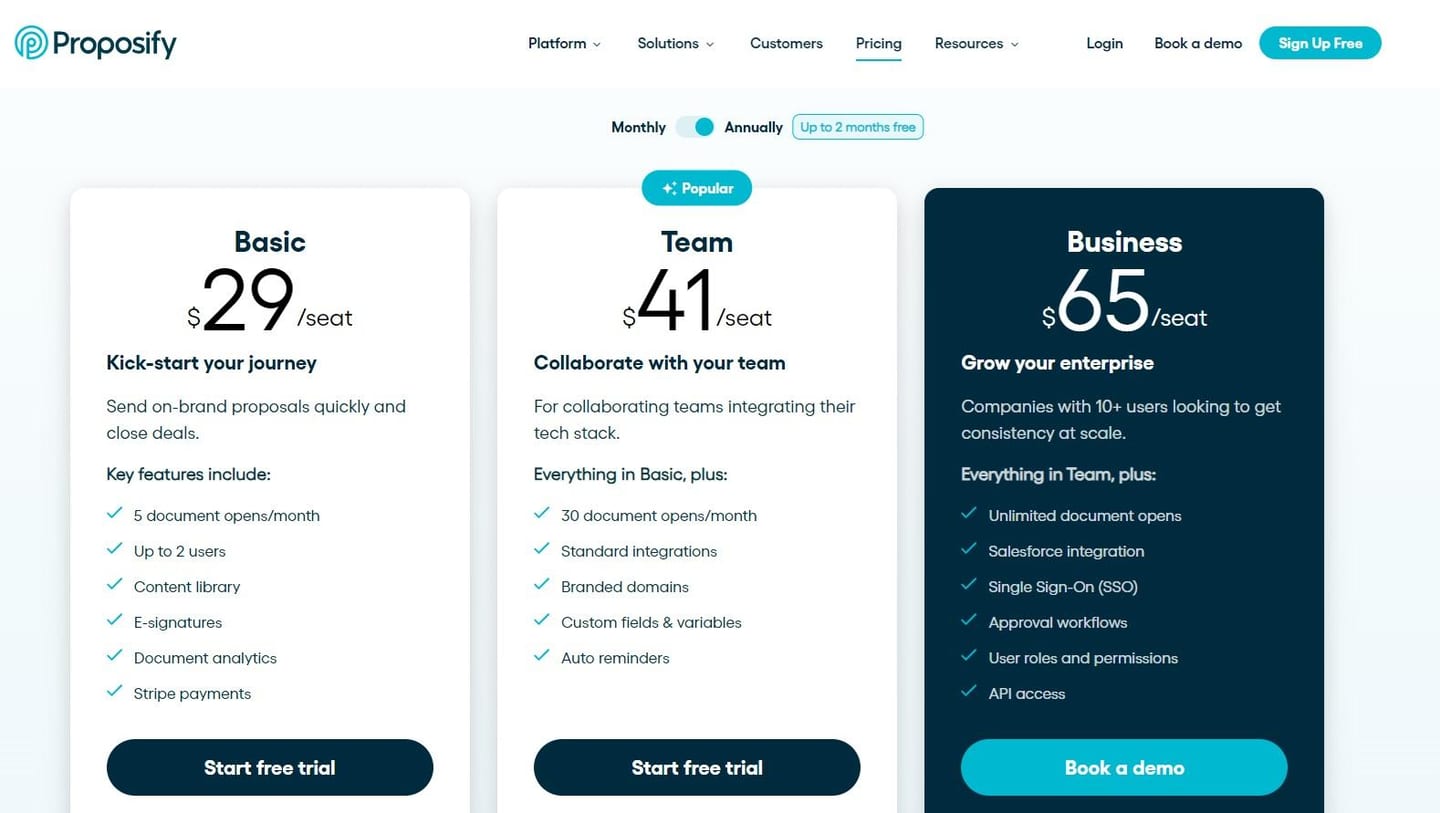
- Basic Plan:$29/month/seat, which gives you access to 5 document opens/month, e-signatures, document analytics, and content library.
- Team Plan:$41/month/seat, which adds access to 30 document opens/month, branded domains, standard integrations, and custom fields & variables.
- Business Plan:$65/month/seat for a minimum of 10 seats, which adds access to unlimited document opens, API access, and approval workflows.
Pros and Cons
✅ Interactive quotes that are customizable and good for up-selling.
✅ Out-of-the-box proposal templates.
✅ Integrations with a wide range of CRMs.
⚠️ Some users of the platform find the platform’s customization limited.
⚠️ There are some reported bug issues.
#9: Nusii
Best for: Sending out proposals with e-signatures.
Similar to: DocSend, GetAccept.
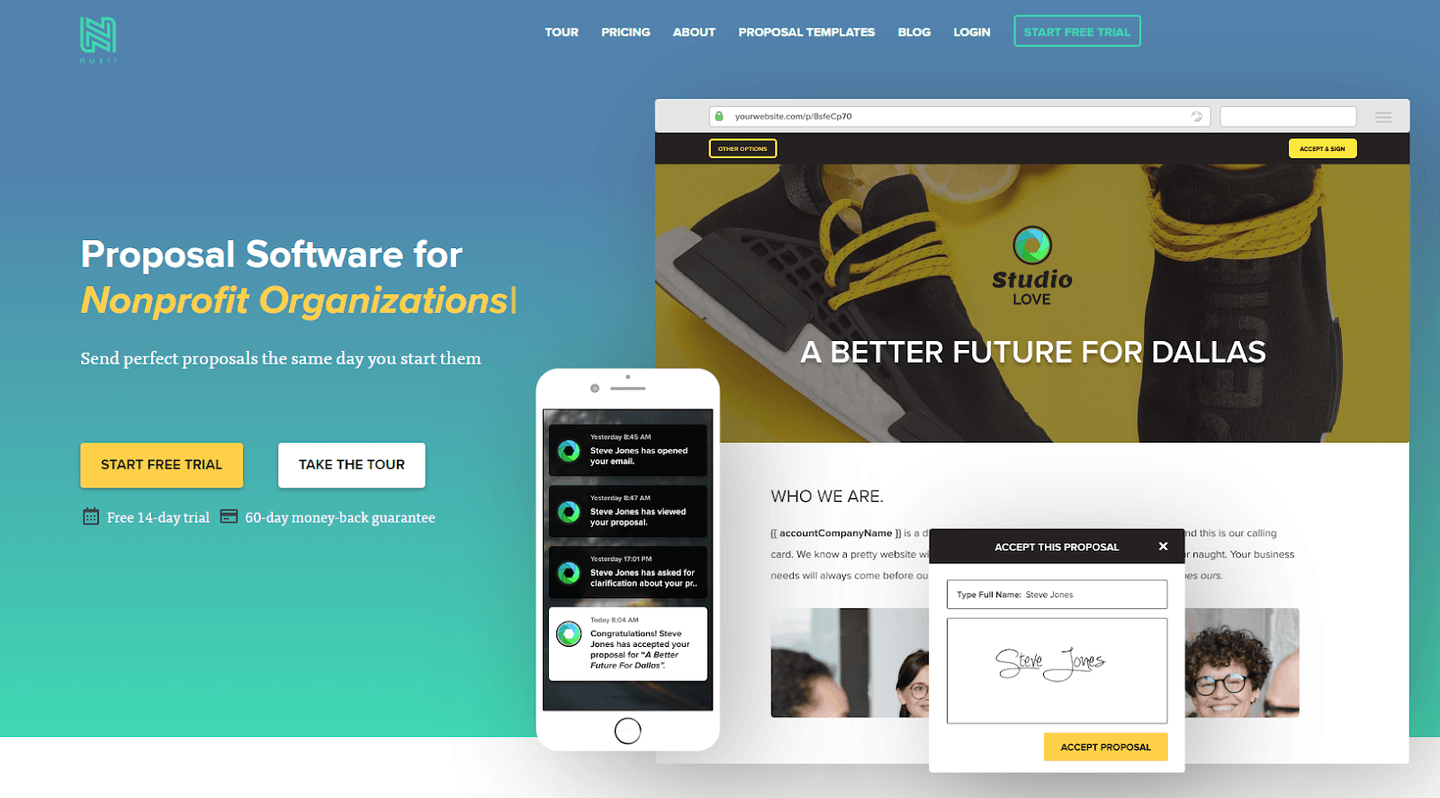
Nusii offers a sales proposal platform for freelancers and SMBs who are looking to create customizable proposals with e-signatures.
Features
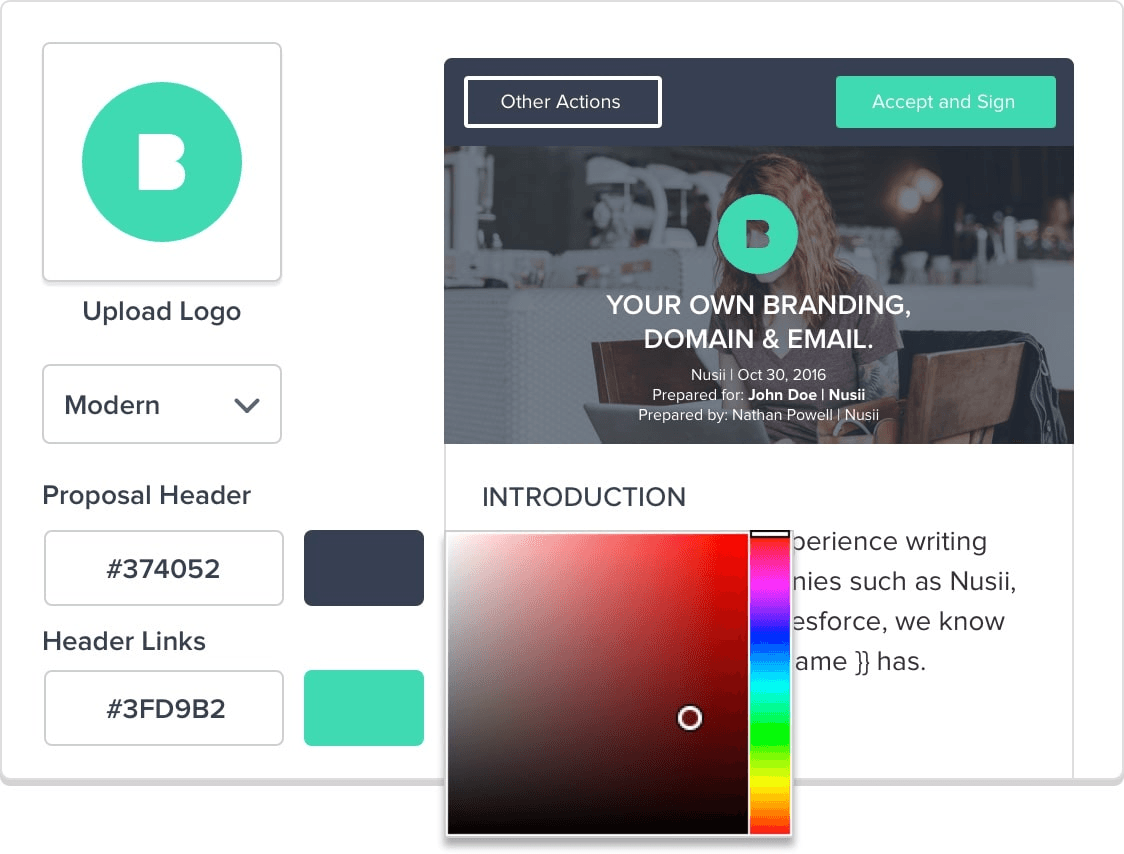
- Build and send out customizable proposals with your branding and logo.
- Receive notifications to stay in the loop for every action of your prospects.
- Scale the proposal-building process by re-using your content blocks.
Standout Feature: Template Library Per Industry
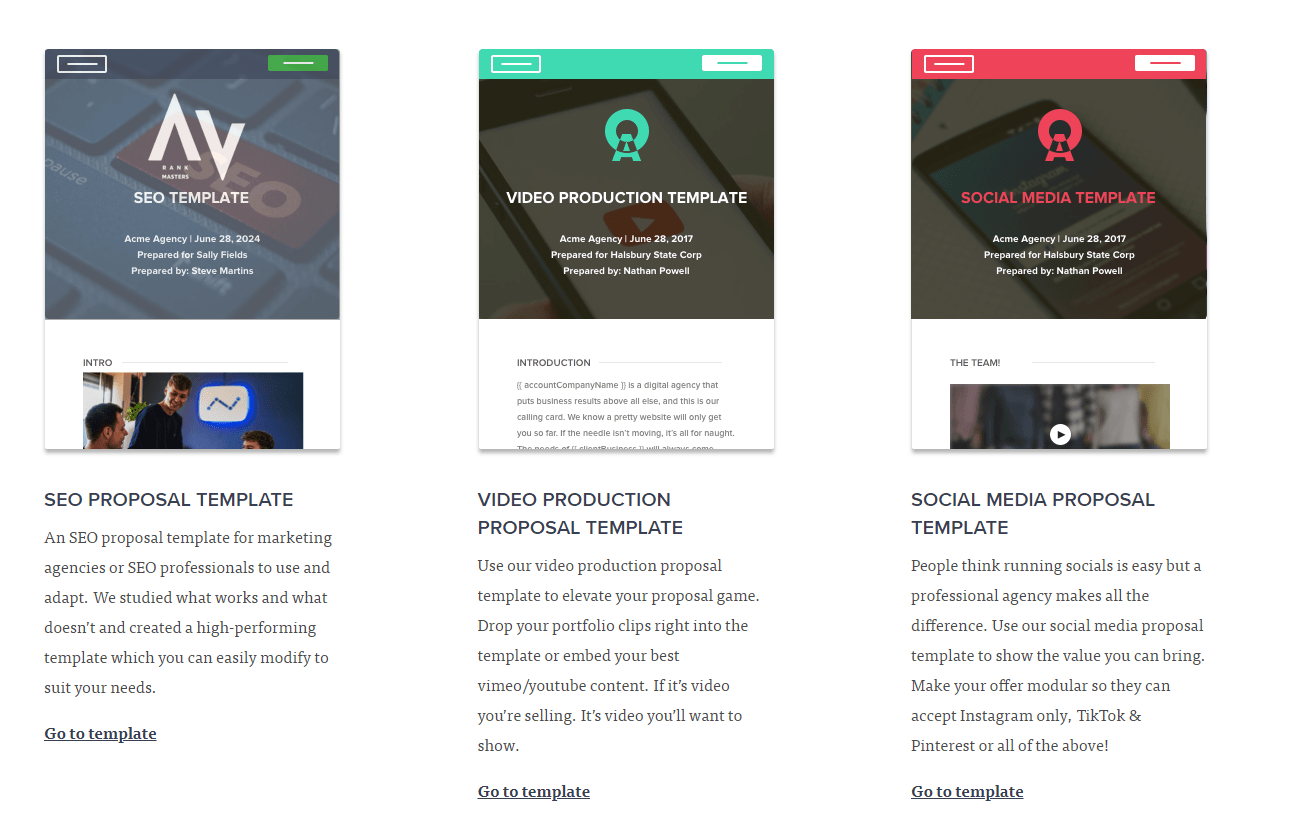
The platform lets you access a gallery of templates for different industries, such as building proposals for social media management or video production.
Pricing
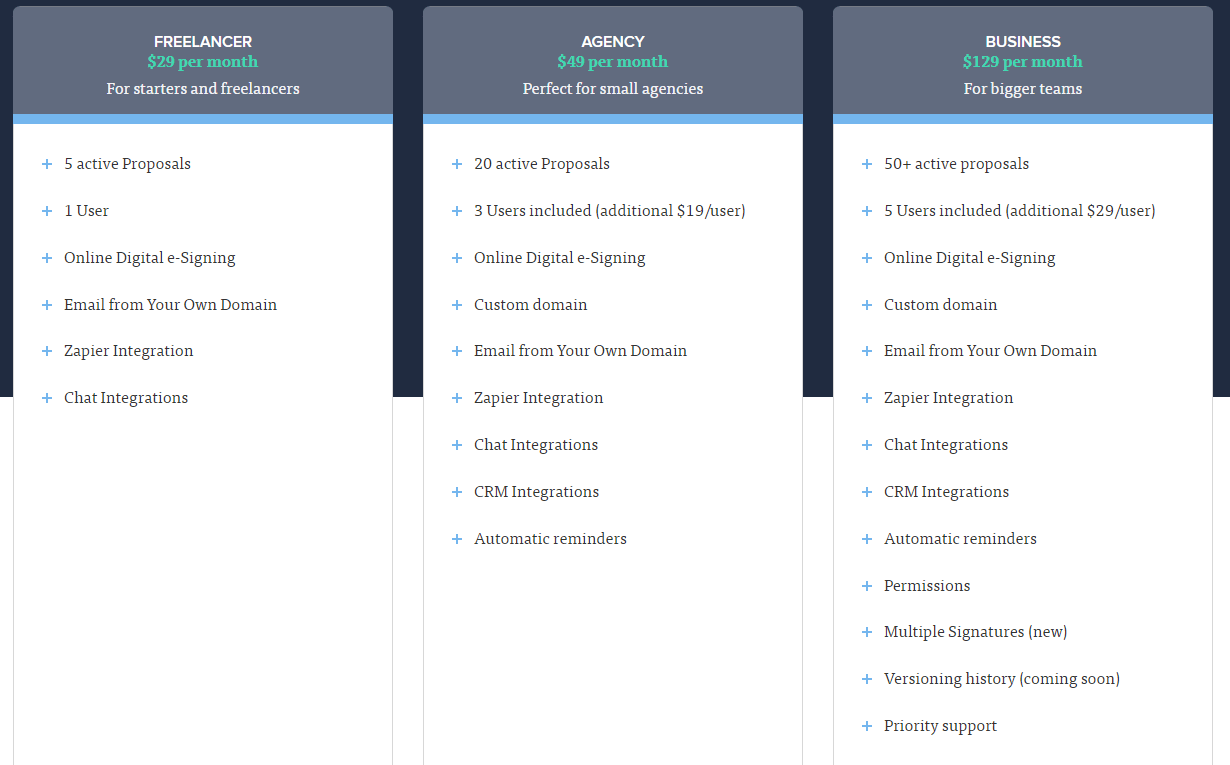
Nusii offers three paid plans:
- Freelancer:$29/month for up to 1 user, which lets you access 5 active proposals, e-signatures, and a Zapier integration.
- Agency:$49/month for up to 3 users, which lets you access 20 active proposals, CRM integrations, and automatic reminders.
- Business:$129/month for up to 5 users, which lets youcess to 50+ active proposals, custom domains, permissions, and multiple signatures.
Pros and Cons
✅ Chat integration and automatic reminders.
✅ E-signature and good CRM integrations.
✅ Template library is based on industry, not modules.
⚠️ Auto-saving functionality does not allow to go back to old text when editing.
⚠️ The analytics are less sophisticated than other feature-heavy platforms like PandaDoc.
#10: PandaDoc
Best for: Getting in-depth document insights about customer engagement.
Similar to: DocSend.
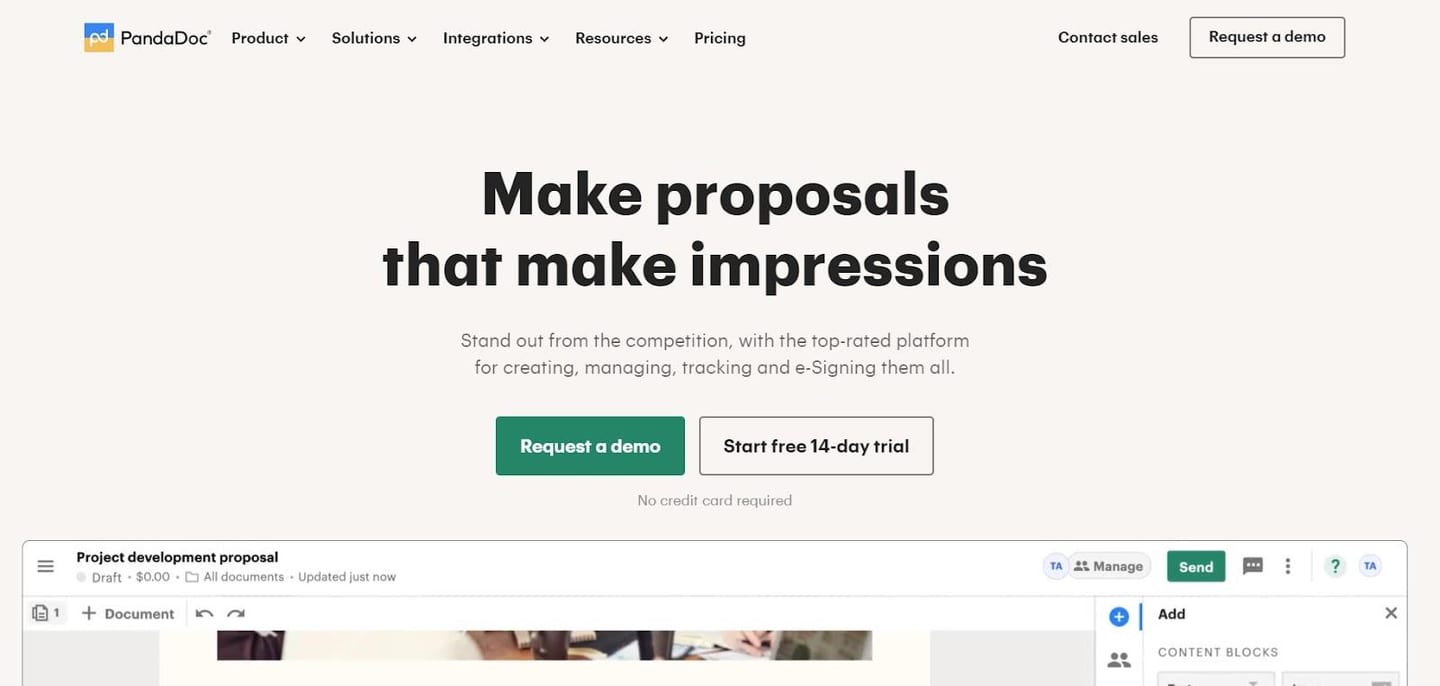
PandaDoc is a document automation platform that helps your sales team create proposals, contracts, and quotes with advanced workflow automation.
Features
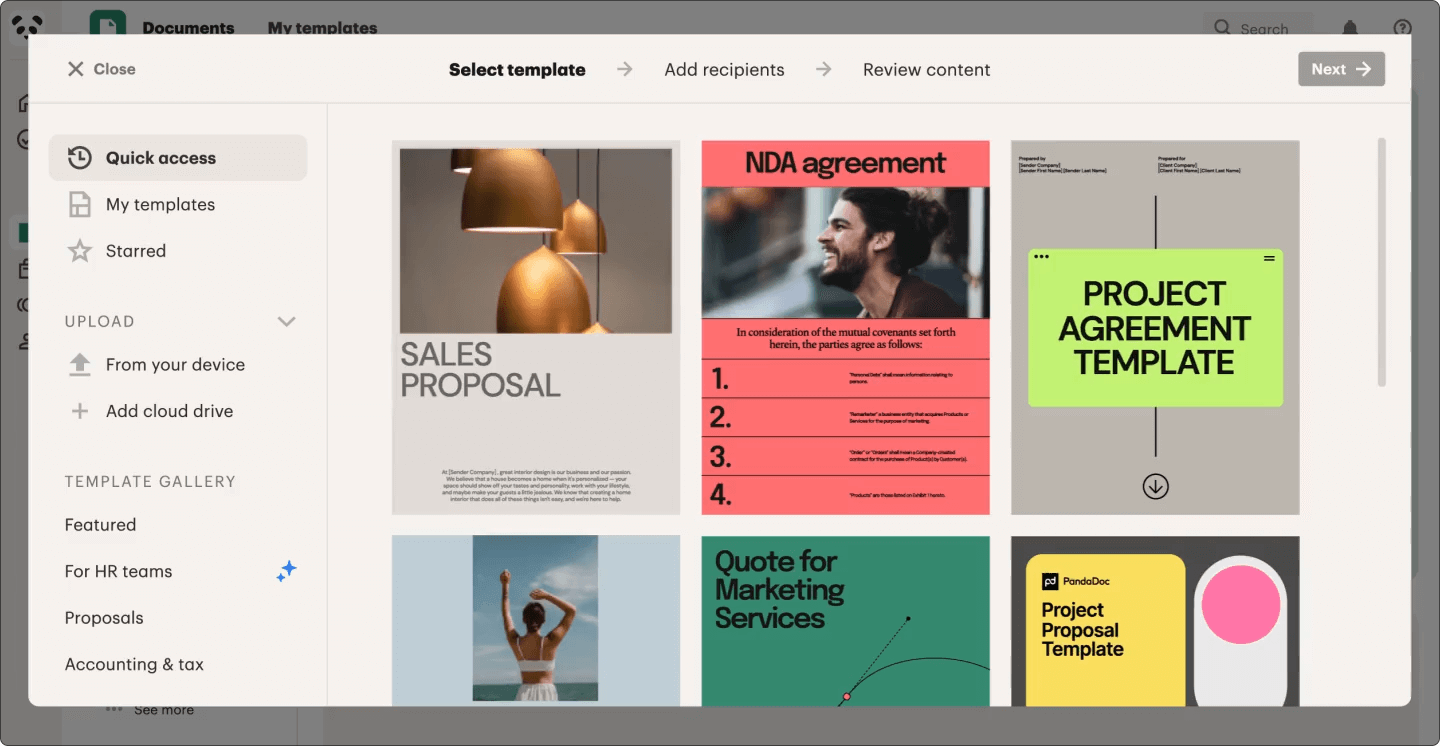
- Document generation software that lets you design and send out HIPAA, FERPA, and GDPR-compliant documents in minutes with customizable templates.
- Personalized deal rooms, where you canorganize and share resources, collaborate with your leads and stakeholders, and negotiate deals.
- Document analytics with insights to access data into how your leads interact with your documents.
Standout Feature: Smart Content
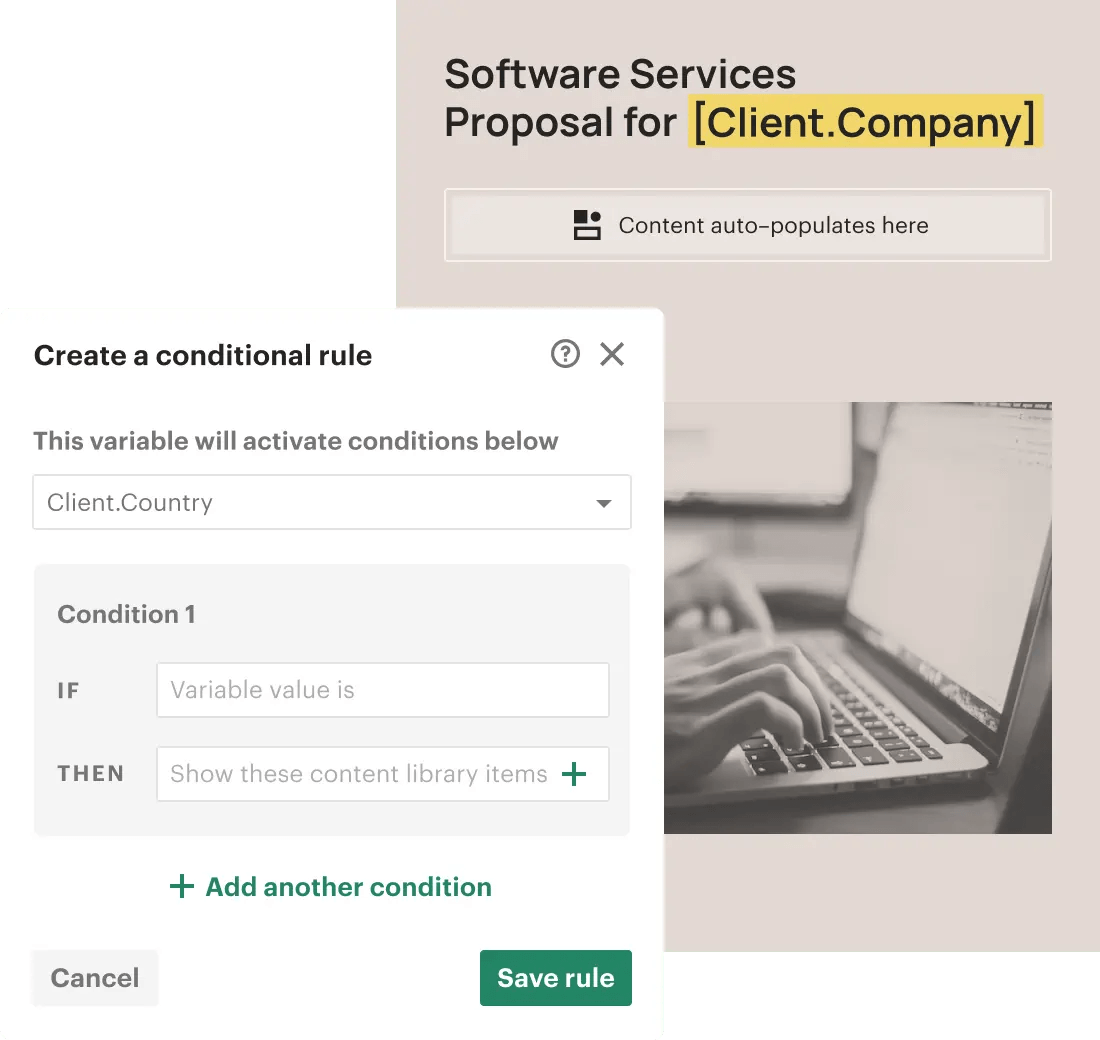
PandaDoc offers a smart content feature that ensures the right information is always added to every document while minimizing your document’s mistakes.
Pricing
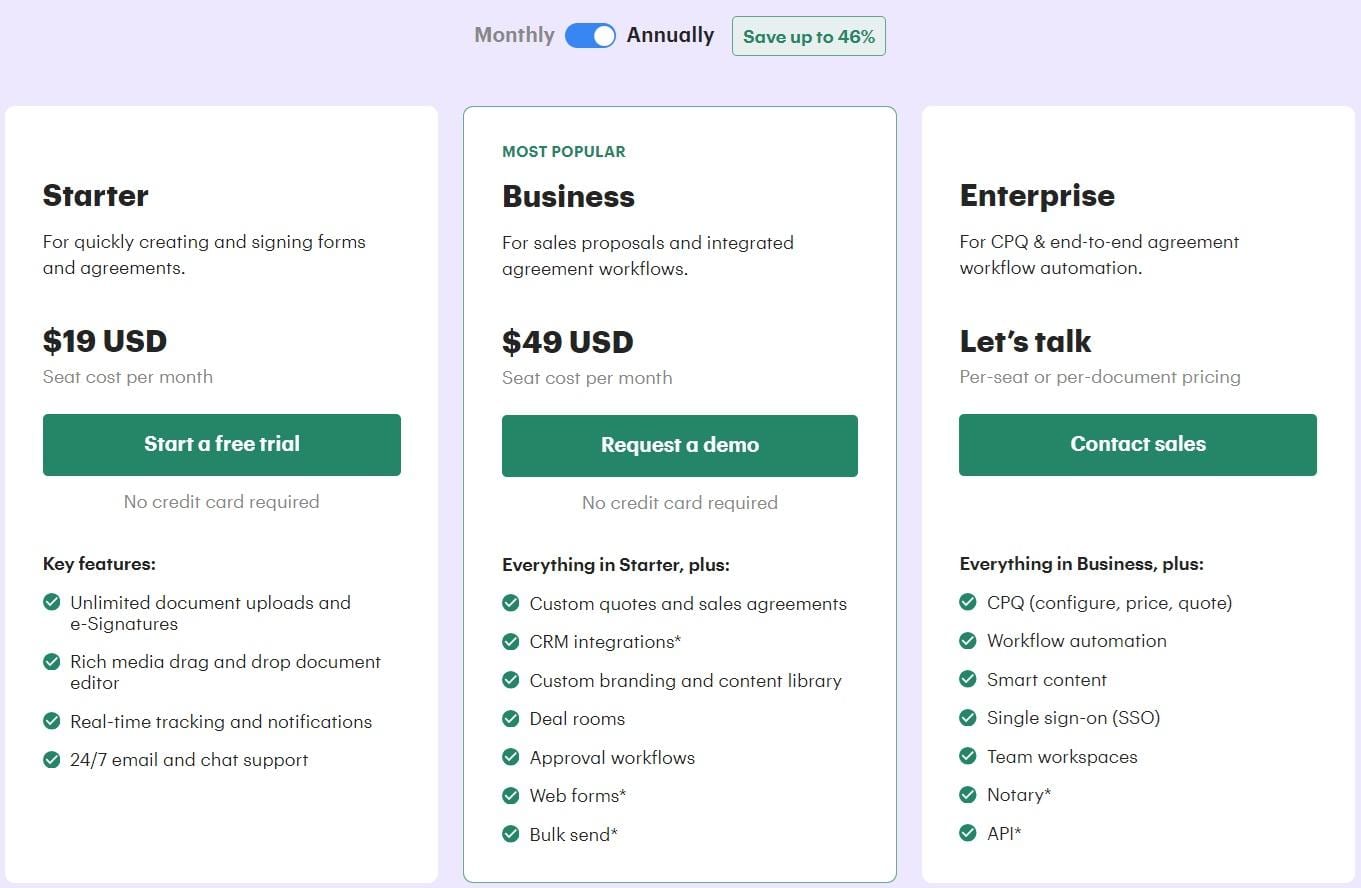
PandaDoc offers three paid plans:
- Starter Plan:$19/month/seat, which gives you access to unlimited document uploads, e-signatures, rich media drag-and-drop document editor, and real-time tracking.
- Business Plan:$49/month/seat, which adds custom quotes and sales agreements, CRM integrations, deal rooms, and approval workflows.
- Enterprise Plan: Custom pricing that adds advanced workflow automations, CPQ, smart content, and SSO.
Pros and Cons
✅ Document automation with good analytics.
✅ Large proposal library with easy-to-use templates.
✅ Personalized deal rooms.
⚠️ Templates are not as customizable as some users would want them to be.
⚠️ Integrations with CRM platforms are not deep enough when compared to other alternatives.
Next steps: keep deals moving after the proposal goes out
A good proposal tool gets the document in front of your buyer. The deal still needs a follow-up, a case study that fits the buyer, and someone who notices when the buyer goes quiet.
If you’re a sales leader who wants:
- A gameplan for every deal, built from your team’s playbook.
- Follow-up emails, case studies, and CRM updates done for your reps after every call, with a rep approving each one before it sends.
- Sales rooms kept current and nudges when a deal goes quiet, all of it working with the CRM and notetaker your team already uses.
Then you can book an agent kickoff to see how Arrows works today.