
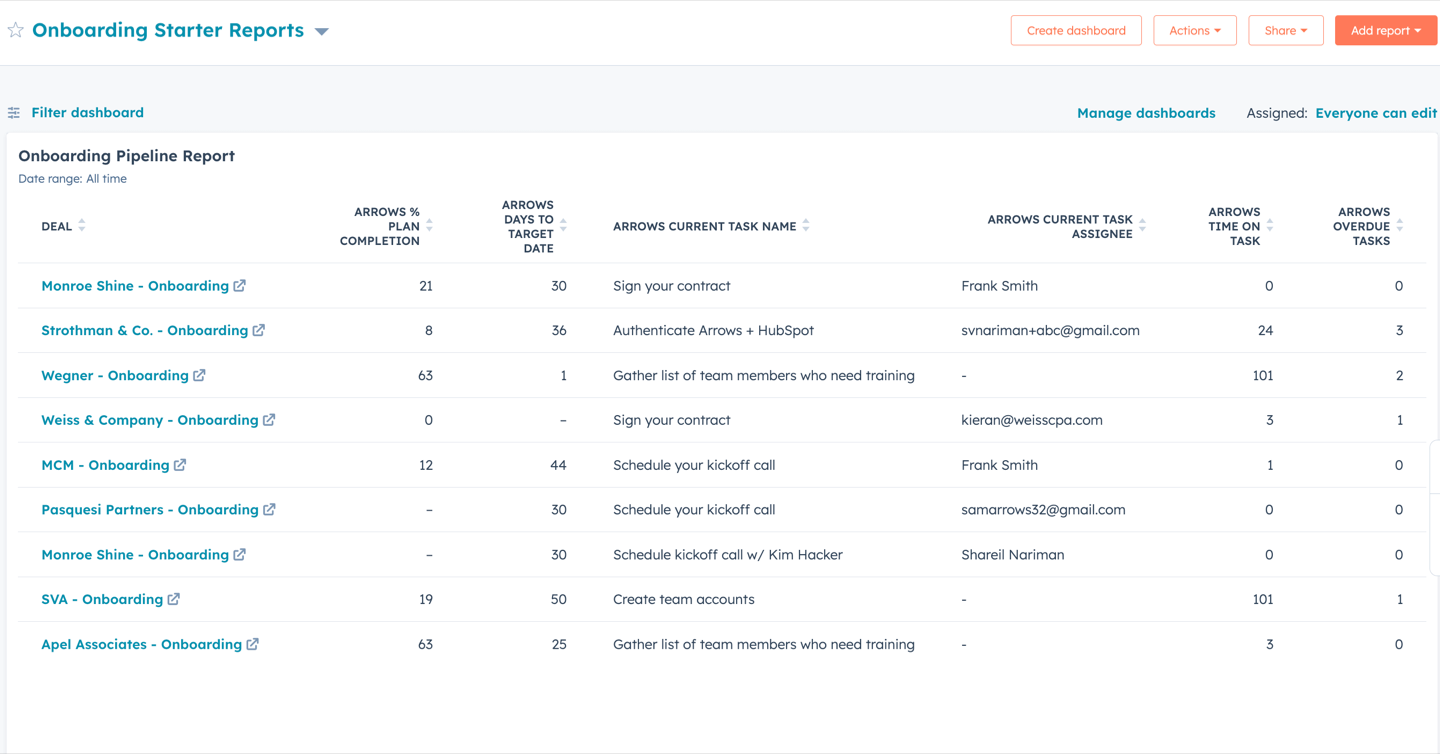
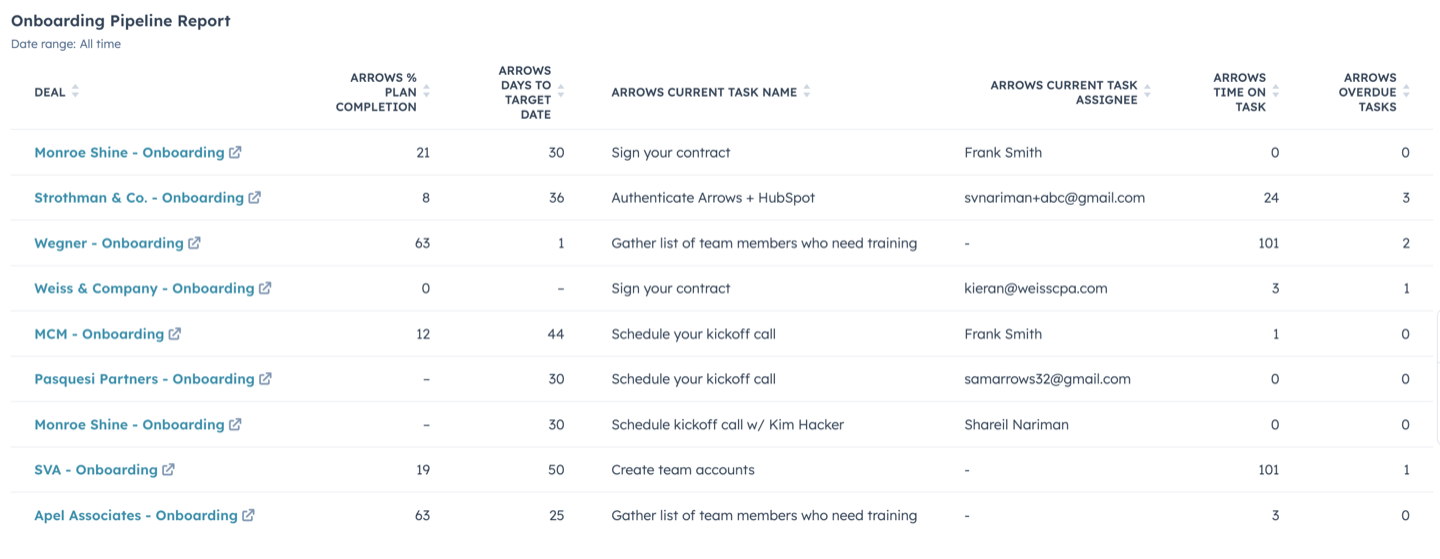
Steal this HubSpot report to keep track of customers’ progress in onboarding.
Having real-time insight into how the customers in your HubSpot onboarding pipeline are making progress and where they might be getting stuck is critical to reducing their time-to-value and iterating on your process.
We can combine Arrows onboarding plan data in a HubSpot report to provide granular insight into our customer’s progress.
Here’s how it works:
1. . Set up Arrows data sync
We’ll integrate Arrows to sync data into the properties we just created in HubSpot.
Here are the properties we’ll use in this report:
- Arrows task completion percentage
- Arrows days until target date
- Arrows current task name
- Arrows current task assignee
- Arrows days on current task
- Arrows overdue tasks
2. Create a new report
From the Reports page, select “Create Report” and select the Single object report type using Deals or Tickets.
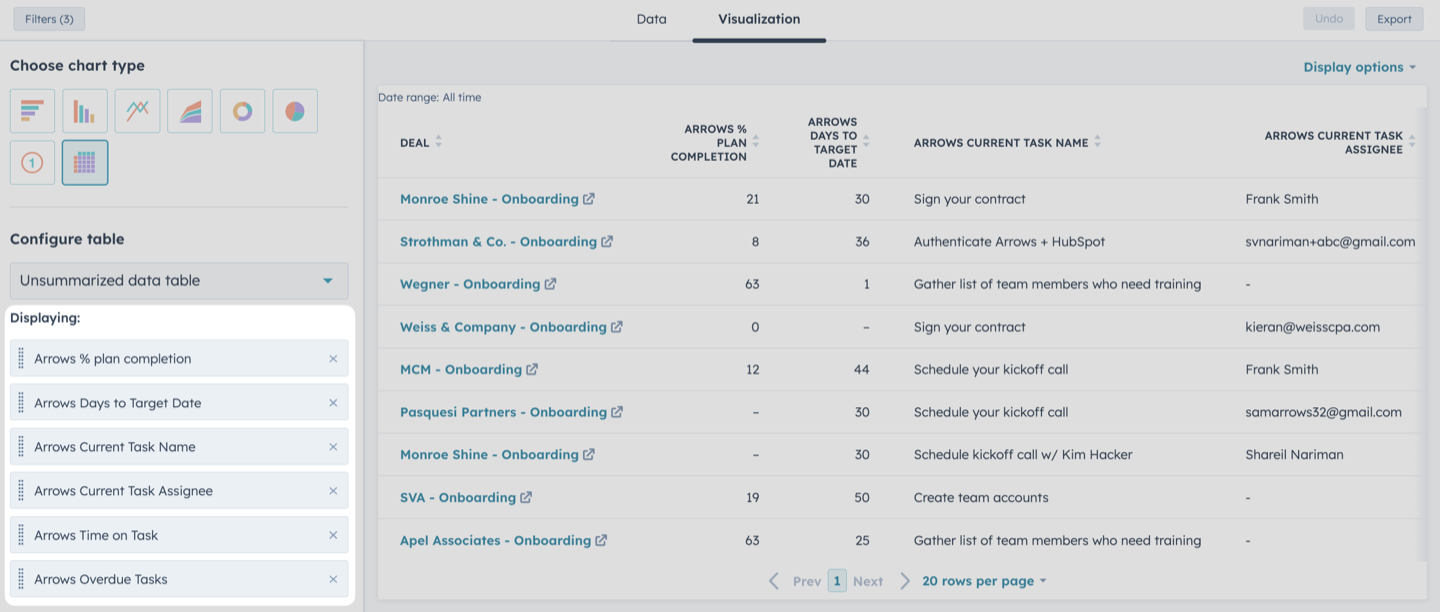
3. Add your data to the report
Search and select each of the properties we added to include them in our report.
4. Select your visualization
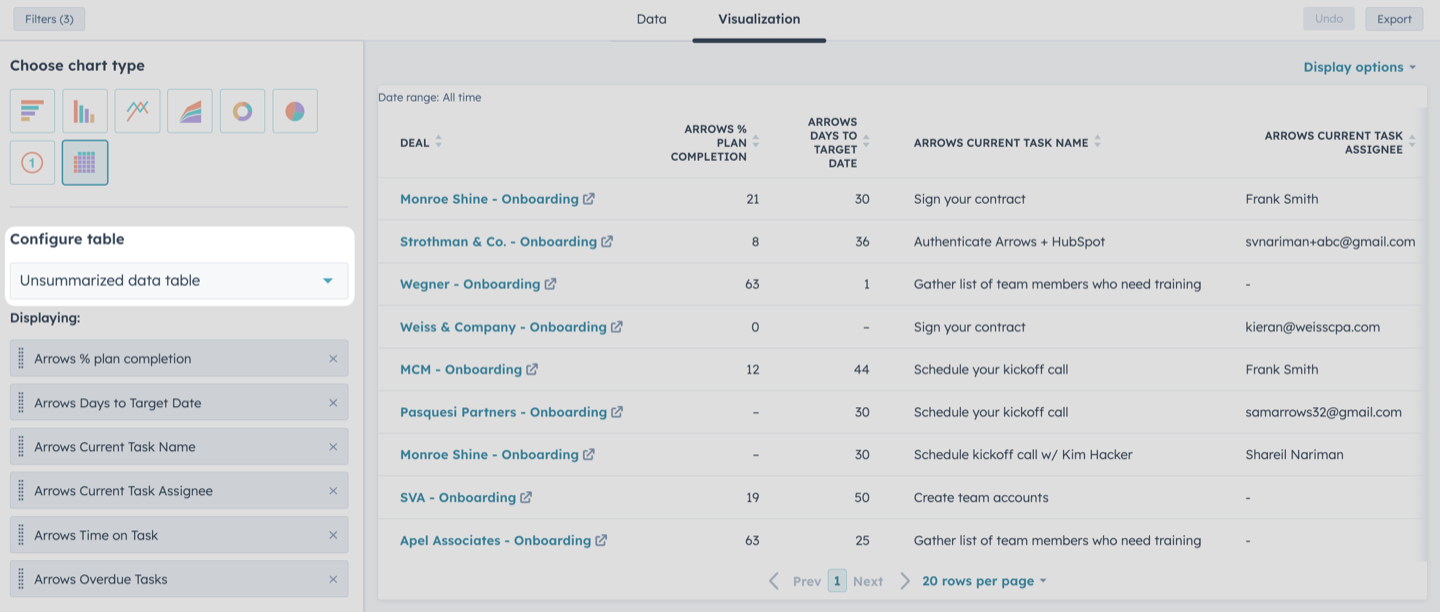
Select the unsummarized data table visualization type for this report.
5. Save report & add to dashboard
Add your report to a dashboard to improve your team’s visibility.
6. Review your report dashboard
View the finalized report in your HubSpot onboarding dashboard and see data update as customers take action (or not). You can filter this report by customer owner or any other HubSpot property such as last contacted.
7. Automatically share your report weekly
Send your report as a recurring email to onboarding managers and related teams to provide visibility into post-sale progress.
Giving your entire team visibility into the progress customers are making in onboarding inside the tools they are already using is a great first step to identifying bottlenecks and improving your process.
