


How to turn sales discovery into buyer-facing content (automatically)

.png)
Table of Contents
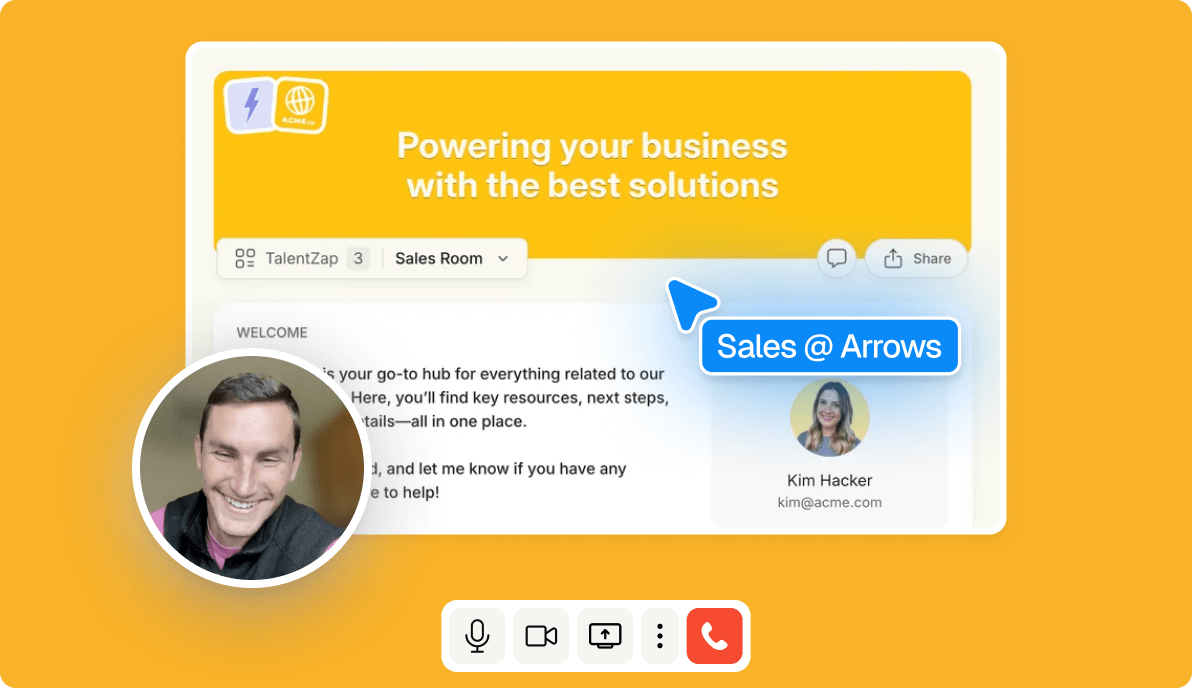
You just had a great discovery call. You learned their pain points, their priorities, and who else needs to be involved. You asked good questions. They opened up. It felt like real progress.
Then you logged off, jumped into your next meeting, and that context went straight into the CRM, where it will sit, untouched, until the deal is won, lost, or forgotten.
Most reps treat discovery like a data collection exercise. Ask the questions, fill the fields, move on. But discovery only matters if it shows up in front of the buyer, in their own words, repeatedly, across the whole deal cycle. The problem is that turning discovery into buyer-facing content takes time most reps don't have.
In this post, I'll break down why discovery dies in the CRM, what it looks like when it doesn't, and how Arrows uses AI agents to turn one call into a buyer-ready case to buy, automatically.
Why discovery dies in the CRM
The issue isn't that reps aren't doing discovery. Most are. The issue is what happens after the call ends.
Your AI notetaker sends a recap. You log the highlights. You move on. By the next call, none of that context is in front of either of you. It's not in the follow-up materials. It's not being reinforced. It's just sitting in a notes field that nobody opens.
That gap between what top reps do on their best deals and what everyone else does on every deal is where most pipeline leaks.
What it looks like when discovery actually moves a deal forward
Discovery moves deals when it gets reinforced throughout the buying process. Not once. Repeatedly. In every follow-up, every meeting, and every artifact the buyer shares internally.
That means taking what the buyer told you, their pain, their goals, the specific numbers they mentioned, who's involved in the decision, and making it visible in a buyer-facing format that stays useful as the deal develops.
A few things your discovery follow-through needs to do:
→ Mirror the buyer's words back to them. Most reps summarize their own pitch in follow-ups. The deals that move forward show the buyer that you actually heard them, using their language, not yours.
→ Build a deal-specific value case. Generic ROI decks don't close deals. A value case built from what the buyer actually said does.
→ Give the champion something to share. Your champion almost never makes the decision alone. If you don't give them a clear, organized page they can forward upstream, they're on their own.
The three AI-powered blocks that keep discovery alive
This is what Arrows is built for. Arrows uses AI agent blocks inside a connected sales room to turn your discovery call into a buyer-ready page, automatically, from the call transcript, CRM data, and deal activity.
What we heard
This block pulls the buyer's stated pain, goals, constraints, and timeline from the call and puts them in the sales room, in the buyer's own words, not yours.
The rep doesn't write any of it. It's generated from the conversation and visible to everyone on the buying team, including people who weren't on the discovery call. When a stakeholder opens the room, they see what their colleague actually said. You're reinforcing urgency with people you've never spoken to, using language from someone they trust.
ROI
This block takes the specific numbers and pain points the buyer described and turns them into a deal-specific value case. Not a generic pitch, a case built from what they told you. The receipt submission rate they mentioned. The hours they spend on manual work. The quota gap they're trying to close.
As you learn more, the ROI narrative gets sharper. It's the business case your champion needs to sell internally, and it's already written.
Stakeholders
This block captures everyone involved in the decision: the people who were on the call, and the people they mentioned who weren't. It surfaces what each person cares about, based on what came up in the conversation.
This gives your champion a map to sell internally. No surprise decision-makers showing up at the end. The buying committee is visible, documented, and useful from discovery all the way to close.
Two more blocks worth knowing
Beyond the core three, most Arrows customers also use:
→ Next steps: a running list of what was agreed on every call, so nothing falls through between touchpoints.
→ Milestones: a deal-specific timeline built from what the buyer said. If they told you they want to be live by end of Q1, this maps out what needs to happen and when. Turns an abstract deadline into a concrete plan the buyer can share with their team.
How Arrows works in the CRM
You finish a discovery call. You open your deal in HubSpot or Salesforce, hit "create room," and choose your template. Arrows reads the call transcript, the contacts in the deal, any emails exchanged, and the deal properties in your CRM. In seconds, it generates content that fills in all the blocks.
You review, make any tweaks, and send the room. The buyer gets a personalized page built from what they told you, ready to share with their team. The whole thing takes seconds, not hours. And it works for every deal, not just the ones you want to spend extra time on.
Frequently asked questions about sales discovery and AI
What does it mean for discovery to "die in the CRM"?
It means the context from your discovery call, the buyer's pain, goals, constraints, and timeline, gets logged in CRM fields or notes and never makes it back in front of the buyer. It doesn't show up in follow-up materials, doesn't get reinforced on later calls, and doesn't help the champion sell internally. The information was collected but never used.
How do you turn discovery into buyer-facing content?
Take the buyer's own words, their stated pain, priorities, and numbers, and put them in a shared space the buyer can reference and forward to their team. That means a "what we heard" summary, a deal-specific ROI narrative, and a stakeholder map. AI tools like Arrows can generate all of this automatically from your call transcript and CRM data.
What is a "what we heard" block in a sales room?
A section of a buyer-facing sales room that summarizes the buyer's pain points, goals, constraints, and timeline in their own language, pulled from the call. It shows the buyer you were listening, reinforces urgency across the deal, and gives stakeholders who weren't on the discovery call the context they need to care about the purchase.
How does AI generate a deal-specific ROI case?
Arrows AI agents read the call transcript and CRM data to identify the specific numbers, pain points, and goals the buyer mentioned. From that, they write a value case built around what that buyer actually said. The rep reviews it, sharpens it as the deal progresses, and uses it to help the champion make the business case internally.
What is a digital sales room?
A shared page you give your buyer with everything they need to evaluate, decide, and share with their team: discovery summaries, ROI narratives, next steps, milestones, case studies, call recordings, and more. Everything in one place, one link the buyer can forward upstream.
How does Arrows connect to HubSpot and Salesforce?
Arrows has a native integration with both. When you create a room from a deal record, Arrows reads the call transcript, logged emails, contact data, and deal properties from your CRM to populate the sales room automatically. Room activity, opens, clicks, engagement, syncs back to the deal record so your CRM stays current.
Can you use Arrows for every deal, or just large ones?
Every deal. That's the point. The best reps already build custom decks and ROI cases for their top opportunities, but only those, because doing it manually takes too long. Arrows makes it possible to create a personalized, AI-generated room for every deal in the time it takes to send a standard follow-up email.
The bottom line
Stop letting discovery sit in the CRM. Instead:
→ Turn every call into a buyer-facing summary, in the buyer's words.
→ Build a deal-specific ROI case from what they actually told you.
→ Give your champion the stakeholder map and the story they need to sell internally.
→ Keep all of it alive and visible throughout the deal, not just on call one.
You can do this manually for your best deals. Arrows makes it possible for every deal.
If you want to see how it works on your sales pipeline, book a demo with the Arrows team.
Your customers will be happy you subscribed to our newsletter.
Join 14,000+ subscribers who read the Happy Customers newsletter—it's jam-packed with tips-and-tricks about sales, onboarding, HubSpot, and winning happy customers at scale.


.png)